2026 AI Job Market Outlook: Opportunities and Structural Challenges
AI is reshaping employment in both directions — displacing routine roles while driving demand for new skills.
This article offers a structured framework for understanding AI's impact on the 2026 job market. Rather than a one-way story of displacement, AI presents both replacement and augmentation effects: repetitive, standardizable entry-level roles face the most direct pressure, while skills like AI collaboration, systems engineering, and complex communication are rising in value. A key structural risk — often overlooked — is that shrinking junior-level positions may cut off traditional pathways for new workers to gain experience, creating a talent pipeline gap over time. For professionals, the most practical response is to maintain transferable skills, actively use AI as a productivity lever, and focus on value creation that AI cannot easily replicate.
Introduction: A Reshaped Employment Landscape
The explosive growth of AI technology over the past few years is fundamentally transforming the structure of the global labor market. Discussions around the "2026 AI job market" reflect a core concern shared by workers, employers, and policymakers alike: Is AI eliminating jobs, or is it creating new opportunities?
It's worth being upfront: the source material for this article is limited (essentially a headline and a small amount of community commentary), so what follows is an analytical framework drawn from broad industry trends rather than a summary of any specific data report. Readers should treat it as a structured way of thinking through the topic, not a definitive forecast.
AI's Dual Effect on the Job Market
Two seemingly opposing views have long coexisted in the debate over AI and employment. One holds that as large language models and automation tools grow more capable, a wide range of repetitive, process-driven white-collar jobs will be displaced — particularly entry-level roles in data processing, customer service, basic programming, and content generation.
The other view emphasizes "augmentation" over "replacement" — AI acts more as a productivity multiplier, enabling individual workers to accomplish what once required entire teams. From this perspective, the change in the job market isn't a sharp decline in total positions, but a shift in the nature of roles and the skills they demand.
Reality tends to fall somewhere in between. Every major technological revolution in history has seen some professions disappear while new ones emerge. The AI wave will likely follow this pattern — but its speed and scope may far exceed anything we've seen before.
Skills in Growing Demand
In a market deeply shaped by AI, certain skills are expected to gain significantly in value:
The Ability to Collaborate with AI
Regardless of profession, the ability to use AI tools effectively is becoming a baseline competitive requirement. This includes prompt engineering, output verification, and integrating AI-generated results into real-world workflows. These capabilities are no longer exclusive to technical roles — they're becoming a cross-industry standard.
Systems and Engineering Capabilities
As AI adoption accelerates, demand remains strong for engineers who can build, deploy, and maintain AI systems. This goes beyond model training to encompass data infrastructure, model evaluation, safety alignment, and production-environment reliability.
Soft Skills That Resist Automation
Complex communication, cross-team coordination, strategic judgment, and creative decision-making remain difficult for AI to fully replicate in the near term. These deeply human capabilities may actually become scarcer and more valuable as automation advances.
Job Types Under Pressure
The roles facing the most pressure tend to be those with clearly defined task boundaries and high standardizability. Entry-level content writing, basic code generation, and simple customer support are among the first to feel AI's impact.
One structural risk worth watching closely is the contraction of junior-level positions. If companies increasingly turn to AI to replace entry-level roles, new workers may lose the traditional pathways into industries where they can build experience — creating a talent pipeline gap in the medium to long term. This is an underexplored issue with significant long-term consequences.
Strategies for Professionals
In an uncertain market, individual-level responses matter more than ever. Continuous learning and maintaining transferable skills are the foundational strategies. Rather than betting on the stability of any specific role, it's wiser to build core capabilities that apply across domains.
Actively embracing AI tools — rather than avoiding them — is the more pragmatic choice right now. Using AI as a lever to amplify your own output is generally more constructive than worrying about being replaced by it. At the same time, focusing on value-creation areas that AI struggles to reach — deep relationships, complex judgment, original thinking — remains an effective way to build a durable professional edge.
Conclusion
The 2026 AI job market will almost certainly be a high-tension transitional period. Technological progress brings both displacement anxiety and unprecedented capability gains. Where things ultimately land will depend on the interplay between the pace of technological development, the rate of enterprise adoption, and the policy frameworks societies put in place to respond.
For individuals, rather than trying to predict the exact outcome of this transformation, staying agile and continuously adapting may be the most reliable strategy for navigating uncertainty.
Related articles

Ditch the Vector Database: Building a Memory Layer for LangChain Agents with BM25
CogniCore replaces vector databases with BM25 retrieval for LangChain agent memory, outperforming embeddings in small-context benchmarks with zero external dependencies.
Are All-in-One AI Platforms Actually Worth It? A Practical Guide to Escaping Subscription Overload
Tired of paying for ChatGPT, Claude, and Midjourney separately? We break down whether all-in-one AI platforms are actually worth it — and what a smarter subscription stack looks like.
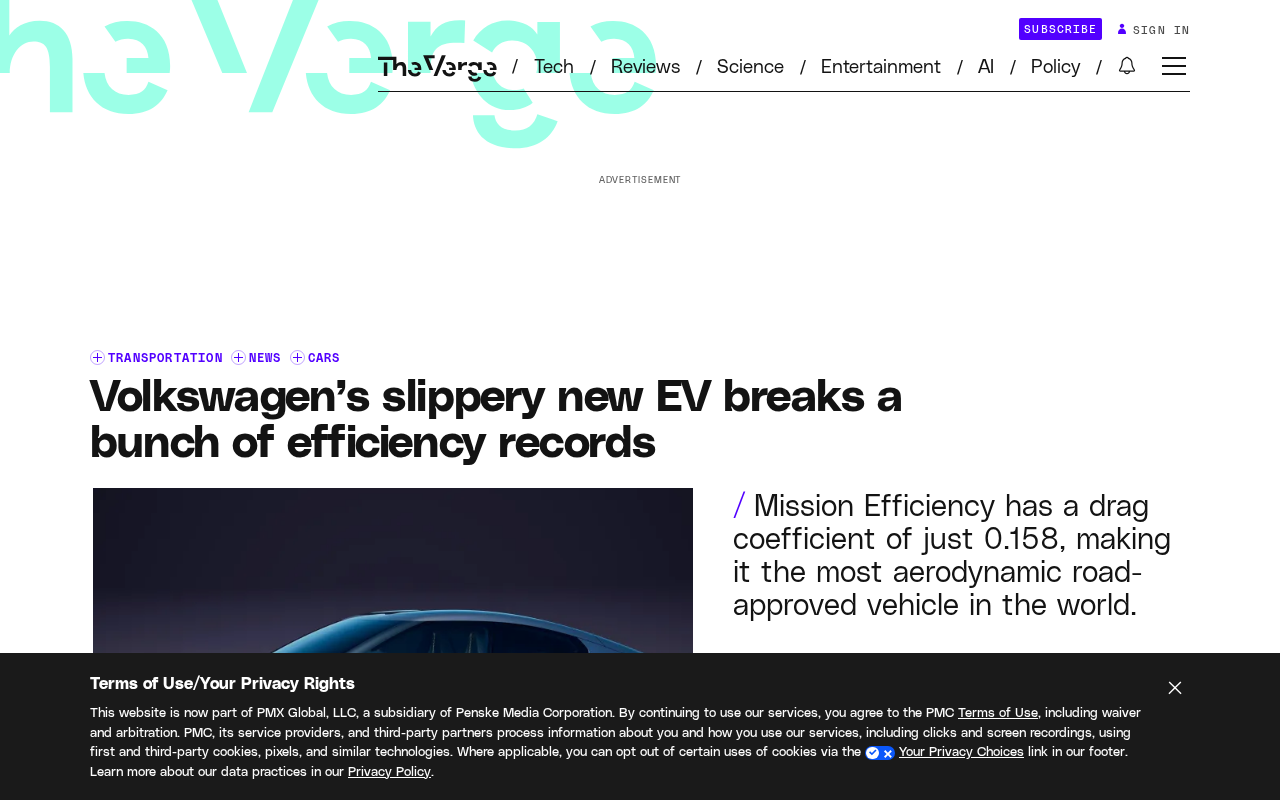
Volkswagen Mission Efficiency: The World's Lowest-Drag EV Breaks Multiple Efficiency Records
Volkswagen's Mission Efficiency prototype claims the world's lowest drag coefficient, built on MEB+ platform with ID. Polo and ID. Cross components. Here's what it means for EV efficiency.