2026 Chemistry Nobel Prize Explained: Chirality and Autocatalytic Asymmetric Synthesis

2026 Nobel Prize in Chemistry awarded to Kagan and Soai for revealing chiral amplification and autocatalysis, linking chemical synthesis to the origin of life.
The 2026 Nobel Prize in Chemistry was awarded to Henri B. Kagan and Kenso Soai for pioneering contributions to asymmetric organic synthesis. The article starts from the basic concept of chirality, explaining why nature prefers single-chiral molecules (homochirality) and how this affects drug safety (such as the thalidomide tragedy). Kagan discovered the nonlinear asymmetric effect, showing that a tiny chiral bias in a catalyst can be greatly amplified in the product; Soai demonstrated the autocatalytic "snowball effect" through the Soai reaction, raising an initial 2% enantiomeric excess to over 87%. These findings not only transformed pharmaceuticals, fragrances, and pesticides, but also provided experimental evidence for the Frank model, suggesting that life's homochirality may arise from autocatalytic amplification in chemical evolution.
Why the Nobel Prize Went to "Left Hand" and "Right Hand"
The 2026 Nobel Prize in Chemistry was awarded to Henri B. Kagan and Kenso Soai for their pioneering contributions to asymmetric organic synthesis. According to an explanation by the YouTube education channel Anil Sir, the core question of this research seems simple but has puzzled the chemistry community for more than half a century: why does nature favor only one "handedness" of chiral molecules?
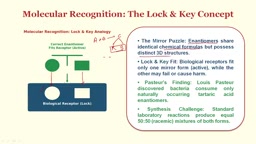
To understand this question, we must first start with chirality. Your left hand and right hand are completely symmetrical in structure—five fingers, one thumb—but if you place the two hands together, you will find that they cannot overlap no matter how you try—the thumb position is wrong, and the finger directions are twisted. This property of being "mirror images but non-superimposable" is chirality. The molecular world has the same situation: the same chemical formula can form two mirror-image structures, called enantiomers.
Nature's Preference: Where Does Homochirality Come From?
Living organisms have strict selectivity for the chirality of certain molecules. Take amino acids as an example. As the basic building blocks of proteins, nature almost exclusively uses L-type (left-handed) amino acids. The sugar molecules in DNA also show a similar preference. This phenomenon is called homochirality.
Why does this preference matter? In the pharmaceutical field, two enantiomers can produce completely different effects. One may have therapeutic effects, while the other may be ineffective or even harmful. A typical example is thalidomide—the R configuration has sedative and analgesic effects, while the S configuration is teratogenic. This is precisely where the significance of Kagan and Soai's research lies.
Biological receptors are like a lock that recognizes only a specific key; they can usually recognize only one chiral molecule. According to the explainer, this is similar to how a left hand can only wear a left glove, while a right glove completely "does not fit."
Enantiomeric excess (ee value) is the core indicator for measuring the effectiveness of chiral synthesis. It is defined as the ratio of the difference between the concentrations of the two enantiomers to their sum, expressed as a percentage. For example, if the R form accounts for 90% and the S form accounts for 10%, then the ee value is 80%. An ee value of 0% means the two enantiomers are mixed in equal amounts, that is, a racemic mixture; an ee value of 100% represents complete single chirality. In medicinal chemistry, the ee value is directly related to efficacy and safety, so regulatory agencies usually require the ee value of single-enantiomer drugs to be higher than 99%. Understanding the ee value helps grasp the specific meaning of "chiral signal amplification" in Kagan's nonlinear effect and the Soai autocatalytic reaction.
The Divide Between Traditional Synthesis and Asymmetric Synthesis
Traditional chemical synthesis usually produces a racemic mixture, in which the two enantiomers each account for 50%. But Kagan's research showed that by introducing a chiral catalyst, asymmetric synthesis can be achieved—allowing the target chiral molecule to dominate overwhelmingly, with yields reaching more than 90%.
Kagan's Nonlinear Effect
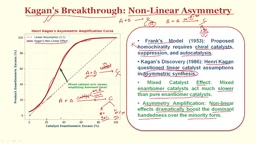
Kagan's breakthrough was the discovery of the nonlinear asymmetric effect. Suppose the catalyst contains 60% R form and 40% L form. According to a linear expectation, the product should also be 60:40. But the actual result is that the R-form product reaches 90% or even higher. This means that a tiny chiral bias in the catalyst can be amplified in the product.
The mechanistic explanation for this phenomenon is that a mixed-enantiomer catalyst has much lower activity than a pure-enantiomer catalyst. Because of this, the dominant chirality accelerates the reaction at a disproportionately faster rate, further widening the gap.
The mathematical basis of the nonlinear asymmetric effect lies in the fact that catalyst enantiomers may form heterochiral dimers, and such dimers are often extremely low in activity or completely inactive. Taking 60% R and 40% L as an example, the remaining concentration of R monomers is not 60%, but far lower after being consumed by heterochiral pairing; at the same time, the pure R catalyst remains highly active because it is not disturbed by heterochiral interference. This "the majority becomes even more dominant" mechanism allows the product ee value to far exceed the catalyst ee value. It is worth noting that this effect is not always positive amplification; some systems also exhibit negative nonlinear effects, where the product ee value is lower than the catalyst ee value, depending on the specific stability and activity of the heterochiral aggregate.
The Soai Reaction: Molecules Can Also Self-Replicate
If Kagan solved "how to amplify," then Soai answered "how to start from zero." The Soai reaction developed by Soai demonstrated an astonishing phenomenon of autocatalysis, also known as the "snowball effect."
Specifically: the reaction product itself can act as a catalyst and promote its own formation. With an initial enantiomeric excess (ee value) of only 2%, after multiple rounds of autocatalytic cycles, the final ee value can climb to more than 87%. One molecule "teaches" another molecule how to copy itself, and the chiral signal is continuously amplified during the reaction.
The Soai reaction is also regarded as experimental validation of the chemical evolution model proposed by Frank in 1953—Frank once speculated that autocatalysis of chiral catalysts might be one of the mechanisms for the origin of life's homochirality, and Soai provided experimental evidence in an asymmetric autocatalytic coupled reaction.
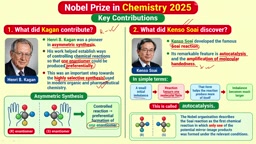
The Frank model is a theoretical model proposed by chemist F. C. Frank in 1953, attempting to explain the origin of life's homochirality. The core of the model is that in an open system containing autocatalysis and mutual inhibition between enantiomers, a tiny initial chiral bias can be spontaneously amplified, ultimately leading to the dominance of a single chirality. The key to the Frank model lies in the coupling of an autocatalytic step (the product promotes its own formation) and an antagonistic step (the two enantiomers inhibit each other). The Soai reaction experimentally realizes this model: the product acts as an autocatalyst, while at the same time the reactivity between heterochiral products is relatively low, thereby satisfying the kinetic conditions of the Frank model. This experimental validation makes the Soai reaction an important bridge connecting chemistry and research on the origin of life.
From the Laboratory to Industry: Practical Applications
The discoveries of the two scientists have already permeated multiple fields:
- Pharmaceutical industry: Enables efficient synthesis of single-enantiomer drugs, reducing ineffective components and side effects
- Flavors and fragrances: Different chiral molecules may present completely different odors, such as the clearly different aromas of mint and caraway seed
- Pesticide chemistry: Improves the chiral purity of active ingredients and reduces environmental burden
- Origin-of-life research: Provides a chemical basis for understanding primitive homochirality
Asymmetric organic synthesis and asymmetric catalysis are the core application forms of the Nobel Prize-winning achievements. Asymmetric catalysis uses a small amount of chiral catalyst to induce a large amount of substrate to convert into products of a specific chirality, offering advantages such as high atom economy and fewer byproducts. The chiral ligands developed by Kagan (such as DIOP) form chiral catalysts after coordinating with transition metals and are widely used in reactions such as hydrogenation and isomerization. The Soai reaction belongs to the category of organic small-molecule autocatalysis and does not require metal participation. Together, the two constitute a complete methodological chain from "externally added chiral source" to "self-generated chiral amplification," providing an efficient route for industrial-scale production of single-enantiomer drugs, pesticides, and fragrances.
Why This Discovery Deserves the Nobel Prize
The work of Kagan and Soai answered a fundamental scientific question: how a tiny chiral bias can be amplified into overwhelming single chirality. This is not only an innovation in chemical synthesis methods, but also touches on the deeper question of "why life is the way it is now." From asymmetric catalysis to autocatalytic amplification, from drug manufacturing to the origin of life, their research connects the precision of chemistry with the selectivity of nature.
One-line Summary
2026 Nobel Prize in Chemistry awarded to Kagan and Soai for revealing chiral amplification and autocatalytic mechanisms, connecting chemical synthesis and the origin of life.
Paragraph Summary
The 2026 Nobel Prize in Chemistry was awarded to Henri B. Kagan and Kenso Soai for their pioneering contributions to asymmetric organic synthesis. Starting from the basic concept of chirality, this article explains why nature prefers single-chiral molecules (homochirality) and the major impact of this preference on drug safety (such as the thalidomide tragedy). Kagan discovered the nonlinear asymmetric effect, proving that a tiny chiral bias in a catalyst can be significantly amplified in the product; Soai demonstrated the autocatalytic "snowball effect" through the Soai reaction, allowing an initial enantiomeric excess of only 2% to climb to more than 87%. These discoveries not only revolutionized industries such as pharmaceuticals, fragrances, and pesticides, but also provided experimental evidence for the Frank model, suggesting that life's homochirality may originate from autocatalytic amplification in chemical evolution.
Related articles

Testing the 350K-Star REA in an Isolated Environment: 4-Second Install, but Watch Out for Two Pitfalls
Isolated lab test of the 350K-star open-source reverse-engineering tool REA: 4-second install, 15 seconds to list a screenshot tool's outbound addresses, 565 communication channels mapped, while exposing two pitfalls—user-level settings writes and 31 high-risk tool permissions—plus three safety rules.
Reverse Engineering + AI Agents: The T…
Reverse Engineering + AI Agents: The Technical Truth Behind Cloning Adobe Apps in Weeks
A developer used AI Coding Agents for reverse engineering to build 7 open-source Adobe alternatives in weeks. We explore how it works, the MCP Server that hit 100K stars in 6 days, and the real technical and legal limits.

MCP Protocol Explained: How AI Agents Connect to External Tools
What is MCP (Model Context Protocol)? From APIs and Function Calling to MCP's three-layer architecture, this article explains how AI Agents connect to external tools like calendars and email, and reveals two major security risks—prompt injection and tool poisoning—along with four protection principles.