2026 Nobel Prize in Chemistry Announced: Chirality, Kagan, and Soai's Symmetry Breaking

The 2026 Nobel Prize in Chemistry honors Kagan and Soai for revealing chiral amplification mechanisms in asymmetric reactions.
The 2026 Nobel Prize in Chemistry was awarded to Henry B. Kagan and Kenzo Soai for their pioneering work in asymmetric organic synthesis. Kagan discovered nonlinear effects in asymmetric catalysis, where low chiral purity catalysts can yield products with far higher ee values than expected, correcting traditional linear understanding. Soai achieved asymmetric autocatalysis and chiral amplification, where the product catalyzes its own formation and amplifies tiny chiral preferences, providing a chemical model for the origin of biological homochirality. Both discoveries deepen our understanding of symmetry breaking and advance the chiral drug industry toward high-purity single enantiomer synthesis.
When Molecules Have a "Left Hand" and a "Right Hand"
The 2026 Nobel Prize in Chemistry has been awarded to Henry B. Kagan and Kenzo Soai for their pioneering work in asymmetric organic synthesis. The core concept of this research is chirality — like a person's left and right hands, certain molecules exist in two forms that are mirror images of each other yet cannot be superimposed. Such molecules are called enantiomers.
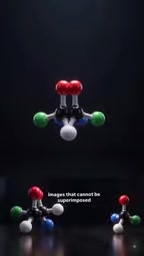
In pharmaceutical chemistry, distinguishing between enantiomers is critically important. One configuration may be a life-saving drug, while its mirror-image molecule may be ineffective or even harmful. Therefore, how to selectively synthesize a single configuration has been a core challenge for synthetic chemists for decades.
Enantiomeric excess (ee value) is the key metric for measuring the purity of a chiral product, defined as the ratio of the difference between the mole fractions of the two enantiomers to their sum, expressed as a percentage. For example, if the product contains 90% R-form and 10% S-form, the ee value is 80%. An ee value of 0% represents a racemic mixture (equal amounts of both configurations), while 100% represents a single pure configuration. In the pharmaceutical field, ee value is directly related to drug safety and efficacy — the U.S. FDA mandates that for chiral drugs, the pharmacological and toxicological properties of both enantiomers must be evaluated separately, making high-ee asymmetric synthesis a key technical benchmark. What Kagan's nonlinear effect describes is precisely the phenomenon in which the relationship between catalyst ee and product ee can be nonlinear: when catalyst ee is low, product ee may actually be higher — a counterintuitive principle that provides a theoretical basis for reducing catalyst costs in industry.
Kagan's Nonlinear Effect: How Small Deviations Get Amplified
Traditional asymmetric catalysis theory holds that a linear relationship exists between the chiral purity of a catalyst and the enantiomeric excess (ee value) of the product — as pure as the catalyst, so pure is the product. Kagan's research broke this intuition: he demonstrated that asymmetric reactions can exhibit nonlinear effects.
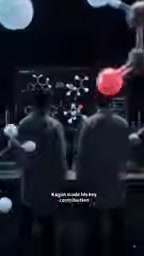
This means that a catalyst with very low chiral purity can, under certain conditions, produce a product with enantiomeric purity far higher than expected. This discovery not only corrected our understanding of catalytic mechanisms but also provided new approaches for industrial synthesis — there is no need to pursue absolute optical purity of the catalyst itself, as high-ee products can equally be obtained through nonlinear amplification mechanisms within the system.
Asymmetric catalysis refers to the synthetic strategy of using a small amount of chiral catalyst to induce a large amount of substrate to undergo stereoselective reactions, thereby obtaining a single or high-proportion enantiomer. Compared with traditional stoichiometric chiral auxiliary methods, asymmetric catalysis offers advantages such as high atom economy, low catalyst loading, and easy scale-up, and has become the preferred route for industrial synthesis of chiral drugs. The 2001 Nobel Prize in Chemistry was awarded to Knowles, Noyori, and Sharpless for their foundational contributions to asymmetric catalytic hydrogenation and oxidation reactions. Kagan's research on nonlinear effects further revealed the interactions between chiral species in catalytic systems — when catalyst molecules exist in different aggregation states or coordination forms, their chiral purity's influence on reaction selectivity no longer follows a simple linear relationship, which is of great significance for understanding the true active species in catalytic cycles.
The Soai Reaction: Letting Molecules "Choose" Their Own Chirality
If Kagan revealed the laws of nonlinear behavior of external catalysts, then Soai pushed asymmetric synthesis in an even more astonishing direction — asymmetric autocatalysis and chiral amplification.
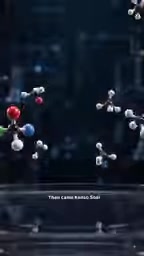
In the reaction system discovered by Soai, the product itself acts as a catalyst, catalyzing its own formation. More critically, when a tiny chiral preference exists in the system, this preference is continuously amplified through the autocatalytic cycle, and the final product is almost entirely biased toward one configuration. This phenomenon provides a chemical model for understanding the origin of homochirality in life — why living organisms on Earth almost exclusively use L-amino acids and D-sugars; the chiral amplification mechanism may offer a possible explanatory pathway.
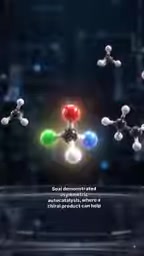
Biological homochirality refers to the phenomenon that amino acids in living organisms are almost entirely L-form and sugars are almost entirely D-form. Why life chose a single chirality chemically is one of the most fascinating unsolved mysteries in natural science. Possible explanations include: chiral bias induced by cosmic rays or circularly polarized light, chiral selection through adsorption on mineral surfaces, and autocatalytic amplification mechanisms. The significance of the Soai reaction lies in the fact that it experimentally demonstrated for the first time that starting from a nearly racemic state, near-100% ee chiral amplification can be achieved through asymmetric autocatalysis. This provides solid chemical evidence for the hypothesis that "tiny initial deviations can be amplified to macroscopic chiral purity through autocatalysis," and offers an experimentally verifiable model system for understanding the formation of chiral homogeneity in the origin of life.
From Basic Chemistry to Industrial Applications
The work of the two laureates is not merely isolated theoretical contribution. In the pharmaceutical industry, the market share of chiral drugs continues to grow, and the demand for high-purity single enantiomers is driving the iteration of asymmetric catalysis technology. Kagan's nonlinear effect theory helps engineers optimize catalyst formulations, while Soai's autocatalytic system provides a bottom-up strategy for chiral amplification.
This Nobel Prize also reminds us that the most elegant discoveries in organic chemistry often stem from inquiries into the fundamental question of "symmetry." From Pasteur's manual separation of tartaric acid crystals to Kagan and Soai's manipulation of chirality at the molecular level, humanity's understanding of symmetry breaking has traversed a long path, but the ultimate question of why life chose a single chirality still awaits the next generation of chemists to answer.
Chiral resolution and asymmetric synthesis are the two main pathways for obtaining single enantiomers. Chiral resolution separates the two enantiomers in a racemate through physical or chemical methods, but the theoretical maximum yield is only 50%, and additional processing of the unwanted isomer is required. Asymmetric synthesis directly constructs the target configuration, with a theoretical yield of up to 100%, better aligning with green chemistry principles. The work of Kagan and Soai expanded the strategic space of asymmetric synthesis from two dimensions: catalyst nonlinear behavior and autocatalytic amplification. In industrial practice, nonlinear effects can guide catalyst ligand screening and reaction condition optimization; autocatalytic amplification has inspired the design of some novel chiral amplification processes. Together, they have propelled chiral technology from the laboratory to large-scale production.
Related articles

Understanding DeepSeek in 3 Minutes: The Rise from a Quant Hedge Fund to an Open-Source AI Leader
DeepSeek's history in 3 minutes: from High-Flyer Quant's compute build-up to V2's MLA inference cost cuts, V3's $5.576M training bill, R1's open-source global shock, and V4 with a $7B Series A.

Local Creative Writing Model Showdown: Fine-tuned Qwen3.8 27B Wins, DeepSeek v4.1 Underwhelms
Bilibili creator tests seven local creative writing models: Hemingway and HumanLike Chat based on Qwen3.8 27B perform best, DeepSeek v4.1 is plain, Dongfang Shuo ranks last with confused characters. Includes three test prompts, scores, and usage advice.

Liang Wenfeng's Three Big Bets: Why Did DeepSeek Open-Source Its 82% Gross Margin?
Why did DeepSeek open-source DeepInfer, its 82% gross margin inference framework, and then launch a hundred-billion funding round? An analysis of Liang Wenfeng's three big bets and the open-source strategy.