2026 Nobel Prize in Chemistry: Kagan and Soai Unravel the Mystery of Asymmetric Synthesis of Chiral Molecules

2026 Nobel Prize in Chemistry awarded to Kagan and Soai for revealing precise control and auto-catalytic amplification of chiral molecules.
The 2026 Nobel Prize in Chemistry was awarded to Henry B. Kagan and Kenji Soai for their pioneering contributions to asymmetric synthesis and chirality control. Kagan demonstrated that adjusting reaction conditions can make one chiral form preferentially form; Soai discovered that chiral molecules can auto-catalyze and amplify initial chiral bias, providing a chemical pathway to explain single-handedness in the origin of life. Non-linear effects connect their work, enabling high chiral amplification with minimal catalyst.
From Left and Right Hands to Molecular Mirrors: A Seemingly Simple Problem That Has Puzzled Chemistry for a Century
Our hands appear symmetrical, yet are highly asymmetrical in function—most people can only use one of them to perform fine movements. The molecular world exhibits the same phenomenon: a molecule can exist in left-handed and right-handed forms, which look almost identical, are mirror images of each other, yet cannot be perfectly superimposed.
This phenomenon is known as chirality. In chemistry, it is far more than a theoretical curiosity—it directly relates to drug safety and material performance. The 2026 Nobel Prize in Chemistry was awarded to Henry B. Kagan from France and Kenji Soai from Japan precisely because they revealed how to precisely control the generation of chiral molecules.
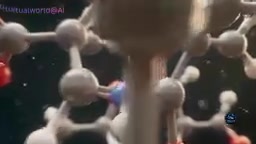
Why Are Chiral Molecules So Critical?
The two mirror-image forms of many drug molecules produce drastically different effects in the human body. One may have the intended therapeutic effect, while the other may be completely ineffective or even cause serious side effects. This means that if chirality cannot be controlled during drug synthesis, ineffective or even harmful products may be produced.
Therefore, chemists have long dreamed of finding a method to selectively generate only the specific type of chiral molecule needed. In organic synthesis, this is known as asymmetric synthesis, long regarded as one of the most difficult challenges in chemistry.
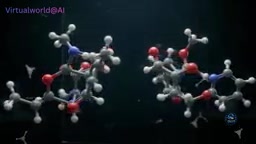
The core difficulty of asymmetric synthesis lies in the fact that the two mirror-image forms of a chiral molecule (called enantiomers) have nearly identical physical and chemical properties in achiral environments, such as melting point, boiling point, and ordinary spectral characteristics. This means that conventional chemical separation methods can hardly distinguish them. Chemists must employ tools such as chiral catalysts, chiral ligands, or chiral auxiliaries to artificially create an environment that "favors" one configuration during the reaction, thereby achieving selective synthesis. The key metric for measuring the effectiveness of asymmetric synthesis is the enantiomeric excess (ee value), which is the percentage excess of the target configuration in the product. The higher the ee value, the better the selectivity of the synthesis. In industry, an ee value of 99% or above is typically required to meet regulatory safety requirements for single-enantiomer drugs. This is why asymmetric synthesis has long been regarded as one of the most challenging frontiers in organic chemistry.
Kagan's Breakthrough: Changing Reaction Conditions to Let One Form Stand Out
Henry B. Kagan's research demonstrated that by carefully adjusting reaction conditions, one of two nearly identical chiral molecules can be made to form at a faster rate and in higher proportion. This is equivalent to subtly tilting one of two virtually identical fork roads, causing molecules to "automatically" tend toward that path.
The significance of this discovery is that it proved asymmetric synthesis does not have to rely solely on natural enzymes or biological systems—chemists can achieve high selectivity entirely through artificially designed reaction pathways. Kagan's work laid the theoretical foundation for the subsequent industrial production of numerous chiral drugs and fine chemicals.
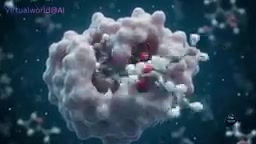
Soai's Auto-catalysis: Letting Chiral Molecules "Self-Replicate"
Kenji Soai made pioneering contributions in another direction. He discovered that a molecule with a specific chiral configuration can catalyze the generation of similar structures—that is, the reaction product accelerates its own formation. This phenomenon is known as auto-catalysis.
More strikingly, Soai also demonstrated that this auto-catalytic process amplifies initial chiral bias. Even if the difference between the two chiral forms is minuscule under initial conditions, after the auto-catalytic cycle, one configuration will rapidly gain overwhelming dominance. This provides a highly compelling chemical pathway for explaining the origin of chirality in nature—in Earth's early environment, tiny chiral fluctuations could have been amplified through auto-catalysis, ultimately leading to the single-handedness preference prevalent in living organisms.
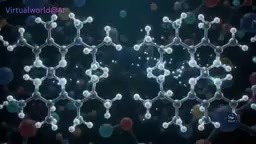
The origin of chirality is one of the most profound unsolved mysteries in natural science. The puzzle is: if the physical laws governing chemical reactions are themselves completely fair to left- and right-handed chirality, why are amino acids in Earth's living organisms almost exclusively left-handed, while sugars are almost exclusively right-handed? This phenomenon, known as "homochirality," implies that at some stage before the emergence of life, a mechanism must have existed that broke left-right symmetry. Possible explanations include: chiral bias carried by meteorites, selective photolysis by circularly polarized light, and the auto-catalytic amplification mechanism demonstrated by Soai. The Soai reaction is notable because it provides a purely chemical pathway independent of biological enzymes—starting from extremely small random fluctuations and progressively amplifying one chiral configuration to near 100% purity through auto-catalytic cycles. This offers an experimentally verifiable chemical model for "why life chose left-handed amino acids."
Non-linear Effects: The Hidden Thread Connecting Two Discoveries
There is a profound intrinsic connection between the work of Kagan and Soai, and the key bridge is non-linear effects. In ordinary chemical reactions, the chiral ratio of the product is usually linearly related to the chiral ratio of the catalyst. However, in certain systems, this relationship is non-linear—a slight bias toward one chirality in the catalyst leads to a dramatically amplified proportion of that chirality in the product.
Understanding and leveraging this non-linear behavior enables chemists to achieve higher chiral purity at lower cost. For the pharmaceutical industry, this means lower production costs and fewer harmful byproducts. Together, the research of the two laureates constructed a complete framework from theoretical understanding to practical control.
The concept of non-linear effects was first systematically proposed by Kagan himself in 1986. He discovered that in catalyst systems modified with chiral ligands, the ee value of the product is not simply proportional to the ee value of the ligand, but rather exhibits a complex curve—sometimes the ligand only needs a moderate ee value for the product to achieve an extremely high ee value, a phenomenon known as "chiral amplification." Its chemical essence lies in the fact that catalyst molecules of different chiral configurations form diastereomeric aggregates, and the catalytic activities of these aggregates differ enormously. The highly active aggregate happens to correspond to the target chiral product, so a small amount of the "correct" catalyst can dominate the entire reaction. Conversely, some systems exhibit "chiral depletion," where high-ee ligands actually give low-ee products. Understanding the rules of these non-linear behaviors enables chemists to design efficient chiral catalysts in a much more economical way, without pursuing absolute purity of the ligand itself.
How This Discovery Will Change the Future of Chemistry and Medicine
The 2026 Nobel Prize in Chemistry honors not an isolated experiment, but a methodology for chirality control. From more precise drug synthesis to the design of novel chiral materials, and to the exploration of the mystery of chiral selection in the origin of life, the contributions of Kagan and Soai continue to reverberate in multiple directions.
For general readers, this research may not be as intuitive as gene editing, but the problem of "left versus right" that it solves is precisely one of the most fundamental underlying capabilities of modern chemistry. When we can precisely regulate the chiral direction of molecules like directing traffic, drugs will be safer, materials will be more efficient, and chemistry itself will become more predictable and designable.
One-line Summary
2026 Nobel Prize in Chemistry awarded to Kagan and Soai for revealing precise control and auto-catalytic amplification of chiral molecules.
Paragraph Summary
The 2026 Nobel Prize in Chemistry was awarded to Henry B. Kagan and Kenji Soai for their pioneering contributions to asymmetric synthesis and chirality control. The left- and right-handed mirror forms of chiral molecules can produce drastically different effects in drugs, making precise synthesis of single chiral molecules critical for drug safety. Kagan demonstrated that adjusting reaction conditions can make one chiral form preferentially form, breaking the traditional view that asymmetric synthesis must rely on natural enzymes; Soai discovered that chiral molecules can auto-catalyze and amplify initial chiral bias, providing a chemical pathway to explain the single-handedness preference in the origin of life. Non-linear effects are the core theoretical thread connecting their work, enabling high-yield chiral amplification with small amounts of chiral catalyst. This research has far-reaching implications for precision drug synthesis, chiral material design, and the exploration of the origin of chirality.
Related articles

Workbuddy for Absolute Beginners: How a Desktop AI Agent Fits Into Real Workflows
A beginner's guide to the Workbuddy desktop AI agent: installation, claiming credits, file management, and building automated workflows—compared with CodeX for fit and cost, helping professionals shift from AI question-askers to AI managers.

OpenAI's New Agent Stack: Computer Use, Decisions API, and Ultra-Fast Workflows
OpenAI Dev Day unveiled a new agent stack: Computer Use outperforms humans, Decisions API delivers ultra-low-latency classification via Luna, Agents API opens the same Computer Use capabilities, and GPT-6.1 Sol costs only one-seventh of Astra. Core updates, benchmark data, and developer insights.

Liang Wenfeng Open-Sources DeepInfo Inference Framework, Takes On U.S. Ban
DeepSeek open-sources its DeepInfo inference framework after its models, featuring GPU/CPU cross-pipelining, small-model prediction with large-model verification, and full Huawei Ascend and NVIDIA chip support—facing the U.S. federal ban head-on. This article analyzes its significance for AI deployment and open-source strategy.