2026 Nobel Prize in Chemistry: Why the Same Drug Cures One Person and Kills Another

Two scientists reveal precise chiral molecule synthesis method, making drugs safer and more effective
The article introduces two scientists who won the Nobel Prize in Chemistry for solving a century-old puzzle: why the same drug produces different effects in different people. The core breakthrough lies in precisely controlling chiral molecule synthesis in chemical reactions — many drug molecules exist in mirror-image structures, and traditional synthesis produces mixtures where one form is therapeutic while the other may be harmful. This discovery makes drug manufacturing simpler and safer, reducing side effects and medication risks. From an industry perspective, pharmaceutical companies can produce high-quality drugs at lower cost; while the journey from laboratory to large-scale clinical application still takes time, the establishment of this direction is already profoundly significant.
A Century-Old Puzzle Haunting the Medical World
Why does the same drug work for one person but prove fatal for another? This seemingly simple question conceals one of the most vexing challenges in chemical synthesis. According to a YouTube science video, it is precisely this question that earned two scientists the Nobel Prize in Chemistry.
This is not a new problem. Adverse drug reactions have long been a pain point in clinical medicine — statistics show that a significant proportion of adverse events among hospitalized patients are related to individual differences in drug metabolism. But for a long time, scientists lacked effective tools to precisely control synthetic pathways at the molecular level.
Chiral Molecules: The Key Code to Drug Safety
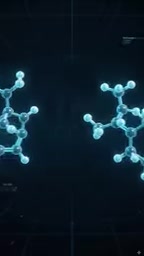
At the heart of the problem lies molecular "chirality." Many drug molecules exist in two mirror-image structures, like the relationship between a left hand and a right hand — they look similar but cannot be perfectly superimposed. In chemical synthesis, traditional methods often produce a mixture of both chiral forms.
One form may have therapeutic effects, while the other may be ineffective or even harmful. This is one of the fundamental reasons behind "same drug, different effects." According to the video, understanding and controlling this concept was extremely difficult in the past, and chemists long relied on inefficient and imprecise methods in attempts to achieve selective synthesis.
Chirality is a fundamental concept in chemistry and physics, derived from the Greek word "cheir," meaning "hand." When a molecule cannot be perfectly superimposed on its mirror image, it is called a chiral molecule, and the two forms are known as enantiomers. This phenomenon was first discovered by Louis Pasteur in 1848 — he observed that tartrate crystals existed in two mirror-image forms and personally separated them with tweezers, marking humanity's first achievement of chiral resolution.
In pharmaceutical chemistry, chirality is critically important. The most famous case is thalidomide: in the late 1950s, it was widely used as a sedative to relieve morning sickness in pregnant women, but one enantiomer had a sedative effect while the other caused severe fetal deformities. Because the drug was sold as a mixture of both enantiomers at the time, it led to the birth of tens of thousands of "seal-limb" babies worldwide. This painful lesson drove a fundamental overhaul of global drug regulatory systems, and drug regulatory agencies in various countries subsequently required rigorous enantiomer safety assessments for chiral drugs.
Two Scientists' Breakthrough Discovery
The video points out that the two award-winning scientists successfully revealed how to precisely construct useful molecules with a single chiral site in chemical reactions.

This means chemists can now synthesize the desired molecular configuration more precisely, rather than obtaining a mixture full of uncertainty. The significance of this breakthrough lies in making drug manufacturing simpler and safer.

From a technical perspective, such methods typically involve the design of novel catalysts that can guide reactions in a specific direction, producing only the desired chiral configuration.

The "novel catalysts guiding reaction direction" mentioned in the video relates to the core technology of asymmetric catalysis. The 2001 Nobel Prize in Chemistry was awarded to William Knowles, Ryoji Noyori, and Barry Sharpless for their pioneering contributions to chiral catalytic hydrogenation and chiral catalytic oxidation reactions.
Even earlier foundational work came from the field of asymmetric synthesis: the BINAP ligand-rhodium catalyst system developed by William Knowles could efficiently catalyze the hydrogenation of prochiral olefins, generating single chiral products with extremely high enantioselectivity. This method was later successfully applied to the industrial production of L-DOPA, a treatment for Parkinson's disease. Ryoji Noyori further expanded the applications of BINAP catalysts, while Sharpless pioneered asymmetric epoxidation reactions. These catalytic methods enabled the pharmaceutical industry to obtain single-enantiomer drugs more economically and environmentally friendly, without the need for tedious resolution processes.
What It Means for Ordinary People
The direct impact of this discovery is profound. More precise drug synthesis means fewer side effects, more stable efficacy, and lower medication risks. In the words of the video — future drugs will become safer, and people will suffer less from disease.
From an industry perspective, pharmaceutical companies can produce high-quality drugs at lower cost, especially for drug varieties requiring a single chiral configuration. This has positive implications for global public health.
Of course, there is still a distance from laboratory discovery to large-scale clinical application. Catalyst costs, process scale-up, and regulatory approval all require time. But the establishment of this direction has already changed the fate of countless people downstream.
Final Thoughts
The Nobel Prize in Chemistry once again reminds us: the most fundamental scientific questions often lead to the most practical human welfare. An abstract puzzle about molecular structure ultimately lands as a safer pill in every patient's hand.
One-line Summary
Two scientists revealed a precise method for synthesizing chiral molecules, making drugs safer and more effective
Paragraph Summary
The article introduces two scientists who won the Nobel Prize in Chemistry for solving a century-old puzzle: why the same drug produces different effects in different people. The core breakthrough lies in precisely controlling chiral molecule synthesis in chemical reactions — many drug molecules exist in mirror-image structures, and traditional synthesis produces mixtures where one form is therapeutic while the other may be harmful. The two scientists discovered how to precisely construct useful molecules with a single chiral site in chemical reactions, meaning chemists can synthesize desired molecular configurations more precisely. This discovery makes drug manufacturing simpler and safer, reducing side effects and medication risks. From an industry perspective, pharmaceutical companies can produce high-quality drugs at lower cost; while the journey from laboratory to large-scale clinical application still takes time, the establishment of this direction is already profoundly significant.
Related articles

Workbuddy for Absolute Beginners: How a Desktop AI Agent Fits Into Real Workflows
A beginner's guide to the Workbuddy desktop AI agent: installation, claiming credits, file management, and building automated workflows—compared with CodeX for fit and cost, helping professionals shift from AI question-askers to AI managers.

OpenAI's New Agent Stack: Computer Use, Decisions API, and Ultra-Fast Workflows
OpenAI Dev Day unveiled a new agent stack: Computer Use outperforms humans, Decisions API delivers ultra-low-latency classification via Luna, Agents API opens the same Computer Use capabilities, and GPT-6.1 Sol costs only one-seventh of Astra. Core updates, benchmark data, and developer insights.

Liang Wenfeng Open-Sources DeepInfo Inference Framework, Takes On U.S. Ban
DeepSeek open-sources its DeepInfo inference framework after its models, featuring GPU/CPU cross-pipelining, small-model prediction with large-model verification, and full Huawei Ascend and NVIDIA chip support—facing the U.S. federal ban head-on. This article analyzes its significance for AI deployment and open-source strategy.