2026 Tech Litigation Compass: Lawmakers Move to Tighten AI and Platform Liability

A U.S. Senate hearing pushes to restrict forced arbitration and hold deepfake creators accountable, reshaping platform litigation rules.
In late 2026, a U.S. Senate Judiciary subcommittee held a hearing focused on online harm protections, centered on restricting platform forced arbitration clauses and holding deepfake creators accountable. Forced arbitration has long been used by platforms as a "shield" to block user class actions, and lawmakers are trying to invalidate it in specific harm cases so disputes return to court. On deepfakes, generative AI has lowered the forgery barrier while existing laws lag in accountability, and the legislative direction is toward strengthening direct creator liability and requiring platforms to bear review obligations. Together, the two measures aim to reconstruct user remedy paths and break down judicial obstacles set by platforms. Although whether the legislation can pass within the session remains uncertain, the hearing has sent a clear signal: tech litigation rules are being rewritten, and platforms and AI developers face a systemic rise in compliance costs and precedent risk.
As 2026 draws to a close, U.S. lawmakers are trying to push through a series of new protections targeting online harms in the final few weeks. According to an RSS source, a Senate Judiciary subcommittee held a hearing on Tuesday centered on two major pain points: accountability for deepfakes and the use of forced arbitration clauses by online platforms to block users from filing lawsuits. The hearing sent a clear signal—the rulebook for tech litigation is being rewritten, and platforms and AI developers will face more direct judicial scrutiny.
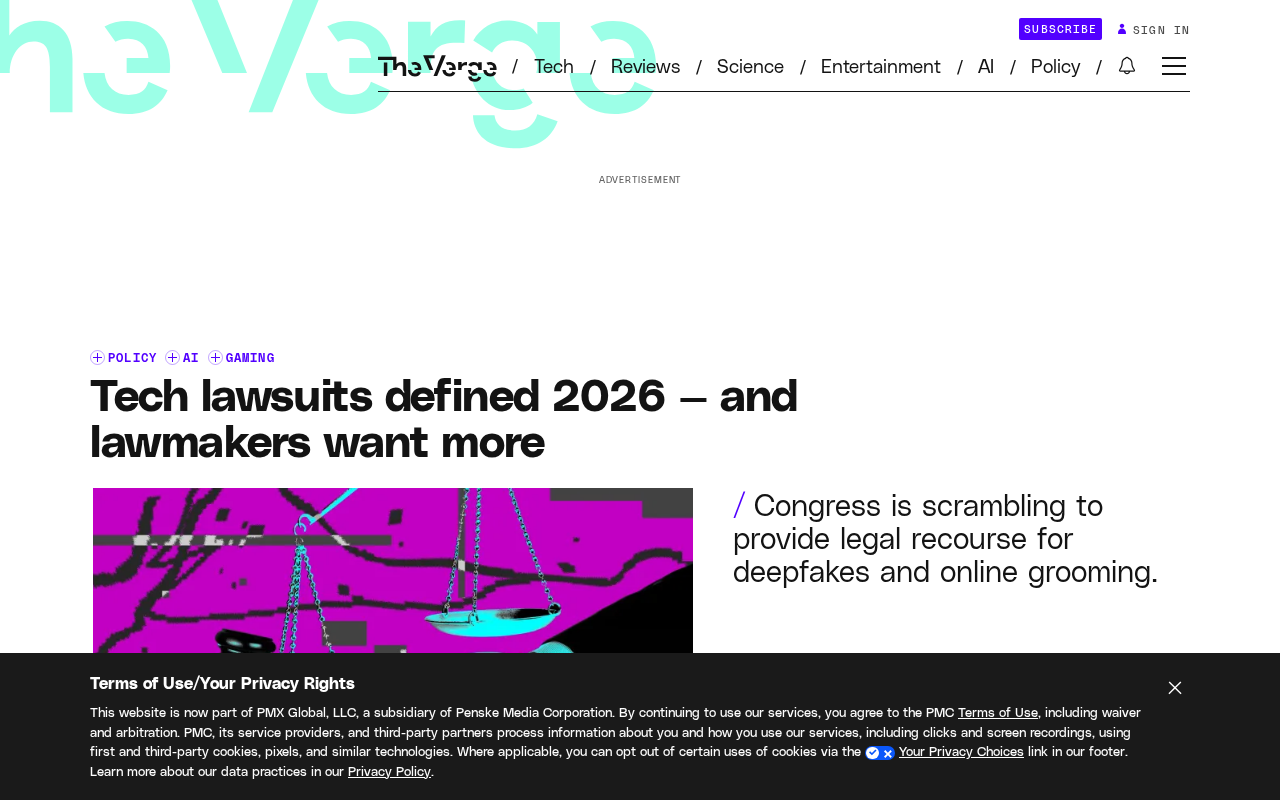
1. Forced Arbitration: The Platform "Shield" Faces Dismantling
The hearing's most direct target was "forced arbitration." For a long time, many online platforms have embedded arbitration clauses in their user agreements, requiring users to waive their right to class-action lawsuits and divert disputes into corporate-designated arbitration proceedings. Critics argue that this effectively deprives victims of access to judicial remedies, creating structural barriers especially for victims of sexual exploitation, harassment, and deepfakes.
Lawmakers proposed targeted protections aimed at invalidating such clauses in specific online harm cases. If the legislation advances, platforms will no longer be able to block users from entering court with nothing more than a user agreement. For tech giants that rely on arbitration clauses to control legal risk, this is a fundamental shock to their compliance logic.
The legal basis for forced arbitration clauses stems from the U.S. Federal Arbitration Act (FAA), which since 1925 has given arbitration agreements strong enforceability, later extended through case law to consumer and employment contexts. By embedding "click-to-agree" clauses in user agreements, companies move disputes from public courts to private arbitration bodies that they select or pay for, and in most cases prohibit class actions. This mechanism has long been used by tech platforms to lower litigation costs and avoid public precedent. In recent years, several bipartisan proposals (such as the Ending Forced Arbitration Act) have sought to invalidate such clauses in specific areas like sexual harassment and sexual exploitation. If legislation passes, affected cases will return to the court system, where victims can seek jury trials and class-wide relief, while platforms will need to reassess their user agreements and risk-pricing models.
2. Deepfake Accountability: From Gray Area to Clear Target
Another focus of the hearing was the creators of deepfake content. The original text explicitly mentions that lawmakers are targeting "deepfake creators." With the proliferation of generative AI tools, the barrier to generating someone's likeness without consent for pornographic or fraudulent content has dropped extremely low, while existing laws still lag in providing paths to accountability.
From the legislative signals, the direction is becoming clear: first, strengthening direct liability determination for deepfake content producers; second, requiring platforms to bear more review and response obligations in content distribution. This means AI tool providers and content-hosting platforms may both be brought into the liability chain, rather than pursuing only the final publisher.
Deepfakes refer to highly realistic fake images, audio, or video synthesized using AI technologies such as generative adversarial networks or diffusion models. The legal challenge lies in the fact that existing copyright, defamation, and privacy laws mostly target traditional creation and struggle to cover "non-consensual intimate imagery" (NCII) and political disinformation. The U.S. currently lacks a unified federal deepfake law, with only scattered state-level legislation and proposals such as the 2023 Deepfake Accountability Act. Accountability difficulties include creator anonymity, platform safe harbor principles (Section 230 of the Communications Decency Act), and the liability boundaries of tool providers. The legislative trend is shifting from "notice-and-takedown" toward requiring platforms to proactively detect and label synthetic content, and exploring watermarking and provenance-tracking obligations for AI generation tools to build a traceable liability chain.
3. Reconstructing Platform Liability and User Remedy Paths
These two protections together outline a common thread: breaking down the obstacles platforms have set up in users' remedy paths. Forced arbitration closes the courthouse door, while deepfakes expose the asymmetry in existing liability allocation—platforms often claim immunity on the grounds of "third-party content," while victims lack effective countermeasures.
Lawmakers are attempting to bring disputes back into the public judicial arena through procedural reform. For tech companies, this is not just a reputational issue but a systemic rise in potential litigation costs, precedent risk, and compliance costs. The original text defines 2026 as "the year tech litigation defined the year," which precisely illustrates that the interplay between the judicial and legislative tracks is accelerating toward convergence.
4. What It Means for the Industry
These protections are still in the legislative sprint phase, and whether they can pass within the session remains uncertain. But the hearing itself has constituted a stress test: once deepfake accountability and forced arbitration restrictions are implemented, they will reshape the operating boundaries of AI content and social platforms.
For AI developers and platform operators, the more practical action is to review in advance the arbitration clauses in user agreements, the detection and takedown processes for deepfake content, and the effectiveness of victim appeal channels. The tech litigation landscape of 2026 is not just an issue for legal departments but a front-end variable for product design and risk-control strategy.
Related articles

Gemini 4 Neon Hands-On Test: Best for Coding but Nearly Twice as Slow — How Do You Account for That?
Overseas reviewers tested Gemini 4 Neon: ranked first on the Coding Agent Index with per-task cost about half of Claude, but nearly twice as slow as the median. We break down third-party cost, speed, and capability data to help you decide if the bill is worth it.

Gemini 4 Neon Hands-On: How Does It Compare to Astra 6.2 for PPT Generation?
Hands-on test of Google Gemini 4 Neon vs Astra 6.2 on the same offline speech PPT task: visuals on par, Neon wins on accuracy and detail and faithfully converts the data source; but revisions return only single pages, and UI and images are easily redrawn. The fast model matches the flagship and is worth using.
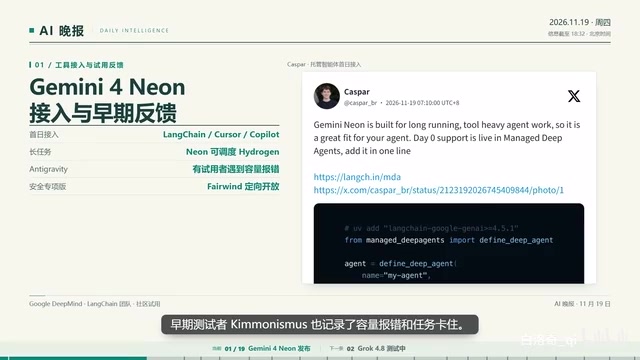
Google Gemini 4 Neon Released: Three-Tier Model System and Pricing Breakdown
Google releases Gemini 4 Neon, positioned between Hydrogen and Carbon for complex high-frequency tasks with multimodal input. Artificial Analysis composite intelligence index around 60, per-task cost about 30% lower than Carbon. Also: Grok 4.8 multi-version testing, Anthropic IPO priced at $83.