21-Day Python Automation Testing Crash Course: A Complete Breakdown of the Three-Stage Learning Path

A validated three-stage path to master Python automation testing in just 21 days.
This article breaks down a proven three-stage learning path for Python automation testing: Stage one covers Selenium/Appium and the PO design pattern; stage two covers Requests, PyTest, and Allure for API testing; stage three covers performance testing, CI/CD, and real-world projects—plus emerging AI-assisted testing trends.
Why Traditional Testing Courses Are So Inefficient
Many people who want to learn automation testing get stuck right at the starting line. The problem often isn't a lack of ability, but rather taking a wrong turn on the learning path. A large number of online courses still start from the very basics of Python syntax—variables, loops, functions—spending weeks on each. For someone who wants to quickly master testing skills, this is a very real waste of time.
There's a cognitive science explanation for this phenomenon. The Cognitive Load Theory proposed by John Sweller in 1988 points out that a learner's working memory capacity is limited. If you stack syntax details (intrinsic cognitive load) and engineering practices (germane cognitive load) on top of each other simultaneously, overall learning efficiency drops significantly. Sweller divided cognitive load into three categories: intrinsic load is determined by the inherent complexity of the learning material, such as the rule system of programming syntax; extraneous load is introduced by poor instructional design, such as mixing in irrelevant concepts; and germane load is the effective cognitive investment that genuinely promotes the construction of knowledge schemas. The design of traditional courses that start from scratch consumes a great deal of working memory on intrinsic and extraneous load, squeezing out the germane cognitive load space that actually drives skill internalization. A goal-driven learning path—first clarifying "what problem needs to be solved," then supplementing syntax as needed—effectively reduces irrelevant cognitive load and improves knowledge retention.
A more efficient approach is to skip the redundant groundwork and dive straight into engineering practice. The core of automation testing is problem-solving ability, not syntax proficiency. As long as you have a basic understanding of programming, you can fully build a complete knowledge system within three weeks. The three-stage path outlined in this article is a systematic method that has been validated in practice and helps beginners avoid detours.

Stage One: Core Tools and Foundational Frameworks
The goal of the first stage is to lay a solid foundation for automation testing, focusing on two directions.
Getting Started with Mainstream Automation Tools
Selenium is the mainstream choice for Web UI automation—focus on practicing element location, page operations, and wait mechanisms. Appium covers mobile App testing scenarios, and together the two can handle most UI automation needs. This stage doesn't pursue depth; the key is to practice basic operations until you're fluent, so you don't need to consult documentation when encountering common scenarios.
Selenium was born in 2004, originally developed by Jason Huggins at ThoughtWorks, and has now become the de facto standard for Web UI automation testing. It communicates directly with browsers through the WebDriver protocol, supports mainstream browsers such as Chrome, Firefox, and Safari, and provides bindings for multiple languages including Python, Java, and JavaScript.
The working mechanism of the WebDriver protocol is worth understanding in depth: it is essentially a set of W3C-standardized RESTful HTTP interface specifications. Test scripts issue commands by sending HTTP requests to the locally running browser driver (ChromeDriver, GeckoDriver, etc.), and the browser driver then translates these commands into native browser API calls. The entire communication chain is "test script → WebDriver client library → browser driver process → browser," with clear protocol boundaries at each step. This protocol officially became a W3C standard in 2018, replacing the older Selenium RC approach based on JavaScript injection, and fundamentally resolved cross-origin restrictions and security sandbox issues, enabling test scripts to control browsers in a way that closely mimics real user behavior. It's worth noting that there is a strict version correspondence between ChromeDriver and the Chrome browser (for example, ChromeDriver 114 only supports Chrome 114.x). Version mismatches are one of the most common environment issues beginners encounter; the SeleniumManager tool introduced after Selenium 4.6 can automatically detect and download the matching driver version, greatly reducing the difficulty of environment configuration. Understanding this chain is crucial for troubleshooting high-frequency issues such as "the element was found but the click had no response" or "browser version doesn't match the driver." Many places where beginners get stuck are precisely due to a lack of understanding of the underlying communication mechanism.
Appium is the corresponding solution for mobile automation, extended from the WebDriver protocol. Its biggest advantage is that one set of scripts can cover both iOS and Android platforms simultaneously, without modifying the source code of the App under test. On iOS, Appium calls Apple's official XCUITest framework at the bottom layer; on Android, it calls UIAutomator2. This architectural design makes Appium completely transparent to the application under test, covering native Apps, hybrid Apps, and mobile Web pages alike. This technical lineage means that the learning curve for migrating from Selenium to Appium is greatly reduced—the two share the same operational philosophy (Desired Capabilities configuration, element location, wait strategies), differing only in the underlying protocol implementation at the driver layer.
Mastering the PO Design Pattern
The PO (Page Object) design pattern is key to improving the maintainability of test code. It encapsulates page elements and operations into independent objects, completely decoupling test logic from page details. Once the page structure changes, you only need to modify the corresponding PO class, and a large number of test cases can remain unchanged.
The Page Object pattern was formally proposed and popularized by Martin Fowler in 2013, and is a concrete application of the "Separation of Concerns" principle in software engineering within the testing domain. Separation of concerns is one of the foundational principles of software architecture, and its core assertion is that different responsibilities of a system should be independently handled by different modules, without coupling. Applied to Page Object, this means that UI location logic (what is the XPath of a certain button) and business verification logic (does clicking login redirect to the homepage) are strictly layered and managed separately—a frontend redesign only requires updating the locators in the PO class, while the test cases themselves are completely unaffected and won't trigger a chain of crashes.
The PO pattern is usually understood in conjunction with the Test Pyramid proposed by Mike Cohn. The test pyramid divides automation testing into three layers: the bottom layer consists of a large number of unit tests (fast execution, low cost), the middle layer is service/interface tests, and the top layer is a small number of UI end-to-end tests. The shape of the pyramid itself conveys a key engineering principle: the closer a test is to the top layer, the higher its writing and maintenance costs, the slower its execution speed, and the more complex its environment dependencies—therefore, the fewer there should be; the closer a test is to the bottom layer, the faster its feedback and the higher its stability, and it should serve as the main investment for quality assurance. The PO pattern primarily serves the maintainability of top-layer UI tests—top-layer tests inherently have high maintenance costs, and PO significantly reduces this cost through decoupling, allowing a limited number of UI test cases to remain usable over long-term iterations without frequently crashing as the frontend is redesigned.
From a code structure perspective, a standard PO implementation is usually divided into three layers: the bottom layer is the base page class (BasePage), which encapsulates common WebDriver operations (finding elements, waiting, screenshots); the middle layer consists of specific page classes (LoginPage, SearchPage, etc.), which inherit from BasePage and define the element locators and business methods unique to that page; and only the top layer is the test case layer, which only calls the business methods provided by the page classes and contains no locator strings whatsoever. This three-layer structure reduces maintenance costs when the UI changes from "modifying all test cases involving that page" to "only modifying the corresponding PO class," saving several times the maintenance hours in large projects. This is the core gap between "being able to write scripts" and "being able to do engineering." Solidifying it in the first stage will save a lot of effort later on.
Stage Two: Interface Automation and Advanced Frameworks
If the first stage is about learning to control the interface, the second stage delves into the lower-level interface layer of the system—this is also the more frequent and more valuable part in actual work.
Interface Testing and Test Case Management
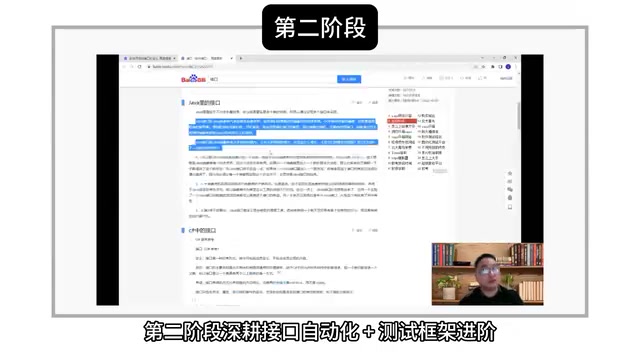
The core tools are the Requests library (used to construct HTTP requests and assert on returned results) and the PyTest testing framework (responsible for test case organization and management).
The Requests library was released by Kenneth Reitz in 2011, with "HTTP for Humans" as its design philosophy, greatly simplifying the way HTTP requests are written in Python. It encapsulates the underlying details of urllib, supports complex scenarios such as Session management, authentication, and file uploads, and is the preferred foundational library for interface testing scripts.
Understanding how Requests works is essentially also reinforcing your understanding of the HTTP protocol and RESTful specifications. RESTful (Representational State Transfer) was proposed by Roy Fielding in his 2000 doctoral dissertation and is currently the mainstream paradigm for internet API design. Its core constraints include statelessness (each request carries complete context), a uniform interface (using HTTP methods to express operation semantics), and being resource-oriented (URLs identify resources rather than actions). These concepts correspond one-to-one in the Requests API: request methods such as GET/POST/PUT/DELETE map to the CRUD semantics of RESTful resource operations (read, create, update, delete), forming the foundational framework for interface test case design; the status code system (2xx for success, 3xx for redirection, 4xx for client errors, 5xx for server errors) constitutes the criteria set for interface assertions—a robust interface test must not only assert normal returns but also verify the correct response of various abnormal status codes; the Content-Type field in the request Header determines the serialization format of the request body (application/json vs multipart/form-data), and the Authorization field carries authentication information such as Bearer Token or Basic Auth. These details directly affect whether the interface can be correctly parsed by the server. While practicing interface calls with Requests, you are also systematically internalizing protocol knowledge, avoiding the tedium of memorizing HTTP specifications in isolation.
PyTest, with its flexible fixture dependency injection mechanism, powerful parameterization decorator @pytest.mark.parametrize, and hundreds of community plugins (such as pytest-html and pytest-xdist for parallel execution), has replaced unittest as the mainstream framework in the Python testing ecosystem. The essence of the fixture mechanism is an implementation of the Dependency Injection pattern—systematically expounded by Martin Fowler in 2004: the depended-upon object (fixture) is created and injected by an external framework, rather than being instantiated by the test function itself. This design allows test cases to only care about "what resources to use"; when the initialization logic of a resource changes, you only need to modify the fixture definition, and all cases that depend on it automatically get updated. The fixture's scope parameter (function/class/module/session) precisely controls the lifecycle of the resource—a session-level fixture is initialized only once throughout the entire test session, which can significantly speed up interface test suites requiring time-consuming authentication. Compared to UI testing, interface testing runs faster and more stably, and is the core pillar of an efficient automation system.
Visual Test Reports
Pair it with Allure to generate visual test reports, making execution results clear at a glance. The Allure Framework, developed by Qameta Software, is currently one of the most widely used visual reporting tools in enterprise-level automation testing. It has deep integration with mainstream testing frameworks such as PyTest, JUnit, and TestNG, and can display test results from multiple dimensions such as timelines, suite trees, and functional modules, while supporting the embedded display of screenshots, logs, and step details.
From the perspective of the Test Metrics system, the data presented in Allure reports is the core carrier of software quality visualization. Key metrics include: Pass Rate, Defect Density (number of defects per thousand lines of code), test coverage (obtainable via the pytest-cov plugin), and Mean Time To Repair (MTTR). Allure elevates these metrics from "a one-dimensional pass/fail list" to "a multi-dimensional quality view": aggregating by functional module can identify high-risk modules, arranging along a timeline can reveal performance bottlenecks, and embedded failure screenshots compress problem localization time from hours to minutes. Allure's annotation system (@allure.feature, @allure.story, @allure.step) allows the business semantics of test cases to be directly reflected in the report structure, so that product managers or test managers without a technical background can read the report without understanding the code. This cross-role readability is an important reason for its widespread adoption in enterprises. In DevOps processes, Allure reports are usually integrated into platforms such as Jenkins and GitLab CI, serving as a quality snapshot for each build and directly supporting decisions by test managers and development teams. Clear reports make it easy to locate problems yourself and are also a direct way to present your work results to your team and superiors. When test execution efficiency and result readability improve simultaneously, the overall output undergoes a noticeable qualitative change.
Stage Three: Performance Testing, CI/CD, and Real-World Project Practice
After building a solid foundation in the first two stages, the task of the third stage is to fill in the hardcore skills and tie all the knowledge together through real-world projects.
Performance Testing and Continuous Integration
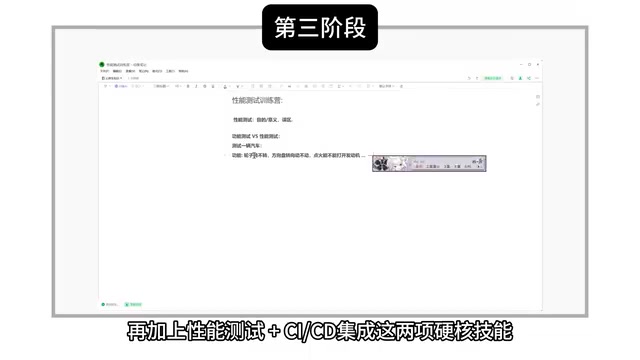
Performance testing verifies system performance under high concurrency and heavy loads, and is an important means of ensuring product stability. CI/CD integration embeds automation testing into the continuous integration pipeline, enabling tests to be automatically triggered after code commits.
Performance testing is subdivided into four types in engineering practice: Load Testing (verifying system performance under expected concurrency levels), Stress Testing (continuously increasing pressure until the system crashes to find the upper limit), Soak Testing (running under low load for a long time to discover hidden issues such as memory leaks), and Spike Testing (simulating scenarios of a sudden surge in traffic within a short period). Different business scenarios correspond to different test types: e-commerce sales events focus on spike testing, financial systems focus on soak testing, and SaaS products emphasize both load and stress testing. Both Locust and JMeter support these four modes, but with different design approaches: Locust defines user behavior with Python code, facilitating version control and complex scenario orchestration; JMeter centers on a graphical interface and XML-format test plans (JMX files), making it more suitable for performance testers without a programming background. The two also differ in distributed execution capabilities—Locust natively supports distributed Worker nodes and can horizontally scale concurrency pressure through simple command-line parameters; JMeter relies on a Master-Slave architecture for distribution, which is relatively complex to configure but more mature and stable in ultra-large-scale concurrency scenarios.
CI/CD (Continuous Integration/Continuous Delivery) is a core practice of modern software engineering, rooted in "The Three Ways" systematically proposed by Gene Kim and others in The DevOps Handbook: the first way is Flow—accelerating the value delivery from development to operations, with the CI/CD pipeline as the core carrier; the second way is Feedback—establishing a fast quality feedback loop, with automation testing as the main source of feedback signals; and the third way is Continual Learning—continuously improving through defect data retrospectives. Embedding automation testing into the CI/CD pipeline means that every code commit automatically triggers the execution of the test suite, allowing regression defects to be discovered before code is merged. Common platforms include Jenkins (a veteran open-source solution with the richest plugin ecosystem), GitHub Actions (which defines workflows via YAML files, natively integrated with the code repository, with zero operational overhead), and GitLab CI (built into the GitLab platform, with pipeline configuration synchronized with code version management).
There is a clear economic logic behind this "Shift-Left Testing" strategy: research data from the IBM Systems Sciences Institute shows that the cost of fixing a defect discovered during the requirements phase is only 1/100 of that in the production environment, and automation testing in CI/CD moves the quality gate forward to each code commit, compressing the defect discovery cost from hundreds of times higher after launch to the commit stage. From the perspective of pipeline design practice, unit tests and interface tests are usually placed at the front of the pipeline (fast execution, results within minutes), while UI automation and performance tests are placed at the back (time-consuming, triggered before merging into the main branch or releasing), achieving a balance between speed and coverage through a layered execution strategy. These two capabilities elevate automation testing from personal scripts to a team engineering practice, and are also a key area that many enterprises focus on when hiring test engineers.
Real-World Project Practice
Skills must be honed through real-world scenarios before they can truly take root. It is recommended to validate and consolidate your skills through the following three types of projects:
- E-commerce Platform UI Automation: Covering core business processes such as login, search, and ordering
- Financial Interface Automation: Focusing on the verification of data accuracy and interface security
- App Compatibility Testing: Tackling the challenge of mobile testing across multiple devices and system versions
All three types of projects come from real-world industry needs. After completing them, you will not only have mastered the skills but also accumulated hands-on experience worth writing on your resume. The e-commerce platform project is especially suitable for practicing the comprehensive use of the PO pattern and asynchronous wait strategies (explicit wait WebDriverWait vs implicit wait implicitly_wait), and the complex shopping cart and payment processes can also train your multi-page state management ability. The financial interface project strengthens your understanding of authentication mechanisms (OAuth 2.0 authorization code flow, JWT Token signature verification and expiration handling) and data encryption verification (HTTPS certificate validation, hash consistency checks of response data), which are mandatory requirements in fintech scenarios. The App compatibility testing project requires mastering device matrix management (layered coverage by system version, screen resolution, and manufacturer ROM) and the use of cloud testing platforms (such as BrowserStack and Sauce Labs), which provide remote access to thousands of real devices, eliminating the need to build your own device farm for compatibility testing. These are all highly persuasive practical endorsements on your resume.
AI-Assisted Testing: An Emerging Trend Not to Be Ignored
With the popularization of AI technology, the automation testing field is quietly changing. Current AI-assisted testing mainly relies on two technical routes: large language models (LLMs) and computer vision. In the direction of test case generation, models such as GPT-4 can automatically generate structured test cases based on interface documentation or requirement descriptions, covering boundary values and exceptional paths. In the direction of element location, vision-based tools (such as Applitools and Testim) use image recognition to replace traditional CSS/XPath selectors, offering natural robustness against UI refactoring. Defect prediction analyzes historical defect data and code change records to build risk models, guiding testing resources to concentrate on high-risk areas.
In the LLM direction, models represented by GitHub Copilot and ChatGPT can already directly output interface test cases in PyTest format based on OpenAPI specification documents. The engineer's role shifts from "writing test cases" to "reviewing and tuning test cases," with efficiency improvements of up to 3-5 times. Prompt Engineering has therefore become a key skill—a well-structured Prompt usually includes four elements: role definition (you are a senior test engineer), background information (interface documentation or business description), constraints (must cover normal flows, boundary values, and exceptional scenarios), and output format (PyTest style, with assertions and parameterization). The core value of prompt engineering lies in directing the model's general language ability to focus on specific testing tasks: by embedding descriptions of classic test design methods such as equivalence class partitioning and boundary value analysis into the Prompt, you can guide the LLM to generate test cases with higher coverage; by specifying the output format and code style, you can reduce the post-processing cost of manual formatting; and through the "Chain-of-Thought" prompting technique, having the model first analyze the business logic before generating test cases, you can significantly improve the quality of test cases in complex scenarios.
However, even in the current era of rapidly developing AI-assisted testing, the classic "Test Oracle Problem" remains a core challenge—how do you determine that the expected output of a test is correct? For interfaces with clear specifications, LLMs can infer expected outputs from documentation; but for scenarios involving complex business rules, implicit constraints, or "what should happen but was never documented," the assertions generated by AI may be too lenient (only verifying status code 200 without verifying data semantics) or simply wrong. This is precisely the fundamental reason why the human step is indispensable in the "AI generation + human review" workflow, and it also demonstrates the long-term value of domain knowledge for test engineers. LLMs excel at covering "known unknowns" (scenarios explicitly described in documentation), but for implicit business rules and complex dependencies between systems, experienced test engineers are still needed to intervene and make judgments.
In the computer vision direction, Applitools' Visual AI performs pixel-level semantic comparison of UI screenshots through convolutional neural networks, identifying layout drift rather than pixel-by-pixel diffs, reducing the false positive rate of visual regression testing by over 90% and transforming visual verification during frontend refactoring from manual checking to a fully automated process. Testim uses machine learning to score the stability of element locators, automatically selecting the location strategy least likely to fail due to UI changes, fundamentally solving the chronic problem of fragile traditional XPath location. AI-assisted testing can automatically generate test cases, intelligently identify page elements, and predict high-defect areas, effectively reducing the cost of test writing and maintenance. On the foundation of mastering traditional automation testing frameworks, gradually introducing AI capabilities will become an important direction for test engineers to differentiate themselves.

Final Thoughts
The three-week crash course is not just a slogan—the premise is taking the right path: skip the redundant groundwork, focus on core tools and engineering practices, and finally validate your results with real-world projects. From Selenium, Appium, and the PO pattern in the first stage, to Requests, PyTest, and Allure in the second stage, and then to performance testing and CI/CD in the third stage—this path has been validated, is logically clear, and can be put into practice directly.
Stick with it through all three stages, and even starting from scratch, it is entirely possible to grow into a competent automation test engineer in a short time. What determines the outcome is not talent, but whether you keep investing according to a clear plan.
Key Takeaways
Key Takeaways
Key Takeaways
Related articles
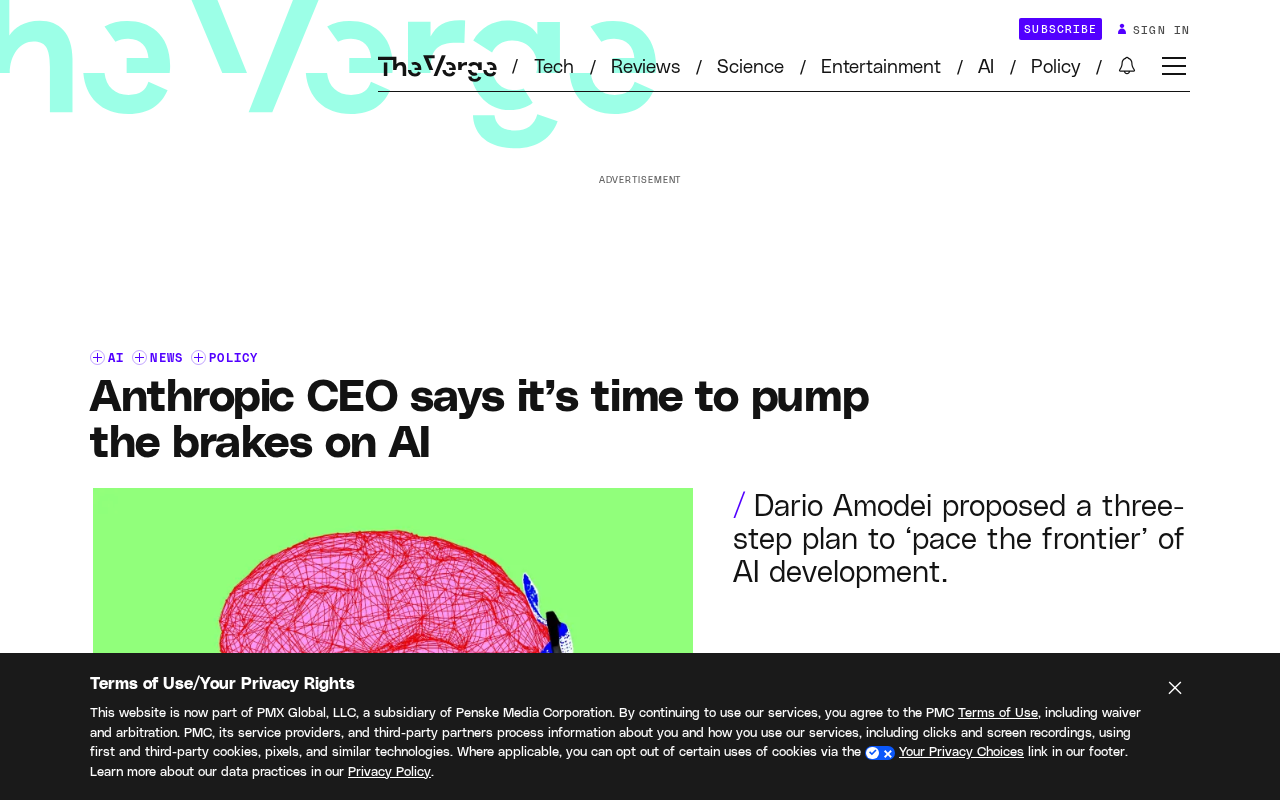
Anthropic CEO Calls for Hitting the Brakes on AI Development: A Three-Step 'Pace the Frontier' Plan
Anthropic CEO Dario Amodei calls for slowing AI development with a three-step 'pace the frontier' plan, including opening model access to third-party evaluators like METR.

Insufficient Source Material: Unable to Generate Article on Sylvan Esso
The source material provided covers music duo Sylvan Esso — unrelated to AI/tech and incomplete. No viable article could be produced; publication not recommended.
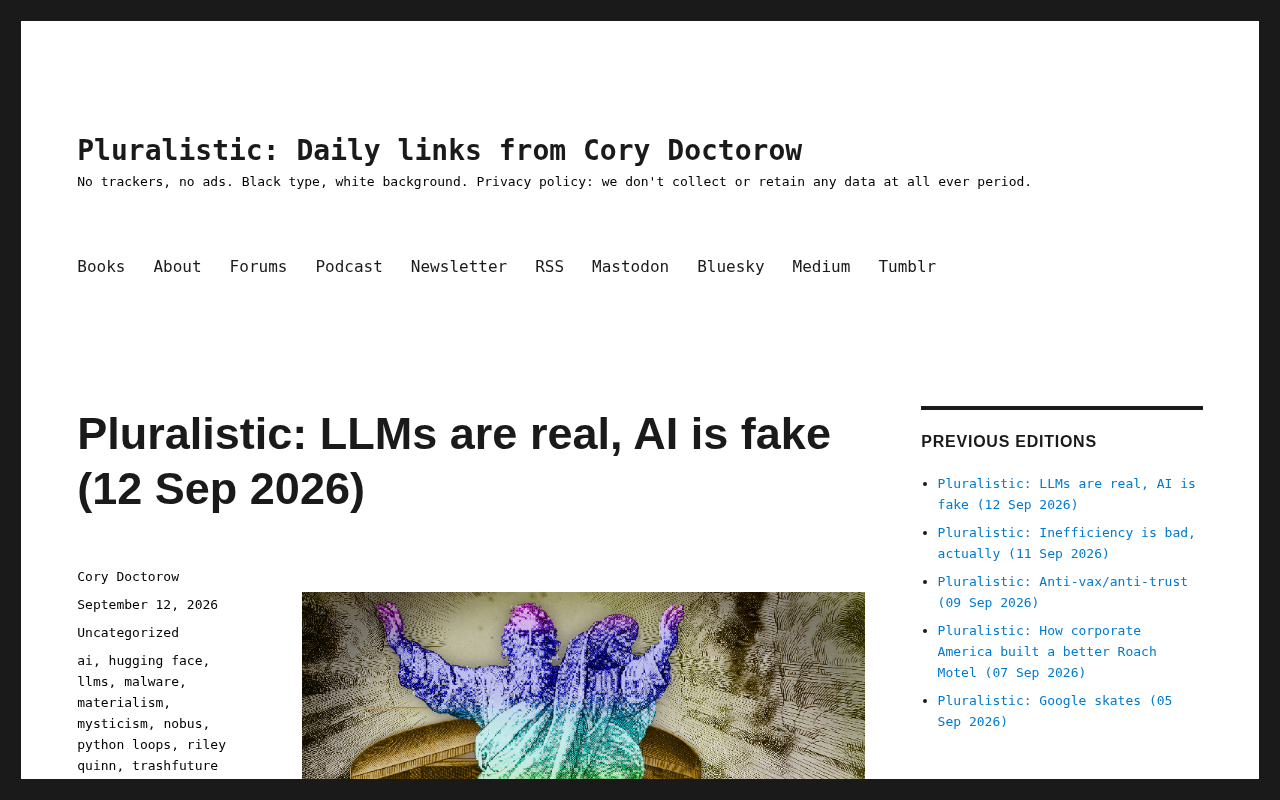
"LLMs Are Real, AI Is Fake": A Debate Worth Having
Hacker News post 'LLMs are real, AI is fake' sparks debate: why LLMs are concrete and verifiable while 'AI' is often marketing hype. What this means for practitioners.