23-Year-Old Builds $45K/Month App with Zero Code Using Claude Code + Cursor

23-year-old zero-code developer builds Payout in 10 days with AI tools, hitting $45K/month.
Conor Burr, a 23-year-old who has never written code, built Payout—an app for discovering class-action settlements—in 10 days using Claude and Cursor. He used competitor screenshots and AI to generate the UI, monetized via a paywall ($10/week or $40/year), and grew through an equity partnership with finance creator Casper that drove 35,000 clicks. Payout earned $30,017 during the hackathon, reached ~$20K/month two months later, and grew to ~$45K/month by December 2025. Conor stresses that AI lowers the coding barrier, but success still hinges on onboarding and distribution.
From Gamer Kid to Tens of Thousands a Month: The Rise of an Atypical Developer
Can you imagine a 23-year-old who has never written a single line of code building an app that earns tens of thousands of dollars a month in just two weeks? Conor Burr did exactly that. Using Claude and Cursor, his story not only demonstrates the power of AI coding tools but also reveals the decisive role of product thinking and growth strategy in today's app development.
Three years ago, Conor was just a game-obsessed teenager with no MacBook and no money. He sold odds and ends from his room to buy an old MacBook and taught himself to code through YouTube and Stack Overflow. His first social app, "Hotspot Events," took six to eight months and ultimately failed. That lesson taught him that social apps are extremely hard to scale solo, so he pivoted to utility apps. A few years later, he owns about six apps with cumulative sales exceeding one million dollars.
The Birth of Payout: Fast Replication and Improvement with AI
In the summer of 2025, RevenueCat held a two-month app hackathon called "Ship Haton," with over 53,000 sign-ups. Conor decided to quickly build a brand-new product—Payout, an app that helps users discover and claim class-action lawsuit settlements. Many large companies settle over hidden fees or privacy issues, but most people never claim their compensation.
His build process was remarkably simple: first, download about 20 similar apps and screenshot every onboarding page, arrange them in Figma to absorb the best ideas, then redesign in his own style. Next, he wrote a short JSON data document. Once ready, he dragged the screenshots into Claude, and the AI recognized the images and generated the complete interface. Wrong details? Just ask again. His principle: don't be picky—ship fast. The first version was completed in just 10 days with zero handwritten code.
Tool costs were low: Claude Pro at $20/month (including Claude Code), Cursor Pro also at $20/month, Vercel for free backend hosting, Expo for app publishing, RevenueCat for subscription management, and Apple App Store's $99 annual fee.

Claude is a large language model developed by Anthropic, with strong natural language understanding and generation capabilities and support for multimodal input (such as image recognition). In coding scenarios, Claude can understand code context, generate code snippets, explain errors, and even generate complete user interface code from screenshots. The Claude Pro subscription ($20/month) includes Claude Code, an enhanced version specifically for coding tasks that supports longer context and more complex code generation. Conor dragged competitor screenshots into Claude, and the AI recognized UI elements in the images and generated corresponding interface code—demonstrating the practical application of multimodal AI in rapid prototyping.
Business Model and Growth Hacking: Paywall and Equity Partnership
Payout is free to download, with premium features unlocked through a paywall priced at about $10/week or $40/year. Conor guides users toward the annual plan because annual subscribers have higher customer lifetime value. But the real growth engine wasn't code—it was a partnership with finance creator Casper, who has millions of followers. Instead of simply paying for ads, Conor gave Casper equity to become a partner. The video took the form of a short skit: "Hey Timu, can I really get $1,000 from your lawsuit?" After commenting "claim," an automated direct message sends the app link. Casper alone drove about 35,000 clicks.
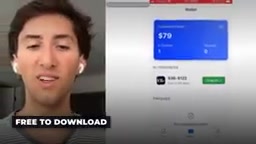
Paywall is a common in-app monetization mechanism where users must pay for a subscription or one-time purchase to access certain premium features or content. In Payout, the paywall gates the core settlement-claiming feature while keeping basic browsing free, attracting users to try it before converting. Paywall design typically involves price anchoring (e.g., comparing weekly vs. annual), free trials, and psychological cues in the interface. Conor guides users toward the annual plan because annual subscribers have higher customer lifetime value (LTV) and lower churn. A reasonable paywall strategy requires balancing user experience and revenue—too aggressive may drive users away, too lenient makes profitability difficult.
Customer Lifetime Value (LTV) refers to the total net profit a user brings to a business from first use until eventual churn. In subscription apps, LTV is typically related to user retention, subscription price, and billing cycle. Annual plans often have higher LTV than weekly or monthly plans because annual subscribers commit to a longer payment period, reducing monthly renewal decision friction and churn risk. Conor highlights the annual option in the paywall precisely to boost LTV. High LTV allows companies to spend more on user acquisition, creating a growth flywheel.
Results and Takeaways: AI Lowers the Technical Barrier, but Business Fundamentals Remain
By the end of the hackathon, Payout had over 17,000 users, 1,750 paying subscribers, and $30,017 in revenue. Among more than 800 submitted apps, Payout won the grand prize, earning $65,000 in cash and a trophy. Growth didn't stop: two months after launch, monthly revenue was about $20,000, and according to Conor, by December 2025 it had grown to about $45,000 per month. His entire app portfolio generates about $1 million in annual revenue.
Conor admits that AI makes coding easy but doesn't make business easy. His years of failure experience are his real advantage. His core insight: 90% of users will only ever see your onboarding pages, so he invests as much time in onboarding design as in developing the app itself.

Three reusable takeaways: copy proven patterns, then remix and innovate; give AI screenshots and clear data documents rather than vague prompts; and as Conor says, a simple app with just three good features can make a lot of money—and the onboarding pages bear most of the conversion pressure.
Payout's story is not an isolated case; it marks the emergence of a new paradigm: AI tools have lowered the coding barrier to a minimum, but product sense, growth strategy, and user psychology insights remain irreplaceable competitive advantages. For developers looking to enter the space, rather than obsessing over technical details, it's better to first think about how to solve a real, small problem and design an onboarding flow that anyone can understand at a glance.
One-line Summary
23-year-old zero-code developer builds Payout in 10 days with AI tools, monthly revenue soars to $45K.
Paragraph Summary
Conor Burr, a 23-year-old who has never handwritten code, used Claude and Cursor to build Payout—a class-action settlement discovery app—in 10 days. He screenshotted competitors' onboarding pages, used AI to generate interfaces, and designed a paywall ($10/week or $40/year) for monetization. An equity partnership with finance creator Casper drove 35,000 clicks and became the growth key. By the end of the hackathon Payout earned $30,017; two months later monthly revenue was about $20,000, rising to $45,000 by December 2025. Conor emphasizes that AI lowers the coding barrier, but business success still depends on onboarding and distribution—90% of users only see onboarding pages, so he invests heavily in onboarding design.
Related articles

Apple Releases New iPad mini: OLED Display and A20 Pro Chip
Apple releases the new iPad mini with an OLED display and faster A20 Pro chip, featuring a thinner and lighter design than its predecessor. This article covers design changes, screen and chip upgrades, and the positioning of small-sized tablets.

New Unsloth Release: Scheduled Tasks and MiniMax-M3.1-Flash Arrive
Unsloth v0.1.911-beta is out with scheduled tasks, MiniMax-M3.1-Flash support, FLUX 3 image editing, Mac performance gains, and training optimizations.
Remarkable Refurbished Paper Pro Move Bundle Saves Over $100
Remarkable Paper Pro Move refurbished bundle saves over $100. This 7.3-inch E Ink digital notepad is great for one-handed notes, and the official refurbished price is more budget-friendly.