Apple Releases New iPad mini: OLED Display and A20 Pro Chip

Apple updates the iPad mini with an OLED screen, A20 Pro chip, and a thinner, lighter chassis.
Apple has updated its iPad mini line with three core upgrades: a thinner and lighter chassis than the previous generation, the first OLED display in the mini series, and the new-generation A20 Pro chip. The thinner, lighter design fits the mini's portability-focused positioning, while OLED improves contrast and black rendering for reading and media consumption; the A20 Pro's significance lies not only in peak performance but also in energy efficiency for balancing battery life and heat. Apple has not yet disclosed specific thickness, weight, screen specs, chip details, pricing, or release timing. Overall, the mini series maintains a portability-first approach while narrowing the experience gap with high-end models through premium screen and chip upgrades.
Apple has recently updated its iPad mini product line, bringing two core upgrades to this small-sized tablet: an OLED display and the all-new A20 Pro chip. At the same time, the new device is thinner and lighter than its predecessor.
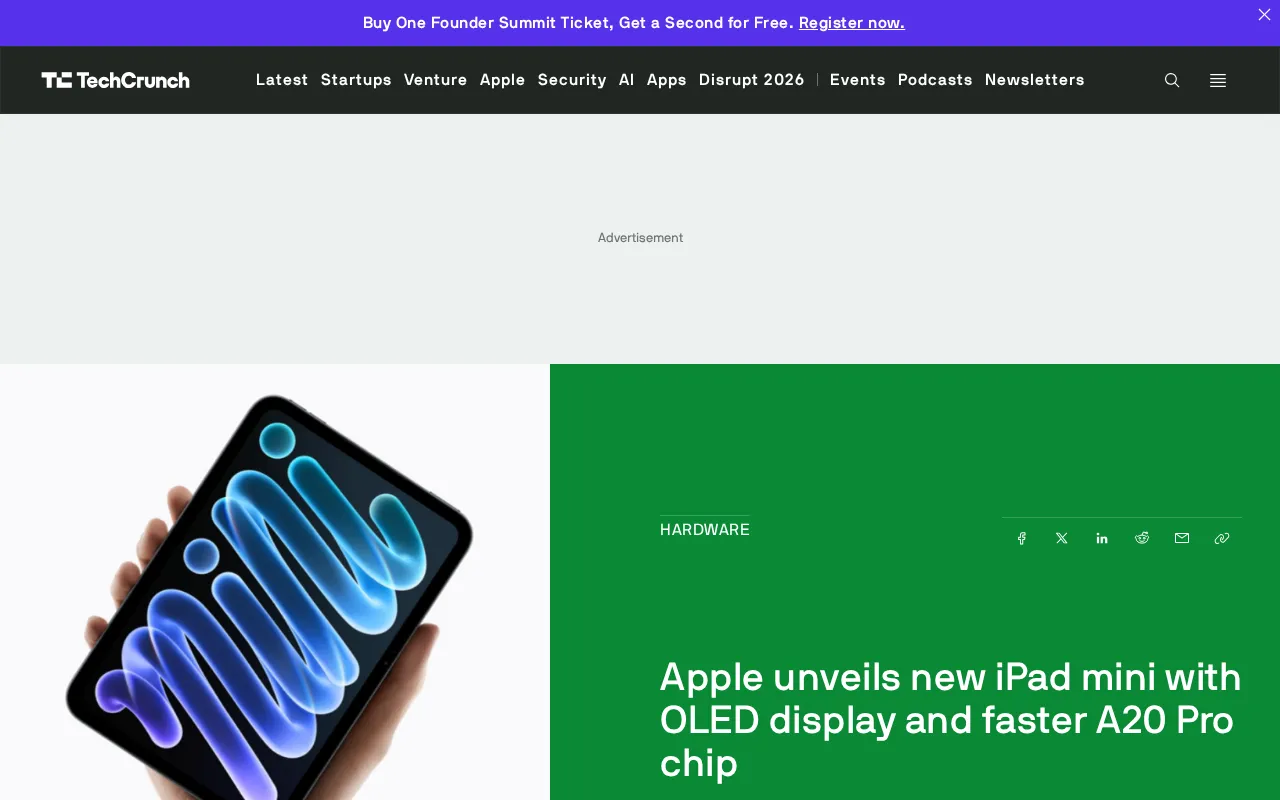
Design: A Thinner, Lighter Iteration
According to information released by Apple, the new iPad mini features a design that is thinner and lighter than the previous generation. For a product whose core selling point is portability, this direction of change is not surprising. The iPad mini has long targeted users who need one-handed handling and on-the-go carrying, and every gram shaved off directly affects the grip experience.
However, Apple has not disclosed the specific thickness and weight figures this time. From a product logic standpoint, design slimming often occurs in sync with a re-planning of internal stacking, and the simultaneous generational upgrade of the screen and chip also provides room for such restructuring.
OLED Screen: A Display Upgrade for the mini Line
The most notable change in the new iPad mini is the introduction of an OLED display. Previously, OLED was not standard across the entire iPad product line; the mini series following suit this time means Apple is beginning to adopt this panel technology—with higher contrast and purer blacks—on small-sized devices as well.
For the mini user base, which primarily uses the device for reading and media consumption, the visual improvement brought by OLED is direct. However, the source material does not mention specifics such as refresh rate or peak brightness; these details await further information.
OLED (organic light-emitting diode) differs fundamentally in working principle from the LCD panels that iPads have long used: LCD relies on a backlight layer to emit light and controls the amount of light transmitted through liquid crystal molecules, so black images still have backlight bleed and contrast is limited; each pixel in OLED emits its own light, and pixels can be completely turned off when displaying black, achieving near-infinite contrast and purer blacks. This characteristic also gives OLED a natural advantage in HDR content and dark-detail rendering. In addition, OLED requires no backlight layer, and the panel structure is thinner, which provides a physical basis for making devices thinner—explaining why screen upgrades often coincide with chassis slimming. However, OLED also has issues requiring engineering optimization, such as sustained brightness output capability and potential image retention from long-term static content; the tandem double-layer structure Apple adopted on iPad Pro was designed precisely to improve brightness and lifespan.
A20 Pro Chip: A Generational Performance Leap
The new iPad mini is equipped with the A20 Pro chip. Judging by the naming, this is a new-generation Pro-level chip in Apple's A series, positioned above the standard version. For a small-sized device like the mini, the significance of the chip upgrade lies not only in peak performance but also in energy efficiency—a stronger performance-per-watt ratio helps maintain a balance between battery life and heat within a limited chassis.
The source material does not provide specific CPU/GPU core counts, process technology, or performance improvement figures, so the actual leap of this chip generation cannot be quantified. What can be confirmed is that Apple presents "faster" as the core message of this chip upgrade.
In Apple's A-series chip naming, the "Pro" suffix typically means an increase in GPU core count, larger cache, or a higher frequency ceiling over the standard version, aimed at scenarios with heavier graphics loads. Chip energy efficiency (performance per watt) is especially critical for small devices: the iPad mini has limited chassis volume, a small heat-dissipation surface, and constrained battery capacity. If peak performance cannot be achieved at lower power consumption, it will quickly trigger throttling and affect battery life. Advances in process technology (smaller nanometer nodes) typically deliver higher performance at the same power consumption, or lower power consumption at the same performance—one of the parts of generational upgrades that users perceive most strongly. Since Apple has not yet announced the A20 Pro's core configuration or benchmark data, its specific improvement margin still needs to be confirmed by official or measured information.
Reflections on the Positioning of Small-Sized Tablets
This iPad mini update reflects Apple's continued investment in a segmented market. Against the backdrop of tablets generally evolving toward large-screen productivity tools, the mini series still adheres to a portability-first approach, while the trickling down of OLED and Pro-level chips narrows the experience gap between this device and high-end models while keeping it compact.
The rationale of this strategy lies in the fact that users of small-sized tablets tend to seek "good enough and portable" rather than extreme performance. But once the screen and chip are brought up to high-end standards, the choice between the mini and larger iPads will depend more on size preference than on performance compromise.
In the tablet market, "productivity" and "portable consumption" have long been two parallel product logics: the former centers on large screens, keyboard accessories, and multitasking capabilities, while the latter emphasizes one-handed grip and grab-and-go use. Since its inception, the iPad mini has anchored to the latter, with user scenarios concentrated on reading, note-taking, short videos, and light office work on the move. Bringing OLED and Pro-level chips down to the mini is essentially a reallocation of high-end model experience elements by size, shifting the differentiation of the product line from "performance tiers" to "size tiers." This strategy also means Apple needs to balance the price band—if the mini's positioning is pushed too high, it could create internal competition with entry-level large-screen iPads.
Conclusion
The core changes in the new iPad mini are concentrated in three points: a thinner and lighter chassis, an OLED display, and the A20 Pro chip. The information Apple has disclosed so far is relatively limited; pricing, release timing, and detailed specifications of the screen and chip are not yet reflected in the source material, and these will be key points to watch going forward.
Related articles
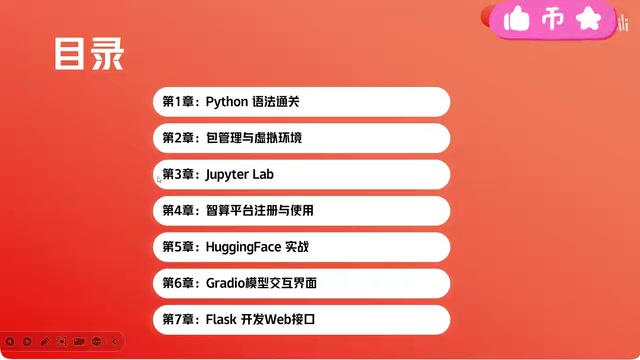
Core Course in Agent Development: A Practical Path with Python and Large Model Agents
Breaking down the seven-chapter path of a core agent development course on Bilibili: from Python syntax, virtual environments, and Jupyter, to intelligent computing platforms, the Hugging Face model community, and on to Gradio interfaces and Flask APIs, outlining the complete core workflow and learning order for large-model Agent development.

What Is Loop Engineering? A Full Breakdown of AI Agent Automated Workflows
What is loop engineering? This article explains how AI agents build automated workflows through goal setting, action-observation loops, context management, MCP tool calls, and sub-agent verification, and analyzes human-in-the-loop pitfalls like comprehension debt, intent debt, and cognitive surrender.

New Unsloth Release: Scheduled Tasks and MiniMax-M3.1-Flash Arrive
Unsloth v0.1.911-beta is out with scheduled tasks, MiniMax-M3.1-Flash support, FLUX 3 image editing, Mac performance gains, and training optimizations.