25 Fields Medalists Issue Joint Statement: AI Is Causing Severe Misalignment in Mathematics
25 Fields Medalists warn that AI involvement in mathematics is distorting the discipline's core values.
25 Fields Medal recipients have co-drafted a statement warning of "severe misalignment" in AI's role within mathematics. Their concern is not that AI produces wrong answers, but that its involvement — in proof assistance, conjecture generation, and literature review — risks shifting mathematics' standards away from depth of insight and understanding toward output efficiency and formal verification rates, thereby eroding the discipline's commitment to rigorous proof and intellectual originality. The collective voice of top scholars signals broad alarm at the field's highest levels. The statement also holds up a mirror to the AI/ML community, where exploding paper counts, benchmark-chasing, and the marginalization of principled understanding suggest the same dynamic is at play. At its heart, this debate asks: when AI tools enter knowledge production, who gets to define what "progress" means?
A statement co-drafted by 25 Fields Medal recipients has sparked heated discussion across the mathematics community and AI research circles. At its core, the statement addresses a growing concern: the application of artificial intelligence in mathematics is drifting away from where it should be headed — a phenomenon the authors describe as "Severe Misalignment." While primarily addressed to the mathematical community, the issues it raises deserve serious reflection from the AI/ML community and the broader research world.
The Core Concerns of the Statement
This statement is not a broad discussion of AI's pros and cons. The authors are focused on something far more specific and pointed: the role AI currently plays in mathematical research is diverging from the fundamental values that define mathematics as a discipline.
The word "misalignment" carries a specific meaning in AI safety, typically referring to a gap between what an AI system pursues and what humans actually intend. Applying this concept to mathematics suggests that these mathematicians are worried about far more than AI producing wrong answers. Rather, they fear that the way AI intervenes — the standards it promotes, the research culture it fosters — may be pulling against mathematics' core goals of understanding, insight, and rigorous proof.
Mathematics is different from many results-oriented applied fields. The value of a theorem often lies not in "getting the answer" but in what the proof process reveals about structure, method, and ideas. If AI tools lead researchers to fixate on "output" at the expense of "understanding," then this apparent gain in efficiency may actually erode the foundations of mathematics itself.
Why Fields Medalists Are Speaking Out
The Fields Medal is widely regarded as one of the highest honors in mathematics. A statement that can bring together 25 laureates as co-signatories carries unmistakable weight. The fact that scholars at the very top of the discipline have chosen to speak collectively signals that the issue has triggered widespread alarm among leading researchers — this is not idle worry from a few isolated voices.
It is worth noting that the statement does not take an entirely dismissive stance toward AI. It reads more like an internal audit and early warning from within the professional community. As AI capabilities rapidly penetrate proof assistance, conjecture generation, literature review, and other areas, mathematicians want to retain the discipline's authority over its own value judgments — to prevent the logic of the tool from redefining what "good mathematics" looks like.
Implications for the AI/ML Community
The person who posted the original thread raised a valuable question: do the problems described in this statement also apply to other fields — especially the AI/ML community itself?
The analogy is strikingly apt. In recent years, the AI/ML field has faced similar tensions: an explosion in the number of papers published, benchmark leaderboard climbing as the dominant mode of evaluation, and a corresponding marginalization — under competitive pressure — of deep understanding of underlying principles, appreciation of negative results, and the cultivation of research taste. When "publish more" and "score higher" become the implicit goals, does AI research itself suffer from a kind of misalignment?
In other words, the very phenomenon that mathematicians are warning against — technical tools and efficiency imperatives distorting disciplinary values — exists just as much within AI research's own domain. This statement acts as a mirror, reflecting not only the anxieties of the mathematics community but also questions that the entire research ecosystem — whether using AI as a tool or studying AI as a subject — must collectively confront.
A Conversation About Research Values
The significance of this statement may extend well beyond mathematics. It touches on a more fundamental question: when powerful AI tools enter the process of knowledge production, how should we define "progress"? Is it measured by the volume and speed of output, or by the depth of understanding and the originality of ideas?
For AI practitioners, this voice from the mathematics community offers a moment for genuine reflection. Advances in technical capability are never neutral — they reshape a field's incentive structures, evaluation systems, and cultural atmosphere. How to ensure that AI truly serves the core values of science, rather than forcing science to adapt to AI's logic, will be a question that demands ongoing discussion for a long time to come.
It should be noted that the publicly available information so far consists mainly of the statement's framing and broad positions; the specific provisions and detailed arguments still await review of the original document. But even from this starting point for discussion, one thing is clear: the relationship between AI and humanity's pursuit of knowledge is rapidly becoming a focal concern that cuts across disciplines.
Related articles
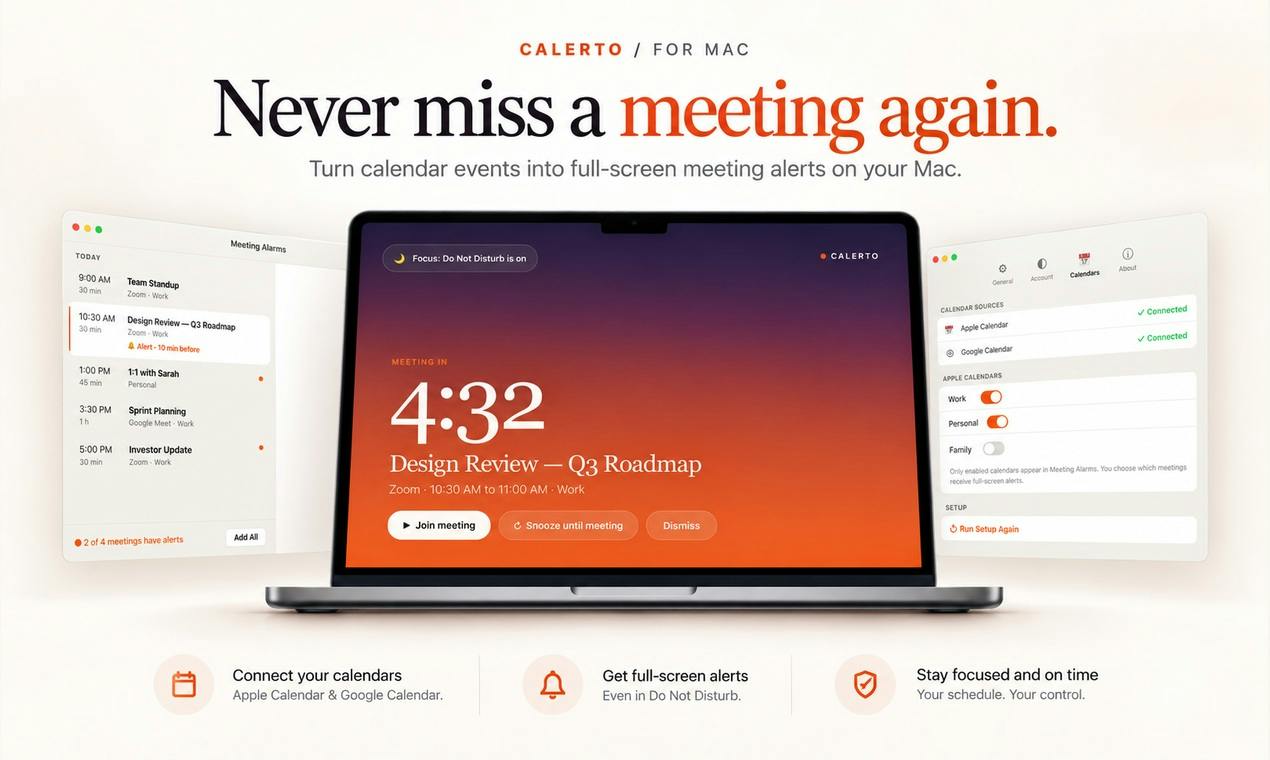
Calerto for Mac: Turn Your Calendar into Meeting Alarms You Simply Can't Ignore
Calerto for Mac replaces easy-to-miss notifications with full-screen meeting alarms, supporting Apple/Google Calendar sync, custom prep times, menu bar countdowns, and local privacy.
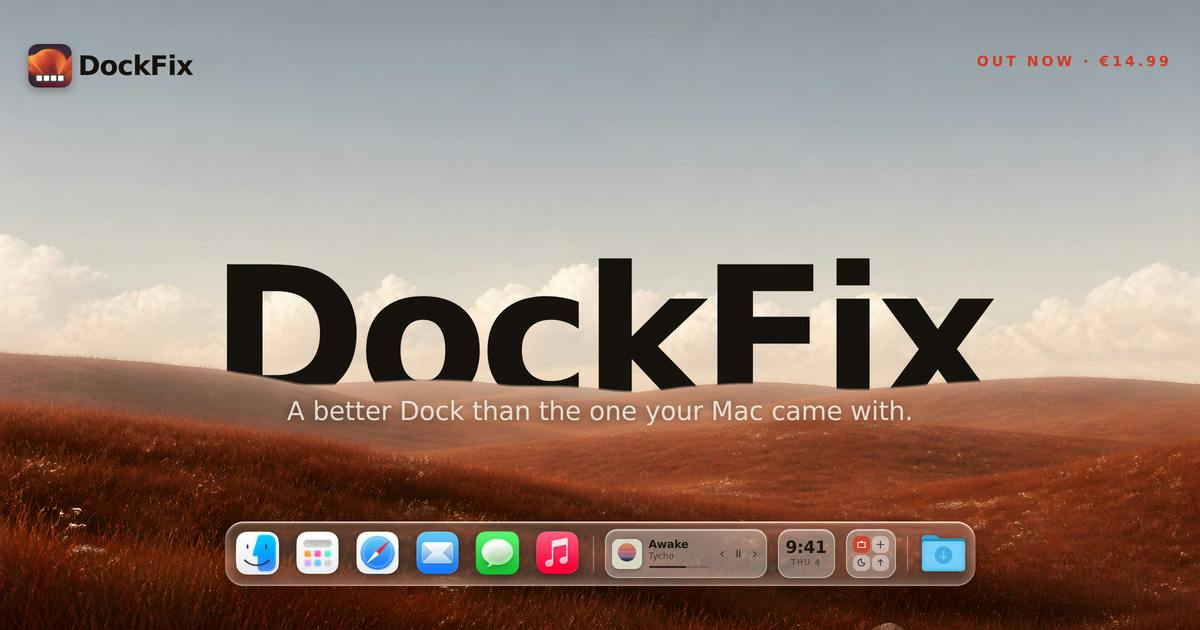
DockFix 5.0: Transform Your macOS Dock Into Something Truly Yours
DockFix 5.0 is a deep macOS Dock customization tool with custom colors, icons, animations, widgets, window previews, and a file shelf for a more personal, efficient Dock.
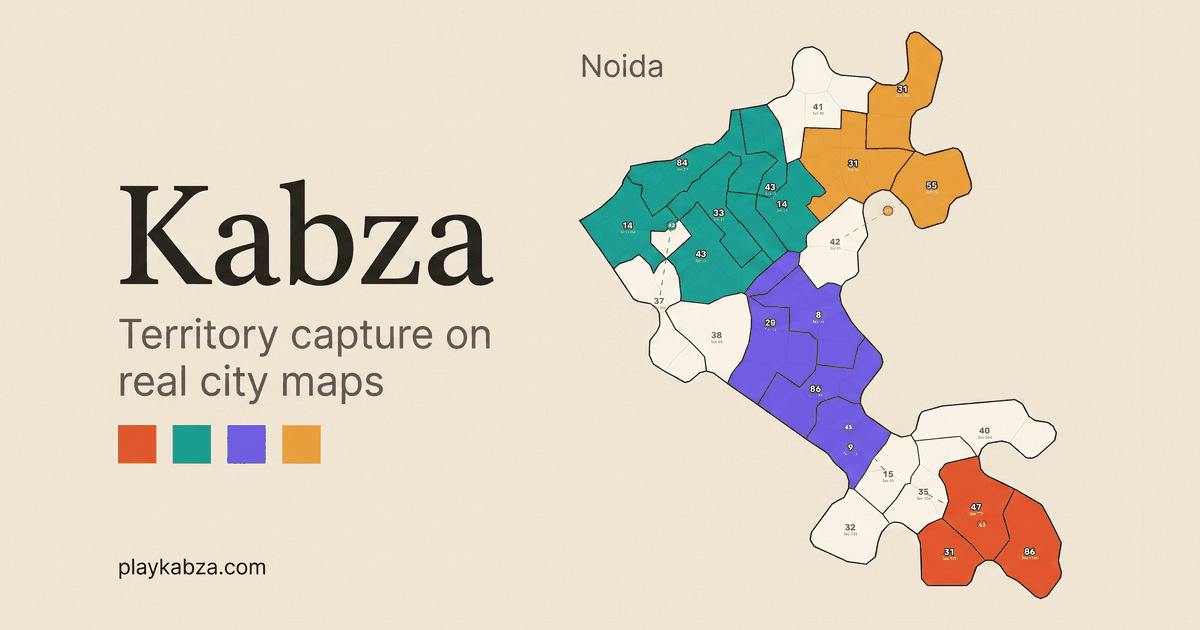
Kabza: The Browser Strategy Game That Turns Real City Maps Into a Friends' Territory War
Kabza is a browser indie strategy game on Product Hunt that turns real Indian cities like Noida and Delhi into multiplayer territory battles. Free, no download needed.