2D Gravity Sandbox Experiment: What Happens When You Throw Everything into a Black Hole?
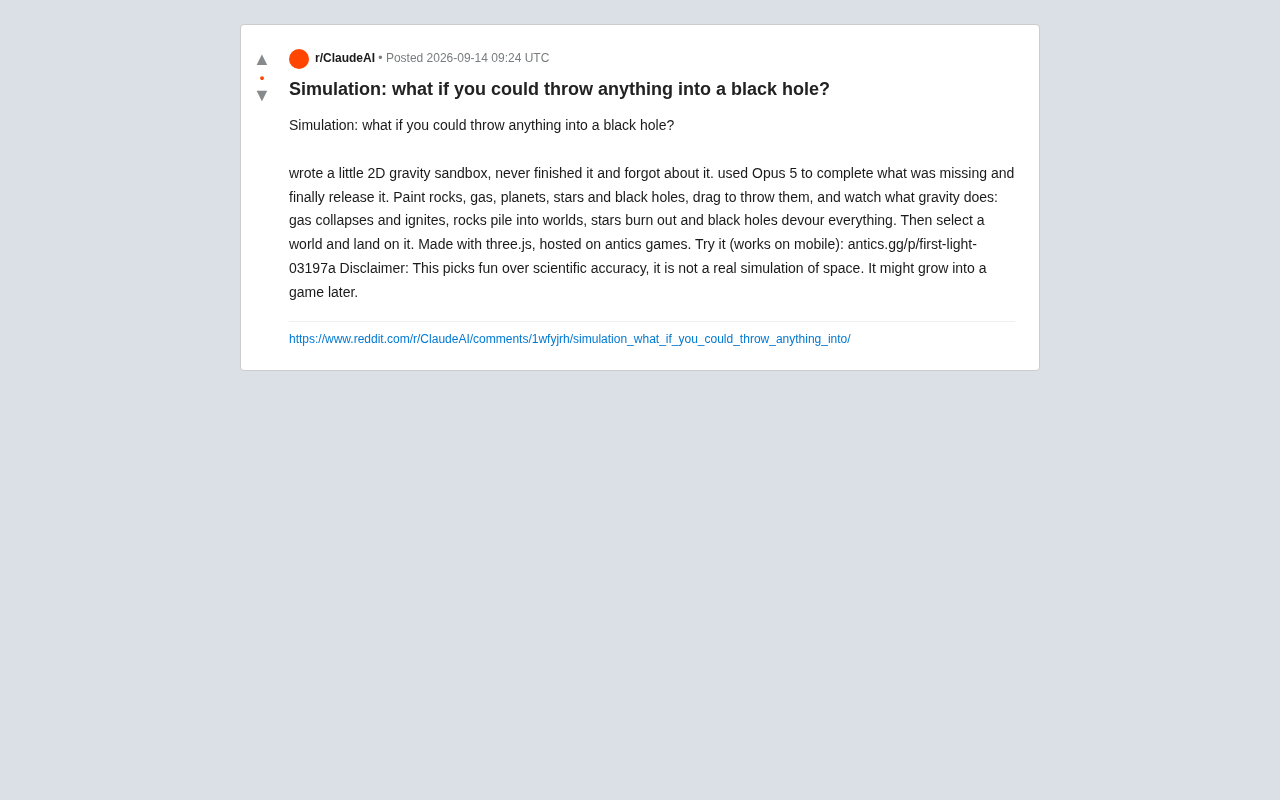
A developer used AI assistant Opus 5 to revive a long-abandoned 2D gravity sandbox and ship it as a finished project.
First Light is a browser-based 2D gravity sandbox built on three.js where players draw rocks, gas, planets, stars, and black holes and watch gravity play out — even landing on the worlds they create. The project sat abandoned for years before the author used AI coding assistant Opus 5 to finish and release it. The author openly prioritizes fun over scientific accuracy. More broadly, it reflects a growing indie dev pattern: using AI to handle mechanical code completion so that creative ideas can move from half-finished drafts to shippable products.
A Forgotten Old Project, Brought Back to Life with AI
A developer shared their gravity sandbox project First Light on Reddit. Behind it lies a familiar story: a half-finished 2D gravity simulator, abandoned for years and nearly forgotten. What finally brought it back to life was the intervention of an AI coding assistant — the author used Opus 5 to fill in the missing pieces and polish the unfinished work into something ready for release.
This kind of "dig up old code and let AI finish it" development pattern is becoming an increasingly common choice for indie developers. Projects that once stalled due to limited time or technical roadblocks now have a low-cost path to revival. The value of this case isn't in how rigorous the simulation is, but in how it demonstrates the way AI-assisted programming lowers the barrier to actually finishing an idea.
What You Can Do in the Sandbox
First Light is essentially an interactive gravity toy box. Players can "draw" various celestial materials onto a canvas — rocks, gas, planets, stars, and even black holes — then fling them around by dragging, watching gravity take control of everything.
The effects the author describes are vivid: gas collapses under gravity and ignites, rocks accumulate to form new worlds, stars gradually burn out and die, and black holes devour everything around them. Going further, players can select a "world" that has formed and actually land on its surface. This perspective shift — from macro-scale creation to micro-scale landing — adds a layer of exploration to what would otherwise be a simple physics toy.
The entire project is built on three.js, hosted on the Antics Games platform, and explicitly supports mobile, running entirely in the browser with no installation required.
Fun First, Science Second
The author was upfront about this when releasing the project: it deliberately prioritizes "fun" over "scientific accuracy" and makes no claim to being a serious simulation of the real universe.
This trade-off is actually quite pragmatic. Real astrophysical simulation demands enormous computational resources and complex numerical methods — not realistic for a small project running in a browser that also needs to support mobile. Rather than chasing physical correctness, making the experience intuitive and entertaining is far more fitting for a sandbox game. The immediate feedback of "throwing things into a black hole" is satisfying in its own right, and that's the point.
The author also mentioned that the project may eventually evolve into a full game. The current version is more of a proof of concept — a gravity playground you can pick up and mess around with at any moment.
A Snapshot of AI-Assisted Indie Development
From a broader perspective, this small project reflects a trend shaping the current indie development landscape: AI coding tools are becoming a kind of "autocomplete superpower" for solo developers. They don't need to write an entire project from scratch — they just need to help developers get past the critical sticking points, pushing an "idea" all the way to a "finished product."
For developers sitting on a pile of half-finished projects they've never been able to wrap up, this workflow is highly instructive. Using AI to handle the mechanical or tedious completion work — while keeping the creative and design core for yourself — is perhaps one of the most practical uses of AI-assisted development right now.
First Light may be a lightweight entertainment piece, but it proves one thing: a good idea that was forgotten is worth finishing, and now there's a real chance to do it.
Related articles

Deep Dive into Agent Eval Harnesses: Build vs. Buy?
A deep dive into the four core components of an agent eval harness — Cases, Runner, Capture, and Graders — with practical guidance on when to build vs. adopt existing frameworks.
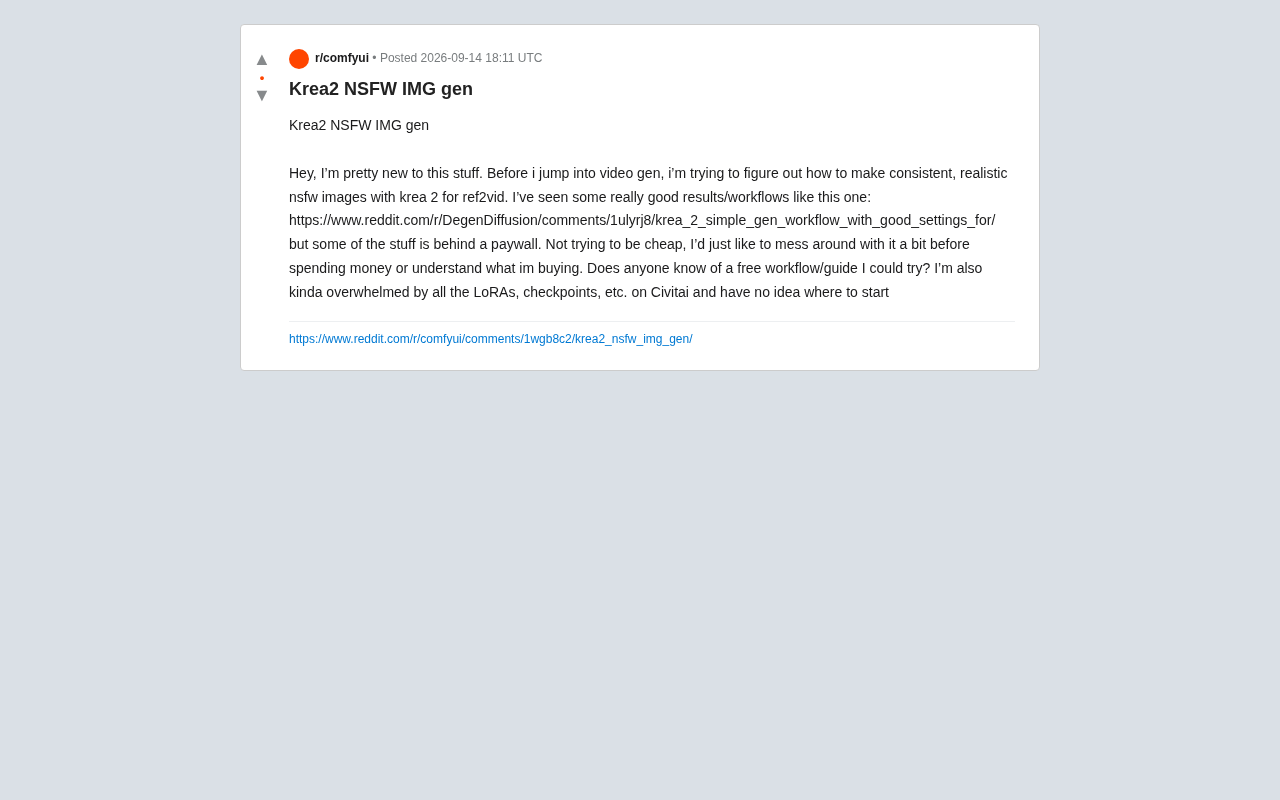
Getting Started with Krea 2 Image Generation: A Beginner's Guide to LoRA and Checkpoints
A beginner's guide to Krea 2 image generation: how to start with free open-source workflows, understand LoRA vs Checkpoint on Civitai, and achieve consistent realistic image generation.

Nintendo 'Customer Appreciation' Sale: Switch Games and Accessories Price Cuts Roundup
Nintendo's Customer Appreciation sale discounts Switch games and accessories at Amazon, Best Buy, Walmart, and its digital store — funded by tariff refunds. Ends Sept 26.