3-Month Roadmap to Becoming an AI/LLM Engineer: A Systematic Learning Guide

A focused 3-month roadmap to transition into AI/LLM engineering via Python, LangChain, RAG, and Agent projects.
This guide offers a practical 3-month learning roadmap for developers entering the AI/LLM field. Month 1 covers Python logic and API calls; Month 2 focuses on the application development stack (LangChain, LlamaIndex, FastAPI); Month 3 is dedicated to hands-on RAG and AI Agent projects. The core philosophy: know what to cut, not just what to learn.
For developers looking to transition into the AI/LLM space, the biggest challenge usually isn't a lack of learning resources — it's the overwhelming abundance of them, with no clear path forward. This guide lays out a structured, three-month hands-on roadmap designed to help beginners focus on core skills and avoid common pitfalls.
Month 1: Build the Foundation — and Know What to Skip
The most common mistake at the beginner stage is trying to learn everything at once, which spreads your energy too thin. The first piece of advice in this roadmap is to actively cut out what's not essential and concentrate your limited time on two key areas: Python fundamentals and API calls.
Python: Focus on Logic, Not Syntax
The goal of learning Python isn't to memorize syntax — it's to understand how code runs and develop basic debugging skills. As AI-assisted programming matures, an engineer's core value has shifted from "writing code" to "reading, optimizing, and debugging code."
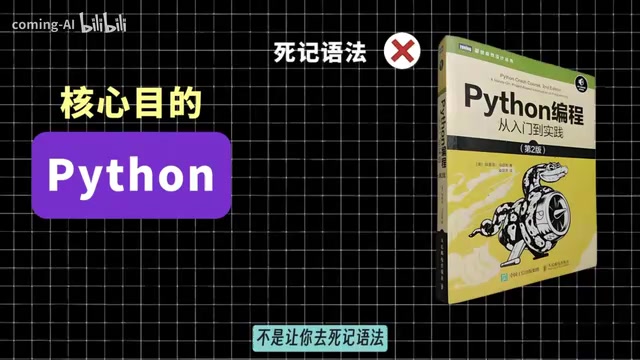
You can absolutely use AI tools to accelerate your learning, but only if you have the foundational ability to evaluate code quality and identify problems. This "human-AI collaboration" approach can significantly shorten your onboarding period.
API Calls: The Starting Point for LLM Development
Compared to Python basics, making API calls has a gentler learning curve — yet it's a fundamental skill no LLM developer can skip. Whether you're integrating with OpenAI, Claude, or domestic Chinese LLM APIs, mastering API calls is the foundation for building any AI application. It's low-cost to learn, yields quick results, and makes a perfect second building block for beginners.
Background: What Is an API Call? API (Application Programming Interface) calls are the core interaction model in modern AI application development. Take OpenAI as an example: its REST API lets developers send prompts to GPT-series models via standard HTTP requests and receive responses — no knowledge of the model's internal architecture required. Major domestic Chinese LLMs such as Baidu Wenxin, Alibaba Tongyi Qianwen, and Zhipu GLM all offer similar interfaces. Mastering API calls means understanding authentication (API key management), request structure (system/user/assistant role design), parameter tuning (temperature, max_tokens, etc.), and streaming output handling. These skills are highly transferable across platforms and serve as your entry pass into the LLM ecosystem.
Month 2: Pick a Direction — Depth Over Breadth
With the fundamentals in place, Month 2 is all about focus. A common trap is trying to learn everything and ending up mastering nothing. In the LLM field, required skill sets vary enormously by role, so choosing a direction early is critical.

Algorithm Roles vs. Application Development Roles: How to Choose?
Career paths in the LLM field broadly fall into two categories: algorithm roles and application development roles.
- Algorithm roles: Highly competitive, better suited for candidates with strong academic backgrounds and directly relevant degrees. For career-changers without a top-tier academic pedigree, the pragmatic advice is to skip algorithm roles and redirect your energy toward development roles.
- Application development roles: More accessible entry requirements, strong market demand — a more realistic and efficient path for most career-changers.
Core Tech Stack for Development Roles
Once you've chosen the development path, the learning content breaks down into two parts — tools and frameworks:
- Application building and data retrieval tools: LangChain and LlamaIndex, used for building LLM applications and implementing knowledge base retrieval — core components for RAG development.
Background: LangChain vs. LlamaIndex LangChain and LlamaIndex are the two most popular open-source frameworks for LLM application development, each with a slightly different focus. LangChain (released in 2022, 90k+ GitHub stars) is a general-purpose LLM application framework offering core abstractions like Chains, Agents, and Memory — ideal for building chatbots, workflow automation, and other complex applications. LlamaIndex (formerly GPT Index) specializes in data indexing and retrieval, offering more granular document parsing, chunking strategies, and retrieval optimization, giving it a clear advantage in RAG system development. In real projects, the two are often used together: LlamaIndex handles knowledge base management while LangChain orchestrates business logic.
- Web framework: FastAPI is the recommended choice, excelling at API wrapping and service deployment — the mainstream option for productizing LLM services.
Background: Why FastAPI? FastAPI is a modern async Python web framework released by Sebastián Ramírez in 2018, and it has become the go-to choice for LLM backend service deployment. Compared to Django and Flask, FastAPI offers three key advantages: automatic OpenAPI documentation generation via Python type annotations, native async support (critical for LLM streaming output), and performance comparable to Node.js and Go. In LLM application scenarios, FastAPI is typically used to wrap model inference endpoints, implement streaming SSE (Server-Sent Events) responses, and manage user sessions and authentication — making it the essential bridge between a locally tested AI feature and a production-grade service accessible to frontends or third-party clients.
This tech stack covers the full pipeline from application logic to API deployment, and represents the core competency employers look for in development roles.
Month 3: Build Real Projects — Let Your Work Speak for You
Whether your goal is to land a job or launch your own product, a portfolio of demonstrable projects is always the most convincing proof of ability. Month 3 has one core mission: build things.

Three Key Practical Directions
The hands-on phase should focus on three areas:
- RAG (Retrieval-Augmented Generation): Enabling LLMs to answer questions by referencing external knowledge bases — one of the most prevalent deployment patterns in enterprise AI today.
Background: How Does RAG Work? RAG (Retrieval-Augmented Generation) is a technical architecture that combines an external knowledge base with an LLM's reasoning capabilities. First proposed by Meta AI in 2020, it has quickly become the dominant paradigm for enterprise AI deployment. The core workflow has three steps: documents are chunked, vectorized, and stored in a vector database (e.g., Chroma, Pinecone, Milvus); when a user asks a question, the system retrieves the most relevant text chunks; those chunks are then injected as context into the LLM, which generates a response grounded in real knowledge. RAG effectively addresses the hallucination problem and knowledge cutoff limitations of LLMs, allowing enterprises to give AI access to internal private knowledge without retraining the model — dramatically reducing the cost of deploying enterprise AI applications.
- AI Agents: Giving LLMs the ability to autonomously plan, use tools, and complete complex multi-step tasks — currently one of the hottest application directions.
Background: The Core Mechanics of AI Agents An AI Agent is an AI system capable of perceiving its environment, planning autonomously, and executing multi-step tasks — representing the cutting edge of LLM application. Unlike single-turn Q&A, agents use frameworks like ReAct (Reasoning + Acting) to give models a "think-act-observe" loop, enabling them to call external tools (search engines, code executors, database queries, APIs, etc.) to complete complex tasks. Multi-Agent systems take this further by having multiple specialized agents collaborate, and have already demonstrated enormous potential in code generation, research automation, and business process automation — making them one of the core directions for LLM application development in 2024–2025.
- Deployment and testing: Including local environment setup and debugging — the essential step from "demo" to "usable product."
Complete 2 to 3 Full Projects
Learning without building is a major pitfall. Aim to independently complete at least 2–3 full projects, such as:
- A smart Q&A or document summarization system built on RAG
- An AI medical assistant or task automation tool built on Agent

After finishing a project, there's one critically important — yet often overlooked — step: upload it to GitHub. In an interview, a demonstrable, runnable project carries far more weight than any certificate. It proves both your technical ability and your understanding of engineering best practices.
Summary: The Real Value of This Roadmap Is Knowing What to Cut
The greatest value of this three-month roadmap isn't the list of topics it covers — it's the principle of deliberate trade-offs it reinforces throughout:
- Month 1: Skip rote syntax memorization; focus on logical understanding and debugging.
- Month 2: Skip trying to learn everything; focus on the application development tech stack.
- Month 3: Skip theory for its own sake; focus on hands-on RAG and Agent projects.
For beginners, knowing what not to learn is often more important than knowing what to learn. Three months is a reference timeframe — actual progress varies by individual, and those starting from zero may need to extend it. But the core progression — Python fundamentals → choosing a direction → RAG/Agent hands-on projects — offers career-changers a clear, practical action framework for breaking into the LLM field.
Related articles

Should U.S. College Fraternities Be Banned? A Researcher's Incisive Observations
Why not just ban U.S. college fraternities? A researcher finds the key resistance comes from decision-makers' own fraternity identities and schools' "willful ignorance."

Microsoft Discovery: Accelerating Scientific Discovery with AI Agents
Microsoft's Discovery platform runs specialized AI agents to help researchers screen and prioritize the most promising compounds and experimental paths, reducing experiments and accelerating scientific discovery.

Cambridge Heavy Industries Secretly Develops Desktop-Scale Nuclear Fusion Device
Cambridge Heavy Industries is secretly developing a desktop-scale laser-driven nuclear fusion device, targeting the equipment supply market for fusion power plants. This article analyzes its miniaturization technology path, commercialization logic, and unique positioning in the fusion startup wave.