3 Ways to Subscribe to ChatGPT Plus & Pro from China: A Comparison and Pitfall Guide

A practical comparison of 3 methods to subscribe to ChatGPT Plus/Pro from China, covering difficulty, risks, and ratings.
This article breaks down three common ways for users in China to subscribe to ChatGPT Plus or Pro. Website self-service top-up earns the top rating for its simplicity and Alipay support, though it's still a third-party reseller. Credit card payment is the most official route but requires a foreign card and faces frequent blocks. Mobile top-up — especially via Android — demands strict GMS and network conditions, carrying the highest risk of account lockout. The article also warns that all unofficial channels carry compliance and account security risks that users should weigh carefully.
Three Common Ways to Subscribe to ChatGPT Plus or Pro in China
For users in mainland China, getting a ChatGPT Plus or Pro subscription almost always hits a wall at the payment step. Based on available third-party materials, there are three common approaches: website-based self-service top-up, credit card payment, and mobile top-up (iOS/Android). Each method differs significantly in terms of difficulty, cost, and risk.
A quick disclaimer: this article is based on third-party source material. Any specific websites or tools mentioned are included purely for comparison purposes. Before making any payment, always verify the trustworthiness of the platform to protect your finances and account security.
Method 1: Website Self-Service Top-Up
The biggest selling point of self-service top-up is that you never have to hand your account credentials to a stranger, which reduces the risk of information leaks and account theft. The process is relatively straightforward: choose a plan (Plus or Pro), enter any email address for order tracking, follow the prompts to paste in your GPT account details, submit the order, confirm via email, and pay through Alipay.
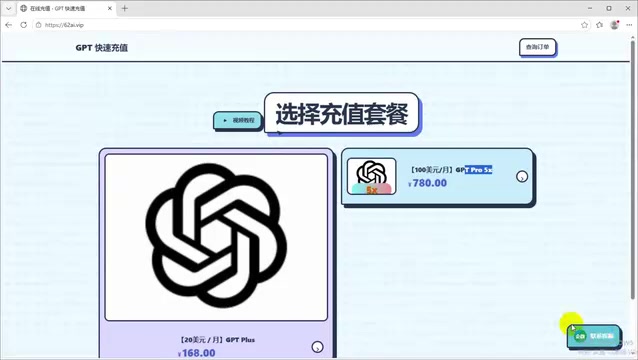
According to the source material, these platforms typically use automated scripts to complete the top-up, claiming 24/7 automated fulfillment that works across Apple, Android, and desktop. Alipay is supported, and invoices can be issued. If your membership status doesn't appear immediately after payment, refreshing the ChatGPT page a few times usually does the trick. A customer support chat is typically available in the bottom-right corner if anything goes wrong.
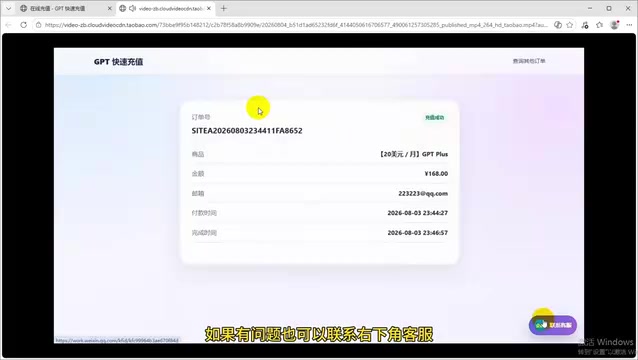
In the source material's ratings, website self-service top-up receives five stars — the lowest barrier to entry and the most beginner-friendly of the three options. That said, it's worth being clear-eyed: "automated top-up" is still a third-party reseller service at its core. Reliability and compliance depend entirely on the platform itself, so evaluate carefully before committing.
Method 2: Credit Card Payment
Paying directly with a credit card is theoretically the most "official" route, but it's not easy for users in China. Domestic Chinese credit cards generally can't be used for this type of payment — you'll need a foreign-issued card, which comes with high barriers and a lengthy application process.
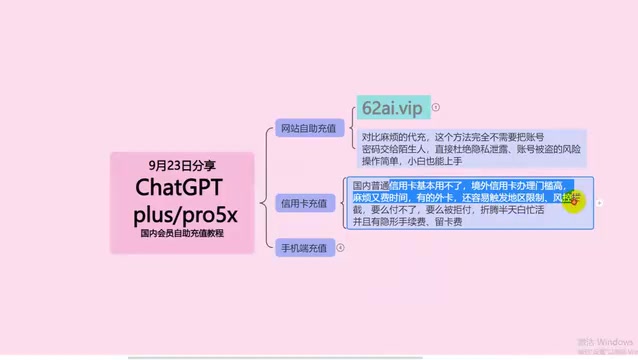
Even with a foreign card in hand, payments often run into regional restrictions or fraud detection, resulting in declined transactions or rejections after a lot of effort. There are also hidden costs like transaction fees and card maintenance fees, pushing the overall cost higher. This method earns three stars — suitable for users who already have a working foreign card, but not beginner-friendly at all.
The two most common foreign card solutions for Chinese users are: (1) virtual prepaid USD cards from platforms like Depay or WildCard, which are designed for users in China and can be topped up to pay for overseas subscriptions; and (2) physical debit cards from Hong Kong banks such as ZA Bank or HSBC Hong Kong. Virtual cards have a lower application threshold but carry their own third-party platform risks (including the possibility of the service shutting down), and OpenAI has already blocked certain virtual card BIN ranges, making success rates inconsistent. Hong Kong physical cards require a visit to Hong Kong or meeting specific eligibility criteria, with a longer processing timeline. Regardless of which foreign card option you choose, a clean overseas IP address is also required — without it, even a valid card may be rejected due to geolocation mismatches.
Method 3: Mobile Top-Up (iOS / Android)
Mobile top-up splits into two paths — Apple and Android — and both have strict environmental requirements.
iOS (iPhone)
iOS users need a US Apple ID paired with App Store gift cards, which involves quite a few steps. First-timers often struggle to get it right on the first try, and repeatedly switching accounts is a hassle. The source material estimates the trial-and-error cost at around $20–$25 USD — only worth it for users willing to accept a certain level of friction.
Android
The Android route has an even higher technical bar: you need a device with a complete GMS (Google Mobile Services) framework, a brand-new Google account with a foreign currency card linked, and an extremely strict network environment.
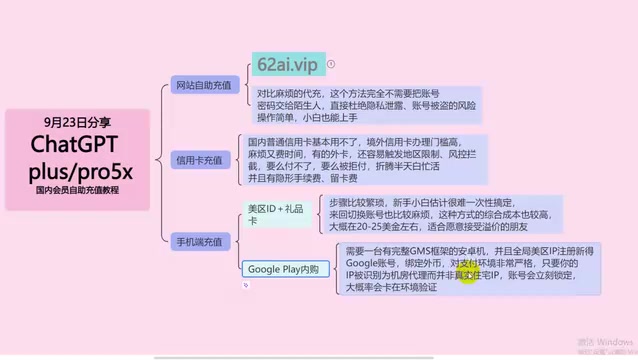
The source material warns that if your IP is flagged as a proxy or your environment is flagged as suspicious, your account may be locked immediately — and your money could be gone with nothing to show for it. Mobile top-up (especially Android) is rated the least recommended method, earning just one star.
GMS (Google Mobile Services) is Google's core service framework for Android, which includes components like Google Play and Google Pay. Huawei and certain Honor devices sold in China lack GMS for well-known reasons, making it impossible to complete the Google Pay card-binding process — which rules out the Android route entirely for these users. Even on GMS-enabled devices, subscribing to ChatGPT Plus via Google Play requires Google's backend to verify that the billing address, the card's issuing country, and the network IP's geographic location all match. Any discrepancy can result in payment failure or account issues. This is why the source material stresses that "the network environment requirements are extremely strict" — using low-quality proxy nodes actually increases the likelihood of being flagged as anomalous traffic.
Side-by-Side Comparison
Putting all three methods together makes the differences clear:
| Method | Difficulty | Main Risks | Rating |
|---|---|---|---|
| Website self-service top-up | Low — beginner-friendly | Depends on third-party platform reliability | ★★★★★ |
| Credit card payment | Medium-high — requires foreign card | Blocks / declined payments / hidden fees | ★★★ |
| Mobile top-up | High — strict environment requirements | Account lockout, high trial-and-error cost | ★ |
Based on the source material's conclusions, website self-service top-up wins on convenience — no card binding, no repayments, instant delivery, and cross-platform support. Credit card and mobile methods are better suited to users who already have the necessary resources and experience.
A Realistic Take on Third-Party Top-Up Services
It's worth stating clearly: regardless of how "convenient" any method appears, any approach involving a third-party platform or non-official payment channel carries inherent compliance and account security risks. OpenAI has fraud detection mechanisms for unusual payments and logins from multiple locations. Memberships activated through unofficial channels are theoretically still at risk of being restricted.
So when choosing a top-up method, look beyond just ease of use — weigh whether the platform is trustworthy, whether it offers after-sales support, and whether the payment channel is legitimate. Features like Alipay support, invoicing capability, and a customer service channel (as mentioned in the source material) can serve as reference points for assessing a platform's legitimacy, but they don't eliminate risk entirely. For heavy ChatGPT users, stability and security are often more important than convenience.
OpenAI's risk control logic operates along two dimensions: payment and access. On the payment side, it checks whether the card's issuing country and billing address match the account registration details — unusual payments can trigger refunds or account bans. On the access side, it continuously monitors the geographic location of login IPs; frequent cross-country switches or the use of high-risk proxy nodes can trigger "suspicious login" warnings, and in serious cases, membership can be revoked. Third-party top-up platforms essentially use their overseas payment resources to complete subscriptions on your behalf — from OpenAI's perspective, this often looks like "one foreign card linked to multiple accounts," which is exactly the kind of pattern their risk systems are designed to catch. Even if the top-up appears successful and membership status shows correctly in the short term, the possibility of accounts being flagged in a batch review later still exists.
Related articles

ChatGPT Space Launches: Team Collaboration and New Pages Features Explained
ChatGPT Space is OpenAI's new team collaboration feature with Pages, real-time collaboration, and Slack/Google Drive sync. We break down its privacy design, multi-platform integration, and the full workflow from conversation to document.

Migrating Apache Spark UDFs to GPU Acceleration with AI Agents
NVIDIA developer blog explains how AI Agents rewrite Apache Spark UDFs for GPU acceleration, covering migration criteria, agent rewriting and verification workflows, plus pitfalls like result consistency and CPU-GPU transfer overhead.

Zed Editor v0.40.4-rc2 Released: Usage Credits Now Available Without Upgrading
Zed editor releases v0.40.4-rc2, allowing users to use usage credits for AI features without upgrading to a paid plan, lowering the trial barrier.