5.3-Inch Phone Crowdfunding: Small-Screen Revival or a $599 Compromise?
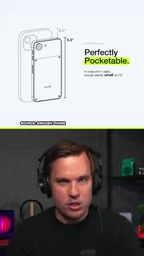
Enough Phone's 5.3-inch screen and $599 price reveal the cost reality behind vanishing cheap phones.
Enough Phone is a Kickstarter project with a 5.3-inch screen, 8GB RAM, 50MP Sony sensor, and 3500mAh removable battery, aiming for a middle ground between feature phones and large flagships. The Vergecast notes its $599 price is reasonable amid high memory costs, with the founder admitting startups are at the mercy of upstream suppliers. The article argues that small-screen viability hinges on cost structure, not product definition.
Title
5.3-Inch Phone Crowdfunding: Small-Screen Revival or a $599 Compromise?
Meta Description
Enough Phone is crowdfunding on Kickstarter with a 5.3-inch small screen, 8GB RAM, and a 50MP sensor, priced at $599. The Vergecast discusses whether small-screen phones can find a middle ground between flagship large screens and feature phones, and why cheap phones are becoming increasingly difficult to make.
Article Content
Smartphone screens keep getting bigger—6 inches is now the starting point, and 7 inches is not uncommon. But a Kickstarter project called Enough Phone is going the opposite direction, setting its screen at 5.3 inches—a size that looks especially "mini" in today's phone market. The Vergecast dedicated a segment to discussing this product, with the host saying it's "so interesting."
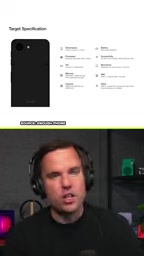
This phone tries to find a third path between "minimalist feature phones" and "flagship large-screen phones." Its specs aren't shabby: a MediaTek chipset, 8GB RAM, a 50MP Sony sensor, and a 3500mAh removable battery. What's truly surprising is its price—$599.
Enough Phone's Product Logic: An Experiment in the Middle Ground
The core idea behind Enough Phone isn't complicated: it's not a throwback to late-1990s feature phones, nor a giant-screen flagship like the iPhone Pro Max. Instead, it assumes "a usable size really does exist in the middle." The Vergecast host acknowledged that this "middle path" has been attempted many times before, but the Enough team's idea is still worth paying attention to.
How small is 5.3 inches today? Just look at the mainstream product lines of phone manufacturers—almost all new phones are 6 inches or larger, with some models approaching 7 inches. The Vergecast even suggested listeners check out Enough Phone's product images, because "5.3 inches looks almost comically small in a modern context."
But a small screen doesn't necessarily mean a low price. That's the most counterintuitive part of the whole story.
The Kickstarter crowdfunding model is a double-edged sword for hardware startups. On one hand, it can validate market demand before mass production, recoup some capital, and attract early backers through early-bird pricing; on the other hand, crowdfunding projects commonly face delays and delivery risks, with backers effectively bearing the risk of whether the product will actually ship. Enough Phone's choice of Kickstarter also means it lacks traditional channel distribution and carrier subsidy support—the very mechanisms that historically allowed cheap phones to lower retail prices. Without the carrier contract model, the price must cover all hardware and service costs, which is one of the structural reasons why the $599 price is hard to push lower.
Behind the $599 Price: Why Cheap Phones Have Disappeared
The Vergecast called Enough Phone's $599 price tag "the story of what's happening in the phone industry right now." The host's assessment was blunt: you can't sell a cheap phone—it's nearly impossible. In an environment of high memory prices, an 8GB RAM phone selling for $599 is already "the cheapest price within the reasonable range."
This isn't manufacturers deliberately inflating prices. One of Enough Phone's founders told The Verge's Allison Johnson that they didn't want to charge this much, but as a startup, there's very little they can do. The Vergecast host emphasized that this isn't PR spin but industry reality—startups can only call supply chain companies in China, pray they have memory to sell, and accept whatever price they're quoted.

From this perspective, Enough Phone's "small screen + removable battery" is more of a product differentiation attempt than a cost-control measure. The screen is smaller, but the price hasn't come down, because the bulk of the cost lies in the chip, memory, and sensor.

High memory prices aren't a short-term fluctuation. Since 2023, surging demand for HBM (high-bandwidth memory) and DDR5 from AI servers and data centers has led major memory manufacturers like Samsung, SK Hynix, and Micron to shift capacity toward higher-margin products, tightening supply and driving up prices for LPDDR and standard DDR memory used in consumer electronics. For phone manufacturers, memory's share of the bill of materials has risen significantly, especially for mid-to-low-end models with 8GB or more, further squeezing profit margins. This is also why the "cheap phone" category has been shrinking globally in recent years: it's not that manufacturers don't want to make them, but that BOM costs no longer allow it. Startups lack the bargaining power of large-scale procurement and can only buy at spot or short-term contract prices, making them far less resilient than major players like Xiaomi and Samsung.
A Third Chance for Small-Screen Phones?
Small-screen phones do have their fans. Over the past few years, many users have complained that flagships keep getting bigger and one-handed use keeps getting harder, but whether enough people are actually willing to pay for a small screen to sustain a startup project remains unknown. Enough Phone offers some early-bird discounts through Kickstarter, but its main price is set at $599, meaning it must compete head-on with mainstream mid-to-high-end models.
The Vergecast discussion didn't reach a conclusion, but raised a thought-provoking question: if a "middle size" really exists, why have so many attempts failed to form a stable market? The answer may lie not in product definition but in cost structure—when memory and chip prices are determined by upstream supply chains, the room startups have to maneuver is far smaller than imagined.
Whether Enough Phone can make this path work depends on how many people are willing to pay $599 for a 5.3-inch phone. The answer to that question may say more about the state of the phone industry than screen size itself.
A removable battery isn't just a nostalgic design choice. The EU's Battery Regulation requires that, starting in 2027, batteries in portable electronic products should be removable and replaceable by end users, which has prompted some manufacturers to reconsider removable battery designs. For small-screen phones, a removable battery can also alleviate battery life anxiety caused by limited body space making it hard to fit a large battery (3500mAh is already near the limit in a 5.3-inch body)—users can extend usage time by carrying spare batteries. However, a removable battery design requires additional structural components, sealing, and certification costs, and also affects water and dust resistance ratings, posing extra challenges for small startup teams already constrained by cost.
One-line Summary
Enough Phone, with its 5.3-inch small screen and $599 price tag, reveals the cost truth behind the disappearance of cheap phones.
Paragraph Summary
Enough Phone is a Kickstarter project featuring a 5.3-inch small screen, 8GB RAM, a 50MP Sony sensor, and a 3500mAh removable battery, attempting to find a middle path between minimalist feature phones and flagship large-screen phones. The Vergecast discussion pointed out that its $599 price is already reasonable given high memory prices, and the founder admitted that startups are constrained by upstream supply chains and can only accept memory makers' quotes. The article argues that the key to whether small-screen phones can succeed lies not in product definition but in cost structure—a smaller screen doesn't make chips and memory cheaper, which explains why past small-screen attempts failed to form a stable market.
Related articles

Asahi Linux Ditches MIT for GPL: A Farce Aimed at Omarchy?
Asahi Linux switched its code license from MIT to GPL V2, accusing Omarchy of stealing code and commercializing it. Analysis suggests the move is poorly justified and violates the MIT license, exposing political divisions and AI controversies in the open source community.
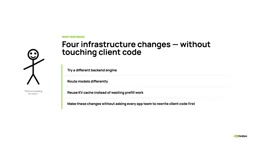
Understanding NVIDIA Dynamo Frontend in 5 Minutes: An OpenAI-Compatible Entry Point for Inference Architecture
What is the NVIDIA Dynamo frontend? Based on the official 5-minute series, this article explains how it uses an OpenAI-compatible API as a stable boundary to enable backend engine replacement, routing, and KV cache reuse in a decoupled architecture.

Jensen Huang Affair Rumors Entangle Nvidia in China Spy Scandal as Its China Strategy Comes Under Pressure
Jensen Huang is alleged to have had an affair with a woman suspected of being a Chinese spy. The unverified rumor could weaken Nvidia's lobbying effectiveness in Washington, adding greater resistance to its push for relaxed chip export controls and its efforts to maintain access to China's AI market.