5 Open-Source Tools to Replace $320/Month in AI Subscriptions
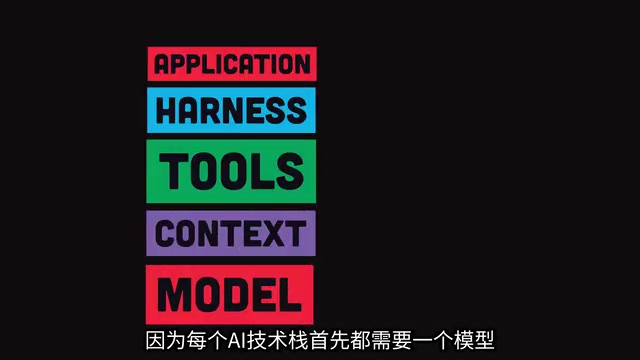
Replace $320/month in AI subscriptions with 5 open-source self-hosted tools.
Fireship's latest video reveals how AI subscriptions can exceed $320/month. The solution: a self-hosted open-source stack using Ollama (local model inference), 9Router (unified API routing with fallback tiers), Headroom (reversible context compression), Dify (visual AI workflow builder), and OpenHands (autonomous coding agent). Together, these tools offer privacy, cost control, and flexibility while retaining access to commercial models when needed.
When AI Subscriptions Become the New "Bill Anxiety"
In his latest episode of The Code Report, Fireship did the math — and the result is jaw-dropping: Cursor at $20/month, Claude Max at $100, GPT Pro at $100, Gemini Ultra at $100, plus ElevenLabs, DeepSeek, and all those API keys from services you signed up for two years ago and have long forgotten — monthly AI spending easily exceeds $320.
This isn't an isolated case. As AI tools proliferate explosively, "subscription fatigue" is becoming a very real pain point for the developer community. Every model vendor wants a piece of your wallet, and when you stack up all the "essentials," the bill spirals out of control fast. The explosion of AI subscription models is closely tied to the commercialization wave following ChatGPT's launch in late 2022. Before that, AI capabilities were primarily offered via pay-per-use APIs aimed at enterprise developers. But as consumer-grade AI products took off, vendors rushed to introduce monthly subscription plans — a pattern eerily similar to the "subscription fatigue" phenomenon previously seen in the SaaS industry. Gartner predicted that by 2025, the average knowledge worker could be subscribed to 5–10 AI tools simultaneously. This fragmented payment model not only inflates personal expenses but also makes enterprise AI procurement budgets increasingly difficult to manage.
Fireship's solution? Cancel all those subscriptions entirely and self-host a complete open-source AI stack instead. This approach isn't just cheaper — in his view, it's "more efficient" — while still retaining the ability to call Claude, GPT, and other large models when needed. Let's walk through the five core open-source tools that make up this stack.
Ollama: The "Docker" for Running LLMs Locally
The first step in any AI stack is the model. For most people, that means sending their proprietary code to a trillion-dollar company and trusting them to keep it safe.
Ollama offers an alternative: everything stays local. Fireship describes it as "Docker for LLMs" — it provides a clean CLI and API that lets you download and run various open-weight models on your own machine, including the latest Chinese open-source models.
The Docker comparison is apt because Ollama borrows the core philosophy of containerization: packaging complex model runtime environments into standardized, portable units. Under the hood, Ollama is built on llama.cpp, a C/C++ inference engine developed by Georgi Gerganov that supports efficient execution of quantized large language models on consumer hardware. Quantization is a model compression technique that reduces model weights from 32-bit floating point to 8-bit, 4-bit, or even lower-precision integers, dramatically reducing memory footprint and computational requirements at the cost of slight accuracy loss. Ollama currently supports models including Llama 3, Mistral, Qwen, DeepSeek, and other mainstream open-source models, covering a range from 7B to 70B+ parameters.
Its two core advantages are crystal clear: all prompts stay private, and inference cost is zero. In Fireship's words, even if your credit card gets declined, the model keeps working.
That said, Ollama has an obvious limitation: most people don't own hardware capable of running frontier-class models. Small models can run on almost any device, but running a frontier-sized model requires a small data center. That leads us to the next tool.
9Router: One Endpoint to Rule All AI Models
Since local hardware can't handle top-tier models, you need a solution that flexibly routes requests in a self-hosted environment. 9Router sits as a middleware layer between your AI tools and dozens of model providers, serving everything through a single local endpoint.
Its value proposition: instead of frantically managing nine different API keys, you route all requests through a single OpenAI-compatible local proxy. The "OpenAI protocol" referenced here refers to the Chat Completions API specification originally defined by OpenAI. Since OpenAI was the first company to commercialize LLM APIs at scale, its API format — including the messages array, role/content structure, streaming responses, and more — has become the de facto industry standard. Nearly all major AI frameworks (LangChain, LlamaIndex, etc.) and development tools natively support this protocol, so any proxy or routing layer compatible with it can seamlessly plug into the existing development ecosystem without modifying application code.
The truly standout feature is Fallback Tiers:
- Tier 1: Your existing paid subscriptions, such as Claude Max;
- Tier 2: Cheap pay-per-use models as backup;
- Tier 3: Various free providers, such as Chinese open-source models, Vertex trial credits, etc.
When Claude Max hits its quota, requests automatically roll over to the next tier — no manual intervention required. Additionally, 9Router tracks usage and compresses tool outputs to reduce token consumption, further cutting AI costs.
Headroom: Context Compression for AI Agents
If you're still burning through billions of tokens every day, you need to know about Headroom — a context compression layer designed specifically for AI Agents.
Fireship illustrates current AI inefficiency with a vivid example: you ask the AI to center a div, and it reads 50,000 lines of package-lock.json, evaporates an entire Olympic swimming pool's worth of water, and only then realizes it needs to install Tailwind CSS.
Behind this exaggerated metaphor lies a real "token economics" problem. In LLM pricing models, the token is the fundamental unit of measurement — one token corresponds to roughly 3/4 of an English word, or 1–2 Chinese characters. Taking GPT-4o as an example, input tokens cost approximately $2.50 per million, and output tokens around $10. When an AI Agent works autonomously, it might repeatedly read large code files, logs, and dependency manifests in a single task, easily consuming hundreds of thousands or even millions of tokens. And Fireship's mention of "evaporating water" isn't entirely a joke either: LLM inference requires massive compute, and data center cooling systems do consume significant water resources. Microsoft's 2023 environmental report showed a 34% year-over-year increase in water consumption, with AI training and inference being one of the primary drivers.
Headroom sits between your application and model providers, compressing tool outputs, log files, and other useless data chunks before they're actually sent as billable input tokens.

One clever design feature is reversibility: the compressed content sent to the model is cached on the local machine, so if the model needs it later, it can be retrieved at any time. This means you save tokens without actually losing information.
Dify: Build AI Apps with Visual Drag-and-Drop
The previous tools are all infrastructure-level. Dify is the platform where you actually build AI applications. It's a visual builder that lets you drag and drop nodes on a canvas to orchestrate workflows, instead of trying to hard-code everything through prompts.
The "visual AI workflow orchestration" that Dify represents is a major trend in AI application development, with tools like LangFlow, Flowise, and Coze also competing in this space. The core value of these platforms lies in abstracting common AI application patterns — RAG (Retrieval-Augmented Generation), multi-model chaining, conditional branching, database queries, and more — into draggable nodes. RAG is a technical paradigm that enhances LLM answer accuracy by retrieving relevant documents from external knowledge bases before generation, and it has become one of the most common architecture patterns in enterprise AI applications. Through this visual orchestration, teams without deep technical backgrounds can rapidly build and iterate on AI applications.
Fireship demonstrated with an over-the-top "Horse Tinder" example: the app sends each horse's profile to Dify, a visual workflow retrieves compatible horses from a database, and an LLM explains the reasoning behind each match — for instance, two horses both enjoy trail riding, with a 94% compatibility score. The entire workflow is exposed as an API, and the frontend app simply calls it when a user "swipes right."
This "low-code + LLM orchestration" pattern is where Dify delivers the most value in real business scenarios: it packages complex AI logic into reusable, callable APIs, dramatically lowering the barrier to AI application development.
OpenHands: Open-Source Autonomous Coding Agent
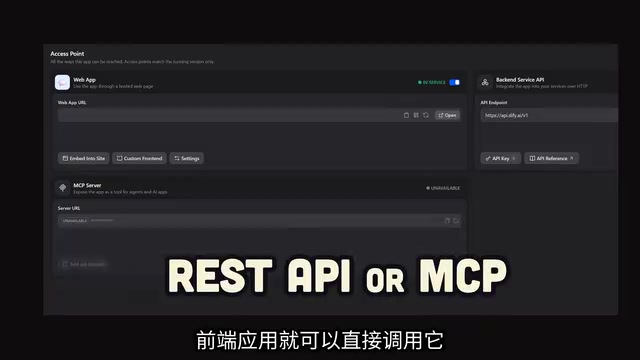
The final piece of the stack is OpenHands — an open-source autonomous coding agent. Fireship half-jokingly calls it the tool that can "get you to fire yourself."
It ranks among the top performers on SWE-Bench Verified. SWE-Bench is a benchmark released in 2023 by Princeton University's NLP group, specifically designed to evaluate AI systems' ability to autonomously solve real software engineering problems. It collected 2,294 real GitHub Issues and their corresponding Pull Requests from 12 popular Python open-source projects (including Django, Flask, scikit-learn, etc.), requiring AI systems to autonomously generate correct code patches given a code repository and an Issue description. SWE-Bench Verified is a human-verified subset ensuring each problem has a clear, automatically verifiable solution, and is considered the gold standard for evaluating autonomous coding agents. OpenHands' strong performance on this benchmark means it has the practical capability to handle real-world software engineering tasks.
Usage is straightforward: you just open up your GitHub Issues and let OpenHands handle the rest.
OpenHands essentially provides a command center, letting you self-host an army of AI Agents that stay online and work continuously in the background. Since it runs on your own VPS, you can choose to connect to OpenAI or Anthropic models, or use local models previously installed through Ollama.
Is a Self-Hosted AI Stack Actually Worth the Effort?
String these five open-source tools together — Ollama for local models, 9Router for unified routing, Headroom for context compression, Dify for building applications, OpenHands for autonomous coding — and you have a fully private AI stack that can theoretically build any software.
Of course, Fireship's signature style blends exaggeration with humor, and segments like "Q2 2026" and "Horse Tinder" are clearly tongue-in-cheek. From a pragmatic standpoint, a self-hosted AI stack isn't without costs: hardware investment, operational complexity, and debugging overhead are all real barriers.
But this episode highlights a trend that can't be ignored: as open-source models and open-source toolchains mature, developers are gaining increasingly powerful "de-subscription" capabilities. For teams and individuals who prioritize data privacy, want predictable costs, or are simply tired of monthly AI subscription bills, this open-source combo is worth serious consideration.
Related articles
Complete Guide to Deploying LLMs Locally on Mac: Ollama Integration with AI Coding Tools
Complete guide to deploying LLMs locally on Mac: hardware assessment, model selection, Ollama setup, and AI coding tool integration with Qwen 35B benchmarks and memory optimization tips.
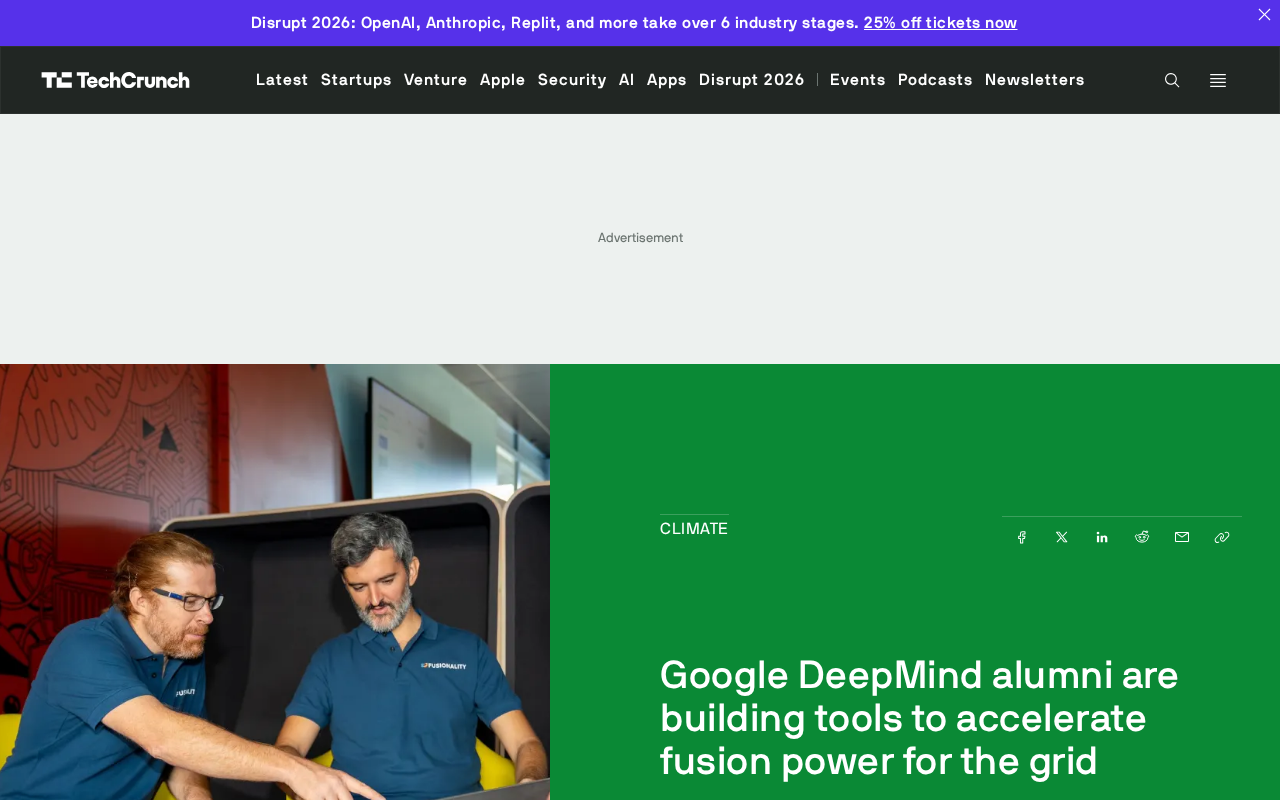
DeepMind Alumni Found Fusionality: How AI Is Accelerating the Commercialization of Nuclear Fusion
Former DeepMind employees founded Fusionality, applying reinforcement learning and AI control to nuclear fusion, accelerating clean energy commercialization with digital twins and smart control systems.
LoRA Explained: Principles and Implementation of Efficient Large Model Fine-Tuning
Deep dive into LoRA's core principles, math, and code implementation. Learn why LoRA achieves near full fine-tuning results with just 0.4% of parameters and its advantages over Adapter and Prompt Tuning.