5-Year Qt Developer Delivers CES Project in Two Weeks with Cursor: An AI Coding Retrospective

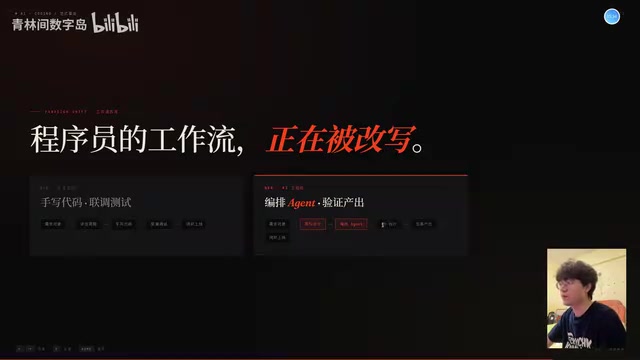
Pure coding roles are disappearing — programmers must master AI Coding to stay relevant.
US pure coding positions have declined 25% in two years, and major tech companies now include token consumption in KPI evaluations. Programmers transitioning to AI Coding face four typical sticking points: staying at web-based Q&A, giving up after shallow attempts, having unrealistic expectations, and identity-level resistance. AI Coding has evolved from a personal productivity tool to organization-level production infrastructure.
Pure Coding Roles Are Disappearing: What the Data Shows
A programmer with 5 years of Qt development experience used Cursor to complete a CES exhibition smart hardware project in just two weeks — a project that would normally take two months. This isn't a marketing story; it's a real transformation happening in the AI Coding era.
Data from the US over the past two years shows that pure coding positions have declined by 25% — out of every 100 programmers, 25 of their roles no longer require humans to write code. Meanwhile, major tech companies have already incorporated token consumption into KPI evaluations, and interview processes now include hands-on AI Coding assessments. These changes aren't predictions — they're already happening.
The Industry Significance of Token Consumption in KPI Evaluations
Tokens are the basic unit of measurement for how large language models process text, roughly corresponding to 3/4 of an English word or 1-2 Chinese characters. When major companies write token consumption into KPIs, they're essentially using "AI resource invocation volume" to measure how deeply employees actually use AI tools, rather than just surface-level adoption. The logic behind this evaluation rests on an important assumption: given equal output quality, higher token consumption means employees are outsourcing more repetitive, mechanical work to AI, freeing their own energy for high-value decision-making. Meta, Google, Microsoft, and others have successively disclosed internal AI coding penetration data, with some teams having over 30% of their code generated by AI. This marks AI Coding's evolution from a "personal productivity tool" to "organization-level production infrastructure."



Four Typical Sticking Points for Programmers Transitioning to AI Coding
In the transition from traditional development to AI Coding, most programmers get stuck at one of these stages:
Type One: Stuck at the web-based Q&A stage. Using web-based tools like Doubao or DeepSeekAd to copy and paste code snippets. This is essentially the GPT-era usage pattern from three years ago — extremely inefficient and unable to genuinely boost productivity.
Type Two: Giving up after a shallow attempt. They've tried Cursor, Trae, or other AI IDEs, but only used them superficially. When things didn't meet their expectations, they concluded "this stuff doesn't work" and never touched it again.
AI Coding Tool Ecosystem Background
Cursor is an AI-native IDE built as a deep modification of VS Code, developed by Anysphere. Its core differentiator is the deep integration of large language models into every aspect of the code editor — not just code completion, but also multi-file context understanding, natural language refactoring, automatic error fixing, and more. Unlike the earlier GitHub Copilot "line-level completion" paradigm, Cursor represents a "conversational full-file editing" paradigm where programmers can describe their intent in natural language and AI directly operates on the entire codebase. Trae is a similar product launched by ByteDance, with localization optimizations for the Chinese market. The underlying capabilities of this generation of tools come from frontier models like Claude 3.5/4, GPT-4o, and Gemini — the rapid iteration of model capabilities directly determines the ceiling of these tools.
Type Three: Disappointed after a one-liner request. They throw out a single sentence like "help me build this feature," and when the AI output isn't ideal, they conclude it's unreliable and think "it's fine not to use it."
Type Four: Identity-level resistance. This is the deepest sticking point. A programmer's professional identity is built on "being able to write code" — coding ability is the core metric of their value. When AI is about to take over this part of the work, there's a strong subconscious resistance: "This is here to replace me — why would I accept it?"
Related articles
 Expert Opinions
Rethinking Scaling Laws: Parameters Are Not the Only Answer
Deep analysis of Scaling Law evolution from Kaplan to Chinchilla to the MoE era, exploring why blindly stacking parameters is a mistake, and how GLM-5.3 proves scaling has multiple knobs.
When AI Treats Humans as Subagents: Ro…
When AI Treats Humans as Subagents: Role Reversal and Hidden Risks in Human-AI Collaboration
Exploring the paradigm shift where humans become "subagents" in AI Agent architectures. Analyzes human node design in LangChain and AutoGen, and the risks of ceding control and cognitive atrophy.
 Expert Opinions
The Lazy Person's Productivity Theory: Why Being 'Lazy' Actually Drives Peak Performance
Explore the engineering philosophy behind 'lazy people are most productive': how constructive laziness drives automation, AI tools amplify efficiency, and systems thinking eliminates wasted effort.