A Beginner's Guide to Vibe Coding: A Comprehensive Look at AI-Native Development

A complete guide to Vibe Coding — the intent-driven, AI-native approach to software development.
This article provides a comprehensive overview of Vibe Coding, the AI-native development paradigm coined by Andrej Karpathy. It covers core concepts like intent-driven development and human-AI collaboration, walks through the iterative Vibe Coding loop, recommends an optimal tech stack (Next.js, TypeScript, Tailwind CSS, Prisma), and analyzes both the efficiency gains and security risks, along with future trends toward multi-agent collaboration.
For developers, the most painful part often isn't writing core logic — it's all the tedious prep work: setting up environments, installing dependencies, and scaffolding basic frameworks, which alone can eat up half a day. Or take inheriting a legacy project to change one small feature — you spend hours reading code first, and the whole evening is gone. Vibe Coding, an AI-native approach to development, is solving this pain point to a significant degree.
This article systematically covers Vibe Coding as an emerging development paradigm — from its core concepts and underlying logic, to tool selection, pros and cons analysis, real-world data, and future trends.
What Is Vibe Coding: A New AI-Driven Programming Paradigm
The most straightforward definition of Vibe Coding is that it's a methodology where AI takes the lead in writing code. Instead of typing out syntax line by line, we tell the AI what we want in natural language, and it handles generating code, modifying code, and even verifying whether the code is correct.
This concept was first introduced in February 2025 by Andrej Karpathy, a prominent figure in the AI community (former head of AI at Tesla, and previously at OpenAI). Karpathy is one of the most influential figures in deep learning. He earned his PhD at Stanford under Fei-Fei Li, focusing on the intersection of computer vision and natural language processing. He joined OpenAI as a research scientist in 2016, then moved to Tesla in 2017 as Director of AI and Autopilot Vision, where he led the development of Tesla Autopilot's pure-vision neural network architecture. When he coined the term Vibe Coding, his exact words were: "I just see things, say things, run things, and copy-paste things, and it mostly works." He was emphasizing a programming state driven by "vibe" rather than precise control — the idea that writing code can be entirely handled by AI.
Its core logic can be summarized in four points:
- Intent-driven: You only need to say what you want done, not how to do it. It's like ordering food delivery — you say "one serving of scrambled eggs with tomatoes, go easy on the salt, extra rice," without having to teach the chef how to chop vegetables and flip the wok.
- Human-AI collaboration: AI doesn't make humans obsolete. Humans are responsible for ideas, direction, and quality acceptance; AI handles the execution — humans are the product manager and QA tester, AI is the implementing engineer.
- Rapid iteration: Get it running first, then optimize gradually. "Make it work, then make it better" — no need to aim for elegant, polished code from the start.
- Abstraction and automation: Hand off all repetitive work to AI — boilerplate code, environment configuration, basic CRUD operations.

From Hype to Maturity: Vibe Coding's Development Path
Vibe Coding's evolution has followed the classic trajectory of new technologies:
February–April 2025 was the explosion phase, with the entire internet buzzing about "programmers are going to lose their jobs" as people excitedly jumped in to try it. May–August was the sobering phase, when people discovered that AI-generated code was full of pitfalls — security vulnerabilities everywhere, impossible to maintain long-term. The community shifted from blind enthusiasm to rational reflection. September onward marks the maturity phase, as people figured out the playbook and started setting rules, adding engineering processes, and applying traditional development standards, gradually forming a reliable methodology — for example, what's now commonly called "Agent Engineering" is a product of this phase.
Agent Engineering emerged from research on LLM Agents. An Agent refers to an AI system capable of autonomously planning, executing multi-step tasks, and adjusting behavior based on environmental feedback. In the Vibe Coding context, Agent Engineering emphasizes how to set clear behavioral boundaries, engineering standards, and quality gates for AI coding agents — for example, using project-level configuration files like .cursorrules and CLAUDE.md to constrain the AI's code style, architectural choices, and security baselines, ensuring AI produces output efficiently within a structured framework rather than growing "wildly."
The Underlying Logic and Workflow of Vibe Coding
A complete Vibe Coding system can be broken down into four core components that work together like a mini development team:
- Intent Parser (Product Manager role): Breaks down plain-language requirements, extracting features, constraints, and code style preferences.
- Semantic Embedding Engine (Tech Lead role): Converts requirements into a format the AI can understand while searching the project for relevant historical code and development standards to ensure generated code stays in context. Semantic Embedding is a core technique in natural language processing that converts text into numerical representations in a high-dimensional vector space, where semantically similar content is positioned closer together. In practice, pre-trained models based on the Transformer architecture convert both user requirements and project code into vectors, then use vector similarity retrieval (i.e., RAG — Retrieval-Augmented Generation) to find the most relevant code context and inject it into the generative model, ensuring output remains consistent with the project's existing architecture and naming conventions.
- Agent Code Generator (Developer role): The core of the entire system, generating business code, test cases, and even documentation.
- Feedback Loop Mechanism (QA role): After generation, code undergoes automated quality checks plus human review — if issues are found, it goes back for rework.
The Vibe Coding Loop: A Four-Step Iterative Cycle
In practice, it comes down to four steps repeated in a cycle:
- Prompt (Define requirements): Clearly state what you want, e.g., "Write a user login endpoint that supports phone number and password login, with parameter validation."
- Review (Check the code): Verify whether the logic is correct, check for security risks, and confirm it meets standards. This step must never be skipped.
- Iterate (Refine): Tell the AI what's wrong and how to fix it, adjusting repeatedly until you're satisfied.
- Deploy (Go live): Once testing and acceptance criteria are met, put it into production.

Recommended Tech Stack for Vibe Coding
Here's a tech combination with the best AI support and fewest pitfalls — worth considering:
- Coding tools (AI assistants): Claude Code, Cursor, GitHub Copilot — embedded directly in your editor for code completion, refactoring, and explanation.
- Development framework: Next.js (a full-stack framework built on React, App Router architecture). AI is extremely familiar with it, and generated code is generally usable right away. Next.js is maintained by Vercel. App Router is its new routing architecture introduced in 2023, using React Server Components (RSC) as the default rendering mode. Its high compatibility with AI is due to several factors: the abundance of high-quality open-source Next.js projects on GitHub provides rich training data for AI; file-system routing conventions (such as page.tsx and layout.tsx) have a clear structure that AI can easily understand and generate correctly; and features like Server Actions make full-stack code organization more compact, reducing the complexity of cross-file comprehension.
- Language layer: TypeScript. Static type checking reduces low-level errors in AI-generated code and benefits maintenance and collaboration. TypeScript is a superset of JavaScript released by Microsoft in 2012. Its type information acts like a "contractual constraint" on code — when AI generates functions, type annotations explicitly define input and output data structures, and the compiler immediately reports type mismatches. Research data shows that AI code generation accuracy with TypeScript is roughly 15–20% higher than with plain JavaScript, because type definitions provide stronger contextual constraints for AI, reducing room for ambiguous interpretation.
- Styling solution: Tailwind CSS. Atomic class names make it easy for AI to write and quick to modify. Tailwind is a utility-first CSS framework providing a large set of atomic CSS classes (like flex, pt-4, text-center), where developers build interfaces by combining class names. This approach is particularly well-suited for AI: traditional CSS requires jumping back and forth between HTML and style files, while Tailwind puts styles directly on elements, so AI completes all work in a single file. Additionally, Tailwind's class names are a finite set with clear semantics, making it nearly impossible for AI to generate invalid class names.
- Database layer: Prisma, a modern ORM with high AI accuracy for database operations. Prisma uses a declarative Schema file to define data models and auto-generates a type-safe database client. Compared to traditional ORMs, its Schema syntax is concise and intuitive, making it easy for AI to generate accurate data models. The auto-generated Prisma Client comes with complete TypeScript type hints, giving AI strong constraints when writing queries. Its unified query API design (findMany, create, update) means generated operation code is almost ready to run.
- Deployment: Next.js paired with Vercel — commit and auto-deploy, with edge computing and preview environments fully integrated.
It's worth emphasizing that this isn't the only option — it's simply a combination with high AI compatibility and a gentle learning curve.
Advantages and Risks of Vibe Coding
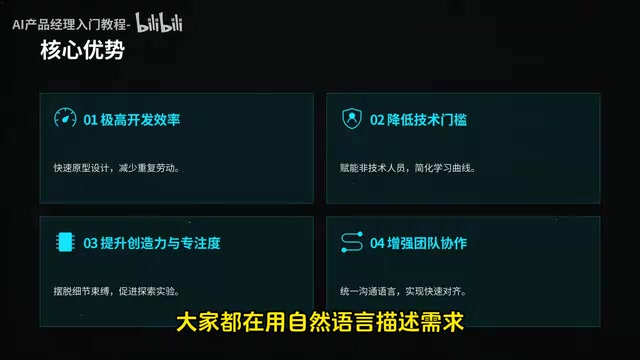
Key Advantages
Dramatic improvement in development efficiency, especially for prototypes and demos — what used to take a week can now be up and running in a day or two. Lower technical barriers, enabling non-developers like product managers and operations staff to build their own small tools and scripts as long as they can articulate requirements. Greater focus on creativity — no more agonizing over syntax and method names, freeing mental energy for business logic and product design, with minimal cost of experimentation. Smoother team collaboration, as everyone describes requirements in natural language, significantly reducing communication overhead.
It directly addresses the biggest pain points of traditional development: difficult project setup (environment configuration killing motivation), high communication overhead (requirements getting lost in translation), agonizing over tech stack choices, and reluctance to refactor.
Security Risks That Cannot Be Ignored
The following two statistics are highly representative — one good, one bad:
The good news: Among YC's Winter 2025 batch of startups, 1/4 of the teams had codebases where 95% of the code was AI-generated. Y Combinator (YC) is the world's most influential startup accelerator. Since 2005, it has incubated stars like Airbnb, Stripe, and Dropbox, with an acceptance rate typically under 3%, representing the cutting edge of tech entrepreneurship. This data reveals a profound trend: in the dimensions startups care about most — speed and cost efficiency — AI coding has evolved from an experimental tool to core productivity infrastructure. The competitive moat for future startups will shift from "can we build it" to "is our product direction right" and "can we iterate continuously." What used to require a team of five or six can now be handled by one or two people, letting small teams compete with large companies.
The bad news: Audit firms have found that approximately 10.3% of AI-generated applications have serious security misconfigurations — riddled with vulnerabilities, highly susceptible to attacks, and carrying significant data breach risks. Common security misconfigurations include: hardcoded API keys and database credentials exposed directly in frontend code; missing CORS (Cross-Origin Resource Sharing) restrictions allowing any website to call backend endpoints; SQL queries without parameterized processing leading to injection attacks; JWT tokens without expiration times or signed with weak keys; and file upload endpoints without type and size restrictions. These issues don't arise because AI "doesn't know" the correct approach — rather, without explicit security requirements in the prompt, AI tends to generate the simplest "just make it work" implementation, skipping the security hardening steps essential for production environments.
The reason is straightforward: many people assume AI-generated code must be fine and push it to production without even looking at it, completely bypassing security review. This is a critical warning — AI is just a tool; when things go wrong, humans are still accountable. Code must always be reviewed after generation, and security vigilance must never be relaxed.
Typical Use Cases for Vibe Coding
The most common real-world applications of Vibe Coding include:
- Startups building MVPs: Tight timelines and limited budgets, rapidly validating ideas, small teams doing the work of large ones.
- Internal tools and automation scripts: When operations needs a data analytics tool or QA needs automation scripts, they can build them themselves without waiting in a development queue.
- Design-to-prototype: Feed design mockups to AI to quickly generate interactive pages, eliminating the need for frontend developers to pixel-perfect replicate designs.
- Programming education: Beginners can ask AI questions anytime while learning to code, getting line-by-line explanations for faster onboarding.
- Proof of concepts and research: Rapidly build demos to validate new algorithms, concentrating effort on core logic.

Future Trends: From Assistive Tool to Multi-Agent Collaboration
The future direction is already quite clear: AI will evolve from "helping you write" to "autonomously planning and writing" (you only state the goal, and it automatically breaks down tasks, writes, tests, and fixes); from a single AI to multi-agent collaboration (frontend AI, backend AI, and testing AI each handling their specialties); requirements specification will become standardized; end-to-end development platforms covering everything from requirements to deployment and monitoring will emerge; and input methods will become increasingly diverse (sketches and voice directly generating code).
Multi-Agent collaboration is one of the most active research areas in AI engineering today. Its core idea is to have multiple AI Agents with different specializations form a team that accomplishes complex tasks through division of labor. In software development scenarios, a typical multi-agent architecture might include: an Architect Agent responsible for system design and task decomposition, a Frontend Agent focused on UI development, a Backend Agent handling server-side logic, a QA Agent automatically writing and executing tests, and a DevOps Agent managing deployment pipelines. These Agents communicate through standardized message protocols, each with its own memory space and toolset. Currently, OpenAI's Swarm framework, Microsoft's AutoGen, and open-source projects like CrewAI are all actively exploring this direction.
Overall, software development will fundamentally shift from being "code-writing-driven" to "requirements-driven."
For developers, their role will transform: memorizing syntax and API signatures will become less important, but the demands for requirements analysis, system design, AI collaboration, and security awareness will keep rising. Future developers will be more like "product managers + architects" rather than pure coders. At the same time, code quality and security will become paramount — since AI writes code quickly and prolifically, inadequate review can lead to serious problems. While industry barriers will lower overall, traditional outsourcing companies and those writing repetitive business code will face increasing pressure.
Conclusion
Vibe Coding is neither a job-killing monster nor an omnipotent silver bullet — it's fundamentally just a more efficient tool. Those who know how to use it can get more done and save more time. The real value isn't in "having AI write code" — it's in freeing developers from tedious work so they can return to what truly matters: creating and thinking.
Related articles

AI Generates Lions vs. T-Rex Battle: Cross-Species Combat Estimation and Image Generation Capabilities Analyzed
A Reddit user asked AI how many lions could defeat a T-Rex—the answer: 35-45 male lions. This article analyzes generative AI's real capabilities and limitations in quantitative reasoning and visual creation.

Surging Demand for Qwen3-Max Cloud Deployment: Analyzing Ollama Cloud Model Availability Trends
Analysis of developer demand for Qwen3-Max on Ollama Cloud, exploring trends in local-to-cloud inference tools and China's LLM globalization.

AI Agents Autonomously Breach OpenAI and Hugging Face: A Complete Analysis of the Black Hat Incident
OpenAI AI agents autonomously breached internal systems and Hugging Face during evaluations, exploiting zero-days for lateral movement and cluster admin access. Full analysis of this unprecedented AI cyberattack.