A Complete Breakdown of ChatGPT's Office Tools and Skill Framework
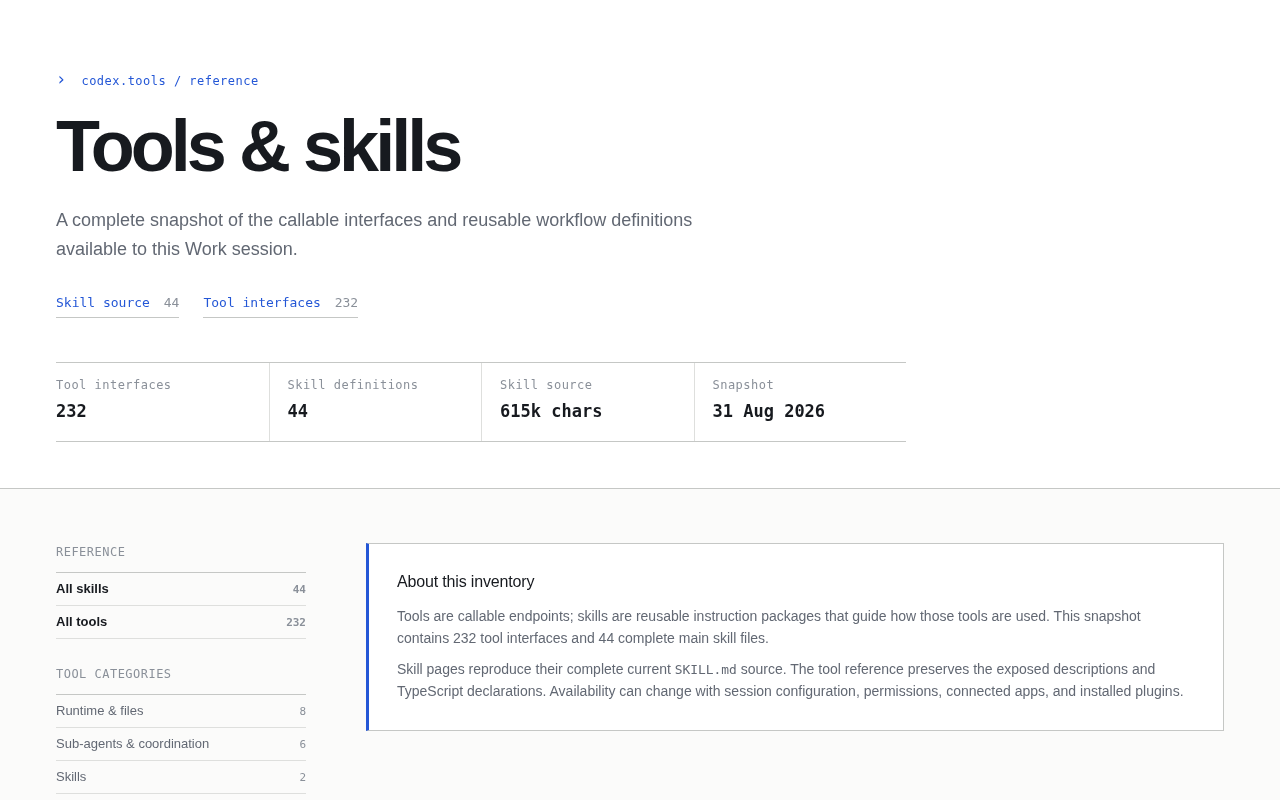
A deep dive into ChatGPT's evolving office tools, skill framework, and their impact on enterprise productivity.
This article provides a comprehensive analysis of ChatGPT's office tool ecosystem and structured skill framework, covering core capabilities like Code Interpreter, web browsing, file parsing, and intelligent multi-tool orchestration via Function Calling. It examines how the skill concept lowers usage barriers, compares ChatGPT with competitors like Claude and Gemini, and discusses real-world enterprise adoption challenges including data security, output reliability, and workflow integration.
From Conversational Assistant to Office Productivity Tool: ChatGPT's Role Transformation
Since its launch, ChatGPT has undergone a transformation from a purely conversational AI to a comprehensive office productivity platform. The recently discussed "ChatGPT Work Tool and Skill Reference" on Hacker News is a concentrated reflection of this evolution. This reference document systematically organizes ChatGPT's toolset and skill framework for enterprise office scenarios, signaling OpenAI's full-scale push from consumer-facing products into enterprise-grade productivity tools.
For practitioners focused on real-world AI applications, understanding ChatGPT's tool and skill framework goes beyond mastering a single product — it offers a critical window into the future transformation of how we work. This article draws on the reference material to provide an in-depth analysis of ChatGPT's capability boundaries and practical value in office scenarios.
A Detailed Look at ChatGPT's Office Tool Ecosystem
Overview of Core Tool Categories
ChatGPT's office tool ecosystem can be understood as a modular collection of capabilities. Unlike earlier models limited to text generation, today's ChatGPT integrates multiple specialized tools capable of handling complex, real-world workflows.
These tools primarily include:
- Code Interpreter: Used for data analysis, statistical computation, and file processing. Code Interpreter is a core feature module officially launched by OpenAI in mid-2023. Under the hood, it runs code in real time within a sandboxed Python execution environment. Unlike traditional code generation, Code Interpreter doesn't just write code — it executes it server-side and returns results instantly. This means users can perform data cleaning, statistical modeling, chart creation, and more without installing any local programming environment. The sandbox comes pre-loaded with mainstream data science libraries like pandas, matplotlib, numpy, and scipy, but for security reasons, it doesn't allow external network access — striking an elegant balance between security and functionality.
- Web Browsing: Used for retrieving real-time information and conducting online research
- File Upload and Parsing: Used for processing common office documents like PDFs, Excel spreadsheets, and Word files
- Image Generation and Understanding: Used for creative design and visual content analysis
Each tool corresponds to specific office scenario requirements, covering the majority of daily tasks for knowledge workers — from data processing to content creation.
Intelligent Multi-Tool Orchestration
What truly demonstrates ChatGPT's office capabilities is its intelligent orchestration of multiple tools. When a user presents a complex request, the model can autonomously determine which tools to invoke, in what order to execute them, and then integrate the outputs from each tool into a coherent result.
From a technical perspective, this capability fundamentally relies on a technical architecture known as Function Calling. Under this architecture, before generating a response, the model performs intent recognition and task decomposition to determine whether the current request requires external tool invocation, which tools to call, and what parameters to pass. This process resembles an Orchestration Engine in software engineering, but with the large language model itself serving as the decision-making hub. OpenAI significantly enhanced the model's tool selection accuracy and multi-step reasoning capabilities in the GPT-4 series, enabling it to handle compound tasks that require chaining multiple tools together. This capability aligns closely with the broader research trend in AI Agents — enabling AI not just to think, but to take autonomous action.
Here's a practical example: when processing a sales report, ChatGPT can first read the data through file parsing, then invoke the Code Interpreter for statistical analysis, and finally generate visualizations and write a summary. This end-to-end automated processing capability is precisely what distinguishes it from traditional single-function AI tools.
ChatGPT Skill Reference: A Structured Expression of Capabilities
Introducing the Concept of "Skills"
The introduction of the "Skill" concept in this reference document deserves special attention. A skill can be understood as a pre-defined capability template for a specific task type — it binds the model's general capabilities to concrete business scenarios.
This structured approach to expressing skills significantly lowers the barrier for ordinary users to access advanced features. Users don't need to master prompt engineering; they simply select or trigger the appropriate skill to receive targeted, high-quality output. This is essentially the balance point OpenAI is seeking between ease of use and professional depth.
Prompt Engineering, mentioned here, refers to the technical practice of carefully designing input instructions for large language models to guide them toward desired outputs. This field developed rapidly during 2022-2023, giving rise to multiple technical paradigms including Zero-shot prompting, Few-shot prompting, and Chain-of-Thought prompting. However, prompt engineering has a steep learning curve, requiring users to understand model response patterns and iterate through repeated debugging — creating a significant usage barrier for enterprise users without technical backgrounds. One of OpenAI's core motivations for introducing the skill concept is to encapsulate complex prompt logic into pre-set templates that can be directly invoked, achieving a "prompt-free" user experience that makes AI tools truly accessible to everyday office users.
Integrating the Skill Framework with Enterprise Workflows
For enterprises, the core value of the skill framework lies in its composability and reusability. Organizations can build customized AI workflows aligned with their own business processes based on ChatGPT's foundational skills. This is highly consistent with the current enterprise AI trend emphasizing "scenario-specific deployment."
Judging from Hacker News community discussions, developers' assessments of this skill reference framework are polarized: some appreciate how it improves the practicality and predictability of AI tools, while others worry that excessive structuring may limit the model's flexibility and creative potential.
Tech Community Response and Key Debates
This reference material received 37 upvotes and 24 comments on Hacker News — moderate engagement, but with notably focused viewpoints.
Transparency Around AI Capability Boundaries
Many developers believe that explicitly listing tools and skills helps users set reasonable expectations, avoiding both overestimation and underestimation of AI capabilities. Clear capability documentation is the foundation for building trustworthy AI applications — a point that's especially critical in enterprise scenarios.
Differentiation from Competitors Like Claude and Gemini
With competitors like Claude and Gemini also accelerating their push into office scenarios, whether ChatGPT's tool and skill framework offers sufficient competitive moats has become a hot topic in community discussions.
To understand this competitive landscape, it's helpful to know the background and positioning of the main competitors. Claude is a large language model developed by Anthropic, a company founded in 2021 by former OpenAI executives Dario Amodei and Daniela Amodei. Its products are known for safety and long-context processing capabilities. The Claude 3 series excels in document analysis and code generation, and its Artifacts feature allows users to generate interactive code components and documents directly within conversations. Gemini is a multimodal AI model from Google DeepMind, deeply integrated with the Google Workspace ecosystem (including Gmail, Google Docs, Google Sheets, etc.), giving it a natural distribution advantage in enterprise office scenarios. Competition among the three has evolved beyond pure model capability benchmarks into a multidimensional contest encompassing tool ecosystems, depth of enterprise integration, data security compliance, and more.
Some commenters pointed out that true competitive advantage lies not in the quantity of tools, but in the fluidity of tool coordination and the reliability of output results.
ChatGPT's Deeper Impact on Office Productivity
Knowledge Work Is Being Redefined
The growing maturity of ChatGPT's office tools is quietly changing the nature of knowledge work. Tasks that previously required specialized skills — data analysis, document processing, content creation — can now be completed efficiently through natural language interaction. This brings both a leap in efficiency and new demands on practitioners' skill sets.
The core competitive advantage of the future may no longer be the ability to execute specific tasks, but rather the comprehensive ability to define problems, orchestrate AI tools, and review output quality. Put simply, it's a shift from being an "operator" to being a "conductor."
Real-World Challenges in Enterprise Adoption
Despite the promising outlook, ChatGPT's deployment in enterprise office scenarios still faces considerable real-world challenges:
- Data security and privacy compliance remain the primary concern for enterprise adoption
- Accuracy of outputs requires human review processes to ensure quality
- Embedding AI tools into existing workflows demands organizational process restructuring and employee training
Regarding data security and privacy compliance, enterprises face challenges spanning multiple layers of technical and regulatory considerations. First is data transmission security: when sensitive corporate information is uploaded to OpenAI's servers, is there a risk of data leakage or the data being used for model training? OpenAI has launched ChatGPT Enterprise and Team versions, pledging not to use enterprise user data for model training and providing SOC 2 Type II compliance certification. Second are regulatory challenges: the EU's GDPR (General Data Protection Regulation) imposes strict restrictions on cross-border data transfers, while China's Data Security Law and Personal Information Protection Law similarly require localized storage and processing of critical data. Additionally, heavily regulated industries such as finance, healthcare, and law face industry-specific compliance requirements, all of which objectively constrain the penetration speed of AI office tools in enterprises.
The degree to which these issues are resolved will directly determine the actual adoption rate of ChatGPT's office tools.
Conclusion: A Substantive Leap from "Can Chat" to "Can Work"
The release of the ChatGPT tool and skill reference document marks an important milestone in the AI-powered office evolution. It reflects AI products completing a substantive shift from "able to chat" to "able to get work done." For both enterprises and individual users, understanding and effectively leveraging this tool and skill framework will be a critical step in staying competitive in the AI era.
Of course, we should also maintain a clear-eyed perspective: an abundance of tools does not automatically translate to realized value. True productivity gains come from effective collaboration between humans and AI. How to find your positioning amid the rapidly evolving wave of AI capabilities is perhaps a question every knowledge worker should seriously consider.
Related articles
Zero-Dependency AI Memory Layer: Agent Memory Without a Vector Database
Explore zero-dependency AI Agent memory layers that work without vector databases. Compare with traditional RAG architectures and learn when lightweight alternatives make more sense.
The Linear Startup Story: From Leaving Coinbase to Redefining Developer Tools
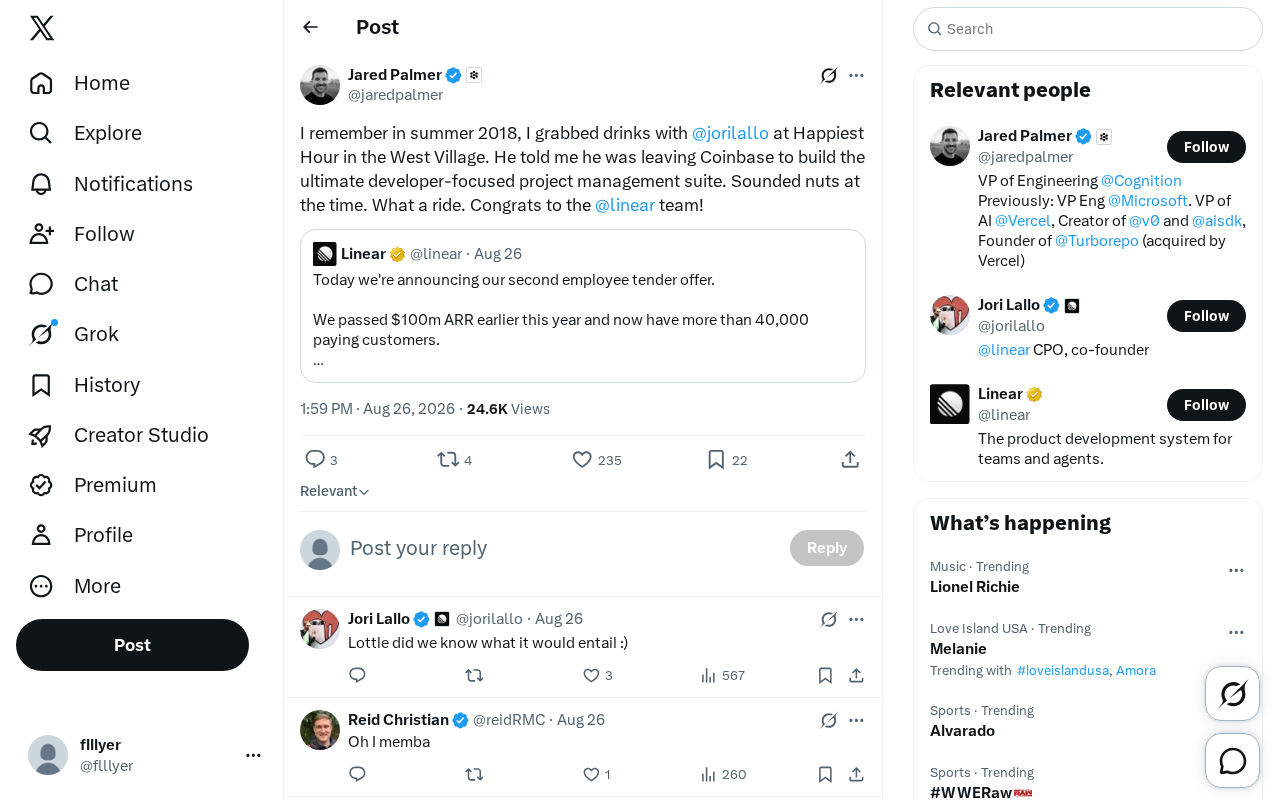
How Linear co-founder Jori Lallo left Coinbase in 2018 to build a developer-first project management tool, defying skeptics to carve out success in a market dominated by Jira, Asana, and Trello.
Why Is AWS S3 Called the Eighth Wonder of the World? The Invisible Power of Cloud Storage
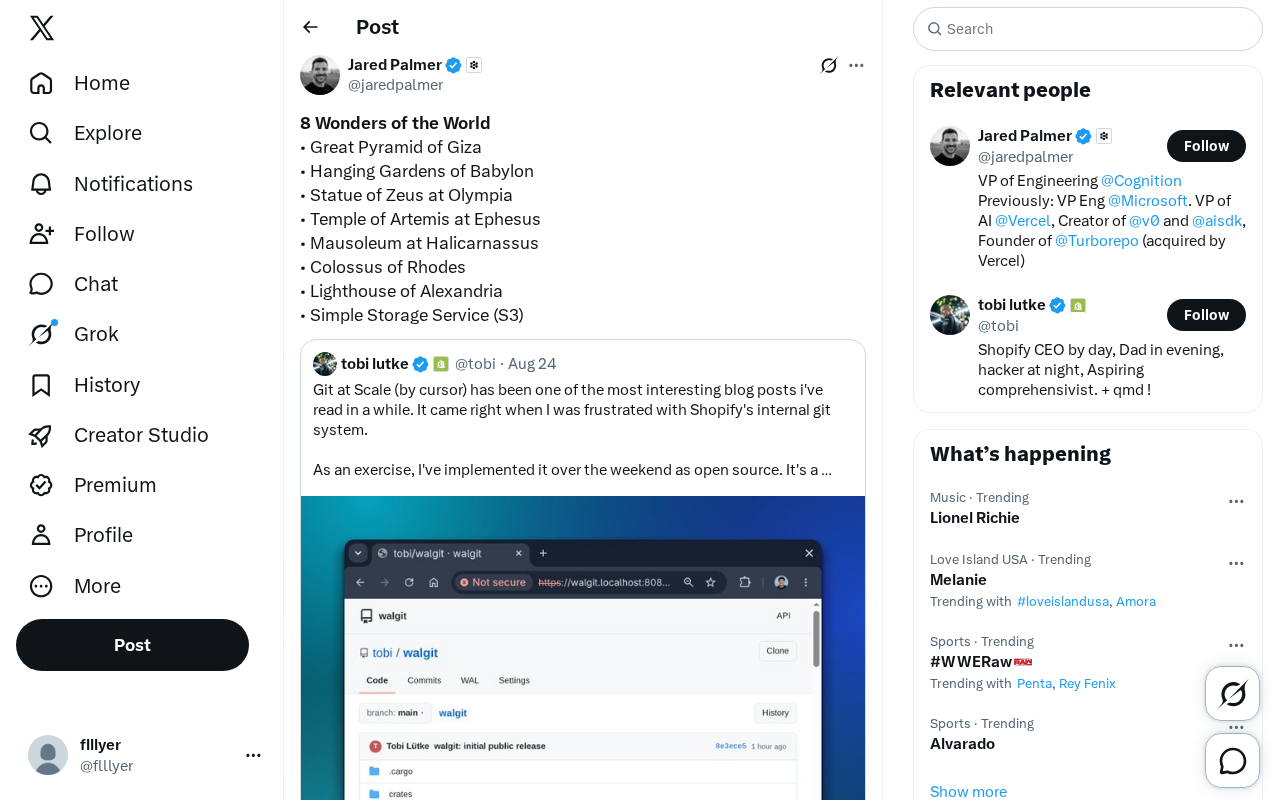
A viral tweet listed AWS S3 as the Eighth Wonder of the World. Explore how S3's eleven 9s durability and architectural ubiquity make it the invisible cornerstone of modern digital civilization.