A Curated List of 1,325 AI-Assisted Repositories Mined from GitHub
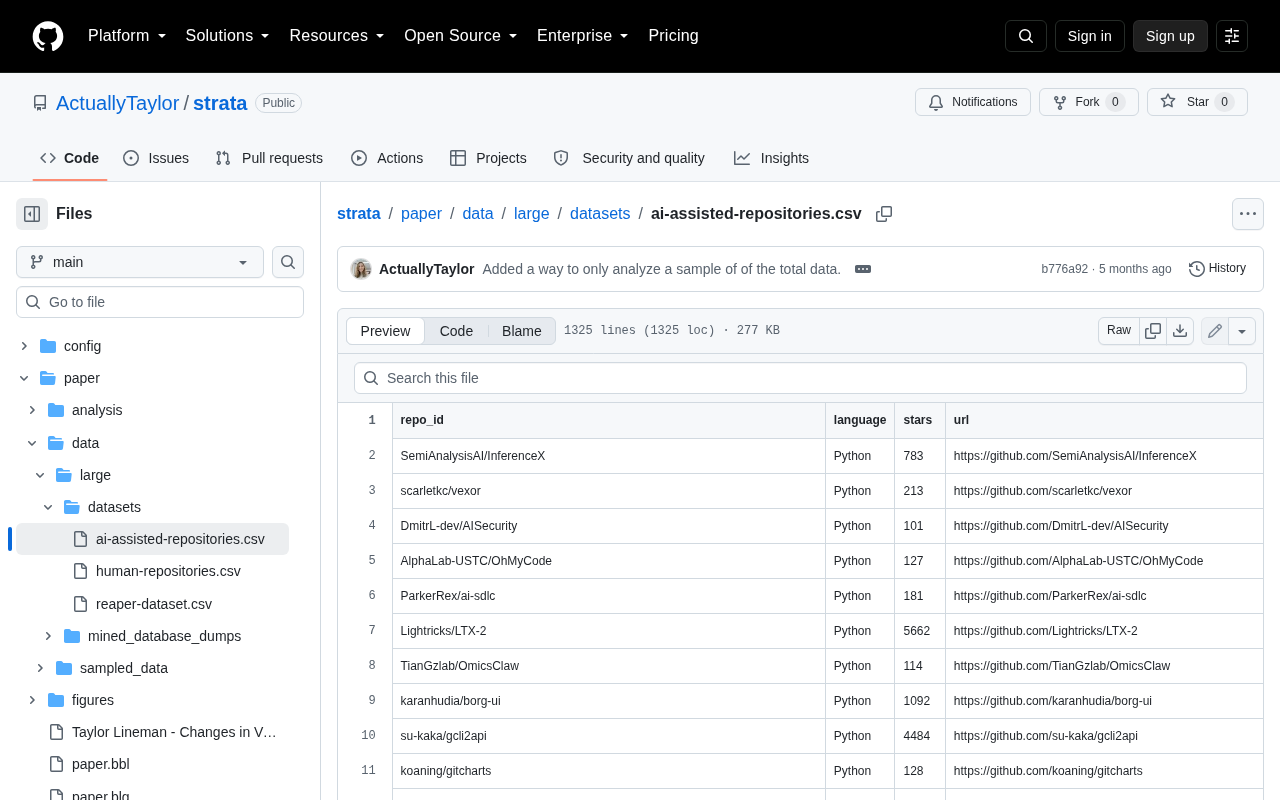
A curated list of 1,325 AI-assisted GitHub repos offers a sampling window into AI coding tool adoption — but with significant detection bias.
A Hacker News user shared a curated list of 1,325 GitHub repositories created with AI assistance, mined to quantify how tools like GitHub Copilot, Cursor, and Claude Code are penetrating real open source development. The dataset gives researchers a window into AI coding practices and offers developers a sample of how others integrate these tools into their workflows. However, the list carries significant sampling bias — only repositories that explicitly declare AI tool usage can be detected, leaving the vast majority of unlabeled AI-assisted projects unaccounted for. The 1,325 figure is best understood as a lower bound. The list's real value lies in providing a time-stamped sampling slice; the meaningful work comes from using it as a foundation for deeper analysis of code quality, maintenance costs, and open source trust.
A Sample of AI-Assisted Development from GitHub
A project with genuine research value has surfaced on Hacker News: someone has mined and compiled a list of 1,325 GitHub repositories created with AI assistance. What makes this kind of project notable is its attempt to answer — in a quantifiable way — a question that's being widely debated: to what extent have AI coding tools actually penetrated real-world open source development?
As tools like GitHub Copilot, Cursor, and Claude Code become more widespread, a growing number of commits, comments, and even entire projects are starting to bear the marks of AI assistance. Systematically identifying and aggregating these repositories into a single list is itself a snapshot of the current development ecosystem.
GitHub Copilot is an AI code completion tool developed through a partnership between Microsoft and OpenAI. It integrates directly into editors and automatically completes code snippets and even entire functions by analyzing context. Cursor is an AI-native code editor that lets developers generate and refactor code through natural language conversation. Claude Code is Anthropic's command-line AI coding assistant, capable of generating code and making project-level changes directly from the terminal. These three tools represent different forms of AI-assisted programming: plugin-based completion, an AI-native IDE, and conversational command-line interaction. What they share is the embedding of large language models (LLMs) into everyday coding workflows — though they differ in the traces they leave behind. Some tools embed identifiable metadata in commit messages or config files; others leave almost no trace at all, which directly affects the coverage of any automated mining effort.
What Makes This Kind of List Valuable
Simply listing repositories may seem straightforward, but the underlying mining logic is worth examining. Filtering GitHub's vast repository base for "AI-assisted" projects typically requires relying on identifiable signals: tool names mentioned in commit messages, README sections describing AI collaboration, specific code comment patterns, or metadata associated with AI tools.
For researchers, this kind of dataset opens a window into AI coding practices. It enables analysis of questions like: Which languages and domains are more likely to adopt AI assistance? How do these projects compare to traditional ones in terms of activity and code quality? Is AI assistance changing patterns of open source contribution?
For everyday developers, the list serves as a learning sample. Browsing these projects offers a hands-on sense of how developers today are integrating AI tools into actual workflows — providing inspiration for project structure, prompting strategies, or collaboration patterns.
Sampling Bias and the Limits of Detection
It's worth taking a clear-eyed view of the inherent limitations of this kind of mined list. The definition of "AI-assisted" is itself quite fuzzy — a project where Copilot was used to autocomplete a few lines of code is fundamentally different in degree from one generated entirely by AI, yet both might end up in the same list.
More critically, there's a detection bias at play. What gets mined tends to be repositories that have explicitly declared their use of AI tools. In reality, a large number of projects use AI assistance without any annotation at all, and these fall entirely outside the reach of this approach. The number 1,325 should therefore be understood as a lower bound on identifiable AI-assisted repositories — not a complete picture.
Furthermore, the actual number of AI-assisted projects on GitHub is growing rapidly, and any static list will become outdated quickly. The value of this data lies more in providing a sampling slice at a particular point in time than in serving as an authoritative, continuously updated count.
The detection bias here is a textbook example of Selection Bias in statistics: samples are not drawn randomly from the full population, but are instead determined by observable characteristics. In the context of identifying AI-assisted repositories, "whether the author explicitly declared AI use" becomes the threshold for inclusion — and that declaration is itself strongly correlated with individual developer habits, community culture, and the default behavior of the tools themselves. For instance, certain versions of Cursor automatically insert a declaration into README templates, making projects built with it easier to detect; developers who call the OpenAI API directly and build their own assistance pipelines, on the other hand, leave almost no standardized signal. This bias means the dataset likely deviates systematically from the true landscape of AI-assisted development in terms of language distribution, project type, and developer background — a caveat that warrants careful consideration when using it.
Implications for the Open Source Ecosystem
This project reflects a deeper trend: AI-assisted development is moving from the margins into the mainstream — to the point where someone felt it was worth building a dedicated index and dataset for it. When "whether AI was used" starts becoming a descriptive label for a project, it signals that a genuine shift in development paradigms is underway.
Judging by the discussion activity, the Hacker News post didn't generate a particularly high level of engagement, suggesting that while pure data-compilation projects like this have value, they haven't yet hit on a widely resonant pain point. What tends to spark real discussion is the deeper analysis built on top of such data — comparisons of code quality in AI-assisted projects, changes in maintenance costs, or the impact on open source trust mechanisms.
For anyone tracking the evolution of AI-assisted programming, this list is a solid starting point. It doesn't draw conclusions on its own, but it lays the groundwork for future quantitative research. How to make good use of raw data like this is, ultimately, more worth thinking about than the data itself.
Related articles
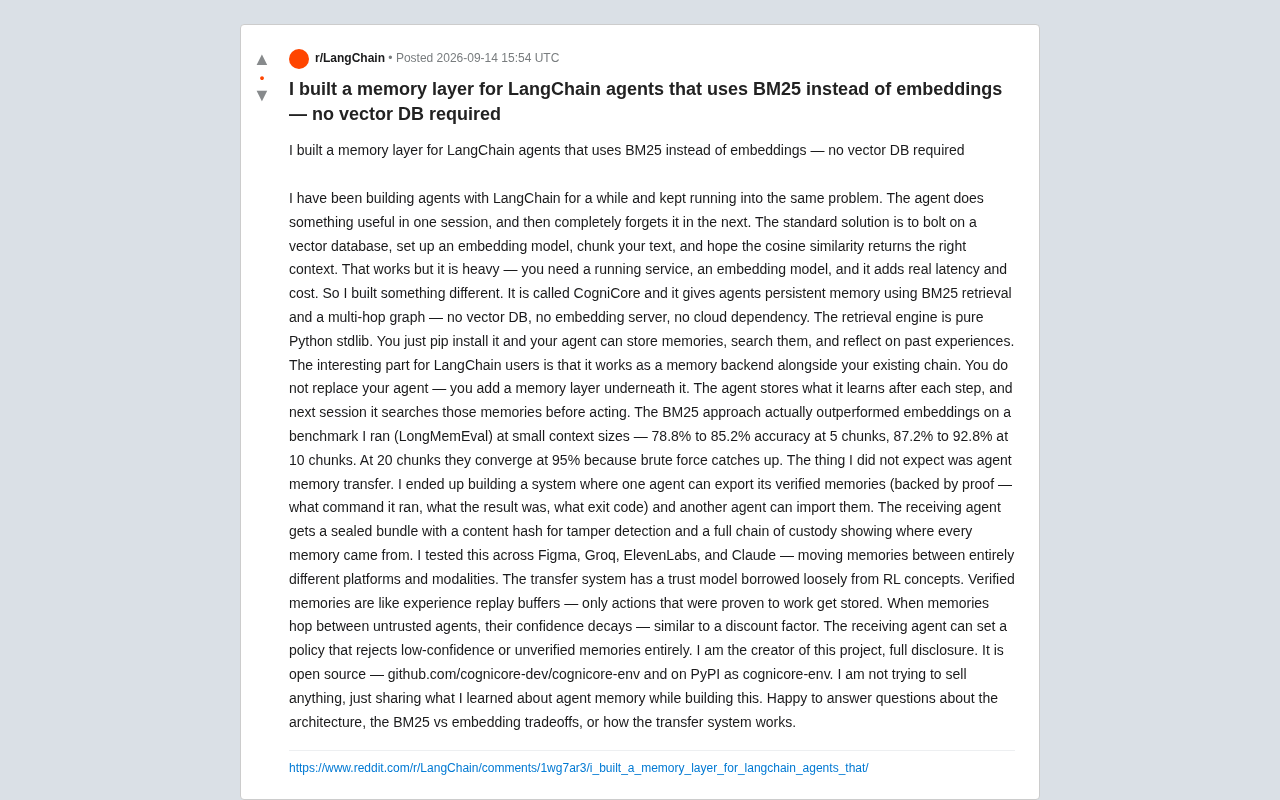
Ditch the Vector Database: Building a Memory Layer for LangChain Agents with BM25
CogniCore replaces vector databases with BM25 retrieval for LangChain agent memory, outperforming embeddings in small-context benchmarks with zero external dependencies.
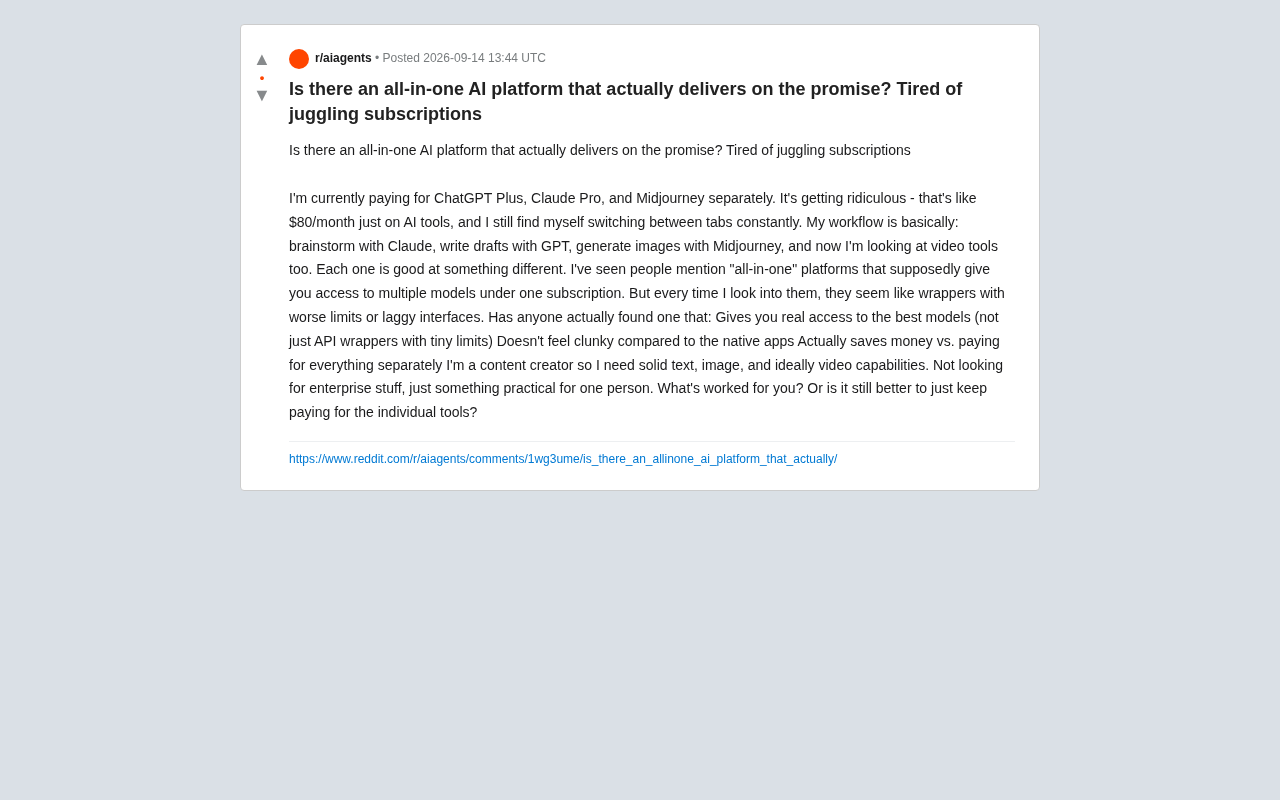
Are All-in-One AI Platforms Actually Worth It? A Practical Guide to Escaping Subscription Overload
Tired of paying for ChatGPT, Claude, and Midjourney separately? We break down whether all-in-one AI platforms are actually worth it — and what a smarter subscription stack looks like.
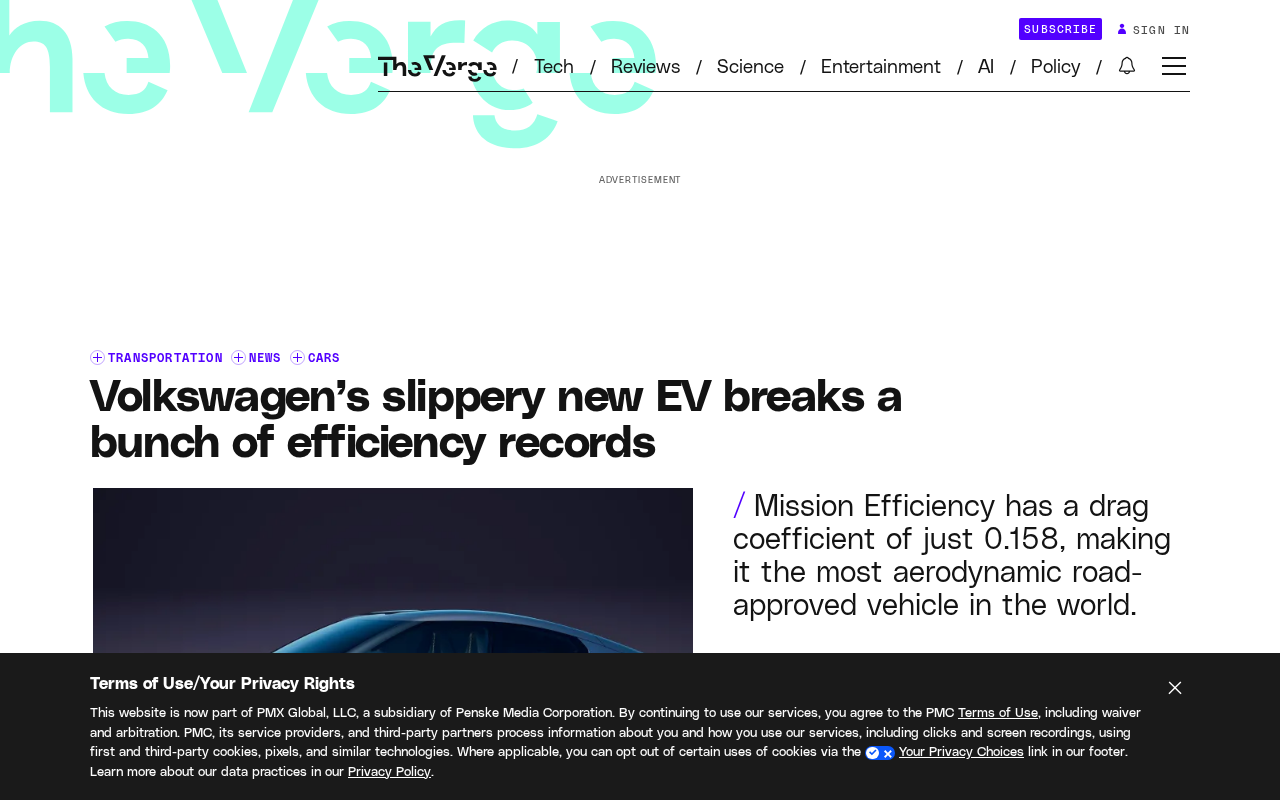
Volkswagen Mission Efficiency: The World's Lowest-Drag EV Breaks Multiple Efficiency Records
Volkswagen's Mission Efficiency prototype claims the world's lowest drag coefficient, built on MEB+ platform with ID. Polo and ID. Cross components. Here's what it means for EV efficiency.