A Fatal Car Accident Can Cost $1.6 Million — California Only Requires $30,000 in Coverage: Analyzing the Auto Insurance Gap
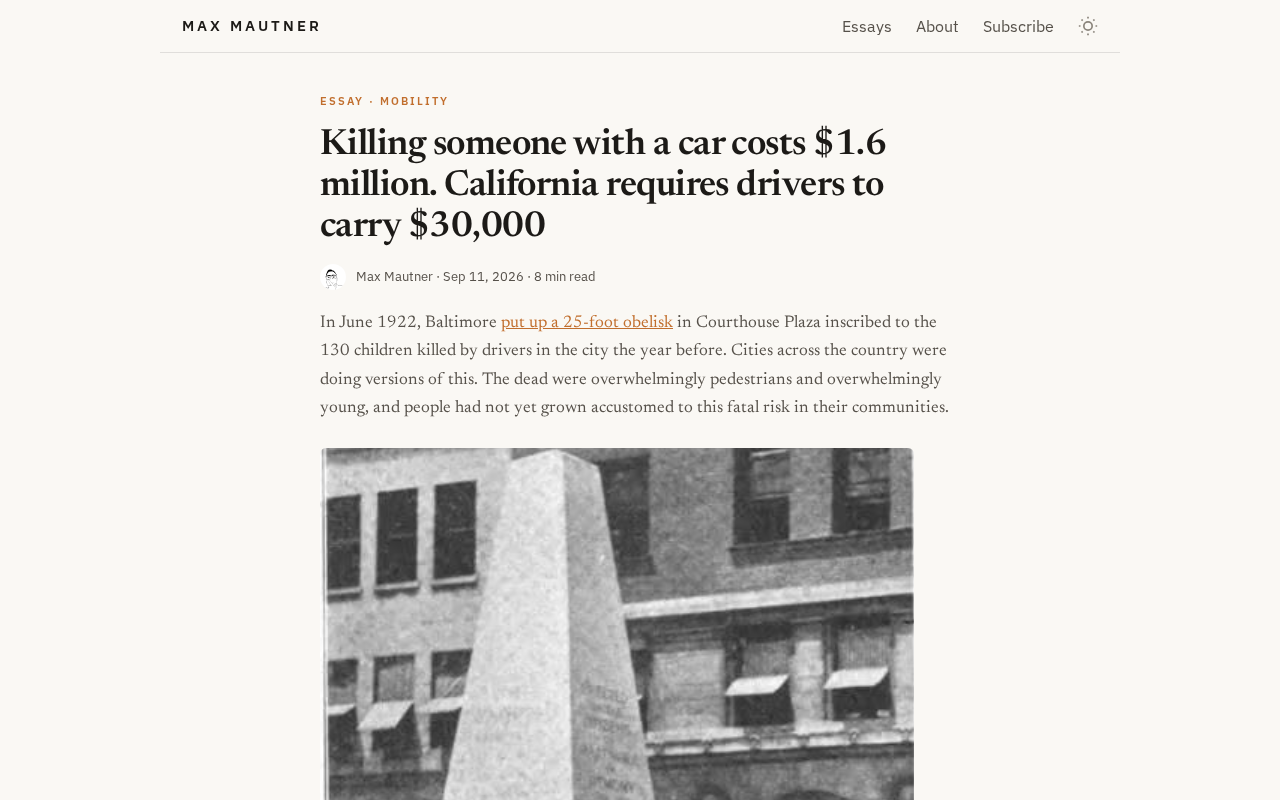
California mandates just $30,000 in auto liability coverage — nearly 50x less than the ~$1.6M cost of a fatal accident.
A Hacker News discussion highlights a stark gap in U.S. auto insurance: fatal car accidents can cost around $1.6 million, yet California only requires $30,000 in liability coverage — a nearly 50-fold difference. State minimums haven't kept pace with inflation, medical costs, or legal damages, leaving at-fault drivers personally liable for any shortfall. The article recommends raising liability limits or adding an umbrella policy to cover catastrophic claims, and notes the deeper policy tension between keeping insurance affordable for low-income drivers and adequately protecting accident victims.
A Risk Figure That's Seriously Underestimated
A discussion thread on Hacker News has spotlighted a long-overlooked contradiction in the American auto insurance system: a fatal car accident can result in economic losses of approximately $1.6 million, yet California law only requires drivers to carry $30,000 in liability coverage.
The nearly 50-fold gap between these two figures exposes a massive chasm between mandatory insurance minimums and the true cost of a serious accident. For the average driver, the legally required minimum coverage falls far short of what's needed to cover the liability from a severe crash.
A quick note: this article is based on a brief Hacker News discussion post (7 upvotes, 1 comment), so the original source material is limited. The analysis below faithfully presents the core argument while adding broader context on how auto insurance works.
Why Mandatory Minimums Fall So Far Short of Real Costs
The Historical Baggage of Minimum Standards
Most states' mandatory auto insurance minimums were set decades ago and have rarely been adjusted to keep pace with inflation, rising medical costs, or evolving legal compensation standards. California's $30,000 liability requirement (for a single death or injury) may have been reasonable when it was first established, but under today's healthcare costs, litigation environment, and standards for valuing human life, that number is clearly outdated.
The roughly $1.6 million figure for a fatal accident typically encompasses multiple components: the victim's lost future earnings, emergency medical costs, pain and suffering damages, and associated legal fees. When an accident results in death or serious disability, actual compensation awards can easily blow past the minimum coverage ceiling.
Who Pays the Difference
When a liability policy isn't large enough to cover a court judgment, the shortfall becomes the at-fault driver's personal responsibility. This means a driver who carries only the legally required minimum could — after causing a serious accident — face personal asset seizure, wage garnishment, or long-term debt.
In other words, the legal "minimum" doesn't mean "sufficient." It's merely the threshold required to legally operate a vehicle, not a meaningful level of risk protection.
What This Means for Drivers
The real value of this discussion is the reminder for everyday consumers to take a hard look at their own policies. Meeting only the legal minimum effectively means you're retaining enormous tail-end risk yourself.
Some common approaches to managing this risk include:
- Increase your liability coverage limits: Raising your coverage to levels that more closely reflect real-world risk (such as several hundred thousand dollars) typically costs far less in additional premiums than the increase in coverage would suggest.
- Add an Umbrella Policy: Stack an umbrella liability policy on top of your auto and homeowners insurance to gain an additional layer of coverage worth $1 million or more, specifically designed to handle catastrophic claims.
- Review what your policy actually covers: Confirm whether your policy covers the other party's death, disability, lost income, and legal fees.
For households with any significant assets, underinsurance-driven personal financial exposure may be one of the most underestimated yet consequential risks out there.
The Deeper Policy Contradiction
From a regulatory design perspective, the failure to regularly update mandatory insurance minimums reflects a growing disconnect between policy and reality. Artificially low requirements may appear to reduce compliance costs for drivers, but they effectively externalize risk — victims may be left without adequate compensation when an at-fault driver can't pay, and the burden ultimately falls on society, the healthcare system, or the victim's own family.
Whether mandatory minimums should be raised is a genuine public policy debate, involving tradeoffs between premium affordability, the cost of car ownership for lower-income individuals, and the protection of accident victims. That's precisely why this issue deserves ongoing discussion well beyond the tech community.
Conclusion
The contrast between "$1.6 million in fatal accident costs" and "$30,000 required by California law" is, at its core, a public lesson in risk awareness. It's a reminder to every driver that the bar for legally operating a vehicle and the bar for genuinely protecting yourself and others are two entirely different things. When making insurance decisions, understanding this gap may matter far more than simply minimizing your monthly premium.
Related articles

Insufficient Material: GPT-5.4 vs Claude Opus Comparison Repository Lacks Substantive Content
A GitHub repo named GPT-5.4-vs-Claude-Opus-4.6 has 0 stars, no code, and no evaluation data — not enough to support a meaningful model comparison article.

Insufficient Material: California Brown Pelican Observation Cannot Support a Tech Article
This source material is a nature observation of California Brown Pelicans at Pacifica Pier. It has no connection to AI or tech topics and cannot support a tech article.

AICON: Natural Language-Powered Infinite Canvas That Turns AI Video Creation into an Editable Workflow
AICON (ai-moive-studio) is an open-source AI video creation tool using natural language and an infinite canvas to turn the full production pipeline into an editable, node-based workflow.