A Lightweight Telegram Client Built for Raspberry Pi: Instant Messaging on Low-Resource Devices

A purpose-built lightweight Telegram client for Raspberry Pi that tackles sluggish performance on ARM devices.
The official Telegram Desktop client is too resource-heavy for Raspberry Pi's ARM hardware. This open-source project offers a lightweight alternative optimized for low-memory environments, leveraging TDLib for protocol handling and minimal GUI frameworks to keep CPU and RAM usage low — a practical solution for Pi users and embedded developers alike.
Why Raspberry Pi Needs Its Own Telegram Client
The Raspberry Pi is one of the most popular single-board computers in the world, with a devoted following among developers, hobbyists, and IoT enthusiasts. It runs on an ARM (Advanced RISC Machine) architecture processor — a design based on the Reduced Instruction Set Computing (RISC) philosophy — prized for its low power consumption, though it typically trails same-price x86 processors in single-core floating-point performance and complex graphics rendering. From the original BCM2835 (single-core, 700MHz) to the BCM2712 powering the Pi 5 (quad-core, 2.4GHz Cortex-A76), performance has improved dramatically, yet the platform's identity has always been rooted in education and embedded applications — not general-purpose desktop computing. As a result, the official Telegram desktop client, with its relatively high hardware requirements, often feels sluggish and unresponsive on resource-constrained devices like the Raspberry Pi.
It was this exact pain point that prompted a developer to share their work on Hacker News: a Telegram client built specifically for the Raspberry Pi. The project is modest in scope, but it embodies the pragmatic spirit of the open-source community — when existing tools don't cut it, build something better. For users running Pi hardware in low-power, low-memory environments, a lightweight, native, and responsive messaging client has genuine practical value.
Going Lightweight: The Core Requirement for Resource-Constrained Devices
Raspberry Pi hardware spans a wide range of specs — from early models with just 512MB of RAM to the Pi 4 and Pi 5 with several gigabytes. But even on newer models, the ARM architecture and relatively limited compute make them a poor fit for heavy applications designed for x86 desktop environments.
The official Telegram Desktop client is built on the Qt framework: feature-rich but sizable. On a Raspberry Pi, apps like this start slowly, consume significant memory, and can interfere with other tasks the device might be handling simultaneously — like home automation or local media serving. The Electron framework is an especially instructive counterexample: it essentially bundles Chromium and Node.js into every app, pushing the baseline memory footprint well above 100MB. That's a painful experience on a Raspberry Pi, and a textbook case of what lightweight development should avoid. A client purpose-built for ARM — stripped down, with minimal resource overhead — is simply a better fit for how the Raspberry Pi actually gets used.
Feature Trade-offs: Good Enough Is Better Than Too Much
Building for embedded or lightweight devices almost always requires trading features for performance. Developers typically prioritize core send/receive messaging functionality while simplifying or lazy-loading advanced features like animated stickers, inline games, and large media previews. This "usability-first" philosophy is precisely what distinguishes a well-crafted lightweight client from a bloated mainstream app.
When choosing a GUI framework for ARM, lightweight graphics libraries like LVGL or Dear ImGui have memory footprints in the hundreds of kilobytes — well suited for embedded scenarios. Terminal-based TUI frameworks like ncurses or Bubbletea (Go) sidestep graphics rendering entirely, with extremely low resource usage. Both approaches tend to unlock far more of the Raspberry Pi's hardware potential than heavier frameworks like Qt or Electron.
Telegram's Open Ecosystem: Fertile Ground for Third-Party Clients
Projects along the lines of "I built a client for X" are a recurring fixture on Hacker News, typically born from a developer's genuine need and technical curiosity. Compared to commercial products that aim to do everything, personal open-source projects tend to be more focused and purpose-driven — solving one specific problem for one specific audience.
Telegram's ability to spawn a thriving ecosystem of third-party clients is largely thanks to its open API and well-documented MTProto protocol. MTProto is Telegram's own encrypted communication protocol, designed with mobile in mind, featuring efficient binary encoding and end-to-end encryption. To lower the barrier to development further, Telegram also open-sourced TDLib (Telegram Database Library) — a cross-platform client library written in C++ that abstracts away all the complexity of MTProto. It supports iOS, Android, Linux, and more, and can be called via JSON or C interfaces, so developers never have to implement the protocol stack from scratch. This stands in sharp contrast to the many closed messaging platforms out there, and is a key reason Telegram's ecosystem continues to thrive.
Want to Build One Yourself? A Few Things Worth Knowing
For developers looking to replicate or contribute to projects like this, here are the key areas to focus on:
- Pick the right stack: On ARM, lightweight GUI frameworks (like LVGL or Dear ImGui) or terminal-based TUI interfaces (like ncurses or Bubbletea) typically outperform heavier options like Qt or Electron, and can bring the app's memory baseline down to single-digit megabytes.
- Leverage TDLib: Telegram's officially maintained cross-platform library dramatically reduces the complexity of protocol integration. With solid community bindings for Python, Go, Rust, and more, TDLib lets developers focus on application logic rather than protocol plumbing — it's the go-to foundation for any third-party Telegram client.
- Test on real low-end hardware: Verify smooth performance on your actual target device, not just "it runs." Devices like the Raspberry Pi Zero are still widely used; stress-testing against a 512MB memory environment is essential.
The Long-Tail Value of Niche Tools
This project may not have attracted massive attention, but it represents a direction worth celebrating in the tech community: providing solutions for use cases that the mainstream ignores. The Raspberry Pi user base, while not enormous, is active and loyal — and there's genuine demand for tools that meaningfully improve what their devices can do.
The value of long-tail tools like this lies in filling the gaps that commercial products have no incentive to cover. When more developers are willing to invest effort for specific platforms and specific needs, the open-source ecosystem as a whole becomes richer and more inclusive. A Telegram client that runs smoothly on a Raspberry Pi may never make tech headlines — but for the users who actually need it, it's exactly the right tool for the job.
Conclusion
Building a dedicated Telegram client for the Raspberry Pi is a classic "scratching your own itch" open-source project — no flashy marketing, no commercial ambitions, just a straightforward solution to a real problem. The technical core comes down to three things: understanding ARM's resource constraints, using TDLib to abstract away MTProto's complexity, and choosing a lightweight rendering approach to keep memory and CPU usage in check. Projects like this, countless and unsung, are what form the bedrock of the open-source world.
For Raspberry Pi enthusiasts and lightweight device users, tools like this are worth knowing about and trying out. For developers, they're also an excellent reference case for learning Telegram API integration and ARM platform performance optimization.
Related articles
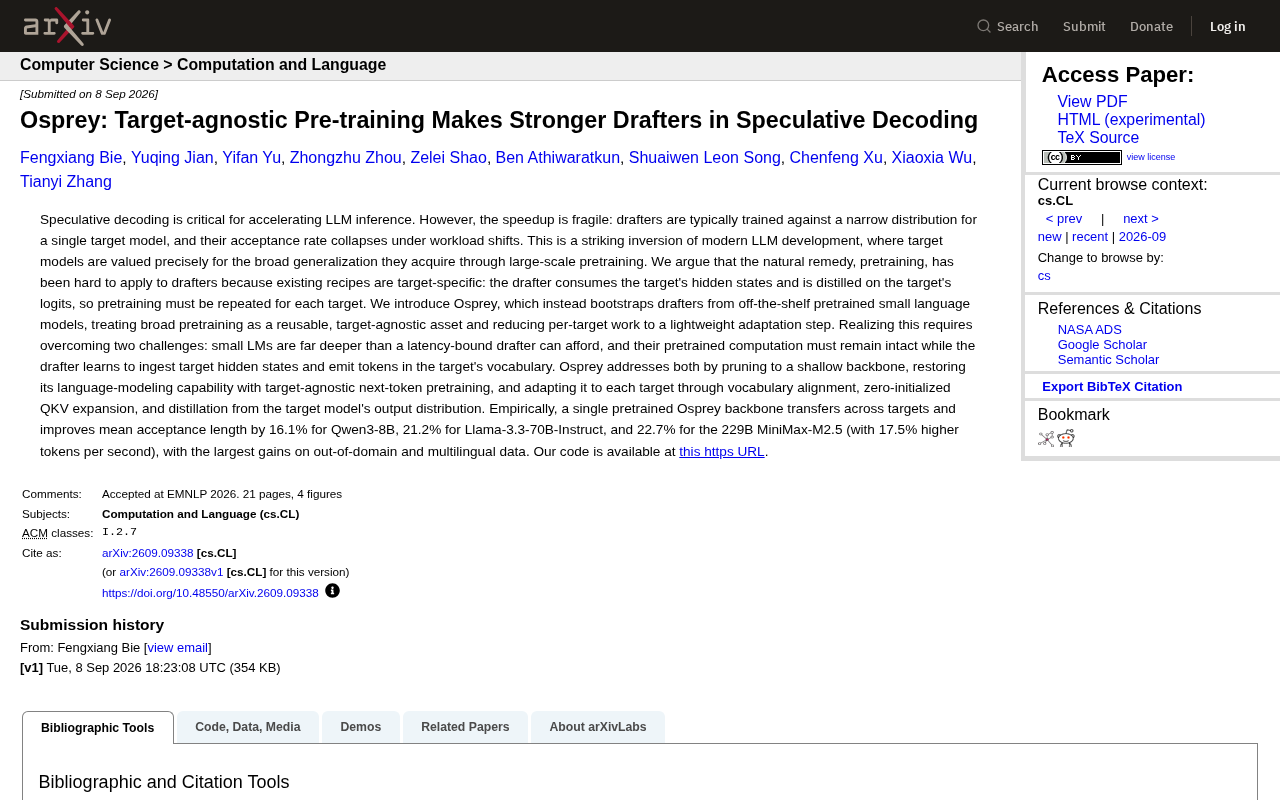
Osprey: General-Purpose Pretraining Makes Speculative Decoding Draft Models More Efficient
Osprey treats pretraining as a reusable, target-agnostic asset. Through pruning and lightweight adaptation, a single draft model transfers across multiple LLMs, boosting mean acceptance length by 16%-22%.
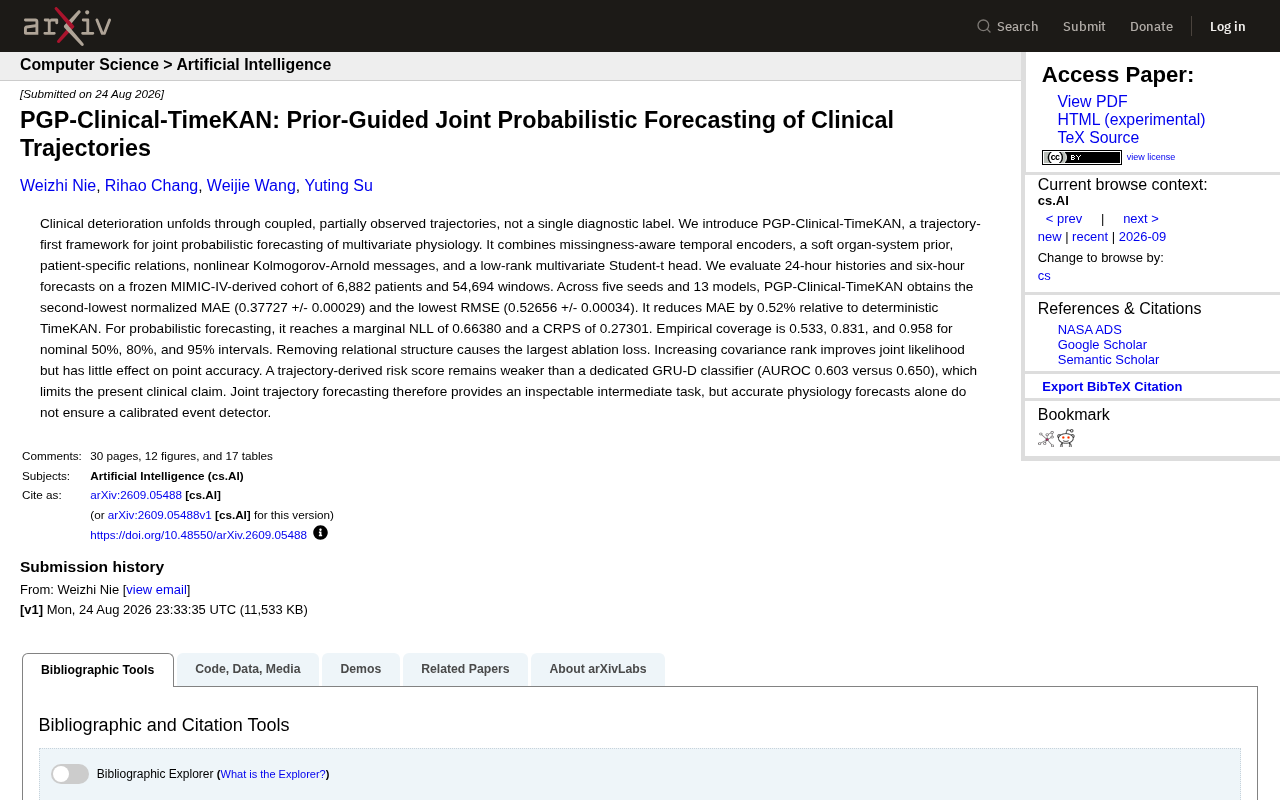
PGP-Clinical-TimeKAN: A Detailed Guide to the Multivariate Physiological Indicator Joint Prediction Framework
An in-depth analysis of the PGP-Clinical-TimeKAN framework for joint probabilistic prediction of multivariate physiological indicators, covering trajectory-first paradigm, KAN message passing, MIMIC-IV validation, and ablation studies.
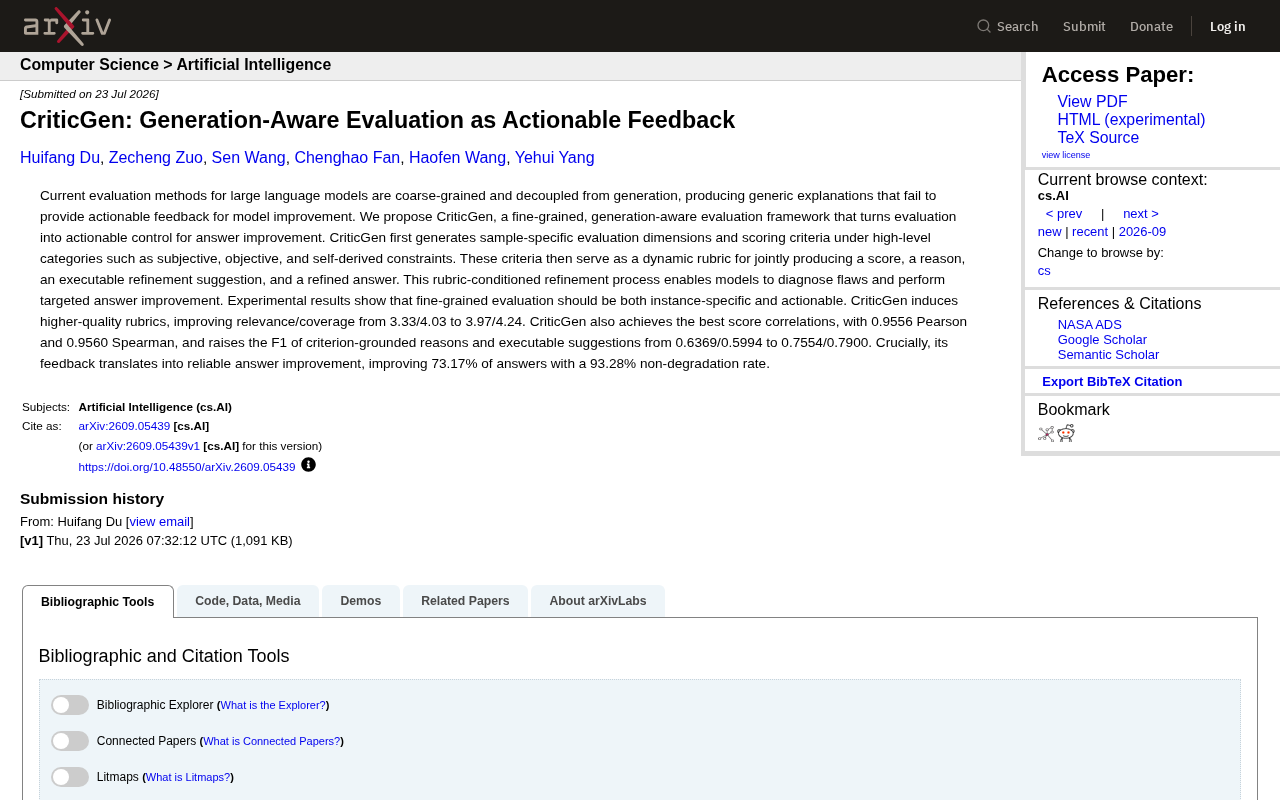
CriticGen: A New Framework That Transforms AI Evaluation into Actionable Improvement Feedback
CriticGen proposes a generation-aware evaluation framework that transforms AI assessment from passive scoring to an active optimization loop, achieving 73.17% answer improvement and 93.28% non-degradation rate.