A New App Built Exclusively for Women's Sports, With No Real-Money Gambling
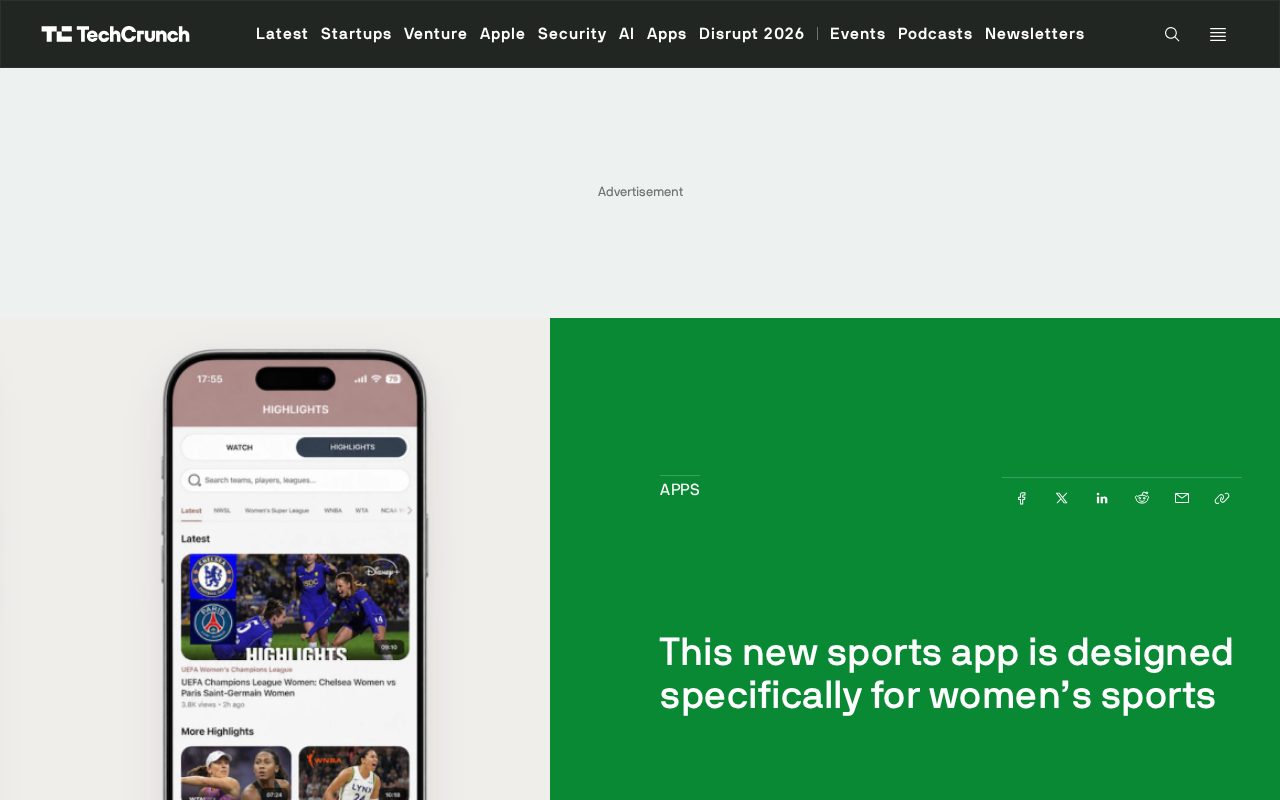
A new app focused on women's sports and explicitly avoiding real-money gambling aims to fill the digital product gap in the space.
A newly launched sports app positions women's sports at its core rather than adding an ancillary channel to a general platform, with schedules, teams, and content organized around women's leagues by default. It explicitly avoids real-money gambling, sidestepping high compliance costs around licensing, geographic restrictions, and user verification while building engagement through match following, content consumption, and community interaction to reach a broader audience. The article notes that women's sports digital experiences have long lagged—fragmented broadcasts, incomplete data, and scattered communities present an opportunity—but media rights and content supply are hard constraints. Without gambling revenue, monetization must come through subscriptions, ads, or sponsorships, with scale requiring a large user base and high engagement; focus brings differentiation but caps the market ceiling, making retention the key test.
Women's sports are surging in popularity, yet digital products built for this space have long been missing. A newly launched sports app aims to fill that gap—focusing entirely on women's sports while drawing a clear line: no real-money gambling.
An App That Serves Only Women's Sports
According to the original report, the app's goal is to change how fans engage with women's sports. Rather than tacking a "women's channel" onto a general-purpose sports platform, it puts women's sports at the core of its product identity. This "native" approach means schedules, teams, players, and content are all organized around women's leagues and competitions by default—not as an afterthought.
For an audience that has long been overlooked, this is itself a shift in product logic: treating women's sports not as supplementary content, but as the main content.
Why "No Real-Money Gambling" Is a Product Decision
The app explicitly states it does not involve real-money gambling. In the sports app space, this is no throwaway disclaimer.
On one hand, real-money gambling faces strict compliance requirements in many markets; once a product ventures into it, it incurs substantial costs around licensing, geographic restrictions, and user verification. On the other hand, the audience composition and motivations of women's sports fans may not align closely with betting-oriented products. Building engagement around following matches, consuming content, and community interaction rather than wagering allows the product to reach a broader audience and sidestep the most complex regulatory territory.
In other words, "no gambling" is both a statement of values and a pragmatic choice of monetization path.
In the sports-tech context, real-money gambling typically refers to businesses where users wager actual currency and the platform or a third-party operator pays out winnings, including sports betting, paid-entry fantasy sports, and some prediction markets. The key distinction from "free-to-play contests" or "points-based predictions" is whether money flows in and out and payouts are made. In the U.S., such businesses are governed by multiple layers of state gambling regulations and federal rules such as the Unlawful Internet Gambling Enforcement Act (UIGEA); platforms often need to apply for licenses state by state, integrate geolocation and age verification, and fulfill anti-money laundering (AML) and responsible-gambling obligations. In Europe, they are subject to national licensing regimes and the Anti-Money Laundering Directive. Precisely because compliance costs are high and regulations are fragmented across geographies, many sports apps targeting vertical audiences choose to strip out real-money gambling entirely in exchange for broader launchable markets and lower legal burden.
The White Space in Women's Sports Digitization
Growing attention for women's sports is plain to see, but the accompanying digital experiences often lag: broadcast resources are fragmented, statistics are incomplete, and community discussion is scattered. The new app is targeting exactly this gap.
Its opportunity lies in the fact that women's sports fans are not yet well served by existing sports apps—switching costs are low, and brand loyalty is easier to build early on. The challenge is that content supply and media rights are hard constraints: without stable event resources, even the best product design struggles to retain users.
Media rights are the core constraint on content supply for sports apps. Rights are typically licensed by league, season, geography, and platform type (linear TV, streaming, mobile), with pricing tied to exclusivity. The rights landscape for women's sports is relatively fragmented: in the U.S., for example, broadcast rights for the WNBA, NWSL, and college women's events belong to different leagues and media groups, with some games scattered across regional sports networks and streaming platforms—making it hard for a single app to aggregate a complete schedule at once. In addition, licensing of real-time data and statistics is often tied to official data providers, making acquisition costs non-trivial for smaller platforms. This explains why women's sports apps in their early stages often rely on official partnerships, content alliances, or original content to supplement supply rather than simply purchasing rights.
Can This Business Work?
Without relying on gambling revenue, the app needs to find money elsewhere: subscriptions, advertising, sponsorships, or content partnerships are all possible directions. Such models are not without precedent in women's sports, but scaling requires a sufficiently large user base and high engagement.
More critically, it needs to strike a balance between "focusing on women's sports" and "commercial sustainability." Focus brings differentiation, but also caps the addressable market. Whether it can convert the growth momentum of women's sports into product retention is the question this app must answer next.
Subscriptions, advertising, and sponsorships are the three most common monetization paths for sports apps, but each has different conditions for success. Subscription models require irreplaceable content—users willing to pay for exclusive events or in-depth data—yielding higher ARPU but typically lower conversion rates. Advertising models depend on scale: a sufficiently large monthly active user base and longer session times are needed to cover content and bandwidth costs. The advertising value of women's sports audiences has been reassessed by brands in recent years, but CPMs remain affected by seasonality and event density. Sponsorships and brand partnerships suit clearly positioned vertical products, directly connecting events, teams, and brands' marketing budgets. The three are often combined—for example, a free base tier with ads, and a paid tier unlocking data and an ad-free experience. The key is whether the unit economics work: whether customer acquisition cost (CAC) can be covered by lifetime value (LTV) within a reasonable period.
Observation
The value of this app lies not just in the product itself, but in the question it raises: do women's sports deserve a standalone, complete digital experience? If the answer is yes, then "no real-money gambling" may become the default choice for more similar products—rather than a selling point.
Related articles

Turn Your Phone Into a Thermal Camera: Thermal Master 8mm Macro Thermal Imager Review
Thermal Master is a phone-attached thermal camera with 8mm macro focus, compatible with iPhone and Android. Ideal for home inspection, circuit repair, and spotting overheating components—portable and easy to use.

In the Age of AI Programming, Should You Still Write Code by Hand?
Do you still need to write code by hand now that AI programming tools are widespread? A YouTube creator gives a conditional answer: during learning you must type it yourself—friction forces real understanding.

Verge Readers' Black Friday Favorite: Novel Tech Products Beat Discounts
The Verge observes Black Friday reader purchasing behavior: price still matters, but novel tech products are favored in holiday shopping. This article analyzes the trend's implications for tech manufacturers' holiday marketing.