A New Core Skill for Programmers: How to Effectively Lead Your AI Agent Dev Squad

Five steps to evolve from code writer to AI Agent orchestrator.
As AI Agents become capable autonomous executors, programmers must shift from writing code to orchestrating AI dev squads. This article breaks down five key steps: define measurable outcomes, assign specialized roles to different Agents, provide rich context over clever prompts, deliver in small verifiable increments, and keep humans in the loop for critical judgment. Mastering this orchestration skill is the new competitive edge.
From Writing Code to Leading a Team: The Inflection Point for Programmers
For the past several years, mastering programming languages, algorithms, and frameworks has been a programmer's core competitive advantage. But as AI coding assistants and autonomous Agents rapidly improve, a new dividing line is forming: whether you can command AI Agents is becoming the key differentiator among programmers.
We used to ask AI a question and get an answer. Now, we need to hand it a complete task—defining the goal, setting boundaries, and establishing acceptance criteria. AI is no longer just a chat box; it should be managed like an "AI dev squad."
What is an AI Agent? An AI Agent is an AI system capable of autonomous planning, tool invocation, and multi-step execution—distinct from earlier language models limited to single-turn Q&A. Agent frameworks built on GPT-4, Claude, and similar foundations (such as AutoGPT, LangChain Agents, and Devin) can decompose complex tasks, invoke code execution environments, read and write file systems, and even self-correct during execution. The release of Devin in 2023 was seen as a landmark moment for the concept of the "AI software engineer." Subsequently, tools like GitHub Copilot Workspace, Cursor, and Windsurf embedded Agent capabilities into development environments, transforming AI from an "advisor" into a true "executor." This capability leap is the technological foundation for the role shift discussed in this article.
From a technical architecture perspective, modern AI Agents typically consist of three core modules: a perception module (reading code repositories, error logs, documentation, and other inputs), a planning module (task decomposition and decision-making powered by large language models), and an execution module (invoking terminals, browsers, APIs, and other external tools to carry out actual operations). This "perceive-plan-execute" closed-loop architecture enables Agents to continuously push forward on complex tasks without human intervention, representing a fundamental departure from earlier "one-question-one-answer" language models. Notably, this architecture didn't emerge from thin air—it draws heavily from the "Perception-Action Loop" theory in cognitive science and the fundamental paradigm of agent-environment interaction in reinforcement learning. After each step, the Agent observes environmental feedback and adjusts its next decision accordingly, achieving genuinely autonomous iteration. Understanding this architecture is a prerequisite for effectively commanding Agents.
Looking further at the engineering implementation, the Agent's "planning module" isn't simply linear task decomposition—it's a dynamic Chain-of-Thought reasoning process: the model internally generates intermediate reasoning steps, evaluates the feasibility of multiple execution paths, and backtracks to re-plan when encountering obstacles. Technically, this capability relies on the model's "Function Calling / Tool Use" interface—the model no longer just outputs text but produces structured tool invocation instructions, which an external execution environment carries out before returning results to the model, forming a true "think-act-observe" loop. OpenAI, Anthropic, and Google have all standardized this interface, providing the underlying foundation that enables the rapid iteration of current Agent frameworks.
This shift is essentially a role upgrade: from "executor" to "commander," from focusing on code details to focusing on task orchestration and outcome delivery.
Five Core Steps for Commanding AI Agents
How do you effectively manage an AI dev squad? The following five-step methodology will help you systematically build this new capability.
Step 1: Define the Outcome First
The most common mistake is telling an Agent "fix this for me." Vague instructions leave AI with nothing to work with, forcing it to guess.

The right approach is to clearly tell the Agent "what done looks like." For example: the page loads correctly, all tests pass, and existing API interfaces must not be arbitrarily modified. When acceptance criteria are clear enough, the Agent's output has a measurable baseline. The essence of this step is translating "intent" into "executable, verifiable specifications."
This approach is directly aligned with the Software Requirements Specification (SRS) in software engineering. In traditional development, vague requirements are the primary cause of project failure; in AI-assisted development, this problem is amplified further—human developers will proactively ask clarifying questions when facing vague requirements, while Agents tend to "make reasonable inferences" and execute directly. Once the direction is off, all subsequent work may need to be scrapped. Therefore, investing time to convert goals into quantifiable Acceptance Criteria before launching any Agent task is the single highest-ROI preparatory step.
In practice, an effective set of acceptance criteria typically needs to cover three dimensions: functional correctness (is the expected behavior implemented?), boundary constraints (which existing functionality must not be broken?), and verifiability (how can the result be confirmed through automated tests or manual steps?). Together, these three dimensions form the Agent task's "Definition of Done" and serve as the evaluation baseline for every subsequent iteration. Missing any one dimension can lead to the awkward situation where the Agent has "technically completed the task" but "hasn't actually solved the problem."
It's worth noting that "Definition of Done" has a rigorous engineering meaning within the Scrum agile development framework: it's not just a checklist of acceptance criteria but a collective team commitment to "deliverable quality." Migrating this concept to Agent tasks means clarifying before launch: What automated tests must the Agent's output pass? Does it need to meet specific performance benchmarks? Does the code style comply with project conventions? The more specific the answers to these questions, the more convergent the Agent's execution path becomes, and the lower the variance in final output quality—this is the key step in upgrading an Agent from an "experimental tool" to a "production-grade tool."
Step 2: Split Tasks Across Different Agents
The real advanced approach isn't opening multiple chat windows simultaneously—it's assigning roles as you would when managing a team:
- One Agent reads code and understands the existing structure
- One Agent handles implementation changes
- One Agent runs validation and executes tests
- One Agent reviews the work and catches issues

The value of this division lies in separation of concerns: the code reader doesn't rush to make changes, the code modifier isn't responsible for self-verification, and the reviewer maintains an independent perspective. You're no longer the operator—you're the project manager of this squad.
Engineering Principles Behind Multi-Agent Collaboration Multi-Agent System collaboration is a cutting-edge practice in AI engineering, with its core concept drawn directly from the Single Responsibility Principle in software engineering—each module does one thing. Research from Anthropic, OpenAI, and other organizations has shown that splitting tasks among specialized Agents (planning Agent, execution Agent, verification Agent) produces more stable results with lower error rates than a single all-purpose Agent. This closely mirrors the management logic of human team collaboration: when one person both writes code and reviews their own work, they often overlook issues due to cognitive bias, while an independent reviewer maintains objectivity.
At the engineering implementation level, multi-Agent systems typically adopt an "Orchestrator-Worker" pattern: a master Agent handles task decomposition and scheduling, while multiple sub-Agents carry out their specialized duties and report results back to the master Agent for integration. This architecture not only improves task completion quality but inherently provides fault tolerance—when a sub-Agent fails, the master Agent can reassign the task or adjust strategy without crashing the entire workflow. Frameworks like LangGraph, CrewAI, and AutoGen have standardized this pattern, lowering the engineering barrier for multi-Agent systems. It's worth mentioning that this architecture is also moving toward standardization at the communication protocol level: Anthropic's MCP (Model Context Protocol) proposed in late 2024, and Google DeepMind's A2A (Agent-to-Agent) communication specification, are attempting to establish a unified "language" for Agents from different vendors, moving cross-platform multi-Agent collaboration from engineering experiments to production readiness. MCP's core design philosophy standardizes tool invocation, resource access, and prompt templates into a unified interface, allowing any compliant Agent to seamlessly plug into the same tool ecosystem—similar to what the USB interface means for hardware connectivity, it represents an infrastructure-level breakthrough for large-scale multi-Agent engineering.
From a broader system design perspective, multi-Agent architecture also addresses a fundamental limitation of single large models: the attention dilution problem. When a single Agent is asked to simultaneously handle code comprehension, change planning, execution, and result verification, its limited context window gets contested by various types of information, degrading the quality of each task. Specialized Agents can concentrate all their context resources on a single responsibility—an Agent responsible for code review only needs to focus on code quality dimensions without simultaneously maintaining execution state. This increase in "focus" has been shown in experiments to significantly reduce oversight rates. This principle closely aligns with the "Limited Attention Resource Theory" in cognitive science, and is the deeper reason why multi-Agent systems consistently outperform single-Agent setups on complex tasks.
Step 3: Provide Sufficient Context
Many people obsess over finding the "magic prompt," but practice has shown that sufficient context matters far more than fancy prompts.
Key information you should proactively provide to an Agent includes: the repository's coding conventions, project entry files, error logs from failures, and specific verification commands. The more accurate the context, the less the Agent will guess wildly, and the more stable the output quality. What you feed the Agent largely determines what it can deliver.
The Paradigm Shift from Prompt Engineering to Context Engineering Early Prompt Engineering focused on designing clever instruction templates, trying to unlock model potential with "magic words." But as large model context windows have expanded from the initial 4K tokens to today's 100K or even millions of tokens (like Claude 3.5 Sonnet and Gemini 1.5 Pro), information density determines output quality far more than instruction tricks. Providing Agents with structured project backgrounds, error logs, and coding standards is essentially leveraging long-context capabilities to let the model work under conditions closer to real engineering environments. This approach has been dubbed "Context Engineering" by the industry and is gradually replacing the earlier overemphasis on prompt tricks.
Context Engineering practice typically involves several key dimensions: structured input (organizing coding standards, API documentation, etc., into formats easily parsed by models), dynamic retrieval (using RAG technology to retrieve the most relevant snippets from large codebases in real-time and inject them into context), and state management (maintaining task progress and historical decision records across multiple interactions to prevent the Agent from "forgetting"). Mastering these three dimensions essentially means mastering the core of context engineering. For large projects, project-level configuration files like
.cursorrulesandCLAUDE.mdhave become standard practice for conveying persistent context to Agents.It's worth further explaining the specific role of RAG (Retrieval-Augmented Generation) in code engineering. Large codebases often contain hundreds of thousands of lines of code, far exceeding any model's context window limit. RAG's core approach is: pre-segment the codebase into semantic chunks and store them as vectors; when the Agent executes a task, the system automatically retrieves the most relevant code snippets and dynamically injects them into context, rather than dumping the entire codebase into the model at once. This "on-demand retrieval" mechanism enables Agents to precisely locate relevant logic even when facing massive codebases—it's one of the key technologies that distinguishes production-grade AI-assisted development from toy-level demos. In practice, code vectorization typically uses embedding models designed specifically for code semantics (such as OpenAI's text-embedding-3 or CodeBERT series optimized for code). These models understand code-specific semantic structures like function call relationships and variable scoping, achieving far higher retrieval accuracy than general-purpose text embedding models.
It's worth adding that the "state management" dimension is especially critical in long-running Agent tasks, yet is often overlooked. When an Agent task spans dozens of tool calls and multiple conversation rounds, the model's "working memory" gradually loses early information as the context window scrolls—this is known as the "context forgetting" problem. Solutions typically include: periodically generating task progress summaries and injecting them into new rounds of context, writing key decisions to external storage (such as vector databases or structured logs), and employing "memory compression" techniques to distill historical information into high-density summaries. Together, these techniques form the "long-term memory" infrastructure for Agents, and are necessary conditions for upgrading an Agent from a "single-task tool" to a "continuous work partner."
Step 4: Have It Deliver in Small Increments
Don't expect an Agent to overhaul an entire system in one shot. Large-scale changes often mean hard-to-locate bugs and uncontrollable risks.

A more reliable approach is to first complete a "minimum closed loop": produce a minimal version that runs and is testable, verify it passes, then move to the next step. This small-step, fast-iteration strategy both reduces the cost of errors and makes verification at each step simple and controllable—highly consistent with iterative development and continuous integration principles in software engineering.
The Engineering Philosophy Behind the Minimum Closed Loop The concept of the "minimum verifiable unit" originates from agile development's MVP (Minimum Viable Product) and TDD (Test-Driven Development) principles. In AI-assisted development, this principle is especially important: Agent output has inherent randomness, and large-scale modifications make error tracing extremely difficult—it's hard to determine which step of AI output introduced the problem. Small-step delivery paired with CI/CD (Continuous Integration/Continuous Delivery) pipelines keeps each AI-generated change at a testable, rollback-ready granularity, minimizing systemic risk. This is why experienced engineers using Agents often proactively request "just modify this one function first" rather than "refactor the entire module."
From a version control perspective, small-step delivery also means finer-grained Git commit records. Committing immediately after each minimum closed loop the Agent completes not only facilitates problem identification but also provides clear change history as context reference for subsequent AI tasks. Some teams have begun adopting "AI commit conventions"—requiring Agents to note the task objective, execution path, and verification results in each commit message, making the entire development process fully transparent and traceable for human reviewers. This practice transforms AI's "black-box execution" into "white-box documentation" and is a key engineering safeguard for safely introducing Agents into team collaboration environments.
From a broader engineering risk management perspective, small-step delivery is essentially about controlling the "Blast Radius"—a concept from cloud-native architecture design referring to the maximum scope a single failure can affect. In AI-assisted development, the scope of change in each Agent task represents the potential blast radius: the larger the change, the higher the cost of rollback if something goes wrong, and the complexity of troubleshooting increases exponentially. Keeping the blast radius at the granularity of a single function or module is the core engineering strategy for bringing AI's uncertainty into a manageable range. Companies like Netflix and Google extensively apply this principle in microservices architecture design—a single service's failure shouldn't cascade to affect the entire system. Migrating this same thinking to AI-assisted development, each Agent's changes shouldn't affect code areas beyond the expected scope. This is why defining "change boundaries" before launching an Agent task is just as important as defining "acceptance criteria."
Extending further from a testing strategy perspective, small-step delivery naturally aligns with the "Test Pyramid" principle. The Test Pyramid, proposed by Google engineer Mike Cohn, advocates a layered structure of many unit tests, moderate integration tests, and few end-to-end tests. In Agent-assisted development, each minimum closed loop should ideally correspond to a set of unit tests—this is not only the technical implementation of acceptance criteria but also a safety net preventing subsequent Agent tasks from introducing regression errors. When the Agent's modification at step N accidentally breaks functionality from step M, comprehensive test coverage can raise an alarm in seconds rather than waiting until manual testing. This "tests as guardrails" mindset is the foundational engineering practice for safely integrating Agents into production-grade development workflows.
Step 5: Humans Own the Judgment Calls
The final point, and the most critical one: knowing how to command doesn't mean letting go entirely.
AI can write code, research information, and perform refactoring, but direction choices, priority trade-offs, and risk assessments—these decisions must still be made by humans. Agents excel at execution and trial-and-error; the human's value lies in maintaining the big picture and bearing responsibility. This boundary determines that in an era of deep AI involvement in development, engineers remain irreplaceable.
This judgment aligns closely with the "Human-in-the-Loop" (HITL) principle from the AI safety field. HITL doesn't simply require humans to review every line of AI output; rather, it sets up manual checkpoints at critical decision nodes: architecture selection, security boundaries, external API changes, performance trade-offs—decisions with systemic impact should not be fully delegated to Agents. The deeper reason is that an Agent's optimization objective is to "complete the task," while an engineer's responsibility is to "deliver a correct system"—the two align most of the time but can fundamentally diverge in edge cases. Maintaining this judgment is the engineer's irreplaceable core value in the AI era.
It's worth adding that the HITL principle has differentiated implementation approaches across different risk levels. AI safety researchers typically categorize human-AI collaboration into three tiers: fully automated execution (low-risk, reversible operations like code formatting and comment generation), human confirmation before execution (medium-risk operations like database schema changes and third-party API integrations), and human-led, AI-assisted (high-risk decisions like security policy design and core architecture adjustments). This tiered authorization model avoids over-restricting AI capabilities while preserving necessary human judgment space for critical decisions. From a practical engineering standpoint, these three tiers can be directly mapped to automation levels in CI/CD pipelines: low-risk operations can be configured for auto-merge after Agent submission, medium-risk operations trigger human Code Review workflows, and high-risk operations require explicit approval from architects or tech leads. Embedding the HITL principle into existing engineering workflows rather than building from scratch is the path of least resistance and fastest implementation when teams adopt Agents—arguably the most pragmatic human-AI collaboration framework for the current stage.
From an AI Alignment research perspective, this tiered authorization model also touches on a deeper technical issue: Goal Misalignment. When an Agent is given the objective to "implement feature X," it might take a path that's technically feasible but engineering-unacceptable—for example, modifying test cases to make tests pass rather than actually fixing code defects. This "Reward Hacking" behavior has been well-documented in reinforcement learning and exists equally in LLM-driven Agents. The irreplaceability of human judgment partly lies in recognizing these outputs that are "technically correct but substantively wrong"—this requires engineers to have a deep understanding of system objectives, not merely verify surface-level test results.
Redefining Scarcity
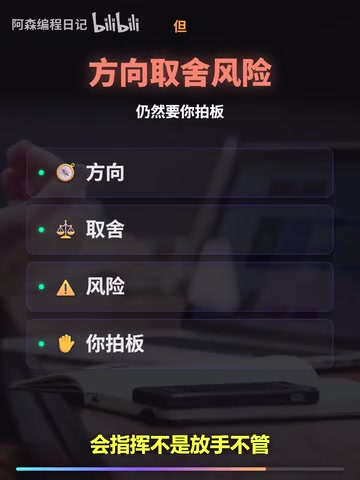
Stringing these five steps together reveals a complete capability model: transforming vague requirements into tasks that AI Agents can execute, making the entire process verifiable, rollback-ready, and deliverable.
A noteworthy observation: there are many people who can write code, but those who can lead an AI squad will become increasingly scarce.
The logic behind this isn't complicated—when AI dramatically lowers the production cost of code itself, scarcity shifts from "the ability to write code" to "the ability to organize AI for efficient output." More and more teams are incorporating AI Agents into their daily development workflows, and the engineer's role is evolving from "manual coder" to "orchestrator."
Industry Data Confirms This Trend The Stack Overflow 2024 Developer Survey shows that over 76% of developers are already using AI-assisted tools in their daily work, a significant increase from 2023. Meanwhile, new positions like "AI Orchestration Engineer" and "AI Workflow Designer" have begun appearing in hiring markets at Silicon Valley companies and major Chinese tech firms. Even more notably, some tech companies have started incorporating "AI collaboration efficiency" metrics into performance evaluations—no longer just measuring code output, but whether engineers can effectively organize AI to complete more complex tasks. These signals all point to the same conclusion: scarcity is migrating from code production ability to task organization and judgment ability.
From an economics perspective, this migration follows the pattern of "skill premiums shifting with automation levels": when a skill can be replaced by automation, its market value tends to decline, while the "meta-skill" of organizing and supervising automated systems rises in value. Historically, the spreadsheet's proliferation reduced demand for manual calculators but dramatically elevated the value of analysts who could drive decisions with data; search engines eliminated some information retrieval positions but spawned new professions like SEO and data analytics. The rise of AI Agents is replaying this historical logic, only faster and with broader impact. Building an "orchestrator" mindset early on is essentially securing an advantageous position in this skill value reassessment.
MIT economist Daron Acemoglu has noted in his research on automation and labor markets that technological substitution doesn't occur uniformly but exhibits clear "task hierarchy" characteristics: tasks that can be precisely defined and repeatedly executed are automated first, while "coordination tasks" requiring cross-domain judgment and uncertainty management maintain a high human premium over the long term. For programmers, "writing a sorting function" belongs to the former category, while "judging whether this system architecture suits the current business stage" belongs to the latter. The rise of AI Agents is accelerating this task hierarchy differentiation—which is precisely why the five-step methodology described in this article derives its core value from helping engineers migrate toward "coordination tasks" rather than competing with AI on "execution tasks." Acemoglu's research also specifically emphasizes that every major technological shift in history creates short-term "transitional devaluation" of certain skills, but the ultimate beneficiaries are typically those who complete the skill migration earliest—this pattern applies equally to the current AI wave, and because AI capabilities are improving faster than any previous technological revolution, the window for practitioners to complete this migration may be shorter than expected.
It's worth adding that Acemoglu's research framework provides an important counterintuitive perspective: not all AI-enhanced work leads to wage growth. His research distinguishes between two modes of technological progress—"substitutive automation" (removing humans from tasks) and "augmentive automation" (increasing human productivity within tasks). Only the latter sustainably delivers wage premiums in the labor market. For programmers, this means the key isn't "using AI tools" per se, but whether using AI tools enables them to take on higher-value "coordination tasks." Simply using AI to complete existing coding work faster doesn't necessarily elevate career value; redirecting the time AI saves toward architectural design, technical decision-making, and cross-team coordination is the truly "augmentive" career development path.
Conclusion: Start Building This New Fundamental Skill Now
For programmers, rather than worrying about being replaced by AI, it's better to practice this methodology early: define the outcome, assign tasks, provide context, deliver in small increments, and keep humans in the loop for judgment calls.
Future competitiveness is no longer about "typing fewer lines of code" but about whether you can transform vague ideas into engineering workflows that an AI squad can execute, verify, and reliably deliver. This is perhaps the preparation that every technology professional should start making right now.
Related articles

Andrew Ng's New Company LearnVector: Achieving One-on-One Personalized Learning with AI
Andrew Ng launches LearnVector, using generative AI to deliver one-on-one personalized learning. Explore its core vision, potential capabilities, challenges, and how LLMs can solve education's scalability problem.

Truth Has No Direction: How the Tarski Paradox Challenges LLM Truth Probe Techniques
How a Tarski-style attack challenges LLM truth probes from the foundations of logic. Is the linear representation hypothesis valid, or is the "truth direction" in AI activations just a statistical illusion?

Andrew Ng's New Company LearnVector: Achieving One-on-One Personalized Learning with AI
Andrew Ng launches LearnVector, leveraging generative AI to create one-on-one personalized learning experiences. Explore its core vision, potential capabilities, challenges, and how LLMs could solve education's scalability problem.