A New Framework for Evaluating Phonetic Encoding Algorithms: Rand Index, Discordance Scores, and Orthographic Transparency Quantification
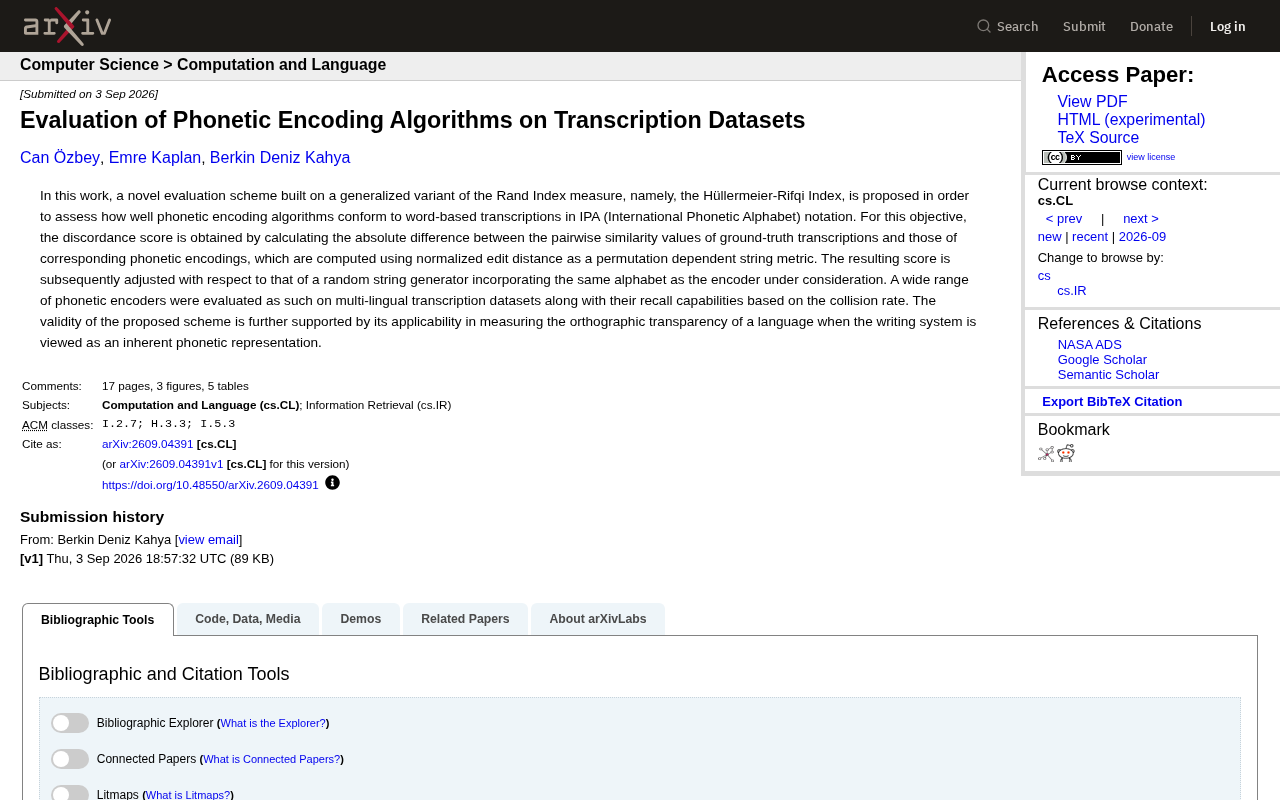
A new IPA-based framework using generalized Rand index to rigorously evaluate phonetic encoding algorithms.
This article examines a novel evaluation framework for phonetic encoding algorithms that uses IPA transcriptions as ground truth and the Hüllermeier-Rifqi generalized Rand index as its core metric. The framework introduces discordance scoring via normalized edit distance, random baseline correction to eliminate chance agreement, collision-rate analysis for recall assessment, and an innovative extension for quantifying orthographic transparency across languages.
Introduction: Why Phonetic Encoding Algorithms Need Better Evaluation Methods
Phonetic Encoding Algorithms play a vital role in applications such as spell checking, name matching, and phonetic retrieval. Classic algorithms like Soundex, Metaphone, and NYSIIS map words to encoded strings so that words with similar pronunciations cluster together. The history of these algorithms dates back to 1918, when Robert C. Russell patented the Soundex algorithm, originally used by the U.S. Census Bureau to handle spelling variations of immigrant names. Soundex maps English words into a code consisting of one letter plus three digits (e.g., Robert→R163), retaining the first letter and grouping consonants by place of articulation while ignoring vowels. Later, Lawrence Philips proposed the Metaphone algorithm in 1990, which improved upon Soundex's handling of English pronunciation rules and better addressed common transformations such as ph→f and ght→t. NYSIIS (New York State Identification and Intelligence System) optimized encoding rules specifically for American English pronunciation characteristics. These algorithms are widely used in database deduplication, genealogical research, and law enforcement systems, but their evaluation has long relied on manually constructed test sets or indirect task-specific metrics, lacking a unified theoretical framework.
However, a core challenge has persistently troubled researchers: How can we objectively and quantitatively evaluate the actual performance of these algorithms?
A recent study published on arXiv (arXiv:2609.04391v1) proposes an entirely new evaluation framework that uses word-level transcriptions annotated in the International Phonetic Alphabet (IPA) as the ground truth, and builds an evaluation scheme based on the generalized Rand index, providing a solid theoretical tool for measuring phonetic encoding algorithm performance.
The International Phonetic Alphabet (IPA) is a standardized phonetic notation system created by the International Phonetic Association in 1888. It currently includes approximately 107 base letters, 52 diacritics, and 4 prosodic marks. The IPA's design principle is that each symbol corresponds to exactly one speech sound, enabling precise one-to-one phonetic representation across languages. In this study, IPA transcriptions serve as the ground truth — regardless of how a word is written in different languages' orthographic systems, its IPA transcription represents an objective depiction of actual pronunciation. Word-level IPA transcriptions typically come from pronunciation dictionaries (such as the CMU Pronouncing Dictionary for English or Wiktionary for multilingual pronunciation data), or can be automatically generated through Grapheme-to-Phoneme (G2P) models. Using IPA as the benchmark frees evaluation from the constraints of language-specific spelling rules, providing a unified reference coordinate system for cross-linguistic comparison.
Hüllermeier-Rifqi Index and Discordance Scores: Core Evaluation Methods Explained
From the Classic Rand Index to Its Generalized Variant
The traditional Rand index is primarily used to measure the agreement between two clustering results, but it inherently handles hard pairwise membership relationships. The classic Rand Index was proposed by William M. Rand in 1971, calculated as the proportion of all data point pairs where two partitions agree on "same cluster / different cluster" assignments. However, the classic Rand index can only handle hard clustering (where each element belongs definitively to one cluster) and cannot handle soft clustering or fuzzy relationships.
This study adopts a generalized variant of the Rand index — the Hüllermeier-Rifqi index, proposed by Eyke Hüllermeier and Maria Rifqi in 2009. This index can handle fuzzy or continuous similarity relationships, allowing pairwise relations to take continuous values rather than only binary 0/1 values. This property is critical for phonetic encoding evaluation: the pronunciation similarity between two words is inherently a continuous spectrum, not a simple "same/different" binary judgment. For example, the pronunciation similarity between 'cat' and 'bat' is clearly higher than between 'cat' and 'dog', but under the traditional Rand index framework this gradient information would be lost. The Hüllermeier-Rifqi index, by introducing fuzzy equivalence relations, can preserve this continuous similarity gradient information for comparison, making it more suitable for phonetic encoding tasks that require measuring "degree of phonetic similarity" rather than simple binary classification.
The Construction Logic of Discordance Scores
The core of this scheme is a discordance score, calculated as follows:
- Compute pairwise similarity values between reference IPA transcriptions
- Compute pairwise similarity values between corresponding phonetic encodings
- Take the absolute difference between the two
Similarity is measured using normalized edit distance as the string metric — an order-dependent measure that precisely captures actual differences in character sequences. Edit distance, also known as Levenshtein distance, measures the minimum number of single-character edit operations (insertions, deletions, substitutions) needed to transform one string into another. For example, the edit distance from 'kitten' to 'sitting' is 3 (k→s, e→i, insert g). Normalized edit distance divides the raw edit distance by the length of the longer of the two strings, normalizing the value range to [0,1] and thereby eliminating the influence of string length on the metric. In phonetic encoding evaluation, this normalization is crucial — a single character difference between short encodings and a single character difference between long encodings should carry different semantic weight. Furthermore, as an order-dependent metric, edit distance captures structural differences in phoneme sequences, making it more suitable than set-based metrics (such as Jaccard similarity) for processing phonetic information that inherently has temporal structure.
In short, a good phonetic encoding algorithm's similarity judgment on word pairs should closely match the "true" pronunciation similarity given by IPA transcriptions — the smaller the difference between the two, the better the algorithm performs.
Random Baseline Alignment Correction: Ruling Out Chance Agreement
Computing discordance alone is not enough — does the resulting score reflect the algorithm's true capability, or is it merely the result of chance?
To address this issue, the researchers introduced a clever correction mechanism: adjusting the score relative to the performance of a random string generator. This generator uses exactly the same alphabet as the encoder being evaluated, thereby ruling out chance agreement caused by factors such as alphabet size and character distribution, making comparisons between different algorithms fairer.
This approach is philosophically aligned with the design of the Adjusted Rand Index in machine learning — only performance exceeding the random baseline is truly meaningful. The Adjusted Rand Index, proposed by Hubert and Arabie in 1985, subtracts the expected value of the Rand index under random label permutation and then normalizes, so that the expected score for random clustering is 0 and perfect agreement is 1. The correction strategy in this study follows the same philosophy but is more refined: the random baseline generator uses exactly the same alphabet and encoding length distribution as the encoder being evaluated. This means that if an encoder uses only a limited character set (such as the digits 0-6 in Soundex), its random baseline will also generate codes from that same limited alphabet, thereby eliminating collision probability differences caused by different alphabet sizes. This controlled-variable design ensures that evaluation results reflect the algorithm's phonetic modeling capability rather than spurious effects of alphabet characteristics.
Multilingual Experimental Design and Recall Capability Evaluation
The study systematically evaluated multiple phonetic encoders on multilingual transcription datasets. This design is critical because many classic phonetic algorithms (such as Soundex) were originally designed for English, and their applicability to other languages has long been questionable. Cross-linguistic evaluation reveals the generalization boundaries of different algorithms.
Beyond consistency measurement, the study also assessed algorithms' recall capability based on collision rate — how many different words are mapped to the same encoding. Collision rate is a key engineering metric in information retrieval and data matching. In the context of hash functions, a collision occurs when different inputs map to the same output. For phonetic encoders, collisions mean that differently spelled words produce identical codes. From an information-theoretic perspective, the entropy of the encoding directly determines collision behavior: the smaller or more concentrated the encoding space, the higher the collision rate. The classic Soundex algorithm produces only 4-character codes with a maximum of roughly 8,000 distinct values, which inevitably leads to high collision rates when facing large-scale vocabularies. Algorithms like Double Metaphone significantly expand the encoding space through longer codes and finer-grained rules.
Collision rate is a double-edged sword:
- Excessively high collision rate: leads to false matches and decreased precision
- Excessively low collision rate: may miss truly similar-sounding words, resulting in insufficient recall
The precision-recall tradeoff manifests in this scenario as follows: lenient encoding (high collision) favors recall (not missing similar words) but introduces noisy matches; strict encoding (low collision) improves precision but may miss valid matches. In practice, spell-checking systems tend to favor high recall (better to have more candidates than to miss any), while security systems for watchlist matching require fine-tuning between the two. Introducing this dimension extends the evaluation from mere "accuracy" to the precision-recall tradeoff that practical systems care about most.
Orthographic Transparency Quantification: An Extended Application of the Methodology
The most inspiring part of this study is the methodological extension — quantifying a language's orthographic transparency.
Orthographic transparency (also called orthographic depth) is an important concept in linguistic typology, first systematically articulated by Katz and Frost in 1992 through the Orthographic Depth Hypothesis. This hypothesis posits that orthographic transparency affects the cognitive pathway of reading processing: transparent orthographies primarily rely on grapheme-phoneme correspondence rules for phonological decoding, while deep orthographies rely more on whole-word visual recognition.
Orthographic transparency refers to the degree of correspondence between a language's writing system and its actual pronunciation:
- High-transparency languages (e.g., Spanish, Finnish): spelling largely reflects pronunciation directly. Finnish's grapheme-phoneme correspondence is almost one-to-one.
- Low-transparency languages (e.g., English, French): there are numerous irregular mappings between spelling and pronunciation. English uses approximately 170 different letter combinations to represent about 44 phonemes — for example, 'ough' can be pronounced in at least 6 different ways (through, though, thought, tough, cough, bough).
The researchers' key insight is this: if the writing system itself is treated as an inherent phonetic representation, then this evaluation framework can directly quantify the degree of deviation between the writing system and IPA transcriptions. This not only validates the effectiveness of the evaluation scheme but also provides an objective quantification tool for computational linguistics and linguistic typology research, enabling the previously qualitative concept of "transparency" to be precisely measured. This approach introduces objective computational methodology into what has traditionally been orthographic research reliant on linguists' qualitative judgment, opening new possibilities for systematic cross-linguistic comparison.
Research Significance and Future Outlook
The value of this work is reflected on three levels:
- Methodological level: Introducing the Hüllermeier-Rifqi index into phonetic encoding evaluation, combined with normalized edit distance and random baseline correction, establishes a theoretically rigorous evaluation system
- Engineering practice level: Horizontal comparison across multiple languages and algorithms, plus collision-rate recall assessment, provides data-driven guidance for engineers selecting phonetic encoding algorithms
- Interdisciplinary level: The quantitative application of orthographic transparency bridges the gap between algorithm evaluation and linguistic research
As fields such as multilingual NLP, speech recognition, and cross-lingual information retrieval continue to advance, precise modeling and evaluation of phonetic similarity will become increasingly critical. This type of foundational evaluation research forms the bedrock that supports the reliability of higher-level applications. If this framework is combined in the future with deep learning-driven phonetic embedding methods (such as multilingual speech representation models based on the Transformer architecture), it has the potential to deliver even greater value in larger-scale, more complex linguistic scenarios. Especially as large language models continue to penetrate speech understanding tasks, a theoretically rigorous and cross-linguistically applicable evaluation framework will become a key yardstick for measuring the strengths and weaknesses of different technical approaches.
Key Takeaways
Related articles

Test-Time Ablation: A Plug-and-Play Method for Improving the Faithfulness of LLM Explanations
A test-time method that improves LLM explanation faithfulness by removing unmentioned concepts from inputs — no model retraining needed, ideal for high-stakes AI decisions.
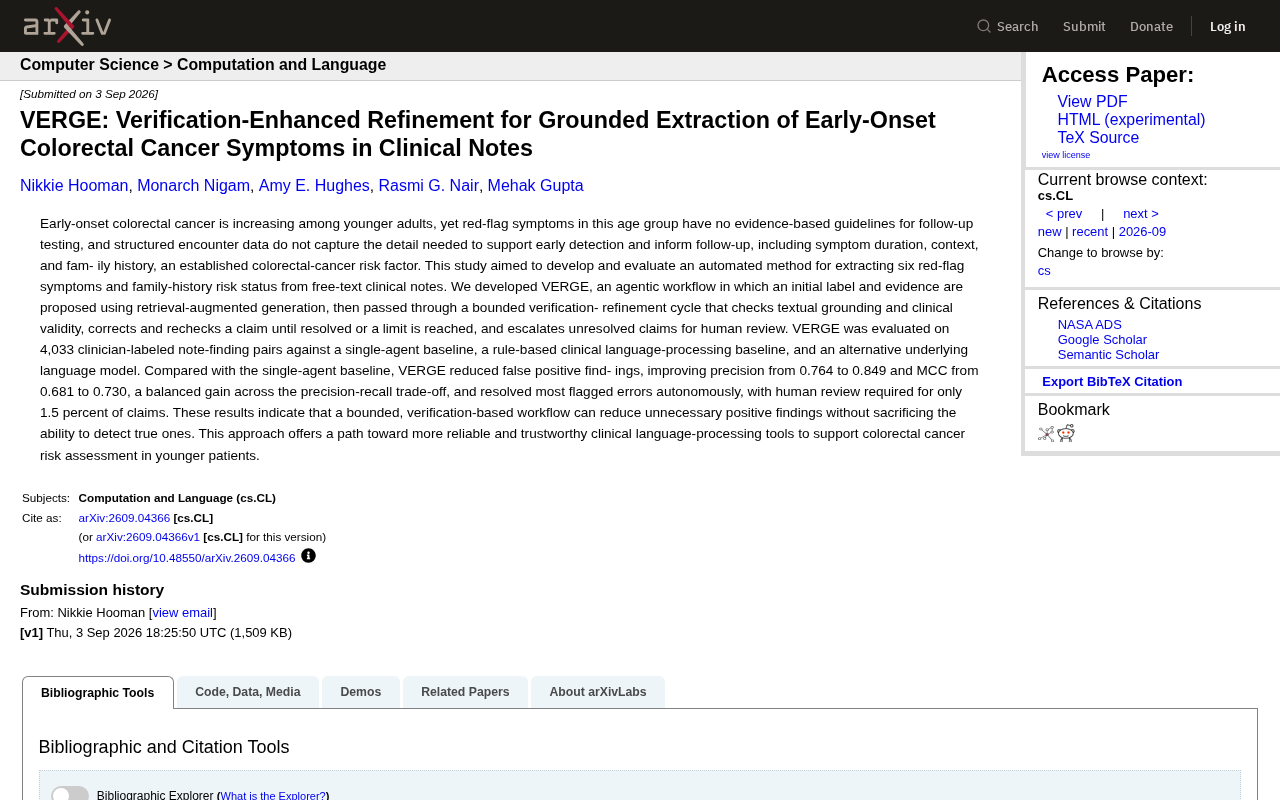
The VERGE Framework: Verification-Enhanced AI for Precise Symptom Extraction from Clinical Notes
VERGE is a verification-enhanced agentic workflow using RAG and bounded verification loops to extract red-flag symptoms from clinical notes, achieving 0.849 precision with only 1.5% requiring human review.

HarvestBench: The First Benchmark to Quantify AI's Willingness to Avoid Harming Animals
HarvestBench is the first benchmark quantifying AI side-effect avoidance as real cost. Testing 9 LLMs in farm simulations reveals kill rates from 0.4% to 98.8%, with moral behavior highly dependent on briefing instructions.