A Non-Coder Built Their First Complete Game with AI: The Development Story of Indie Game "0x00DE"
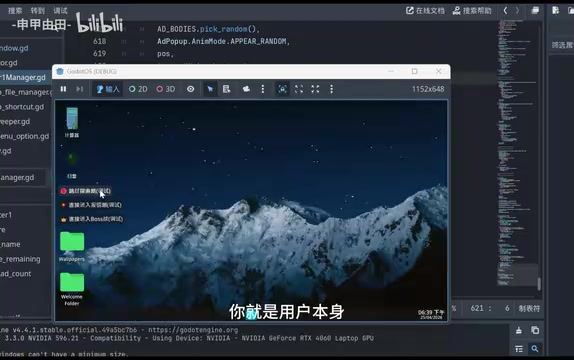
Indie game "0x00DE": a non-programmer's complete "fake desktop antivirus" game built with AI and open-source tools.
A self-described non-coder built the indie game 0x00DE in two months using the open-source project Godot OS and AI programming assistants. Set on a simulated operating system desktop, players fight system infection through Minesweeper-style virus removal and speed math repair mechanics. Despite many designs being cut due to time constraints, "finishing" was itself the victory — demonstrating how AI plus open-source ecosystems can lower the barriers to game development.
A Game Dream That Started with a "Fake Operating System"
Two months ago, a developer who self-described as "not really knowing how to code" opened the Godot engine and discovered an open-source project called Godot OS — a simulated operating system interface built with Godot. An idea immediately struck: What if a real virus invaded this fake desktop?
Godot is a completely open-source, free, cross-platform game engine officially released as open source by Juan Linietsky and Ariel Manzur in 2014. Unlike Unity or Unreal Engine, Godot uses the MIT license, meaning developers pay no royalties and face no commercial restrictions. Its unique node-scene architecture and built-in scripting language GDScript (with Python-like syntax) give it a relatively gentle learning curve, making it a popular choice among indie developers. After Unity announced its pricing policy changes in 2023, a massive wave of developers migrated to Godot, causing rapid community growth and an explosion in the open-source ecosystem. Creative projects like Godot OS are a direct product of this thriving ecosystem.
This was the starting point for the indie game 0x00DE. Submitted to Bilibili's AI game competition track, the game tells an immersive story: you're not controlling a character — you are the mouse cursor, you are the user. Ads multiply, the system deteriorates, until finally — blue screen.
Core Gameplay: Finding Fixes Amid System Collapse
The core gameplay revolves around "system infection and repair," featuring several cleverly designed interactive segments:
Minesweeper-Style Virus Removal
After the blue screen, players enter a BIOS interface and face a virus removal tool disguised as Minesweeper. You scan memory sectors one tile at a time, completing system-level "antivirus" operations beneath the shell of a classic game.
Since Minesweeper was first bundled with Windows 3.1 in 1990, it has become a shared memory of personal computing across generations. One of its original design purposes was to help users practice mouse operations — this forms a delightful intertextual connection with 0x00DE's embedding of Minesweeper into a "virus removal" narrative: a game once used to teach people how to use computers now becomes a metaphorical tool for repairing them. In game design theory, this technique of leveraging players' existing cognitive frameworks is called "Schema Reuse," which dramatically reduces learning costs while triggering emotional resonance through familiarity. It's a common low-cost, high-impact design strategy in indie games. This design perfectly fuses nostalgic elements with narrative logic.
Speed Math Repair Panels
The repair phase transforms into a speed math challenge — only by answering each problem correctly does the progress bar advance one notch. This design choice of abstracting "repair" as "calculation" subtly aligns with the metaphor that computers are fundamentally performing computations.
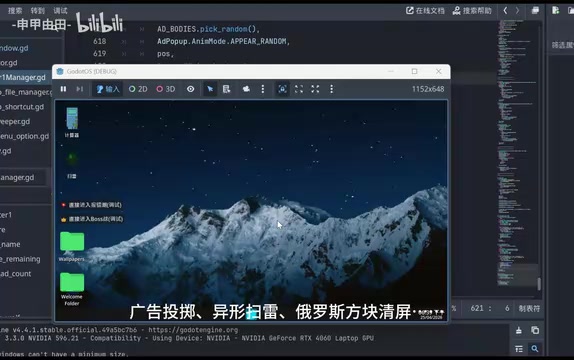
Ambitious Designs Left on the Cutting Room Floor: Regrets in Code Comments
However, the final game was far from the developer's original vision. Numerous designs were cut due to time constraints:
- Five-Phase Boss Battle: Originally designed with phases including ad-throwing, alien Minesweeper, Tetris, and more — all cut
- Deep Narrative Thread: Collective memories of the millennium, contrasts between old and new internet — now reduced to a few lines in code comments
- Chapters Two and Three: A complete multi-chapter story was compressed
- Real Mouse Trembling: Making the player's actual mouse cursor slightly shake after the game ends — a fourth-wall-breaking design that never made it
Breaking the Fourth Wall in game design refers to techniques where a game acknowledges its own nature as a game and intersects with the player's reality. Classic examples include the character in Undertale who remembers the player's save data, the boss fight in Metal Gear Solid requiring players to plug their controller into the second port, and Doki Doki Literature Club directly modifying game files as narrative. The "real mouse trembling" concept in 0x00DE extends this tradition — incorporating the player's physical peripheral into the game narrative, blurring the boundary between virtual infection and reality. The core value of such designs lies in creating powerful existential shock, but technical implementation difficulty and cross-platform compatibility are typically the main obstacles for indie developers.
These cut features illustrate that the developer's design ambitions far exceeded their execution capacity. But this isn't failure — this is the norm in indie game development.
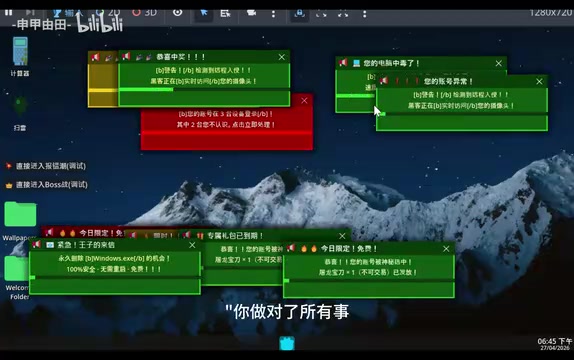
Game Dialogue as Developer Confession: Finishing Is Victory
One line of dialogue in the game leaves a lasting impression:
"You did everything right, but it was meaningless. The infection was never in the sectors."
The developer admitted that this line was originally written for the game's protagonist, but after writing it, they realized it was also speaking to themselves:
You spent two months, cut the boss battle, cut chapters two and three, cut everything you thought "only experts could pull off." Then you submitted this — ordinary? Yes. Beginner-level? Yes. But — it's done.
This self-analysis is almost brutally honest, yet profoundly moving precisely because of that honesty. In the world of indie game development, "finishing" is itself a victory. How many projects die on the road of "just one more feature," how many creative ideas remain forever trapped in design documents.
AI-Assisted Game Development: Lowering Technical Barriers Without Lowering Creative Expression
The development journey of 0x00DE is a typical case study in AI-assisted creation. Building on the open-source project Godot OS and leveraging AI programming assistance, the developer transformed a pure creative idea into a fully functional, complete game.
AI programming assistants represented by GitHub Copilot, Cursor, Claude, and similar tools are essentially code completion and generation systems built on large language models (LLMs) trained on massive code repositories. For game development scenarios, these tools can generate GDScript or C# code snippets from natural language descriptions, explain error messages, and suggest architectural approaches. Their core value lies not in replacing programmers, but in compressing the time cost from "idea to working prototype" — which is especially critical for creativity-driven indie developers with limited time. Research shows that AI-assisted programming can boost experienced developers' efficiency by approximately 55%, while the improvement for beginners is often even more significant, as it effectively fills gaps in syntax knowledge, allowing creators to focus their energy on design decisions rather than syntax debugging.
Several points here deserve attention:
- AI dramatically lowers the programming barrier: Someone who "doesn't really know how to code" was able to complete a game with a full gameplay loop in two months
- Creativity and design remain the core human value: From the central concept of "a real virus in a fake desktop," to the Minesweeper-as-antivirus gameplay design, to the fourth-wall-breaking interaction concepts — these are all manifestations of human creativity
- Open-source ecosystem and AI form a synergy: Godot engine + open-source projects + AI programming assistance constitutes a low-cost indie game development pathway
For creators who want to try game development but are held back by technical barriers, this pathway offers strong reference value.
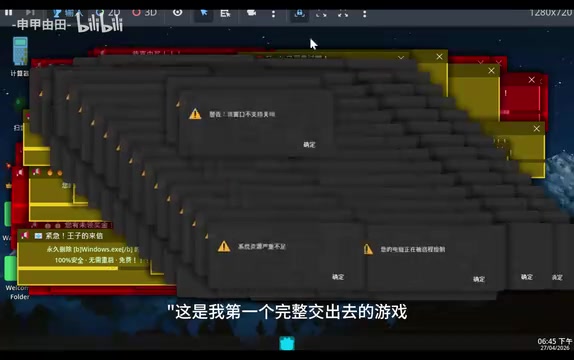
Conclusion: Done Is Better Than Perfect
0x00DE may not be a stunning masterpiece, but it represents a change that's already underway: AI is giving more people with ideas but without technical skills the opportunity to express themselves.
The developer's final words in their video deserve to be remembered by every creator — "This is my first complete game I've ever submitted."
Related articles
 Product Reviews
The Programmer's Desk Setup Guide: Building a Workspace That Feels Like Home
Discover how programmers build productive, comfortable workspaces. From multi-monitor setups to ergonomic design, explore the desk philosophy that drives focus and flow.
 Product Reviews
Qoder vs Cursor Real-World Comparison: Which $20/Month AI IDE Is Better?
Hands-on comparison of Qoder vs Cursor AI IDEs: Agent autonomy, human interaction count, and architecture decisions. Qoder needed only 2 interactions vs Cursor's 8.
 Product Reviews
Cursor Cloud Agent Demo: Eliminating Bottlenecks Across the Entire Software Development Lifecycle
Deep analysis of Cursor's Cloud Agent demo showing how cloud VMs, automated test artifacts, and a full-chain control plane systematically eliminate human bottlenecks across the software development lifecycle.