A Non-Programmer's Complete Guide to Building a Hugo Website from Scratch with Claude

A non-programmer builds a fully custom Hugo site with Claude AI, going from zero to functional in minutes.
DistroTube, a Linux YouTuber who isn't a web developer, used Claude to build a custom Hugo website theme from scratch supporting Emacs Org format. The first working version took just five minutes to generate, with days of iterative refinement adding features like dark themes, card layouts, image support, and tag navigation—work that would have taken weeks manually.
When a Non-Web Developer Meets Claude
As AI coding tools mature rapidly, an intriguing question surfaces: if you're not a web developer, can you still build a personalized website that meets your specific needs? Well-known Linux and open-source YouTuber DistroTube answered this with a resounding yes through his own hands-on experience—using Claude, he built a fully custom Hugo website theme from scratch.
The creator openly admits that over the past few months, he's spent considerable time using Claude to build applications, websites, and write custom Python scripts for generating data. He runs a financial channel called DT Options focused on options trading, and built a Python Flask-based private website around it for his Discord community members to access, featuring custom indicators, charts, and data tables. Flask is one of the most popular lightweight web frameworks in the Python ecosystem, following a micro-framework design philosophy—its core only provides routing and request handling, with all other functionality added through extensions as needed. This flexibility makes Flask particularly suitable for building API services, data dashboards, and small web applications. It's also a common choice among developers in data science and quantitative trading, perfectly fitting scenarios that require quickly displaying custom data.
The value of this case lies not in a professional developer showing off skills, but in how a user who "knows a bit but isn't an expert" leveraged a large language model to overcome technical barriers and accomplish work that would otherwise take weeks or even months.
From Requirements to Implementation: The Complete Process of Building a Hugo Site with Claude's Help
The origin story is simple. The creator uses Emacs Org Mode for all his writing—he describes himself as "living in Emacs." Org Mode is an extraordinarily powerful plain-text markup language and organizational system within GNU Emacs. It's not just a document format similar to Markdown—it also integrates task management, scheduling, Literate Programming, spreadsheet calculations, and more. Org format files use the .org extension, with asterisks marking heading levels. The syntax is concise but far exceeds Markdown in functionality. For deep Emacs users, Org Mode often becomes their unified interface for knowledge management, writing, and programming, so "living in Emacs" is no exaggeration—all notes, articles, and code are produced in the same editor using the same format.
So he wanted to publish blog posts using org-format documents. Hugo, as a static site generator, happens to support both Markdown and org formats—just drop files into the designated folder and it automatically generates the website. Hugo is written in Go and is renowned for its extremely fast build speeds—typically rendering thousands of pages in milliseconds. Unlike dynamic CMS platforms like WordPress, static site generators pre-compile all content into HTML files, requiring no database or server-side runtime, resulting in high security, simple deployment, and fast loading. Hugo's theme system is based on the Go template engine, defining page structure through template files in the layouts directory, while users only need to focus on content files in the content directory.
The problem was themes. After browsing all the publicly available Hugo themes, he concluded: "I don't like any of them." So he made a key decision—rather than force-fitting a preset theme into what he wanted, he'd have Claude build a custom theme from scratch.
His first question to Claude was: "I write everything in Emacs org, I know Hugo supports org, but the public themes aren't great. Can you create a Hugo theme from scratch?" Claude answered affirmatively and provided detailed explanations of how Hugo works, its layout structure, and org support mechanisms.
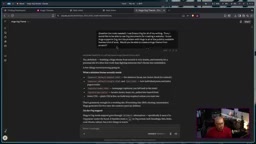
One notable detail: he didn't give overly specific requirements, instead adopting a strategy of "let the AI freestyle first, then fine-tune incrementally." He only stated two basic needs: a hybrid structure of blog posts and static pages, and a dark theme out of the box. Claude then selected a color scheme and began building.
Five Minutes to a Prototype, Days of Iteration to Completion
The most impressive number in this case is the speed of the first version's generation. "The first version of the site, including a sample article, basic layout, and theme, took Claude roughly five minutes to generate." The final delivery was a zip archive that, when extracted, contained a complete Hugo site with theme, even including a default sample article hello.org and an about page.
The subsequent work was gradual, back-and-forth iteration. Over several days, he and Claude communicated repeatedly, adjusting item by item:
- Adjusting spacing and whitespace
- Setting up a card-based layout fitting approximately four articles per row at 1080p resolution
- Adding featured image support for each article
- Cropping the top and bottom of full 1920×1080 images to use as article header images
- Adding a table of contents based on article headings (clickable to jump to corresponding sections)
- Adding tag navigation for browsing articles by tag
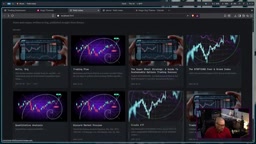
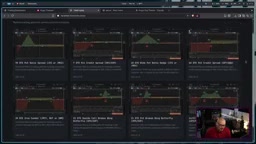
He dumped hundreds of his accumulated trading-related org documents into the content folder as test content, along with test images, quickly validating the actual look and feel of the entire website. This "small steps, single-point adjustments" collaborative approach is key to working efficiently with AI—making only one clear change request at a time rather than throwing all requirements at once. This method not only reduces the probability of AI producing errors but also makes it easier for humans to pinpoint which step went wrong, allowing quick rollback to the last correct state when necessary.
The True Value of AI-Assisted Website Building: Dramatically Reduced Time Costs
For a non-professional web developer, what do these features mean? The creator put it bluntly: "This stuff, if I had to do it myself, would take weeks or even months. Claude only needs a few minutes."
His perspective is quite representative amid ongoing AI controversies. He states plainly: "I see a lot of people fearing AI, mocking Claude, ChatGPT, and other large language models. But honestly, these tools are incredibly useful and save enormous amounts of time." He did the math: Claude's subscription costs $20 per month, and for a content creator whose "time is money," the return on this investment is extremely high.
He also shared Claude's performance across multiple programming languages: it's especially excellent with Python (his primary language for financial and trading scripts), quite proficient with Rust (a trending language), and equally capable with Emacs Lisp—any extension he wants to implement in Emacs, Claude can help build. He even suggested that if you're unsure which language to use, Claude and ChatGPT will often proactively recommend Rust for building applications. Rust is frequently recommended because it provides C/C++-level performance while eliminating memory safety issues at compile time through its unique ownership system. It has rapidly risen in systems programming, WebAssembly, command-line tools, and other domains, and has been voted the "most loved programming language" in Stack Overflow's developer survey for multiple consecutive years.
Next Steps: Integrating Dynamic and Static Sites
This project is far from over. The creator has outlined advanced goals for the future—precisely the kind of complex features that ordinary people would struggle to accomplish alone but can easily implement with Claude's help:
- Adding search functionality to the website
- Implementing a categories system
- Refining the sidebar and contact page (including email functionality)
- Ultimately integrating the blog site with the Flask dynamic charting site
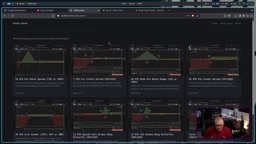
The most imaginative aspect is his desire to dynamically reference charts generated daily by Python scripts via cron scheduled tasks within blog posts. Cron is the task scheduler in Unix/Linux systems, allowing users to automatically execute scripts or commands at set intervals (every minute, hour, day, etc.). In this case, Python scripts run daily via cron, pulling the latest financial market data and generating candlestick chart images. Embedding these dynamically generated charts in a static blog is a clever architectural design—the articles themselves as static HTML don't need rebuilding, but the image files they reference automatically update as the cron tasks execute, achieving a "pseudo-dynamic" effect within a static site framework. These charts change with daily new candlestick data while the article body content remains unchanged. "This would be very complex for someone like me who doesn't really understand web development. I could do it, but it would take a very long time. For Claude, it's just a matter of minutes."
It's worth noting that adding search functionality to a static site is itself a technical challenge. Without a backend database to query, static site search typically relies on client-side solutions—for example, generating a JSON index file at build time, then using JavaScript libraries like Lunr.js or Fuse.js in the browser for fuzzy searching. While the principle isn't complex, it involves build process modifications, template integration, and frontend interaction logic, making it a significant challenge for non-web developers.
Conclusion: Technical Barriers Are Disappearing
This case isn't meant to prove that AI can replace professional developers—quite the opposite. It reveals how AI empowers people who "have ideas but lack professional skills." The creator himself has a certain technical foundation (knows Hugo, uses Emacs, understands org format), which enables him to accurately describe requirements, evaluate output quality, and provide precise feedback. AI here plays the role of a tireless, responsive implementer.
The success of this collaborative model also reveals an important prerequisite: users need "enough domain knowledge to validate the output." While the creator isn't proficient in HTML/CSS/Go templates, he knows clearly what layout and interaction experience he wants, and he can run the Hugo server to preview results locally and spot issues. This ability to "know the goal and verify the results" is the irreplaceable core human role in AI-assisted development.
For content creators, independent developers, and small teams alike, this collaborative model of "humans handle decisions and aesthetics, AI handles implementation and acceleration" is quietly changing the cost structure of building digital products. When building a custom website compresses from "weeks" to "minutes plus a few days of fine-tuning," the disappearance of technical barriers will unleash tremendous creativity.
Related articles

Chain of Thought Isn't Just for AI: How Humans Can Use CoT to Improve Thinking Quality
Chain of Thought isn't just a prompt trick for large models. Starting from a Hacker News discussion, this article analyzes why CoT works for human thinking too, breaks down actionable ways to transfer it, and highlights the key differences between human CoT and machine CoT.
Cloudflare Teams Up with OpenAI: Closi…
Cloudflare Teams Up with OpenAI: Closing the Loop from Vulnerability Discovery to Defense with AI
Cloudflare uses OpenAI Daybreak to investigate security vulnerabilities and generate reviewable remediation plans, while developers use Codex to boost coding efficiency and quality.

Orca Multi-Agent Orchestration in Practice: A Guide to Parallel Collaboration with Claude and Codex
Orca is Stable AI's free open-source agent workbench supporting 34 agents like Claude Code and Codex in parallel. Learn its Git worktree isolation, multi-model orchestration, and mobile management.