A Pastor Runs for Senate: Can Democrats Win Back Religious Voters Through Faith?

A United Methodist pastor runs for Senate as a Democrat, testing whether faith discourse can win back religious voters.
The article focuses on Reverend Adam Hamilton, lead pastor of a United Methodist megachurch in Leawood, Kansas, running for U.S. Senate as a Democrat. Hamilton's campaign message centers on love, charity, compassion, and justice, explicitly supports separation of church and state and the First Amendment, and frames 38 years of pastoral experience as a credential for public affairs. The article notes that Democrats have long ceded religious space to Republicans, and Hamilton attempts to establish a new model for Democratic candidates to discuss faith and reclaim Christianity from extremist forces. The true value of this experiment lies in testing whether sincere faith expression can reconnect with religious voters, but its replicability is questionable because a pastor's community roots and personal credibility are difficult to standardize.
A lead pastor of a United Methodist megachurch is running for the U.S. Senate in Kansas as a Democrat, attempting to flip a seat from the Republican Party. This campaign experiment in Leawood is becoming an important case study for examining the relationship between American politics and religion—it raises more questions than it answers: Can Democrats win back religious voters they have lost in recent years by talking about faith sincerely?
A Pastor's Political Experiment
According to a YouTube video report, Reverend Adam Hamilton leads a United Methodist megachurch in Leawood, Kansas, and is now running for Senate as a Democrat. His campaign theory is not complicated: a candidate with a religious background—a pastor—might have a chance to win back voters the Democratic Party has lost over the past several years.
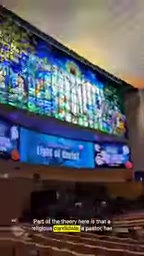
Hamilton's core message centers on love, charity, compassion, doing justice, and protecting Kansans. These words are not unfamiliar in religious contexts, but they are relatively rare in Democratic electoral discourse. The video attempts to answer the question: Does this message truly resonate with voters?
The United Methodist Church is one of the largest mainline Protestant denominations in the United States, emphasizing the combination of personal faith and social justice, with internal divisions between moderate and conservative factions on issues such as abortion and same-sex marriage. A megachurch typically refers to a church with more than 2,000 weekly attendees; such churches possess strong community mobilization capacity and resource networks. Leawood is located in Johnson County, Kansas, one of the wealthiest suburbs in the Kansas City metropolitan area. The region traditionally leans Republican, but suburban voter demographics have shifted in recent years. Understanding this context helps grasp the religious and geographic backdrop of Hamilton's campaign.
Separation of Church and State Is Not Contradictory to Pastoral Experience
Hamilton stated clearly in an interview: "I believe in the separation of church and state. I am not running to use the office to impose religion on anyone. I believe in the First Amendment, and I want to make sure we protect the Constitution."
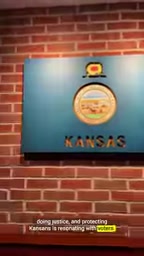
But he simultaneously emphasizes that he brings 38 years of pastoral experience—listening to people, caring for them, empathizing with them, trying to solve problems, and striving to inspire others. In Hamilton's narrative, pastoral experience is not a tool for advancing a religious agenda but a methodology for handling public affairs: first understand the specific person, then solve the specific problem.
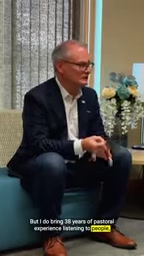
This distinction is crucial. It addresses the most direct concern of secular voters about a religious candidate: Would a pastor entering the Senate try to write specific religious doctrine into law? Hamilton's answer is a clear no, while he does not shy away from his faith identity.
The First Amendment is the first amendment to the U.S. Constitution, containing two clauses directly concerning religion: the Establishment Clause prohibits Congress from establishing a national religion, and the Free Exercise Clause protects the freedom of religious practice. The principle of separation of church and state derives from the Establishment Clause, but in American legal practice, its boundaries have always been contested—the Supreme Court's interpretations have varied in strictness across different historical periods. Hamilton's emphasis that his campaign is not about "imposing religion on anyone" is precisely a defense of his candidacy within the framework of the Establishment Clause, while invoking the Free Exercise Clause to protect space for faith expression.
Why Democrats Have Long Ceded Religious Space
The video points out a long-standing structural phenomenon: Democrats tend to hand over religious space and religious voters to the right and Republican candidates.
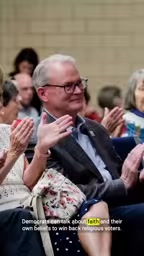
Hamilton believes something different is happening here. What he is attempting is to establish a model for Democratic candidates—how to talk about one's faith, how to talk about religion, and how to "reclaim Christianity" from extremist forces (including the right).
The deeper logic of this strategy lies in: when a certain group monopolizes the interpretive authority of a discourse for a long time, the voters associated with that discourse also become entrenched. The Democratic Party's absence in religious discourse has left religious voters with almost no reason to believe that Democrats can understand or respect their values. Hamilton's campaign attempts to break precisely this cognitive inertia.
Religious voters in American elections are not monolithic. White evangelical Christians have been highly bound to the Republican Party since the 1980s, but Black churches, Latino Catholics, and mainline Protestants have more diverse political leanings and were historically an important part of the Democratic coalition. The Democratic Party's retreat from religious discourse stems partly from its assessment of secularization trends and avoidance of culture war issues, resulting in religious voters being simplified as the "Republican base." Hamilton's experiment directly targets this simplified assumption: there is contestable space within the religious electorate, and the key lies in whether candidates can talk about faith sincerely rather than instrumentally.
Can Faith Discourse Become an Electoral Tool for Democrats?
The true value of this campaign experiment may not lie in whether Hamilton personally can win, but in whether it tests a broader political hypothesis: Can sincere faith expression become a bridge for Democrats to reconnect with religious voters?
From Hamilton's statements, his approach is not to use religion as a mobilization tool but as an entry point for understanding voters' lived experiences. Love, charity, compassion, justice—these concepts are equally valid in public policy discussions, but the Democratic Party's conventional discourse system rarely organizes expression in this way.
What is worth observing is whether this model is replicable. A pastor who has worked in a community for 38 years—his personal credibility is a part of campaign assets that is difficult to standardize. If other candidates merely borrow religious vocabulary without corresponding community roots and faith practice, the effect may be very different.
This Kansas campaign thus becomes a concrete test case: When a pastor participates in an election with a clear premise of separation of church and state, with pastoral experience as a credential for competence, and with love and social justice as the discourse framework, how will voters respond? The answer to this question will influence the direction of discussions within the Democratic Party about religious discourse strategy.
One-line Summary
A United Methodist pastor runs for Senate as a Democrat, testing whether faith discourse can win back religious voters.
Paragraph Summary
The article focuses on the case of Reverend Adam Hamilton, lead pastor of a United Methodist megachurch in Leawood, Kansas, running for U.S. Senate as a Democrat. Hamilton presents a campaign message centered on love, charity, compassion, and justice, explicitly supports separation of church and state and the First Amendment, and frames 38 years of pastoral experience as a credential for handling public affairs. The article notes that Democrats have long ceded religious space to Republicans, and Hamilton attempts to establish a new model for Democratic candidates to talk about faith and reclaim Christianity from extremist forces. The true value of this experiment lies in testing whether sincere faith expression can reconnect with religious voters, but its replicability is questionable because a pastor's community roots and personal credibility are difficult to standardize.
Related articles

World's First Humanoid Robot Company Agility Lists on Nasdaq: Buy or Not?
Agility becomes the world's first pure-play humanoid robot company to list on Nasdaq. This article analyzes what the landmark event means for the industry and investors, unpacking the commercialization test and investment framework for the pure humanoid robot sector.

Agent-Browser: A Browser Automation CLI for AI Agents
Vercel Labs open-sources agent-browser, a Rust-built browser automation CLI designed for AI agents, with over 45,000 GitHub stars and command-line-first browser control.

LZ4: The Open-Source Benchmark for Blazing-Fast Compression
Explore the LZ4 blazing-fast compression algorithm: its design philosophy, performance advantages, and wide use in the Linux kernel, databases, and more. How a 12k+ star open-source project became the speed benchmark.