Abu Dhabi's Mangrove Secret: 15 Minutes from the City to a Sea Forest

Abu Dhabi's mangroves, just 15 minutes from downtown, are a rare growing ecological wonder showing how city and nature can coexist.
Based on a photographer's Abu Dhabi travel video, this article introduces a mangrove ecosystem only a 15-minute drive from the city center. The creator contrasts the city's bustle with the mangroves' tranquility, describes boardwalk and kayak exploration, and highlights that these mangroves are among the few still growing rather than shrinking, with important functions like carbon sequestration, coastal protection, and biodiversity maintenance. As a photographer, he especially appreciates the soft light and pastel tones. The video ends by mentioning the Marwa Marine Biosphere Reserve, home to the world's second-largest dugong population as well as sea turtles and dolphins. The article concludes that Abu Dhabi demonstrates a model where ecological protection and urban development coexist, offering lessons for rapidly urbanizing regions.
A photographer on a trip to Abu Dhabi unexpectedly discovered an ecological wonder hidden beneath the city's bustle. Just a 15-minute drive from the city center lies a lush mangrove forest, with cool sea breezes, calm waters, and a vast landscape known as a "sea forest." This video, a paid promotion from the YouTube channel VisitAbuDhabiChannel, reveals a lesser-known natural side of Abu Dhabi.
From City to Mangroves: A 15-Minute Journey Through Time and Space
At the start of the video, the creator describes his first impressions of Abu Dhabi: the bustle of a modern city, the call to prayer, traffic, and heat. But what truly amazed him was the mangrove ecosystem just a 15-minute drive from the city center.
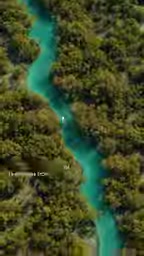
"You can walk above the treeline and look out over this vast sea forest," he says. This striking contrast—from concrete to a natural oasis—forms Abu Dhabi's unique urban ecological landscape. The mangroves not only provide an ecological buffer for the city but also offer residents and visitors a tranquil haven.
Ways to Explore: Walking and Kayaking
There are various ways to explore the mangroves. Besides walking on the boardwalk, kayaking offers another immersive experience. The creator describes paddling into the mangroves as "like entering another world."
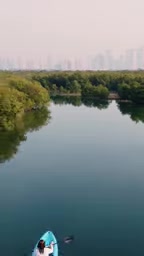
This on-water perspective allows visitors to observe the mangrove roots and the creatures that live among them up close. Mangroves serve as a nursery for many marine species, and their complex root networks provide shelter for fish and crustaceans.
The nursery function of mangroves is a core concept in marine ecology. The intricate prop roots and pneumatophores of mangroves form a dense three-dimensional structure underwater, effectively slowing water flow and trapping sediment and organic debris, providing juvenile fish, shrimp, and crabs with physical shelter from predators. Meanwhile, algae and microorganisms attached to the root surfaces provide a rich food source for the young. Many commercially important fish (such as groupers and sea bream) and crustaceans (such as prawns and mud crabs) use mangroves as nursery habitats in their early life stages before migrating to open waters or coral reefs. Therefore, the health of mangroves directly affects nearshore fishery resources. The continued growth of Abu Dhabi's mangroves means this nursery function is maintained, with long-term value for fishery resources and biodiversity in the Arabian Gulf.
A Rare Growing Mangrove Forest
One key fact in the video: Abu Dhabi's mangroves are one of the few mangrove areas in the world that are still growing rather than shrinking. Against the backdrop of global mangrove loss, this phenomenon is particularly precious.
Mangroves have important ecological functions: carbon sequestration, coastal protection, water purification, and biodiversity maintenance. The ability of Abu Dhabi's mangroves to keep growing is due to local environmental protection policies and natural conditions. This also gives Abu Dhabi a unique appeal for ecotourism.
Mangroves are woody plant communities that grow in tropical and subtropical coastal intertidal zones, named for the red color that mangrove bark takes on when its tannin-rich tissues are exposed to air. They have evolved special adaptations such as vivipary, prop roots, and pneumatophores, enabling them to survive in high-salinity, oxygen-poor mudflat environments. Mangrove ecosystems are among the most productive on Earth, with carbon sequestration per unit area several times that of tropical rainforests, making them an important "blue carbon" resource. Global mangrove area has continued to decline over the past decades, mainly due to aquaculture expansion, coastal development, and pollution. The protection and growth of Abu Dhabi's mangroves are closely linked to the large-scale mangrove planting program the UAE has pursued since the 1970s—the country has planted tens of millions of mangrove trees and established multiple protected areas, making mangroves part of urban ecological infrastructure.
The Photographer's Perspective: Light and Color
As a photographer, the creator particularly mentions the soft tones created by light in the mangroves. "I love the way the light falls on the mangroves, creating this pastel palette," he says.
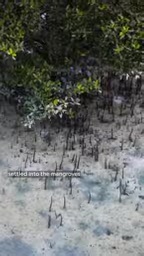
This light effect provides excellent material for photography. At dawn or dusk, sunlight slants into the mangroves and the water reflects the colors of the sky, creating richly layered images. For nature photography enthusiasts, this is a rare shooting location.
Next Stop: Marwa Marine Biosphere Reserve
At the end of the video, the creator expresses interest in other natural attractions in Abu Dhabi, particularly mentioning the Marwa Marine Biosphere Reserve.
According to him, the reserve has the world's second-largest population of dugongs, as well as sea turtles, dolphins, and other marine life. "As a photographer, that would be my favorite place," he says. The dugong is a gentle marine mammal, sometimes called a "sea cow," that feeds on seagrass. Being able to observe dugongs up close is a big draw for many travelers.
The dugong (Dugong dugon) is the only extant species in the family Dugongidae of the order Sirenia, and the only strictly marine herbivorous mammal, with adults about 3 meters long and weighing up to 400 kilograms. They feed on seagrass in seagrass beds, consuming dozens of kilograms a day, so their distribution is closely tied to healthy shallow-water seagrass ecosystems. Dugongs are gentle and slow-moving, with a low reproductive rate (only one calf every 3–7 years), and threats such as boat strikes, entanglement in fishing nets, and seagrass bed degradation have caused global populations to decline; they are listed as Vulnerable by the International Union for Conservation of Nature (IUCN). The Arabian Gulf, where Abu Dhabi is located, is home to the world's second-largest dugong population, estimated at several thousand, thanks to the region's extensive seagrass beds and relatively clean water. The Marwa Marine Biosphere Reserve was established precisely to protect this key habitat, and it also encompasses sea turtles, dolphins, and various reef fish.
Balancing Ecotourism and Urban Development
Abu Dhabi's mangroves and marine reserves show that ecological protection and urban development can coexist. Natural areas so close to the city center not only provide recreational space for residents but also create unique travel experiences for visitors.
This model offers lessons for other rapidly urbanizing regions: while pursuing modernization, preserving and restoring natural ecosystems can improve urban quality of life and tourism competitiveness. Abu Dhabi's mangroves are a vivid example of this idea.
For travelers planning a trip to Abu Dhabi, the mangroves are a destination not to be missed—whether for photography, kayaking, or simply finding a moment of peace in nature.
Related articles
 Tech Frontiers
MuJoCo: An Analysis of DeepMind's Open-Source General-Purpose Physics Simulator
An in-depth analysis of Google DeepMind's open-source physics simulator MuJoCo: high-performance C++ kernel, MJCF modeling format, contact solving principles, MJX GPU acceleration, and robot reinforcement learning use cases.
 Tech Frontiers
Claude API Quick Start: The Official Quickstarts Project Collection
Anthropic's official claude-quickstarts project collection helps developers quickly build deployable apps with the Claude API. Nearly 20k stars, Python-based, great for beginners and prototyping.
 Tech Frontiers
AI Agents Connecting Directly to APIs: Which Calls Can Be Safely Allowed?
AI agents can call any API, but the real challenge is deciding which calls can be safely allowed. This article analyzes allowance decisions from three dimensions—intent matching, least privilege, and controllable impact—and argues that the control layer should sit outside the agent, combined with audit traceability to build a trustworthy API call governance mechanism.