Academa: Using Large Language Models to Automatically Generate Long-Form STEM Lecture Videos

Academa leverages LLMs to automatically generate full-length STEM lecture videos end-to-end.
Academa is a Show HN project that uses large language models to automatically generate long-form STEM lecture videos, covering the full pipeline from course outline planning and script writing to visual asset generation, text-to-speech synthesis, and final video rendering. The article analyzes its technical architecture, the core challenge of maintaining long-context consistency, and the potential for scalable educational content production, while highlighting current limitations in accuracy, pedagogical design, and learning experience.
Introduction: When AI Starts "Teaching"
The online education space is undergoing a transformation driven by generative AI. Generative AI refers to artificial intelligence systems capable of creating entirely new content based on training data, spanning multiple modalities including text, images, audio, and video. Since ChatGPT captured public attention in late 2022, generative AI has permeated numerous fields such as content creation, customer service, and coding assistance. Meanwhile, online education has evolved from the rise of MOOC platforms (like Coursera and edX), to the proliferation of short-form knowledge platforms (like Khan Academy), and now to the emergence of AI-assisted teaching tools. The deep convergence of these two trends suggests that educational content production may shift from being "labor-intensive" to "AI-driven."
Recently, a project called Academa appeared on Hacker News' Show HN section, with a compelling core proposition: using large language models (LLMs) to automatically generate long-form STEM (Science, Technology, Engineering, Mathematics) lecture videos. Hacker News is a technology community run by Y Combinator, Silicon Valley's renowned startup accelerator, and serves as one of the most important information exchange platforms for developers and tech entrepreneurs worldwide. Its Show HN section is specifically designed for developers to showcase personal projects or early-stage startup products, and has been the launchpad for many subsequently successful tech products (such as Dropbox's early prototype).

This is fundamentally different from the short video summaries or AI Q&A assistants we're familiar with. Academa aims to tackle a much harder problem: how to make AI function like a real professor, delivering a complete, logically coherent, and substantive systematic explanation of a complex technical topic. While the project's traction on Hacker News is still modest (7 upvotes, 2 comments), the vote and comment counts on Show HN reflect the tech community's interest in a given direction to some degree — and low traction doesn't necessarily mean the direction is wrong. Many forward-looking concepts often need time before they're widely understood and accepted. The direction it represents — AI-generated structured long-form content — deserves a closer look.
What Academa Is Actually Doing
From "Answering Questions" to "Delivering Courses"
Most mainstream AI education applications today revolve around Q&A-style interactions: users ask questions, and AI responds. Khan Academy's AI tutor Khanmigo, built on GPT-4, can guide learners through Socratic questioning; Duolingo uses LLMs to provide personalized language practice. This model works well for fragmented learning and answering specific questions, but struggles to replace systematic knowledge delivery. A quality STEM course requires progressively building foundational knowledge, interconnecting concepts throughout, and repeatedly reinforcing difficult points.
Academa's positioning is precisely to fill this gap. It targets "long-form" content generation — the output isn't a few-minute explainer on a single concept, but a complete lecture approaching the length of an actual classroom session. This places extremely high demands on the underlying content planning capabilities: the model must maintain logical consistency across long contexts, avoiding contradictions or redundant repetition.
The Unique Challenges of STEM
Choosing STEM as the entry point is both an opportunity and a challenge. STEM content is highly structured and logically rigorous — mathematical derivations, physical laws, and algorithmic processes all have clear right and wrong answers. However, LLMs are fundamentally probabilistic text prediction systems rather than symbolic reasoning engines, making them prone to "hallucinations" in scenarios involving multi-step mathematical derivations and dimensional analysis in physics — generating content that appears plausible but is actually incorrect. This means:
- Advantage: Knowledge boundaries are well-defined, making verification and evaluation straightforward, and AI is less likely to go off-topic with creative tangents.
- Challenge: Zero tolerance for inaccuracy. A single wrong formula or a skipped step in a derivation can mislead learners. This is a well-known weakness of current large language models in mathematical and scientific reasoning.
Technical Architecture Analysis: A Multimodal Pipeline for Video Generation
The Complete Chain from Text to Video
Although the project discloses limited technical details, we can infer the general technical architecture from the description "LLM-generated long-form STEM lecture videos." A complete AI video generation pipeline typically includes the following stages:
- Course Outline Planning: The LLM generates a structured lecture outline based on the topic, determining the sequence of knowledge points.
- Script Writing: Detailed, conversational explanatory text is generated section by section — this is the core test of long-content coherence.
- Visual Asset Generation: Formulas, charts, diagrams, and other visual elements are rendered as slides or animations, potentially involving code generation (e.g., generating plotting scripts) or image generation models.
- Text-to-Speech (TTS): The script is converted into natural, fluent voice narration. New-generation neural network TTS systems like ElevenLabs, OpenAI TTS, and Microsoft Azure Neural TTS can now generate speech that closely resembles human voices, supporting multiple languages, emotional styles, and speed control. For educational lectures, the key TTS metrics go beyond naturalness to include correct pronunciation of STEM terminology (such as chemical compound names and spoken expressions of mathematical symbols), appropriate pauses and emphasis (helping learners grasp logical focus points), and "listenability" over extended periods. Current top-tier TTS systems still require specialized optimization for highly specialized scenarios like reading formulas (e.g., "the integral from 0 to π of sin(x)dx").
- Audio-Video Synthesis: Narration, subtitles, and visual assets are aligned and rendered into the final video.
Long-Context Consistency Is the Core Challenge
Among these stages, the one that best reflects technical sophistication is maintaining consistency across long-form content. Generating a two-minute explanation isn't hard; what's difficult is generating a one-hour lecture that consistently stays on topic, uses terminology uniformly, and progressively increases in difficulty.
The context window refers to the maximum number of tokens an LLM can process in a single inference. Early GPT-3.5 had a context window of only 4K tokens (roughly 3,000 words), while by 2024, Claude 3's context window expanded to 200K tokens, and Gemini 1.5 Pro reached 1 million tokens. Expanding context windows is critical for long-content generation: a one-hour lecture script contains approximately 15,000 to 20,000 words, and combined with necessary prompts and reference materials, it easily exceeds the processing limits of earlier models. However, a larger context window doesn't automatically mean better long-range coherence — research has shown that LLMs exhibit a "Lost in the Middle" phenomenon when processing long texts, where attention to information in the middle portion of the context window is significantly lower than at the beginning and end. This poses a direct threat to quality consistency in long scripts.
Addressing this challenge requires carefully designed prompt engineering, segmented generation, and global verification mechanisms. The complexity of prompt engineering for long-content generation far exceeds that of short-text scenarios: typical strategies include Chain-of-Thought prompting to have the model reason step by step; hierarchical prompting (generating an outline first, then expanding section by section) to maintain structural consistency; and role-setting (e.g., "You are an MIT physics professor with 20 years of teaching experience") to control content style and depth. More advanced approaches include self-consistency checks (having the model review and verify previously generated content) and iterative refinement (multi-round generation-evaluation-revision cycles).
Additionally, the project may incorporate Retrieval-Augmented Generation (RAG) to anchor authoritative knowledge sources and reduce the risk of factual errors. RAG is a technical paradigm combining external knowledge bases with LLMs, first proposed by Meta AI's research team in 2020. Its core approach is: before the model generates a response, it retrieves the most relevant document fragments from trusted external knowledge sources (such as textbook databases, academic paper repositories, Wikipedia, etc.), then injects these fragments as context into the model's prompt, guiding it to generate content based on factual information. In STEM education scenarios, RAG can effectively mitigate LLM hallucination: for example, when generating a quantum mechanics lecture, the system can retrieve authoritative content from the Feynman Lectures on Physics or MIT OpenCourseWare in real time as anchor points, ensuring accuracy in formula derivations and concept explanations. The key challenge with RAG lies in retrieval quality — if retrieved documents are irrelevant or outdated, they may actually introduce noise.
Value and Limitations: A Realistic View of AI-Generated Lectures
The Potential for Scalable Educational Content Production
The exciting potential of tools like Academa lies in scalable production of educational content. The global online education market is projected to exceed $400 billion by 2030 (according to Grand View Research). However, the supply of high-quality educational content has always been a bottleneck: producing a complete MIT-level STEM course typically requires hundreds of hours of a professor's preparation and recording time, plus post-production by a professional team, with single-course costs reaching tens to hundreds of thousands of dollars. This creates severe content imbalance — popular subjects in the English-speaking world (like machine learning and data science) have an oversupply of course resources, while niche subjects in less common languages (like topology or specialized areas of materials science) face severe shortages.
If AI can automate this process, it could theoretically:
- Rapidly cover long-tail, niche knowledge topics, dramatically expanding the breadth of educational content coverage;
- Customize difficulty levels for learners at different stages, enabling truly personalized learning paths;
- Drastically reduce the production cost of quality educational resources — from tens of thousands of dollars to hundreds — particularly benefiting developing countries and non-English-speaking learner communities.
Core Limitations at the Current Stage
However, we need to remain clear-eyed. As an early-stage Show HN project, Academa currently has modest community response and lacks large-scale quality validation. Several core questions remain unresolved:
- Accuracy Assurance: Can AI-generated STEM content achieve the rigor required for teaching? Who reviews and corrects errors? Given that LLM hallucination is particularly pronounced in mathematical derivations and scientific facts, a fully automated content generation pipeline without human review carries the risk of propagating incorrect knowledge.
- Pedagogical Design: An excellent lecture is more than a pile of information — it's a mastery of cognitive patterns. Concepts from educational psychology such as the "Zone of Proximal Development" and "Cognitive Load Theory" guide how teachers organize content, design exercises, and manage learning pace. Can AI truly understand "what's difficult" and "how to explain it clearly," rather than merely mimicking the surface form of teaching discourse?
- Learning Experience: Without a human instructor, how can learner attention and interaction be maintained? Research shows that average attention spans in online learning are significantly shorter than in face-to-face classrooms, and standardized AI-generated content may further diminish learners' sense of immersion and engagement motivation.
Conclusion: A Litmus Test for AI Long-Form Content Generation
Academa may still be in its infancy, but it points to a clear and important trend: generative AI is evolving from a "short-content tool" to a "long-content creator." When models can handle systematic, structured knowledge organization and expression, their application value in education, training, and even knowledge management will be fundamentally redefined.
For practitioners focused on AI application deployment, the significance of projects like this lies not in how well they perform today, but in how they reveal the shifting boundaries of technology. The difficulty of generating long-form STEM lectures — its stringent demands for factual accuracy, extreme dependence on long-range logical coherence, and technical integration of multimodal content coordination — makes it precisely the right litmus test for evaluating large language models' capabilities in "deep reasoning" and "long-range planning." As context windows continue to expand, RAG technology matures, and multimodal generation capabilities improve, the results of this litmus test will become increasingly clear.
Related articles
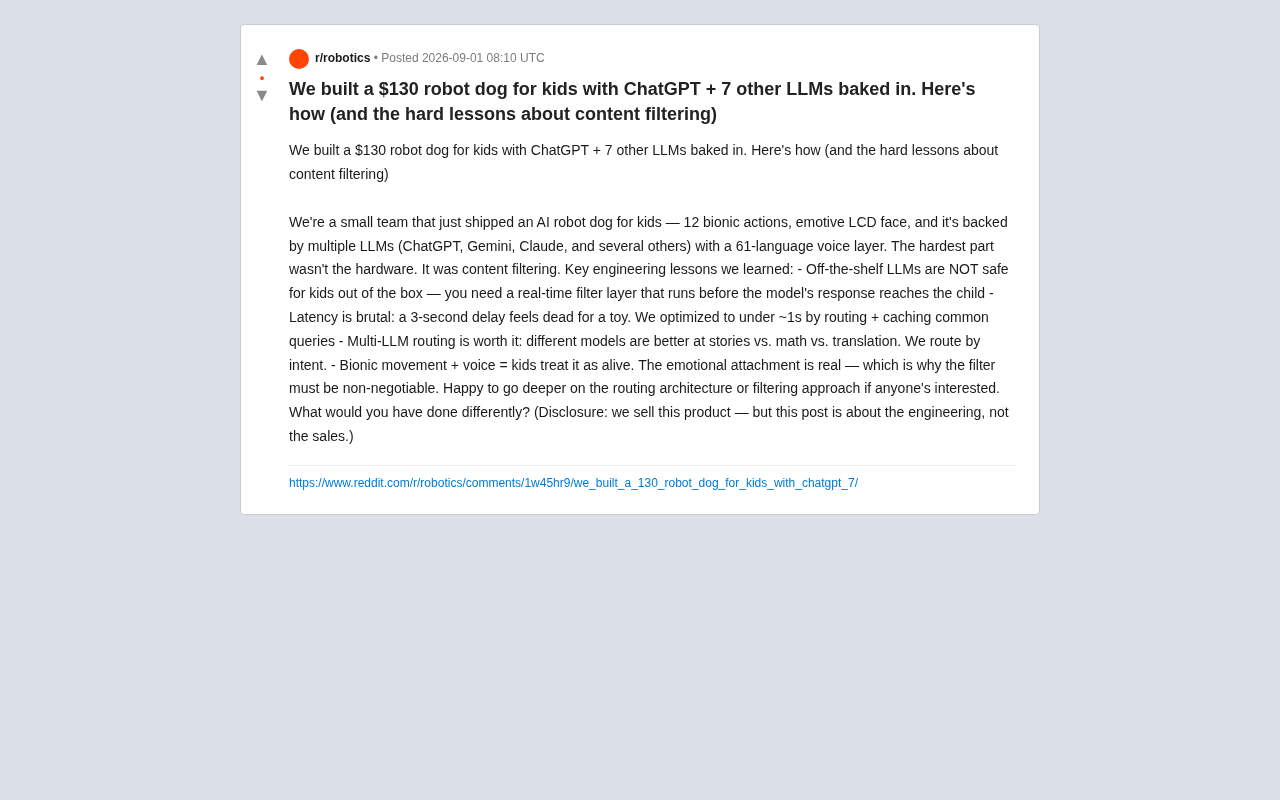
Building an AI Robot Dog for Kids: Multi-Model Routing, Content Filtering, and Latency Optimization
A $130 AI robot dog for kids integrates 8 LLMs with 61-language voice interaction. The team shares key engineering lessons on content safety filtering, multi-LLM intent routing, and sub-1-second latency optimization.
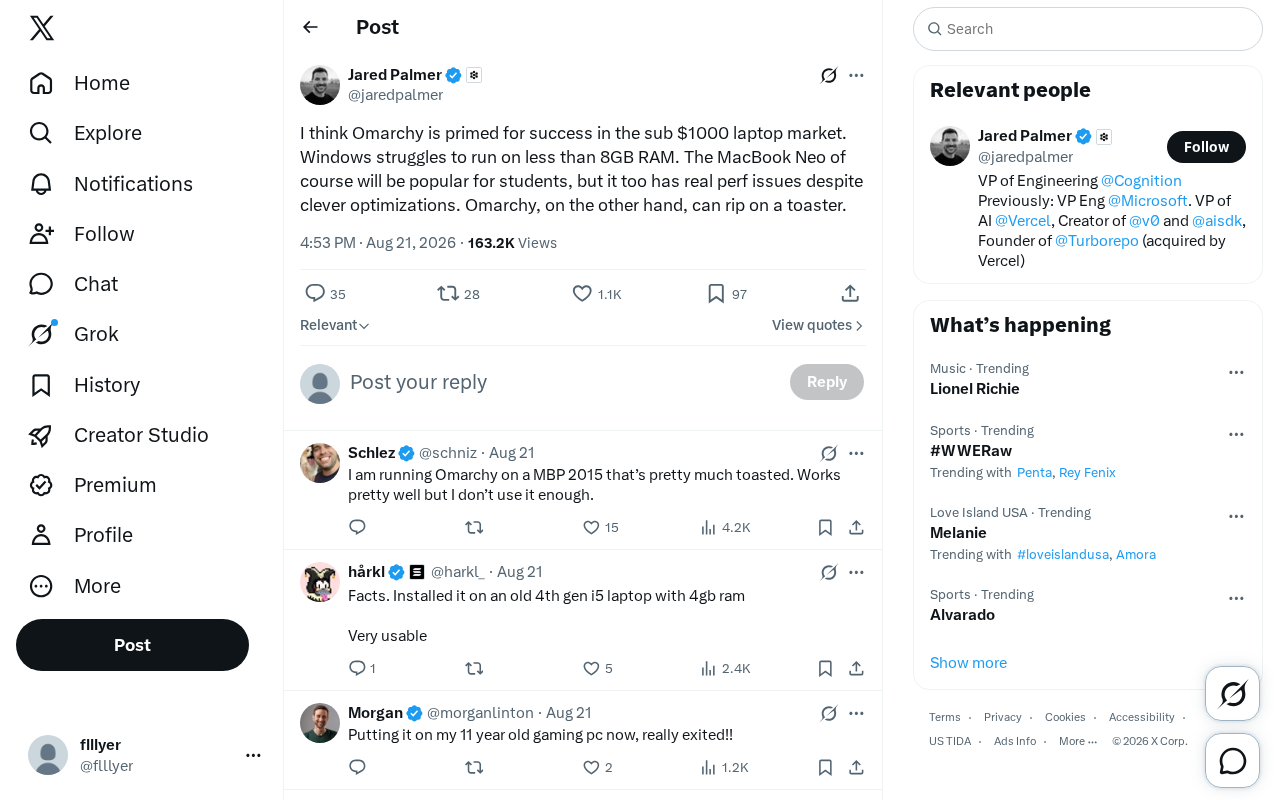
Can Omarchy Dominate the Sub-$1000 Laptop Market? An In-Depth Analysis
Omarchy, based on Arch Linux, shows unique advantages in the sub-$1000 laptop market. This analysis compares Windows and MacBook performance bottlenecks on low-spec hardware and examines why Omarchy enables cheap laptops to run smoothly, plus the ecosystem challenges and market prospects it faces.

AI Agent Beginner's Guide: Building a Creative Strategy Intelligent Assistant from Scratch
A complete guide to building a creative strategy AI Agent from scratch. No coding required — use tools like Dify and Coze to quickly build an intelligent assistant.