Accenture Becomes Anthropic's First Embedded Evaluator — What Does This Mean?
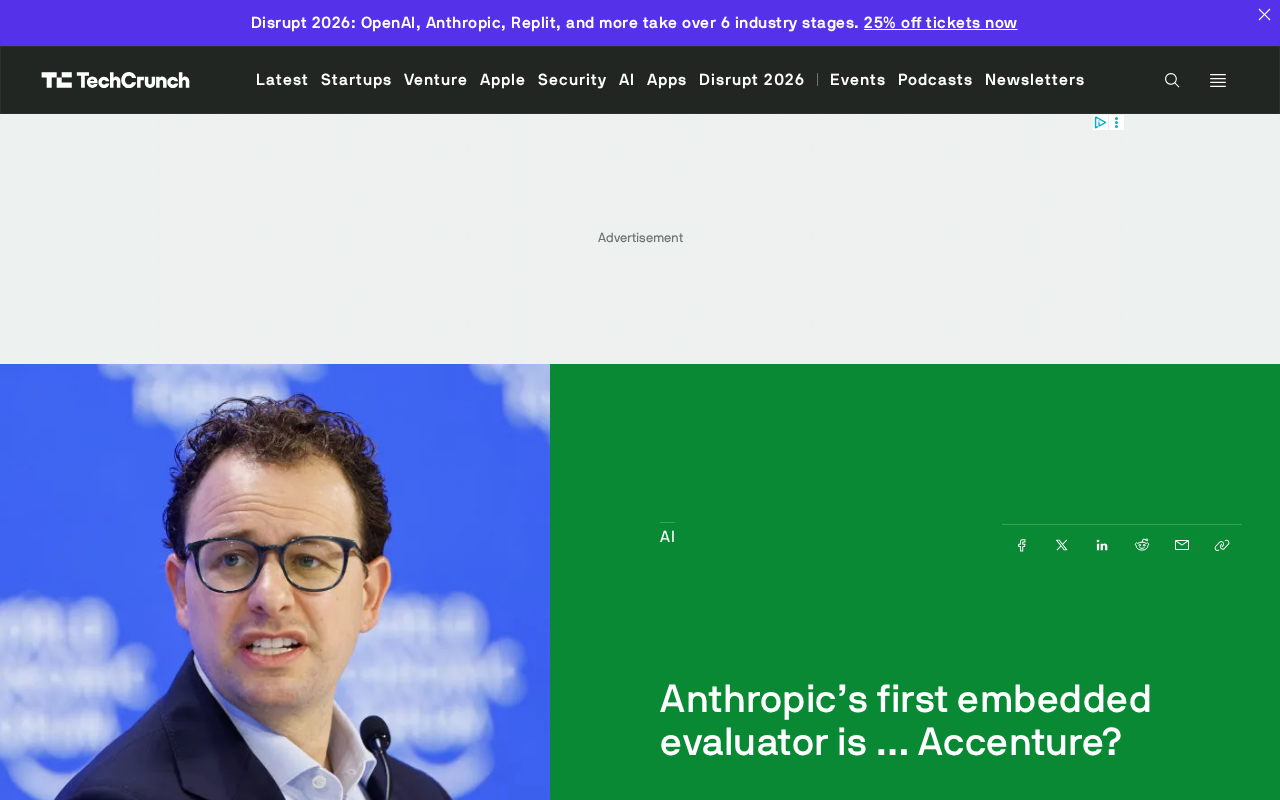
Accenture is reportedly Anthropic's first embedded evaluator, signaling AI's shift into a trust-and-accountability era.
Anthropic and consulting giant Accenture are reportedly forming a new kind of partnership, with Accenture serving as Anthropic's first "embedded evaluator" — working directly inside enterprise workflows to assess and validate AI systems. The deal has been described as the highest-stakes consulting engagement in Accenture's history, highlighting the dual-role tension: consulting firms must simultaneously drive AI adoption and maintain rigorous, independent evaluation. If AI fails at a critical juncture, the evaluator won't be able to stay on the sidelines. This collaboration reflects a deeper industry shift — AI companies are leveraging consulting firms' industry expertise and client trust to break through deployment bottlenecks, while consulting firms redefine their place in the AI value chain from implementers to evaluators and gatekeepers.
A Partnership Worth Paying Attention To
A recent report from a tech media outlet has caught the industry's eye: consulting giant Accenture is reportedly set to become the first "embedded evaluator" for AI company Anthropic. The original piece summed up the weight of this deal in a single line — "Accenture is about to take on the highest-stakes consulting engagement in its history."
Publicly available details remain extremely limited, but even these two data points are enough to sketch out a trend worth thinking about: the boundary between AI model companies and traditional consulting giants is being redrawn.
What Is an "Embedded Evaluator"?
In the AI model development and deployment chain, "evaluation" has become an increasingly critical step. Does the model meet capability requirements? Is it safe and reliable in real business scenarios? Does its output satisfy compliance requirements? All of these questions require a systematic evaluation framework to answer.
An "embedded evaluator" typically refers to a role that works directly inside an enterprise's actual workflows to closely assess and validate AI systems. This is distinct from external third-party benchmarking — it requires understanding specific business context and making judgments based on real data and processes.
Anthropic, a company whose core narrative centers on "AI safety," has consistently placed model evaluation, alignment, and risk control at the top of its strategic agenda. Choosing an external organization to serve as evaluator reflects, in some sense, its desire to extend evaluation capabilities to the enterprise side — ensuring there's professional oversight for the "last mile" of AI deployment.
From a broader perspective, the AI evaluation space has developed several mainstream paradigms in recent years: academic-led benchmarking (e.g., MMLU, HellaSwag) focused on cross-model capability comparisons; red teaming, which uncovers safety vulnerabilities through adversarial attacks; and scenario-based user research that collects feedback from real user interactions. "Embedded evaluation" can be seen as an enterprise-grade upgrade of the third paradigm — evaluators aren't just observers, but are deeply involved in workflow design, data governance, and compliance review, producing industry-specific evaluation reports. This model is especially critical in highly regulated sectors like finance, healthcare, and law, where generic benchmark scores are nearly useless substitutes for judgments about specific business risks. Anthropic has repeatedly emphasized the importance of external evaluation in its Responsible Scaling Policy; this collaboration with Accenture can be seen as a concrete attempt to extend that philosophy from internal R&D to commercial deployment.
Why Accenture, and Why "Highest-Stakes"?
The original report specifically emphasized that this would be "the highest-stakes consulting engagement in Accenture's history." That characterization alone is worth unpacking.
As one of the world's largest consulting and IT services firms, Accenture commands an enormous enterprise client base and has long played the role of helping companies navigate digital transformation, technology selection, and implementation. Having it evaluate Anthropic's AI systems could, in theory, leverage its industry expertise and client network to embed evaluation work into real-world scenarios across countless sectors.
But the "highest-stakes" framing also highlights the fundamental dilemma in this business. Evaluating an AI system means vouching for its performance, safety, and potential failure modes. If AI causes problems in a critical business process, the consulting firm serving as evaluator will have a very hard time staying on the sidelines. Being both an advocate and a gatekeeper creates inherent tension: consulting firms want to drive AI adoption to win business, while also needing to maintain the independence and rigor of their evaluations.
Redefining the Roles of Consulting Giants and AI Companies
If this partnership is real, it reflects a much larger shift in the industry.
For AI model companies, the pure model API sales model is hitting its limits — enterprises' real pain point isn't whether they can access a large language model, but how to integrate it safely, compliantly, and effectively into their operations. This is precisely where traditional consulting firms excel. Partnering with a company like Accenture means tapping into its massive implementation capacity and the client trust it has built over decades.
For consulting firms, AI represents both a massive growth opportunity and a challenge to their core methodologies. Taking on high-risk work like AI evaluation means building an entirely new capability stack and redefining their position in the AI value chain — moving from pure implementers to evaluators and gatekeepers.
This kind of restructuring is not an isolated case. McKinsey, Deloitte, PwC, and other top consulting firms have all been heavily investing in AI service capabilities in recent years — McKinsey's QuantumBlack has deeply integrated data science and AI consulting, while Deloitte has entered the enterprise AI deployment market through a strategic partnership with Microsoft Azure OpenAI. Consulting firms' core competitive advantages lie in "industry knowledge + client relationships + change management" — and these three factors happen to be the hardest barriers for technically-oriented AI companies to replicate quickly. On the other hand, AI companies are also trying to bypass the consulting intermediary layer entirely, lowering implementation barriers through more comprehensive enterprise suites (such as Anthropic's Claude for Enterprise and OpenAI's enterprise GPT). The two sides share a complementary logic for cooperation, but also face long-term channel competition. The Anthropic–Accenture collaboration sits right at the intersection of these tensions.
A Cautious Reading Under Limited Information
It's worth noting that the publicly available source information is very thin — little more than a headline-level indication of the partnership and a single qualitative remark about "high risk." Key details such as the scope of collaboration, evaluation mechanisms, division of responsibility, and business model have not been disclosed.
As such, the analysis above is largely an extrapolation based on industry logic, not a complete account of established facts. The real value and risks of such a partnership will ultimately depend on the specifics of how it's implemented.
For readers tracking the AI industry, the significance of this news lies in the signal it sends: AI deployment is moving from a "technology race" into a new phase centered on "trust and accountability." Who takes responsibility for AI performance, and how credible evaluation frameworks get built — these will be the defining competitive questions of the next phase of the industry.
Related articles

Masayoshi Son's All-In Bet on OpenAI: The Unicorn Hunter from Yahoo to GPT-6
SoftBank surged $70B in 4 days after GPT-6 Astra launched. Behind it: Masayoshi Son's decades-long bet from Yahoo and Alibaba to ARM and OpenAI.
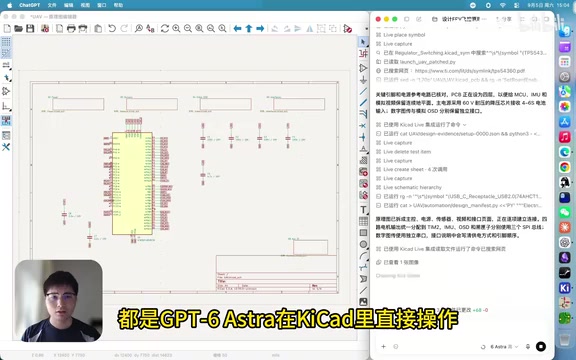
GPT-6 Astra Autonomously Designs a 6-Layer F405 FPV Flight Controller PCB: A Full Walkthrough
GPT-6 Astra autonomously designed a 6-layer F405 FPV flight controller PCB in an EDA tool — from schematic to layout, ERC/DRC checks, and full production file export — in 3h 14min using ~52M tokens. Physical testing pending.

ChatGPT + Codex: Complete Registration & Installation Guide in 5 Steps
Step-by-step guide to registering ChatGPT and installing Codex: email setup, account creation, API key generation, Plus upgrade, and Codex login — with risk notes.