ActionAssist Small Model Review: Real-World Experience at 122 tok/s
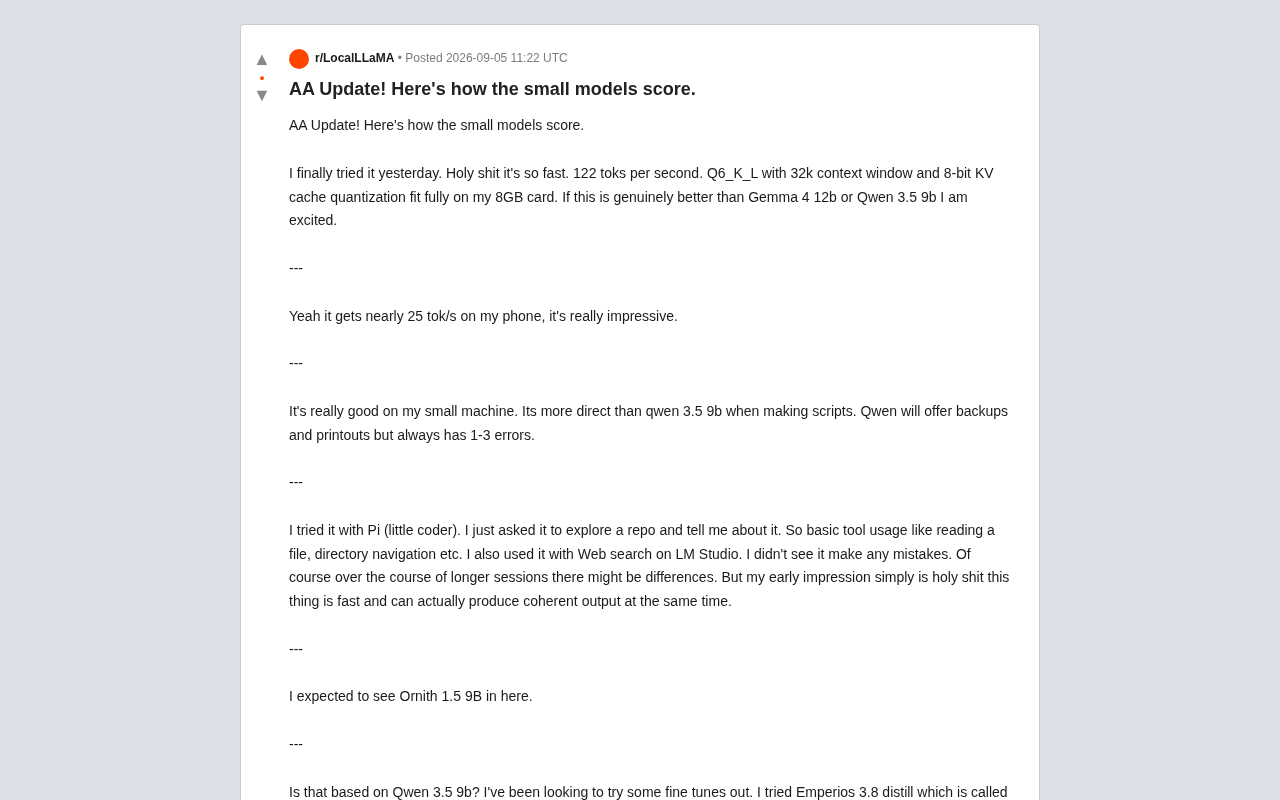
ActionAssist shines at 122 tok/s and tool calling, but struggles with multi-turn conversation.
ActionAssist is a small language model optimized for speed and tool-calling, achieving 122 tok/s on a consumer 8GB GPU and ~25 tok/s on mobile. Thanks to Q6_K_L quantization and KV cache quantization, its hardware requirements are minimal, making it well-suited for edge deployment. It outperforms Qwen 3.5 9B on code generation with fewer errors and cleaner output. However, it falls short in conversational tasks — users report role confusion, context loss, and a poor chat experience. ActionAssist is best used as a backend engine for fast tool-calling and automated agentic tasks, not as a general-purpose assistant, exemplifying the "deep specialization" approach to small model development.
ActionAssist Small Model Review: Real-World Experience at 122 tok/s
A small language model called ActionAssist (AA for short) is gaining traction in the developer community. After multiple users shared their hands-on experiences on Reddit, the model has earned praise for its inference speed and tool-calling capabilities — though reviewers also flagged notable limitations in conversational understanding.

Blazing Inference Speed: A Smooth Experience on Consumer Hardware
ActionAssist's most striking feature is its impressive inference speed. In user testing, the model running in Q6_K_L quantization with a 32k context window and 8-bit KV cache quantization on a consumer GPU with 8GB VRAM achieved 122 tokens/second. This performance has even been validated on mobile devices — one user reported speeds approaching 25 tok/s on a smartphone.
This speed advantage comes primarily from the model's lightweight design. Even with IQ4 quantization occupying just 2GB of VRAM and the remainder offloaded to system RAM, it still runs noticeably faster than most comparable models. This hardware-friendly profile makes ActionAssist a genuinely practical option for deploying AI capabilities on edge devices and resource-constrained environments.
Strong Tool Calling and Solid Coding Performance
Multiple developers reported that ActionAssist demonstrates strong capabilities in tool-calling and agentic tasks. One user tested it with the Pi (little coder) framework, having the model explore and analyze a code repository. The test covered basic tool usage such as file reading and directory navigation, as well as web search functionality in LM Studio — and the entire session ran without notable errors.
ActionAssist also holds its own in coding scenarios. Compared to Qwen 3.5 9B, it tends to be more direct and efficient when writing scripts:
- Qwen 3.5 9B: Provides thoughtful extras like backup routines and debug output, but often introduces 1–3 bugs in the process
- ActionAssist: Tends to generate cleaner, more accurate code with a lower error rate
This "minimal reasoning per turn" design philosophy allows the model to maintain fast response times while still producing coherent and practical output — a significant advantage for development workflows that involve frequent back-and-forth interaction.
Conversational Weaknesses: Not a Drop-in General Assistant
Despite excelling at tool calling and coding, ActionAssist shows clear weaknesses in conversational coherence. One long-term user highlighted several key issues:
-
Role confusion: The model struggles to correctly distinguish between agent names and user names in system prompts, frequently misidentifying the user as the agent and referring to the user in the third person — as if they weren't part of the conversation.
-
Context loss: In multi-turn dialogues, the model tends to lose track of the ongoing task and interprets each new instruction too literally, ignoring the broader conversational context.
-
Poor conversational experience: By comparison, the Gemma series performs much more naturally in everyday conversation and is considerably easier to interact with.
These limitations suggest that ActionAssist is better suited as a focused task tool — such as running simple agentic tasks in background loops — rather than as a general-purpose conversational assistant. Its design philosophy leans toward "completing well-defined tasks quickly" rather than "understanding complex conversational intent."
Market Positioning: How It Stacks Up Against Popular Small Models
The sub-10B parameter model space is highly competitive right now, with Gemma 4 12B, Qwen 3.5 9B, and Ornith 1.5 9B among the popular choices. Fine-tuned variants based on Qwen 3.5 9B — such as Emperios 3.8 distill — have also appeared in the community.
Whether ActionAssist can carve out a lasting niche depends on whether it can build on its speed advantage while improving conversational understanding. In practical terms:
- Best suited for: Fast tool calling, code generation, agentic task automation
- Not ideal for: Deep multi-turn conversations, complex intent understanding, general-purpose assistant use cases
If your primary need is rapid tool calling and code generation, ActionAssist is well worth trying. If you need a general assistant capable of in-depth dialogue, you may still want to pair it with another model for the time being.
The Broader Trend: Deep Specialization vs. Broad Balance?
From a technical evolution standpoint, ActionAssist represents an important direction in small model development: achieving extreme optimization for specific scenarios rather than pursuing broad but mediocre general capabilities. This "deep specialization" strategy has significant value as a reference point for deploying AI in resource-constrained settings.
For developers, choosing the right model ultimately comes down to the core requirements of your actual workflow. The trade-off between speed and comprehension is one of the most important questions in the small model ecosystem right now — and ActionAssist sits squarely at the center of that conversation.
Related articles
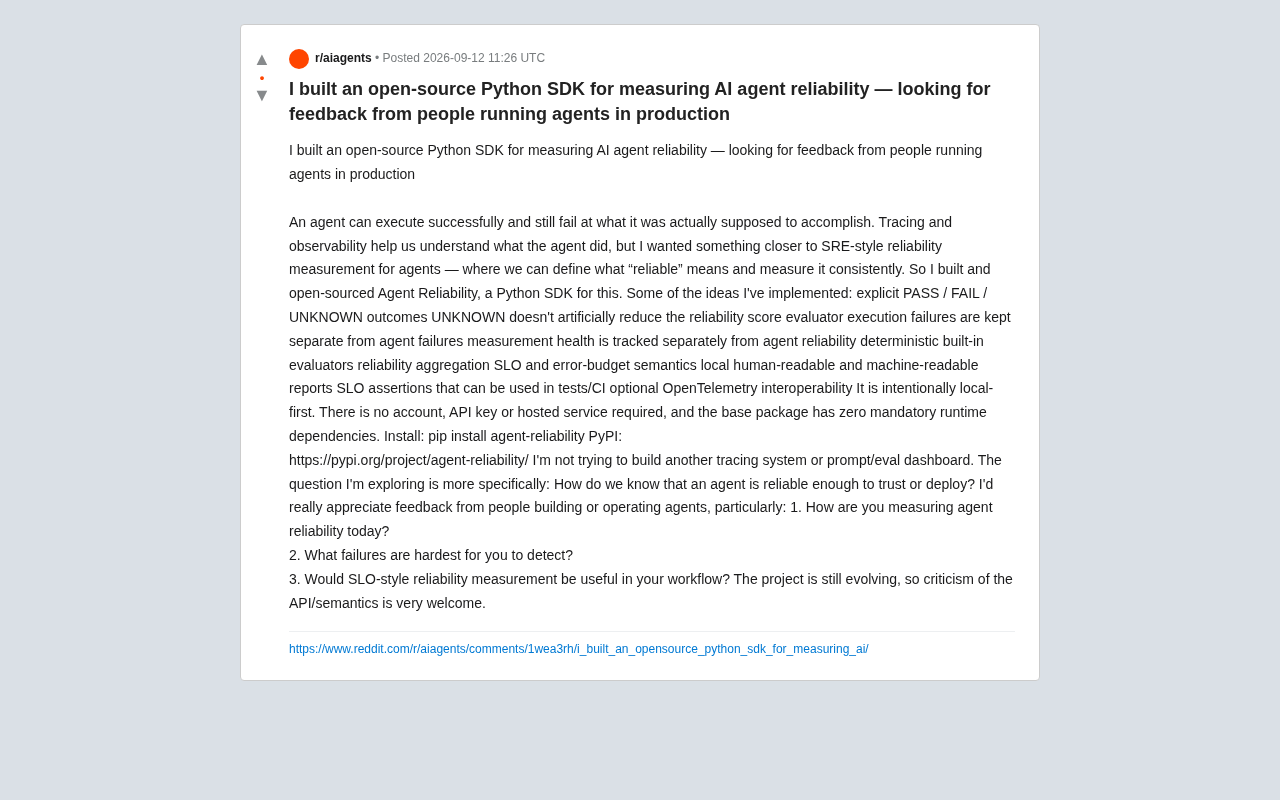
Open-Source Python SDK: Measuring AI Agent Reliability with SRE Principles
Agent Reliability is an open-source Python SDK that applies SRE's SLO and error budget concepts to AI Agent evaluation, with PASS/FAIL/UNKNOWN states, CI assertions, and zero forced dependencies.
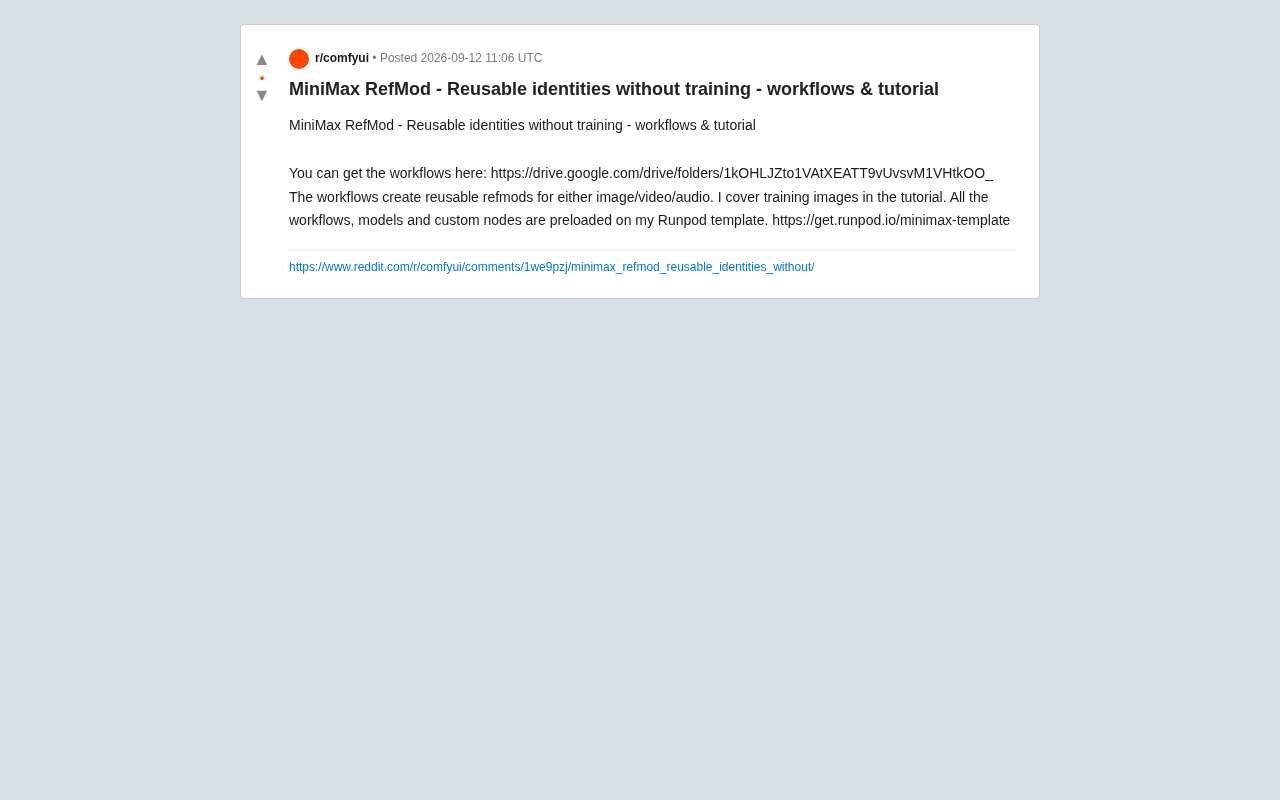
MiniMax RefMod: A Complete Guide to Training-Free Reusable Identity Workflows
MiniMax RefMod offers training-free reusable identity workflows for image, video, and audio generation. Includes Runpod template and tutorial for quick setup.

Invalid Source Material Notice
The source material provided lacks substantive information and is unrelated to AI/tech topics, making it impossible to produce a complete professional article.