After Cursor's Regional Restrictions, Can Claude Code Be the Best Alternative?

With Cursor restricting Chinese users, the article recommends Claude Code and domestic tools as alternatives.
Cursor recently tightened its regional restriction policy, blocking Chinese users from accessing GPT-related models even through proxies, using multi-layered verification including device fingerprinting and account tagging. This article compares Claude Code's advantages in response speed, code quality, and bug fixing, introduces third-party channel solutions for bypassing restrictions along with security considerations, and recommends developers maintain toolchain flexibility while exploring domestic alternatives like Tongyi Lingma and Doubao MarsCode.
Cursor Shuts the Door on Chinese Users
Recently, many developers have been frequently encountering regional restriction errors when using Cursor — and this is far from an isolated case. Cursor recently updated its Model Regional Availability Policy, effectively blocking users in China from accessing GPT-related models.
The so-called "Model Regional Availability Policy" refers to restrictions imposed by model providers on API calls from specific regions, based on local laws, export control regulations, and commercial compliance requirements. OpenAI has restricted access from mainland China IPs since 2023, but previously, Cursor served as a middle-layer application where users could indirectly invoke models through its client without being subject to strict geo-fencing. This policy tightening means Cursor has begun actively enforcing upstream provider regional compliance requirements at the application level, potentially employing geolocation mechanisms far more sophisticated than simple IP detection.
What's even more frustrating is that Cursor's blocking measures exceed expectations — even if you switch to US or Singapore nodes via a proxy, you still can't access the service normally. Cursor officially attributes this to "model provider restrictions," but in reality, the same models work perfectly fine when called directly through APIs. From a technical perspective, Cursor is essentially a deeply customized AI-enhanced IDE built on the VS Code open-source core (Electron framework), which sends user code context to backend model services through a built-in AI middleware layer. Traditional proxy bypass methods primarily target IP-level geo-blocking, but Cursor's blocking mechanism is clearly more complex — it likely embeds device fingerprinting at the client level, account-level regional tagging, and may even detect proxy traffic patterns through TLS fingerprinting. This multi-layered verification blocking strategy is not uncommon in the SaaS industry — platforms like Netflix and Spotify employ similar technologies to enforce regional content licensing.
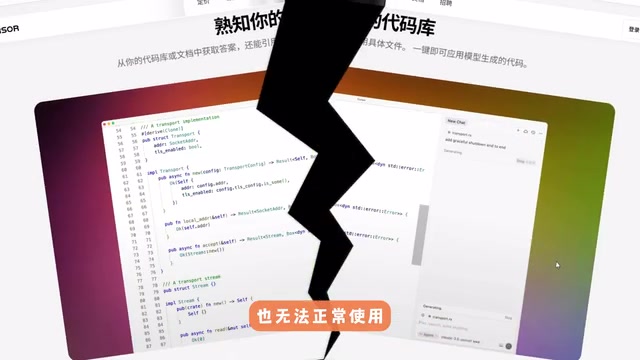
This approach has left a large number of Chinese developers feeling "abandoned." An AI programming tool that once had an excellent reputation among the Chinese developer community is now implementing layer after layer of regional barriers — a truly regrettable situation.
Cursor vs Claude Code: Core Feature Comparison
With Cursor restricted, Claude Code has quickly entered developers' radar. Based on actual usage experience, both have their strengths, but Claude Code holds clear advantages in several key dimensions.
Response Speed and Interaction Fluidity
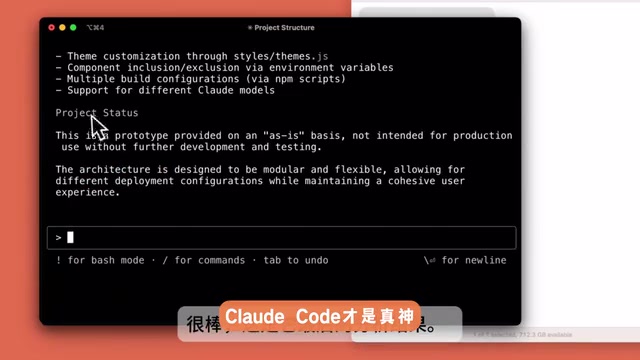
Claude Code leads significantly in code generation response speed. Compared to Cursor's frequent stuttering and timeouts under network-restricted conditions, Claude Code's interaction experience is much smoother — especially when handling complex code logic, where there's virtually no noticeable waiting delay.
Core Programming Capability Comparison
From everyday coding scenarios, Claude Code excels in the following areas:
- Code Logic Writing: Deeper understanding of complex business logic, generating higher-quality code
- Bug Detection and Fixing: Quickly locates root causes and provides reliable fix solutions
- Code Refactoring Suggestions: Offers more reasonable, comprehensive refactoring plans with strong practicality
These capabilities stem from Anthropic's continuous iteration on the Claude model. Anthropic was founded in 2021 by former OpenAI core members Dario Amodei and Daniela Amodei, with the core philosophy of building safer, more controllable AI systems. The Claude model series employs Anthropic's original Constitutional AI training method, which has the model critique and correct itself based on a set of explicit principles, thereby improving output safety and reliability while maintaining powerful capabilities. In the coding domain, Claude 3.5 Sonnet and Claude 4 series perform exceptionally well on authoritative benchmarks like SWE-bench (Software Engineering Benchmark), excelling particularly at understanding large codebase context relationships, cross-file dependency analysis, and complex refactoring tasks. Claude Code, as Anthropic's command-line AI programming tool, runs directly in the terminal environment and can read the entire project directory structure — this "global awareness" capability is a key source of its code comprehension depth.
How Chinese Developers Can Bypass Regional Restrictions to Use Claude Code
For domestic developers, the most pressing question is: how to continue using AI programming tools efficiently in the current environment? There's currently a relatively hassle-free solution — accessing through Claude Code's domestic channel sites (such as Cloud YY and other third-party services).
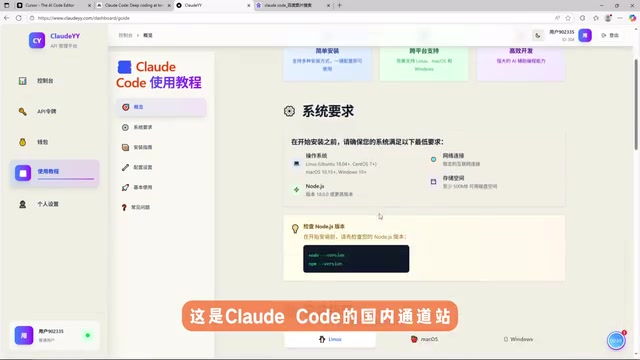
The core advantages of such solutions include:
- No Proxy Configuration Needed: No need to tinker with network environments — just open your browser and start using it
- Completely Region-Free: Fundamentally circumvents geo-blocking issues
- Synchronized Feature Updates: Usage experience remains consistent with the original Claude Code
From a technical standpoint, third-party channel sites (also known as API relay services or mirror sites) work as follows: service providers deploy servers in compliant overseas regions with legitimate API keys, user requests are first sent to the channel site server, which then calls the original API on behalf of the user and returns results. This architecture is essentially a reverse proxy model.
However, when using third-party channel sites, pay attention to data security and service stability. It's important to note that this means all your code snippets and conversation content pass through third-party servers, presenting potential risks of man-in-the-middle attacks and data retention. It's recommended to prioritize service providers with good reputations and transparent privacy policies, focusing on: whether the provider explicitly commits to not storing user data, whether end-to-end encrypted transmission is used, whether there are clear privacy policies and Data Processing Agreements (DPA), as well as the provider's own operational qualifications and longevity — to avoid risks of sensitive code leakage.
How Should Developers Choose AI Programming Tools?
Facing the current situation, Chinese developers need to re-plan their AI programming toolchain. Here are some practical recommendations:
Short-term Strategy: If you're a heavy Cursor user, it's recommended to get Claude Code running as a backup solution first, use both in parallel for a period, and gradually complete your workflow migration.
Long-term Considerations: Looking at industry trends, regional policies for AI programming tools are likely to continue fluctuating. Don't put all your eggs in one basket — maintaining flexibility in your tech stack is the best strategy.
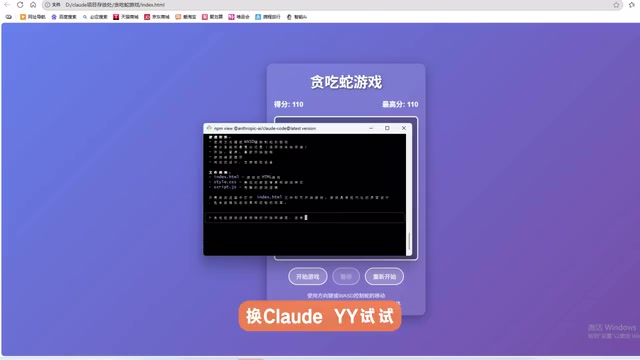
Pay Attention to Domestic AI Programming Tools: Chinese tools like Tongyi Lingma, Doubao MarsCode, and others are iterating rapidly. While some capabilities still lag behind top international products, their stability and freedom from regional restriction concerns are clear advantages. Specifically, Alibaba's Tongyi Lingma is based on the Tongyi Qianwen large model, deeply integrated into VS Code and JetBrains IDE series, supporting code completion, unit test generation, and code explanation, performing particularly well in Java and Python ecosystems. ByteDance's Doubao MarsCode focuses on a cloud IDE experience with a built-in AI programming assistant, supporting multi-language development and one-click deployment. Additionally, Baidu's Comate, Huawei's CodeArts Snap, and the open-source community's CodeGeeX (Zhipu AI) each have their own strengths. While these tools still have gaps compared to top models like GPT-4 and Claude in advanced scenarios such as handling ultra-large-scale codebases and complex architectural design, they can already meet most needs in high-frequency scenarios like daily coding assistance, code completion, and documentation generation — and are completely unaffected by overseas policy changes.
Final Thoughts
Cursor's regional restriction incident serves as yet another wake-up call: when using overseas AI tools, policy risk is always an unavoidable variable. Rather than spending large amounts of time wrestling with proxies and bypass methods, it's better to proactively embrace more stable alternatives.
With its solid programming capabilities and relatively friendly accessibility, Claude Code is genuinely worth serious consideration in the current environment. Of course, tools ultimately serve efficiency — choosing one that works smoothly and reliably is more important than anything else.
Related articles
 Product Reviews
The Programmer's Desk Setup Guide: Building a Workspace That Feels Like Home
Discover how programmers build productive, comfortable workspaces. From multi-monitor setups to ergonomic design, explore the desk philosophy that drives focus and flow.
 Product Reviews
Qoder vs Cursor Real-World Comparison: Which $20/Month AI IDE Is Better?
Hands-on comparison of Qoder vs Cursor AI IDEs: Agent autonomy, human interaction count, and architecture decisions. Qoder needed only 2 interactions vs Cursor's 8.
 Product Reviews
Cursor Cloud Agent Demo: Eliminating Bottlenecks Across the Entire Software Development Lifecycle
Deep analysis of Cursor's Cloud Agent demo showing how cloud VMs, automated test artifacts, and a full-chain control plane systematically eliminate human bottlenecks across the software development lifecycle.