After the Midterms, Musk and Data Centers Face a Bumpy Road Ahead

Midterm results heighten tech policy uncertainty, with Musk's businesses and data center expansion hit hardest.
TechCrunch's Equity podcast focuses on how the U.S. midterms affect the tech industry. As a referendum on the sitting government, midterms directly reshape the legislative agenda, influencing regulation, subsidies, and antitrust enforcement. Musk's businesses—spanning EVs, aerospace, and social media—are cited as a prime example of a "bumpy" road due to deep political entanglement, while data centers, heavily dependent on state and local politics for land, energy, tax incentives, and grid approvals, may see their AI infrastructure expansion slow. The takeaway: tech can no longer isolate itself from politics, and practitioners should keep tracking policy signals.
The results of the U.S. midterm elections are injecting new uncertainty into the tech industry, with Elon Musk and the booming data center sector bearing the brunt. In the latest episode of TechCrunch's podcast Equity, the hosts take a deep dive into what the election results mean specifically for the tech sector, with a particular focus on the shifting policy winds facing Musk's businesses and data center expansion.
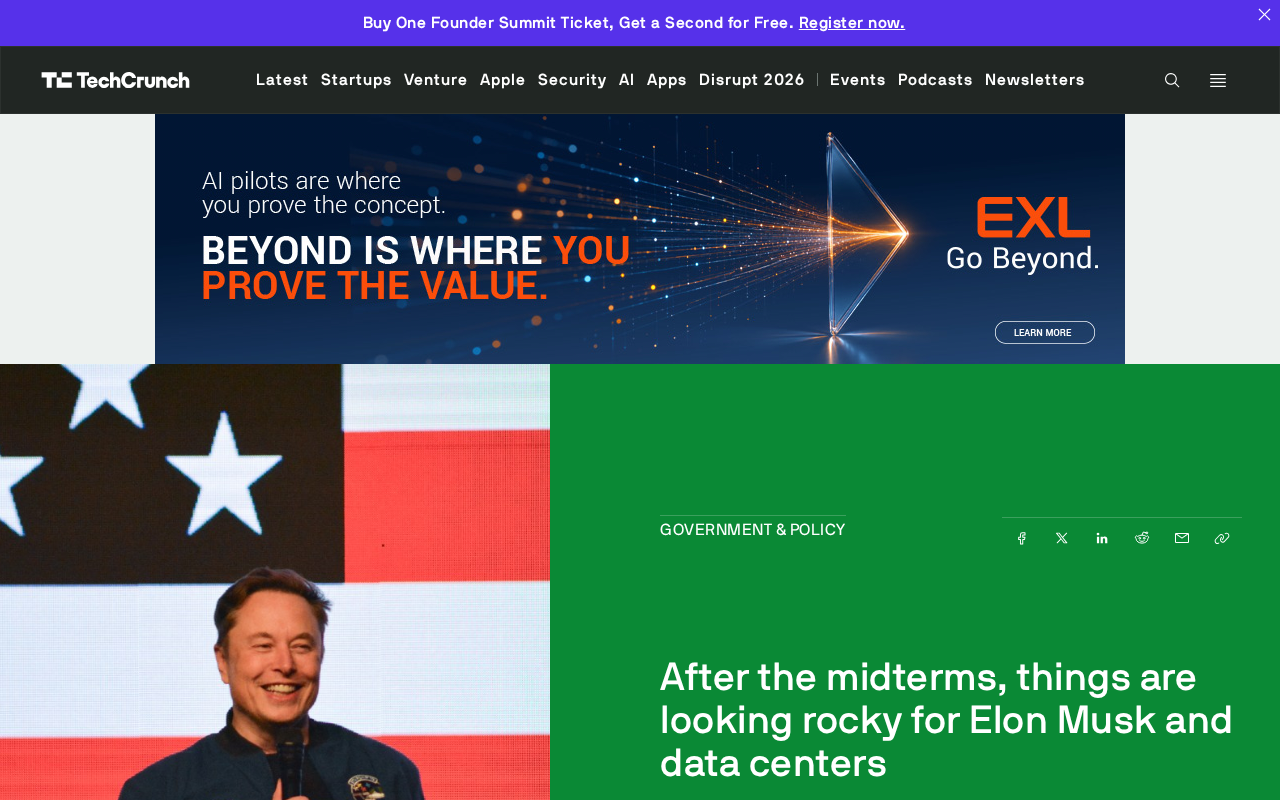
How the Midterms Are Rattling the Tech Industry
Midterm elections are often viewed as a referendum on the sitting government's policies, and their outcomes directly shape the direction of the legislative agenda. For the tech industry, this means the regulatory environment, subsidy policies, and antitrust enforcement could all shift. Equity points out that the election results are forcing tech sectors that previously relied on specific policy tailwinds to reassess their risks.
Musk's businesses span electric vehicles, aerospace, and social media, making them especially sensitive to policy changes. Whether it's federal subsidies, regulatory investigations, or content moderation rules, any shift in the wind can ripple through to his companies' operations and valuations. The show singles out Musk as a prime example of someone facing a "bumpy" road after the elections, suggesting that his business empire is becoming ever more intertwined with the political environment.
Midterm elections are nationwide elections held in the middle of a president's four-year term, typically in November of the second year. Their core components include: all 435 seats in the House of Representatives, about one-third of Senate seats (roughly 33-34), and a large number of gubernatorial, state legislative, and local official races. Midterms are often seen as a "referendum" on the sitting president and their party's performance, and historically the ruling party tends to lose congressional seats (the "midterm curse").
For the tech industry, the key impact of midterms lies in which party controls Congress. If either or both chambers change hands, the legislative agenda will shift significantly: the pace of antitrust legislation, data privacy bills, AI regulatory frameworks, and federal subsidy and tax policies could all be reshaped. In addition, control of Congress affects federal agencies' budgets and the confirmation of personnel appointments, which in turn feeds into the enforcement intensity of regulators like the FTC, FCC, and SEC. This is the institutional basis for the "shifting policy winds" discussed on Equity.
Data Center Expansion Hits Policy Headwinds
Data centers are the infrastructure backbone of this AI boom, but their rapid expansion is running into an increasingly complex policy environment. The election results could change local governments' attitudes toward data center land use, energy consumption, and tax incentives, which in turn affects the capex pace of tech giants.
The discussion on the show notes that data center construction involves not only federal-level policy but is also closely tied to state and local government approvals, power supply, and community relations. Changes in local political landscapes brought about by elections could subject some projects to stricter scrutiny or longer timelines. For companies making large-scale investments in AI infrastructure, this is a variable that needs close tracking.
Among the policy headwinds facing data center expansion, power supply and grid interconnection approvals are among the most binding constraints. A single large AI data center campus can demand hundreds of megawatts of power—equivalent to the consumption of tens of thousands of households—and connecting to the grid requires going through the interconnection queue process of regional transmission organizations (such as PJM and ERCOT), which in some regions has backlogs stretching for years.
At the same time, local tax incentives (such as property tax abatements and sales tax exemptions) are a key economic variable in data center site selection, and such incentives typically require approval and sometimes public referenda at the state legislature or county/municipal level. After elections change the local political makeup, previously promised incentives may be revisited or even revoked. In addition, data center water usage, noise, and land use issues often spark community opposition, and local election results directly affect the hearing and permitting outcomes for such projects. As a result, the expansion pace of the data center industry is largely determined by "micropolitics" below the federal level, rather than by capital and technical conditions alone.
The Tech-Politics Entanglement Is Deepening
A broader trend can be distilled from the Equity discussion: it is becoming increasingly difficult for tech companies to isolate themselves from the political process. Musk's case shows that a business leader's public statements and political stances can in turn shape the regulatory environment their company faces.
The data center industry illustrates another form of entanglement—the physical nature of infrastructure means it must engage with local politics, energy policy, and community interests. When elections change the composition of these stakeholders, the industry's expansion path adjusts accordingly.
Conclusion
The aftershocks of the midterms won't manifest immediately, but they have set a new framework for discussion in the tech industry. Musk's businesses and the data center sector are just two observation windows onto a deeper, ongoing evolution in how tech and policy interact. For practitioners watching the industry's direction, the policy signals in the coming months are worth keeping a close eye on.
Related articles
 Tech Frontiers
MuJoCo: An Analysis of DeepMind's Open-Source General-Purpose Physics Simulator
An in-depth analysis of Google DeepMind's open-source physics simulator MuJoCo: high-performance C++ kernel, MJCF modeling format, contact solving principles, MJX GPU acceleration, and robot reinforcement learning use cases.
 Tech Frontiers
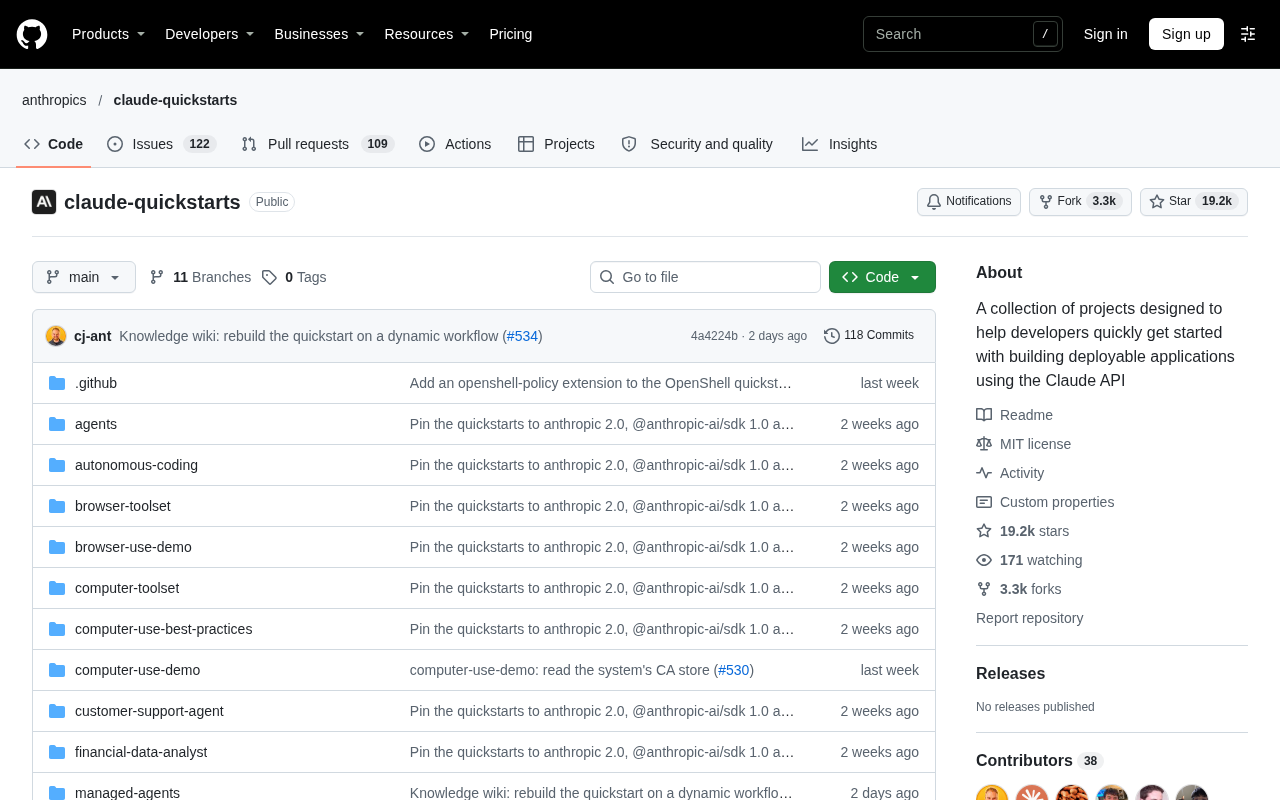
Claude API Quick Start: The Official Quickstarts Project Collection
Anthropic's official claude-quickstarts project collection helps developers quickly build deployable apps with the Claude API. Nearly 20k stars, Python-based, great for beginners and prototyping.
 Tech Frontiers
AI Agents Connecting Directly to APIs: Which Calls Can Be Safely Allowed?
AI agents can call any API, but the real challenge is deciding which calls can be safely allowed. This article analyzes allowance decisions from three dimensions—intent matching, least privilege, and controllable impact—and argues that the control layer should sit outside the agent, combined with audit traceability to build a trustworthy API call governance mechanism.