agency-agents-zh: 211 Plug-and-Play AI Expert Roles Covering 18 Departments and 16 Tools

Near-10K Star open-source project offers 211 plug-and-play AI expert roles supporting 16 mainstream tools
The GitHub open-source project agency-agents-zh provides 211 AI expert roles (system prompt configurations) compatible with 16 mainstream AI tools including Claude Code, Cursor, and GitHub Copilot, covering 18 enterprise department scenarios. Its biggest highlight is 46 original Chinese market AI agents natively designed for platforms like Xiaohongshu, Douyin, WeChat, and Feishu. With nearly 10K Stars, the project reflects the trend of AI applications shifting from general assistants to specialized domain expert roles.
Project Overview: A Near-10K Star AI Role Open-Source Repository
As AI-assisted development and content creation become increasingly prevalent, the ability to quickly deploy high-quality AI expert roles has become a key factor in boosting productivity. The open-source GitHub project agency-agents-zh offers a practical solution — it provides 211 plug-and-play AI expert roles supporting 16 mainstream AI tools including Hermes Agent, Claude Code, Cursor, and GitHub Copilot, covering 18 departmental scenarios across engineering, design, marketing, finance, and more.
What we call "AI expert roles" here are essentially carefully designed System Prompt configurations. System prompts are a core mechanism in large language model interactions — before each conversation begins, they are injected as hidden context into the model, defining the AI's identity, behavioral boundaries, domain expertise, and output style. A well-crafted system prompt can transform a general-purpose LLM into a domain-specific expert. It doesn't modify the model's underlying parameters but instead activates domain-specific knowledge acquired during pre-training through In-Context Learning. The advantage of this approach is that it's zero-cost and takes effect immediately, requiring no fine-tuning or retraining.
As of now, the project has earned nearly 10,000 Stars (9,965) on GitHub with 1,883 Forks, clearly demonstrating the community's strong demand for structured AI role libraries.
Core Highlights: Why This Project Deserves Your Attention
Compatible with 16 Mainstream AI Tools
The project supports the most commonly used AI development and collaboration tools, including:
- Code assistance: Claude Code, Cursor, GitHub Copilot
- Agent frameworks: Hermes Agent
- General-purpose scenarios: Adaptable to various LLM calling environments
The current AI development tool ecosystem is highly fragmented. Claude Code focuses on code generation and project management in command-line environments, supporting direct AI conversations in the terminal to complete complex coding tasks. Cursor deeply integrates AI into the IDE, supporting code completion, refactoring, and conversational programming — it's currently one of the fastest-growing AI editors. GitHub Copilot covers mainstream editors like VS Code and JetBrains through inline completion and Chat modes. These tools use different role configuration formats — some use YAML files, others use JSON configurations, and some load through Markdown files in specific directories. A cross-tool compatible role library needs to maintain multiple configuration file formats for the same role, which is precisely where this project's engineering value lies.
Regardless of which AI toolchain you use daily, you can directly import these preset roles and skip the hassle of writing system prompts from scratch.
18 Department Roles Organized by Enterprise Architecture
The project is systematically categorized following enterprise organizational structures, covering 18 core departments including engineering, product design, marketing, financial analysis, human resources, and legal compliance. Each department contains multiple specialized roles — for example, the engineering department includes frontend experts, backend architects, DevOps engineers, and other distinct personas.
The benefit of this classification approach is straightforward: you can quickly find the corresponding role based on your actual business scenario, with an extremely low barrier to entry.
46 Original AI Agents for the Chinese Market
This is the project's most distinctive differentiator. 46 original AI agents specifically designed for the Chinese market cover domestic mainstream platforms and tool ecosystems:
- Content platforms: Xiaohongshu operations expert, Douyin content strategist
- Social ecosystems: WeChat ecosystem operations, Official Account content creation
- Enterprise collaboration: Feishu workflow expert, DingTalk integration development
It's important to emphasize that these roles are not simple English translations or superficial localizations — they are originally designed based on the actual needs of China's internet ecosystem. Chinese internet platforms differ significantly from overseas platforms in algorithm logic, content distribution mechanisms, and user behavior patterns. Take Xiaohongshu as an example: its algorithm heavily relies on metrics like cover quality of image-text notes, title keyword density, and engagement rate, with content tonality leaning toward "product seeding" and lifestyle sharing. Douyin uses completion rate, engagement rate, and account vertical focus as core recommendation factors. The WeChat ecosystem is an enclosed social distribution system where the traffic flow logic between Official Accounts, Channels, and Mini Programs is completely different from open platforms. These platform characteristics mean that generic AI roles cannot be directly applied — they must be natively designed based on platform rules and user habits.
For this reason, these roles understand domestic platform algorithms, content guidelines, and user habits, offering practicality far beyond generic roles.
Technical Implementation and Usage
The project primarily uses Shell as its main language, employing lightweight file organization and script-based deployment. Users can import role configurations into their target tools through simple command-line operations.
The typical usage workflow is as follows:
- Clone the repository locally
- Select the configuration format corresponding to your target tool
- Import or copy role definition files to the tool's configuration directory
- Call the corresponding role directly within the AI tool
The entire process follows a "plug-and-play" design philosophy — even users without a technical background can get started quickly.
Practical Application Scenarios for Different Roles
Developers: Getting More Precise Code Suggestions
For example, when you need to perform database performance optimization, the suggestions from a "Database Architect" role will be more professional and targeted than those from a generic AI assistant. The role preset includes the professional knowledge framework and thinking patterns for that domain — essentially equipping the AI with an "expert brain."
From a technical perspective, this works because the expert role's system prompt explicitly defines the core conceptual framework, common problem patterns, and best practice frameworks for that domain. When the model receives this context, its attention mechanism preferentially activates knowledge representations related to that field, producing more professional and structured responses. This is far more efficient than users describing their needs ad hoc during conversation.
Content Creators: Directly Matching Domestic Platform Tonality
Creators producing content for Xiaohongshu or Douyin can directly use the dedicated roles for those platforms. These roles have built-in understanding of platform tonality and algorithm preferences, saving you significant time that would otherwise be spent repeatedly tweaking prompts.
Enterprise Teams: Rapidly Building Department-Wide AI Assistance Systems
Enterprises can use these roles as foundational templates for internal AI tools, customizing them based on their specific business characteristics to quickly establish AI-assisted workflows covering multiple departments.
From General AI to Expert AI: The Trend Behind This Project
The popularity of agency-agents-zh reflects a clear trend shift in AI applications: users are moving from relying on general-purpose AI to using expert AI. A generic assistant that "can chat about anything but goes deep on nothing" increasingly fails to meet actual work demands. What people need are AI roles with deep domain expertise in specific fields.
This trend aligns closely with the development direction of Agent frameworks. Agent frameworks like Hermes Agent represent an important evolutionary direction for AI applications — traditional LLM calls follow a single-turn Q&A pattern, while Agent frameworks grant AI the ability to autonomously plan, invoke tools, and perform multi-step reasoning. An Agent typically consists of a role definition (determining its behavior patterns), a memory system (maintaining contextual coherence), a tool set (calling external APIs or executing code), and a planning module (decomposing complex tasks into sub-steps). The role definition is the Agent's "soul," determining how it understands tasks, selects tools, and organizes output. A structured expert role library is precisely the infrastructure needed to build high-quality Agent systems.
Fundamentally, preset role libraries represent the systematic accumulation of Prompt Engineering best practices. Prompt engineering has evolved from individual experience to systematic methodology — early users found effective prompts through repeated trial and error, an approach that was inefficient and hard to reuse. The emergence of structured role libraries essentially templates and packages proven prompt strategies across multiple dimensions including Role, Constraints, Format, and Knowledge Scope. An excellent expert role preset often crystallizes the experience of dozens or even hundreds of iterative optimizations.
As the AI tool ecosystem continues to mature, structured role assets like these will gradually become indispensable productivity infrastructure for teams and individuals alike.
Summary
agency-agents-zh provides Chinese-language users with a high-quality, out-of-the-box AI expert role library. Its broad tool compatibility, systematic departmental coverage, and solid Chinese market localization design make it one of the most noteworthy AI role resources available today.
Whether you're a developer looking to boost coding efficiency, a creator needing platform-specific content output, or a manager hoping to promote AI tools within your team, this project is worth bookmarking and exploring in depth.
Key Takeaways
- The project provides 211 plug-and-play AI expert roles supporting 16 mainstream AI tools across 18 enterprise department scenarios
- Includes 46 original Chinese market AI agents covering domestic platforms like Xiaohongshu, Douyin, WeChat, Feishu, and DingTalk
- Nearly 10K GitHub Stars reflect strong community demand for structured AI role libraries
- Uses lightweight Shell script organization with plug-and-play rapid deployment
- Reflects the industry trend of AI applications shifting from general assistants to specialized domain expert roles
Related articles
 Product Reviews
The Programmer's Desk Setup Guide: Building a Workspace That Feels Like Home
Discover how programmers build productive, comfortable workspaces. From multi-monitor setups to ergonomic design, explore the desk philosophy that drives focus and flow.
 Product Reviews
Qoder vs Cursor Real-World Comparison: Which $20/Month AI IDE Is Better?
Hands-on comparison of Qoder vs Cursor AI IDEs: Agent autonomy, human interaction count, and architecture decisions. Qoder needed only 2 interactions vs Cursor's 8.
 Product Reviews
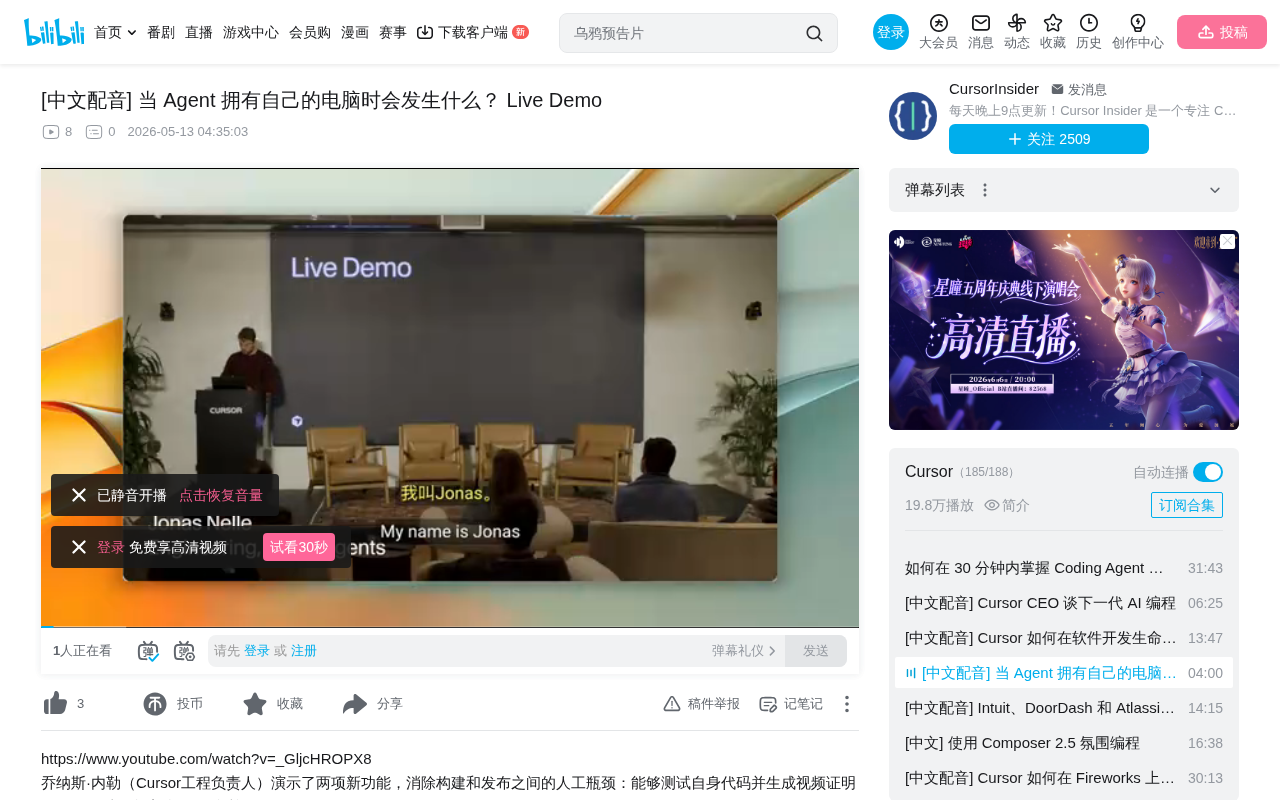
Cursor Cloud Agent Demo: Eliminating Bottlenecks Across the Entire Software Development Lifecycle
Deep analysis of Cursor's Cloud Agent demo showing how cloud VMs, automated test artifacts, and a full-chain control plane systematically eliminate human bottlenecks across the software development lifecycle.