Agent Engineering in Practice: Building a Proactive AI Developer Assistant in 25 Days

A 25-day Agent Engineering project builds a proactive AI assistant that reviews, fixes, and documents code.
This article examines an Agent Engineering project that built a proactive AI developer assistant in just 25 days, capable of autonomous code review, bug fixing, and documentation writing. It explores how this represents a paradigm shift from passive AI tools to autonomous digital employees, and discusses the compound evolution trajectory where self-improving feedback loops could drive exponential capability growth.
From Chatbots to the "Age of Action"
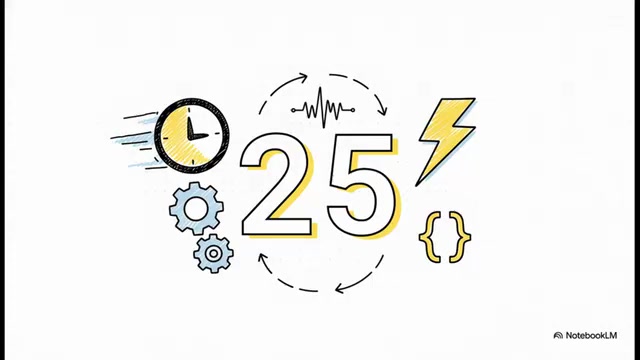
We're well past the era when AI could only answer questions. A profound paradigm shift is happening at the cutting edge of software development — moving from passive response to proactive execution. This deep dive focuses on a project called "Agent Engineering," which aims to build a comprehensive AI developer assistant. The most staggering number? This project is only 25 days old.
Let that number sink in for a moment. We're not talking about a mature product that's been incubating for years and iterating for months — this is an engineering snapshot taken on just the 25th day. Reaching such milestones in under 30 days creates an almost unbelievable momentum. It sends a clear signal: iteration cycles in the AI coding assistant space are advancing at light speed. What we're looking at isn't static software — it's a living system evolving at a breathtaking pace.
The Key Word: Proactive, Not Reactive
To understand the value of this project, we first need to clarify what "Agent Engineering" truly means in this context. It's a framework entirely dedicated to developing proactive AI coding assistants. The absolute keyword here is "proactive."
Agent Engineering is rooted in an emerging engineering discipline born from the recent leap in Large Language Model (LLM) capabilities. Traditional AI applications operate primarily in a "request-response" mode — the user asks, the model answers, and the interaction concludes within a single conversational turn. The core breakthrough of the agentic paradigm is the introduction of a closed-loop architecture based on "planning → tool invocation → feedback loop": an agent can decompose complex tasks into sub-goals, invoke external tools (such as code editors, terminals, APIs) to perform operations, observe the results, and then autonomously decide what to do next. The theoretical foundation of this paradigm traces back to the Agent-Environment interaction framework in reinforcement learning, but what truly brought it to fruition in software engineering is the long-context understanding, code generation, and multi-step reasoning capabilities demonstrated by GPT-4-class models. Agentic architecture patterns like ReAct (Reasoning + Acting) and Plan-and-Execute are becoming industry standards, evolving AI from "a tool that generates text" into "a system that executes tasks."
Not Autocomplete — An Autonomous System
We're not talking about a passive autocomplete tool that guesses your next line of code. The core goal of Agent Engineering is to build an autonomous system capable of executing complex work entirely on its own. It doesn't react to instructions — it proactively takes action.
This positioning fundamentally changes how we think about a "developer assistant." You can no longer treat it as some fancy IDE plugin — instead, you should see it as a digital employee. The essence of this project is essentially onboarding an AI into a highly demanding technical role, working shoulder-to-shoulder with human engineers. It's a digital colleague with a real job title and real responsibilities.
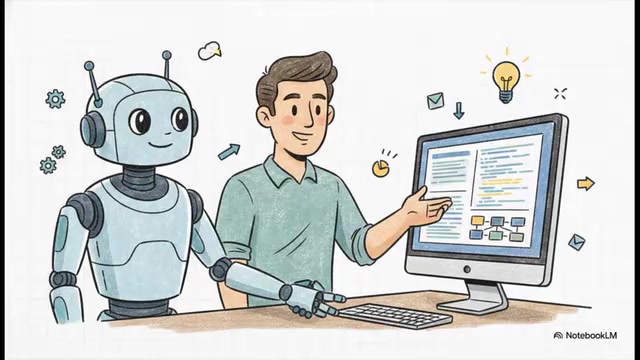
The Digital Employee's "Resume": Three Core Competencies
If we're essentially hiring a digital employee for a high-intensity technical role, the critical question becomes: what tangible value does it actually bring? Having a cool job title is one thing; possessing genuinely usable, practical capabilities is another thing entirely.
By Day 25, this AI developer assistant had mastered three core competencies: code review, bug fixing, and documentation writing. For any software developer, these are essentially the "holy trinity" of codebase maintenance. Building a resume foundation like this in under a month is genuinely impressive.
Code Review: Stepping into the QA Role
For humans, code review demands deep analytical thinking. Establishing this as the first major capability means the agent assistant can successfully parse massive amounts of context — it analyzes complex logic written by humans, evaluates architectural choices, checks for style consistency, and navigates across dozens of different files without losing its way. This step places it directly into a critical quality assurance role.
Code Review is a core practice in software engineering quality assurance, first formalized by Michael Fagan at IBM in 1976. Modern code reviews are typically conducted through Pull Request workflows, where reviewers need to understand the business intent behind changes, assess code logic correctness, check for potential security vulnerabilities, verify compliance with project coding standards, and consider the impact of changes on other parts of the system. This requires reviewers to possess both granular detail analysis and holistic architectural understanding. For AI, the challenge of code review lies in the fact that it demands not just syntactic understanding but semantic reasoning — understanding what the code "intends to do" and "whether it does it correctly." LLM breakthroughs in this area are thanks to the Transformer architecture's ability to capture long-range dependencies, combined with pre-training on massive open-source codebases that internalizes extensive knowledge of programming patterns and anti-patterns.
Bug Fixing: From Observer to Executor
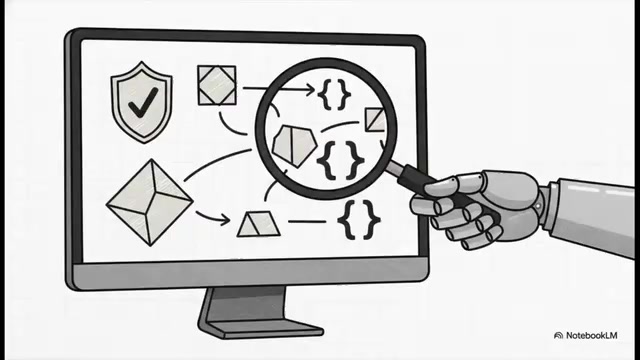
However, spotting problems during review is one thing — actually deploying a viable fix is something else entirely. Bug fixing is where the "proactive agent" capability truly shines.
This AI assistant doesn't just flag a bunch of errors in the console and call it a day. It proactively generates solutions, writes the necessary patches, and modifies the codebase itself to eliminate defects. It transforms from a passive observer into an autonomous executor. This is precisely the dividing line between proactive agents and traditional development tools.
Automated Program Repair (APR) is a classic challenge in software engineering research with over a decade of academic accumulation. Early methods like GenProg used genetic algorithms for code mutation with limited success rates. In recent years, LLM-based APR approaches (such as AlphaRepair and ChatRepair) have shown significant advantages because language models inherently understand code semantics rather than merely performing symbolic transformations. However, the core challenges of autonomous bug fixing include: fault localization (precisely pinpointing the bug's location within a massive codebase), patch correctness verification (ensuring the generated fix truly solves the problem without introducing new defects), and regression testing (confirming the fix doesn't break other functionality). A truly agentic repair system needs to organically combine static analysis, dynamic test execution, and code generation capabilities into an automated "locate → generate → verify" pipeline.
Documentation Writing: Closing the Loop on the Entire Engineering Workflow
The final piece of the workflow puzzle is documentation writing. You can write the most elegant patch in the world, but if you don't document it, you're creating a massive headache for the rest of your team.
By mastering this step, the AI developer assistant proves it can translate complex autonomous code modifications into clear, readable records for human teammates to review. It synthesizes the technical operations it just performed into human-readable summaries, perfectly closing the loop on the entire engineering workflow: analyze code → deploy fix → document changes.
The Future Trajectory of Compound Evolution
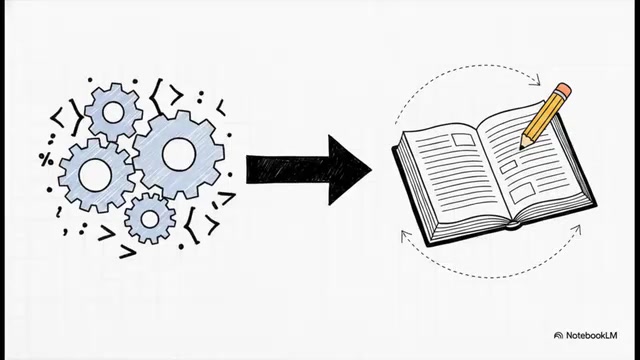
Now that we understand the framework, have met the digital employee, and have reviewed its impressive three-part resume, the most thought-provoking question is: if it mastered autonomous code review, bug fixing, and documentation writing by Day 25, what will Day 50 look like? What about Day 100?
The development trajectory outlined by this Agent Engineering project points toward a future of compound evolution between AI capabilities and software engineering — not just linear growth, but compounding gains at an astonishing rate. When an agent can review, fix, and document its own work, it already possesses the foundation for a complete self-improvement feedback loop.
The concept of Compound Evolution borrows from the mathematical model of compound interest: when each improvement to a system enhances the efficiency of subsequent improvements, capability growth follows an exponential rather than linear curve. In the context of Agent Engineering, this concept is particularly compelling — if an AI agent can review the code it generates, fix the defects it introduces, and write documentation for its own work, it possesses a rudimentary Self-Improvement Loop. This relates to the theory of Recursive Self-Improvement, one of the core topics in AI safety research. Of course, current implementations are still quite far from true autonomous self-improvement, but the "review + fix + document" capability combination does lay the engineering groundwork for this direction.
Points Worth Watching
Of course, we should also remain rational: this "resume" is currently just a 25-day snapshot. The reliability of its capabilities, its performance in real-world large-scale codebases, and the safety and accountability issues arising from autonomous code modification all still require longer-term validation. Regardless, this case study offers an excellent window into the evolution of AI coding assistants from "assistive" to "autonomous."
What will our digital colleague learn next? That's exactly what makes the entire field of Agent Engineering so exciting.
Key Takeaways
Related articles

Alguard: Building a Dual-Layer Trust Defense for AI Agent Shopping
Alguard, an Amazon Developer Hackathon project, designs a dual-layer trust architecture for Alexa+ agent shopping. Through physical isolation between an MCP server and a human approval channel, it replaces prompt defenses with structural constraints to block unauthorized purchases caused by prompt injection.

Food Poisoning: Causes, Symptoms, Treatment, and Prevention Explained
Food poisoning is caused by bacteria, viruses, parasites, or toxins contaminating food, with common symptoms including vomiting, diarrhea, and dehydration. This article explains the causes, symptoms, treatment, and prevention of food poisoning to help you safeguard food safety.

Meta Uses LLMs to Make Facebook Feed Customizable
Meta launches LLM-powered algorithm personalization for Facebook and Reels, letting users manage interests via menu and customize feed with a text box.