Agent Skills in Practice: Making AI Coding Assistants Automatically Follow Team Coding Standards

Agent Skills turns AI coding assistants into team-standards-aware collaborators, not just generic code generators.
Agent Skills is a mechanism that injects team coding standards into AI assistants like Claude Code and Codex through structured, version-controlled skill definitions. By codifying tacit team knowledge into reusable modules, it solves the 'last mile' problem of AI coding adoption—ensuring generated code meets team conventions out of the box, reducing code review rework, and enabling cross-platform consistency.
The "Standards Dilemma" of AI Coding Assistants: Why Generated Code Never Meets Team Conventions
As AI coding assistants like Claude Code and OpenAI Codex become more widespread, an increasing number of development teams are incorporating them into their daily workflows. However, an obvious pain point has emerged: AI-generated code often fails to comply with a team's existing coding standards. Indentation styles, naming conventions, error-handling patterns, module organization logic—rules considered "common knowledge" within a team are a complete blank slate for general-purpose large models.
The root cause lies in how these models are trained. The underlying technology behind Claude Code, Codex, and similar tools are large language models (LLMs) pre-trained on massive public code repositories—millions of repos on GitHub. This means the model learns a "statistically averaged" coding style: it has seen PEP 8-style Python as well as all kinds of non-standard practices; it knows camelCase and snake_case alike. Without additional constraints, the model tends to generate patterns that appear most frequently in its training data, rather than any specific team's internal conventions.
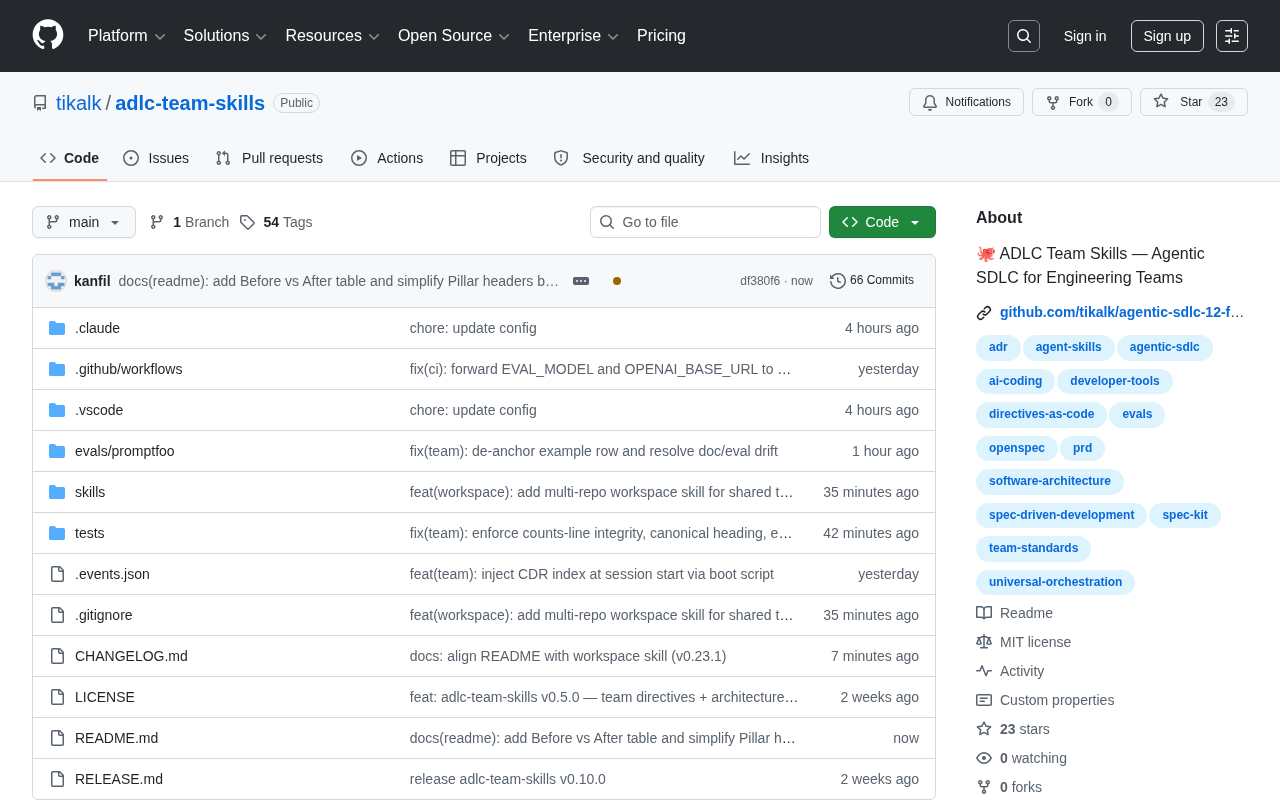
A project that recently sparked discussion on Hacker News focuses precisely on this problem: using an Agent Skills mechanism to inject team coding standards into Claude Code and Codex, enabling AI assistants to automatically follow established team conventions when generating code.
What Are Agent Skills: From Scattered Prompts to Reusable Skill Modules
Crystallizing Experience into Structured Skill Definitions
The core idea behind Agent Skills is to transform experience that was previously scattered across individual prompts into reusable, shareable, version-controlled skill modules. In the traditional approach, developers have to repeatedly emphasize requirements like "use 4-space indentation" or "errors must be explicitly returned, not thrown as exceptions" in every conversation with the AI assistant—tedious and prone to omissions.
This traditional Prompt Engineering approach has several structural problems: context windows are limited, and overly long rule descriptions crowd out space for the actual task; prompts lack version control mechanisms, and versions maintained by different team members easily drift apart; furthermore, rules described in pure natural language are inherently ambiguous, and the model's adherence to them degrades as conversation turns increase—a phenomenon known as "instruction forgetting," a known limitation of current LLMs in long conversations.
Agent Skills encapsulates these rules into structured definition files, enabling AI assistants to proactively load and follow them when executing coding tasks. This is essentially a "configuration as convention" approach—a team only needs to maintain one skill definition, and all members' AI assistants will maintain consistent output styles.
This philosophy originates from the Infrastructure as Code (IaC) engineering philosophy. In the DevOps domain, tools like Terraform and Ansible codify server configurations to ensure consistency and reproducibility. Agent Skills applies the same philosophy to AI behavior management: using declarative configuration files to define rules the AI should follow, making standards subject to Git version control, reviewable via Pull Requests, and verifiable in CI/CD pipelines. This provides much stronger enforcement than verbal agreements or documentation.
Deep Integration with Team Engineering Culture
The value of this approach goes beyond unifying code style—it truly integrates the AI assistant into a team's engineering culture. A mature development team typically accumulates substantial tacit knowledge: specific directory structures, conventionally established log formats, security review checkpoints, and more. Agent Skills provides a vehicle to make this tacit knowledge explicit and codified, transforming the AI assistant from a violator of standards into an enforcer of them.
Tacit Knowledge is a concept introduced by management scholar Michael Polanyi, referring to knowledge that is difficult to articulate precisely in language and is usually transmitted through practice and experience. In software teams, this includes decisions like "why we chose to place the database access layer in /internal/store rather than /models" or "why error logs must include a request_id field." Traditionally, such knowledge relies on senior members passing it down verbally or scattering it across Wiki pages. Agent Skills provides a way to encode it as machine-executable rules—serving not only the AI assistant but also representing a structured preservation of team knowledge assets.
Why Teams Need Agent Skills to Solve Standards Consistency
The "Last Mile" of AI Coding Adoption
Current AI coding assistants already work quite well for individual developers, but they repeatedly hit walls when it comes to team collaboration and enterprise-level deployment. The core contradiction is that LLMs are trained on massive open-source codebases, and their default output reflects an "average style," while every team has its own unique engineering constraints.
If AI-generated code requires repeated manual adjustments before it can be merged into the main branch, the efficiency gains it provides are significantly diminished. What Agent Skills aims to solve is precisely this "last mile" problem—making AI output ready to use out of the box, reducing rework costs during the Code Review phase.
Quantifying this problem from an engineering practice perspective: research shows that approximately 30%-50% of code review comments relate to style and convention rather than logical errors. Each round of rework caused by inconsistent standards involves the complete cycle of developers modifying code, resubmitting, and reviewers re-examining, adding an average of 1-3 days of merge delay. When AI-generated code also goes through this cycle, its "instant generation" speed advantage is offset by friction in the review stage. This also explains why enterprises often see impressive results during PoC phases of AI coding tool pilots but disappointing outcomes during scaled rollouts.
A Win-Win for Code Maintainability and Consistency
From an engineering management perspective, coding standards consistency directly impacts the long-term maintainability of a codebase. As teams scale and member turnover increases, an AI assistant that consistently produces standards-compliant code may actually be more reliable than some manually written code. This is why such tools attract widespread attention in the tech community—they address a real pain point in scaling AI-assisted development.
Agent Skills Practice Guide: How to Define Effective Skill Rules
Key Principles for Writing High-Quality Skill Definitions
For Agent Skills to truly deliver value, the quality of the skill definitions themselves is crucial. Effective skill definitions should possess the following characteristics:
- Clear and actionable: Rules should be specific enough for the AI to follow directly; avoid vague statements like "write elegant code"
- Include positive and negative examples: Side-by-side comparisons of correct and incorrect code significantly improve the AI's comprehension accuracy
- Organized in layers: Separate universal standards from project-specific conventions to facilitate cross-project reuse
- Continuously iterated: As team standards evolve, skill definitions need to be updated accordingly
Cross-Platform Compatibility: Supporting Both Claude Code and Codex
You might not have noticed, but this project supports both Claude Code and Codex—two of the major mainstream AI coding platforms. This cross-tool compatibility has significant practical implications: team members may use different AI assistants based on personal preference, and unified skill definitions ensure consistent output standards regardless of which tool is used. This also reduces the risk of vendor lock-in to a single AI provider.
Vendor Lock-in is an important consideration in enterprise technology selection. In the AI coding assistant space, Anthropic's Claude Code and OpenAI's Codex represent two major technical approaches, each with different API interfaces, context management mechanisms, and instruction-following characteristics. If a team's coding standards are stored only in a proprietary format specific to one platform, switching tools requires re-adapting all rules. By providing a cross-platform compatible skill definition format, Agent Skills achieves a "standards-tool decoupling" architecture, conceptually aligned with the Multi-cloud Strategy advocated in the cloud-native domain.
Current Limitations and Future Directions
As a solution still in early exploration stages, the actual effectiveness of Agent Skills awaits validation at larger scale. Several foreseeable challenges include:
- The initial cost of writing and maintaining skill definitions
- The degree to which AI adheres to complex nested rules
- The balance between strict standards enforcement and AI creativity
The last point deserves further discussion. In software development, not all scenarios are suited to strict standards enforcement. Exploratory prototyping, algorithm optimization, and architectural innovation often require the AI to have a degree of "creative freedom." Over-constraining may cause the AI to fall into mechanical template application, missing superior implementation approaches. This is similar to the judgment human engineers make between "following standards" and "reasonable deviation"—a skilled engineer knows when to strictly comply and when to suggest changing the standard. Future Agent Skills mechanisms may need to introduce concepts of rule priority and soft constraints, allowing the AI to flag "suggested deviation from standards" with reasoning under specific conditions.
However, looking at the trend, as AI coding assistants evolve from "personal toys" to "team productivity tools," how to inject organizational knowledge into AI and how to ensure controllability and consistency of output will inevitably become core topics in the next phase. Explorations like Agent Skills represent an important direction in the engineering maturation of AI-assisted development.
Conclusion: Transforming AI Assistants from External Experts to Internal Team Members
The core value of Agent Skills lies in transforming the AI coding assistant from a "knowledgeable but unfamiliar with your team" external expert into an internal member "deeply integrated with team standards." For teams exploring the scaled deployment of AI-assisted development, this is an approach worth watching—it reminds us that the true value of AI tools lies not only in the model's capabilities themselves, but in whether it can be effectively constrained, customized, and integrated into existing engineering systems.
Related articles

Alguard: Building a Dual-Layer Trust Defense for AI Agent Shopping
Alguard, an Amazon Developer Hackathon project, designs a dual-layer trust architecture for Alexa+ agent shopping. Through physical isolation between an MCP server and a human approval channel, it replaces prompt defenses with structural constraints to block unauthorized purchases caused by prompt injection.

Food Poisoning: Causes, Symptoms, Treatment, and Prevention Explained
Food poisoning is caused by bacteria, viruses, parasites, or toxins contaminating food, with common symptoms including vomiting, diarrhea, and dehydration. This article explains the causes, symptoms, treatment, and prevention of food poisoning to help you safeguard food safety.

Meta Uses LLMs to Make Facebook Feed Customizable
Meta launches LLM-powered algorithm personalization for Facebook and Reels, letting users manage interests via menu and customize feed with a text box.