Agentic AI Solves Medical Claim Denial Challenges: A Traceable, Compliant, Privacy-Preserving Framework

A modular Agentic AI framework enables traceable, compliant claim denial analysis via multi-agent collaboration and policy-anchored RAG.
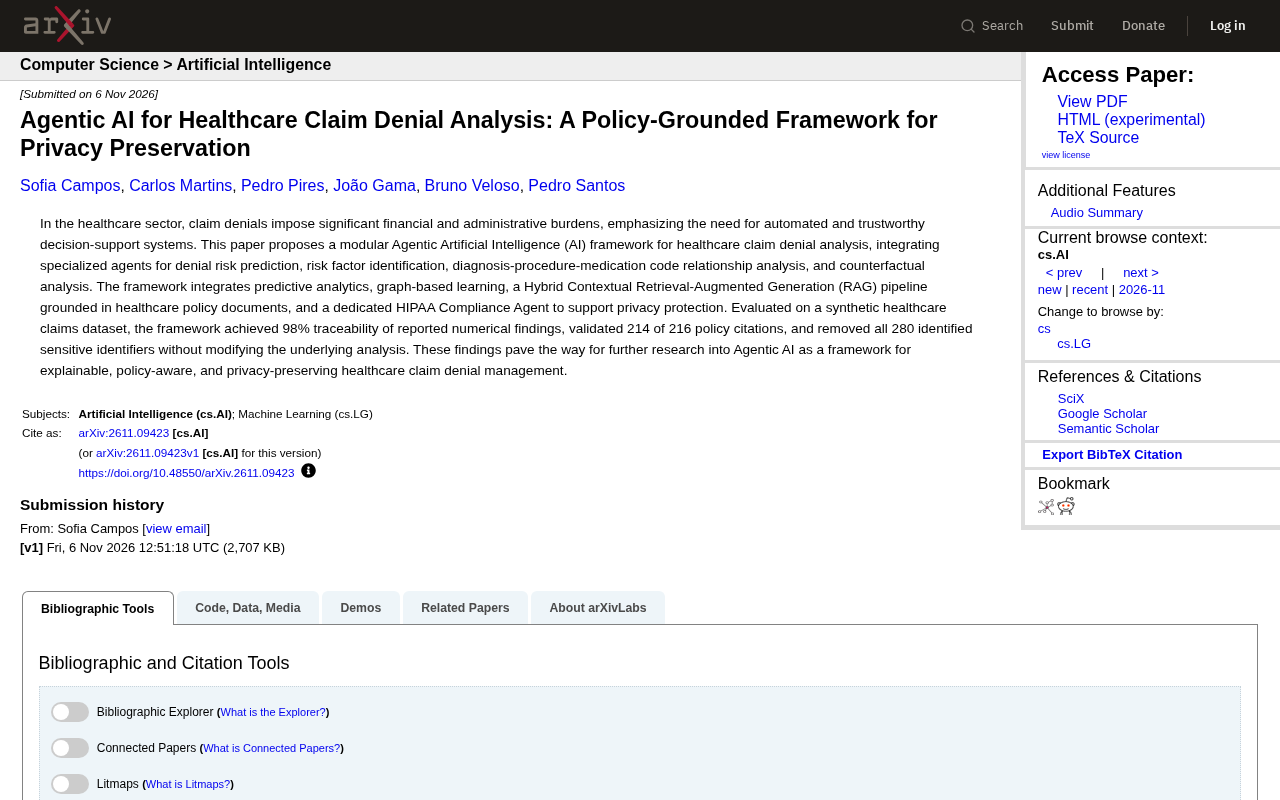
This article presents a modular Agentic AI framework for medical claim denial management. Comprising denial risk prediction, risk factor identification, code relationship graph analysis, counterfactual analysis, and HIPAA compliance agents, it anchors conclusions to policy documents via a hybrid-context RAG pipeline. On synthetic data, it achieved 98% numerical traceability, validated 214 of 216 policy citations, and removed all 280 sensitive identifiers without affecting analysis logic. The core challenge for medical AI is trust and auditability; real-world generalization remains to be validated.
Medical claim denials impose enormous financial and administrative burdens on institutions every year, and how to build trustworthy, auditable decision-support systems with AI has become an industry pain point. A recent paper proposes a modular Agentic AI framework that, through multi-agent collaboration and a policy-document-anchored RAG pipeline, achieves 98% numerical traceability on a synthetic dataset, validates 214 of 216 policy citations, and removes all 280 sensitive identifiers without affecting analysis results. This offers a new approach to explainable, policy-aware, and privacy-preserving claim denial management.
Why Claim Denials Need Agentic AI
Traditional claim denial analysis relies on manual review and rule engines, making it difficult to handle the complex relationships among diagnosis, procedure, and drug codes—let alone predict risk before a denial occurs and provide explainable reasons. The modular design of Agentic AI decomposes tasks among multiple specialized agents: denial risk prediction, risk factor identification, code relationship graph analysis, counterfactual analysis, and a dedicated HIPAA compliance agent. This division of labor makes the output of each stage traceable and verifiable, rather than a black-box model producing a vague probability.
The paper emphasizes that the core challenge of medical decision-support systems is not prediction accuracy but trust—clinical and financial staff need to know "why this claim will be denied" and "which code could be modified to avoid denial." The Agentic architecture provides this explainability precisely through inter-agent collaboration and retrieval-augmented generation (RAG).
Agentic AI refers to systems composed of multiple agents with autonomous planning, tool-calling, and collaboration capabilities, distinct from the single-model one-shot output paradigm. Each agent can decompose subtasks, invoke retrieval or computation tools, and exchange intermediate results with other agents, thereby breaking complex decisions into traceable steps. In the medical claim context, this architecture forms a chain of "prediction—explanation—validation" rather than a black-box probability output. Its key characteristics include task decomposition, tool use, memory, and collaboration, which together support auditability.
Core Framework Modules and Privacy Protection Mechanisms
The framework comprises four analytical agents and one compliance agent. The denial risk prediction agent assesses the likelihood that a claim will be denied; the risk factor identification agent locates key drivers; the diagnosis-procedure-drug code relationship analysis agent uses graph learning to uncover hidden associations among codes; and the counterfactual analysis agent simulates "how denial risk would change if a certain code or piece of information were adjusted." All analysis results are aligned with medical policy documents through a hybrid-context RAG pipeline, ensuring that every conclusion has a policy basis.
The HIPAA compliance agent operates independently, specifically identifying and removing protected health information (PHI). In tests on the synthetic dataset, this agent removed all 280 identified sensitive identifiers, and the underlying analysis logic was not modified in any way. This means privacy protection is not a post-hoc filter but a parallel component embedded in the analysis workflow.
Retrieval-Augmented Generation (RAG) is a technique that combines external knowledge base retrieval with large language model generation: the system first retrieves relevant document fragments based on the query, then has the model generate an answer grounded in those fragments, thereby reducing hallucinations and improving traceability. The "hybrid-context RAG pipeline" in this paper further binds analysis results to medical policy document fragments, enabling every conclusion to be traced back to specific policy clauses. The core value of RAG lies in anchoring model outputs to verifiable external evidence, which is precisely the technical foundation for achieving 98% numerical traceability and policy citation validation.
HIPAA (Health Insurance Portability and Accountability Act) is a US federal law that governs the use and disclosure of protected health information (PHI). PHI includes 18 categories of individually identifiable health information, such as names, addresses, dates, and medical record numbers. In medical AI systems, compliance requirements typically include de-identification, minimum necessary use, and security auditing. The HIPAA compliance agent in this paper operates independently, automatically identifying and removing PHI, ensuring that the analysis workflow does not touch sensitive identifiers while not altering the underlying analysis logic—embodying the design principle of "privacy protection embedded in the workflow."
Counterfactual analysis is a causal inference method that assesses intervention effects by simulating "how the outcome would change if a certain variable were altered." In the claim denial context, the counterfactual analysis agent can answer "how much would denial risk decrease if a certain diagnosis code were modified or a piece of information were supplemented," thereby providing actionable adjustment recommendations for clinical and financial staff. Unlike mere risk prediction, counterfactual analysis requires the model to understand the causal structure among variables rather than mere correlations, making its explanations closer to decision-making needs.
Empirical Results: Traceability and Policy Citation Validation
Evaluation on a synthetic medical claim dataset shows that 98% of all numerical findings reported by the framework are traceable to source data or computation processes, and 214 of 216 policy citations are validated. These two metrics directly address the two most questioned aspects of medical AI deployment: where do the numbers come from, and which policy is the basis. The paper notes that this traceability benefits from the RAG pipeline binding each output to original policy document fragments, rather than relying on the model's internal memory.
It should be noted that this evaluation is based on synthetic data; the complexity and noise levels of real-world claim data may introduce additional challenges. However, the modular design of the framework allows any individual agent to be replaced or upgraded independently, providing a foundation for subsequent iteration on real data.
Implications for Medical AI Deployment
The value of this work lies in moving Agentic AI from conceptual demonstration to auditable industry application. Medical claim denial management involves multiple parties—finance, clinical, and compliance—and any automated recommendation must withstand audit. Through policy-anchored RAG, multi-agent division of labor, and independent compliance checks, the framework builds a transparent chain from data to decision.
Future research directions include validating the framework's generalization capability on real de-identified data and expanding the coverage of the policy document library. For institutions exploring AI-assisted claim management, this framework suggests a pragmatic path: prioritize building traceability and compliance infrastructure, then gradually improve prediction accuracy.
One-line Summary
A modular Agentic AI framework achieves traceable, compliant claim denial analysis through multi-agent collaboration and policy-anchored RAG.
Paragraph Summary
This article introduces a modular Agentic AI framework for medical claim denial management. The framework comprises five agents—denial risk prediction, risk factor identification, code relationship graph analysis, counterfactual analysis, and HIPAA compliance—and anchors analysis conclusions to medical policy documents through a hybrid-context RAG pipeline. On a synthetic dataset, the framework achieved 98% numerical traceability, validated 214 of 216 policy citations, and removed all 280 sensitive identifiers without affecting analysis logic. The article notes that the core challenge of medical AI deployment is trust and auditability; the framework builds a transparent decision chain through multi-agent division of labor, policy anchoring, and independent compliance checks, though real-world generalization capability still needs validation.
Related articles
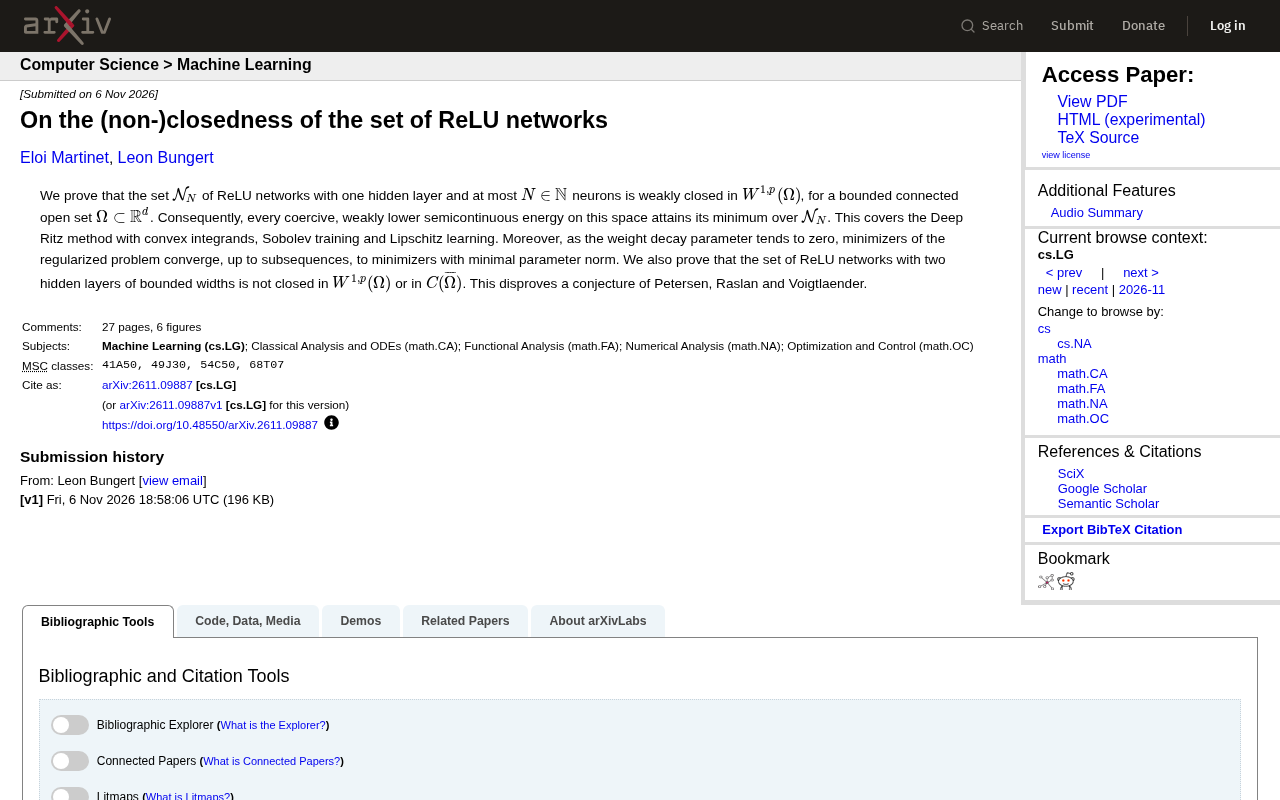
A New Proof on the Closedness of ReLU Network Sets: Single Hidden Layer is Weakly Closed, Two Hidden Layers is Not Closed
New research proves single-hidden-layer ReLU network sets are weakly closed in W^{1,p}, ensuring existence of solutions for Deep Ritz and similar methods; two-hidden-layer network sets are not closed, refuting an existing conjecture.
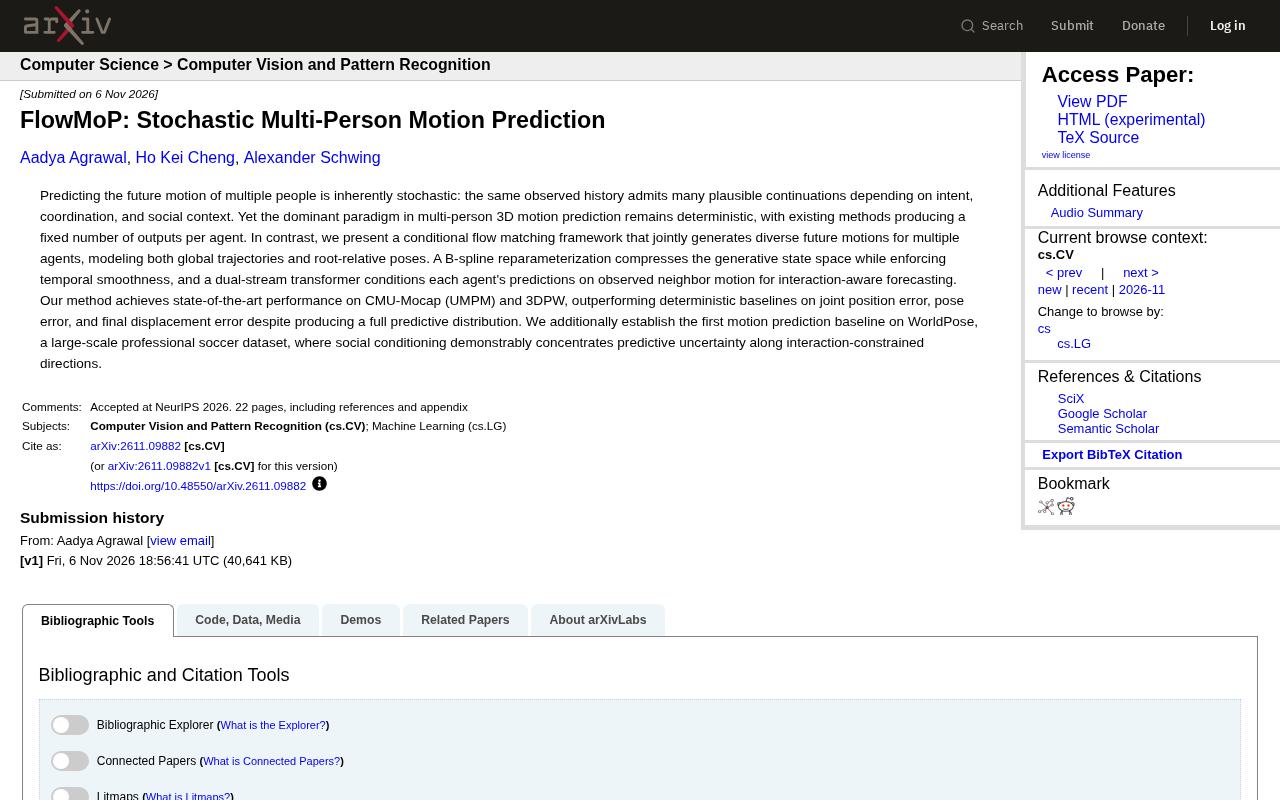
FlowMoP: A New Framework for Stochastic Multi-Person Motion Prediction
FlowMoP introduces a conditional flow matching framework that jointly generates diverse future motions for multiple agents, using B-spline reparameterization and a dual-stream Transformer for interaction-aware prediction. It outperforms deterministic baselines on CMU-Mocap and 3DPW and establishes the first motion prediction baseline on WorldPose.
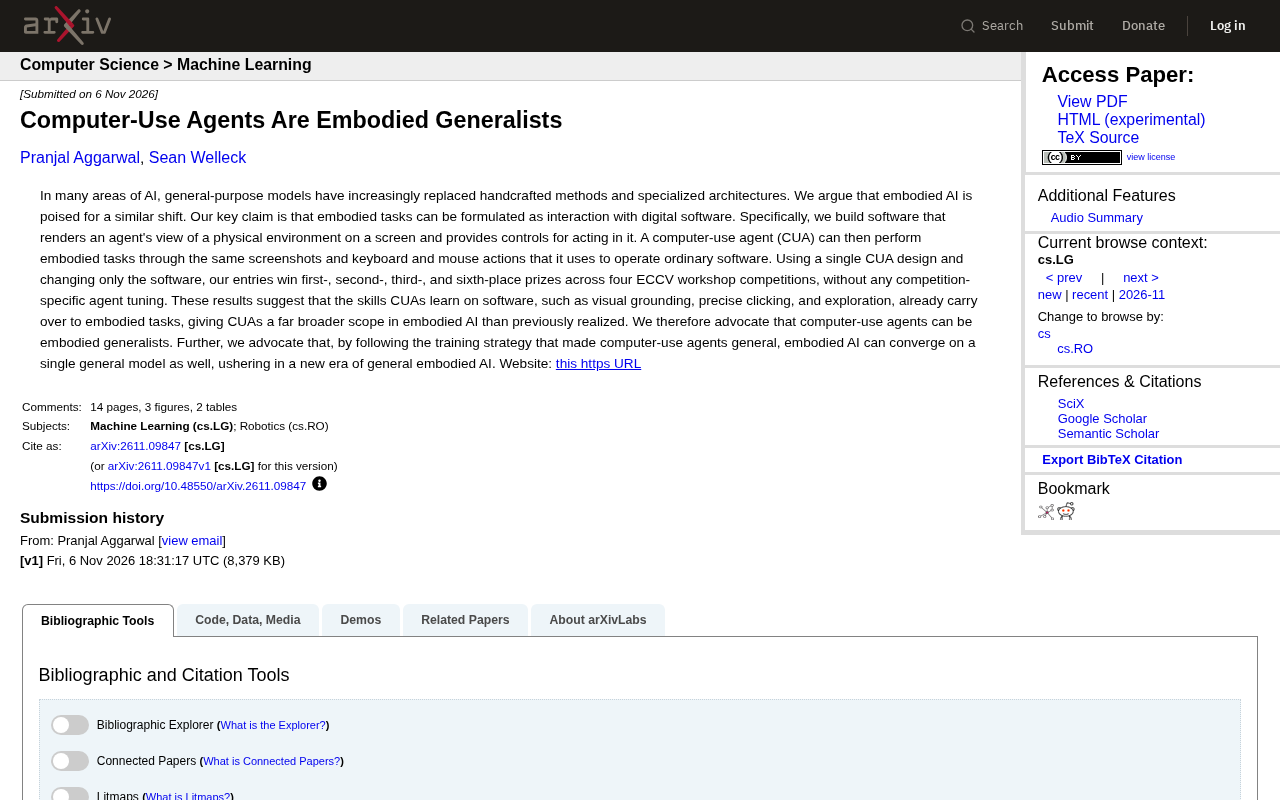
Computer-Using Agents: A New General-Purpose Paradigm for Embodied AI
ECCV workshop competitions show computer-using agents (CUAs) can win multiple contests by turning embodied tasks into software interaction, without specialized tuning—revealing their potential as embodied generalists and a new path to general embodied AI.