Ahead of iPhone 18 Pro Launch, Google Cuts Pixel 11 Prices to Compete
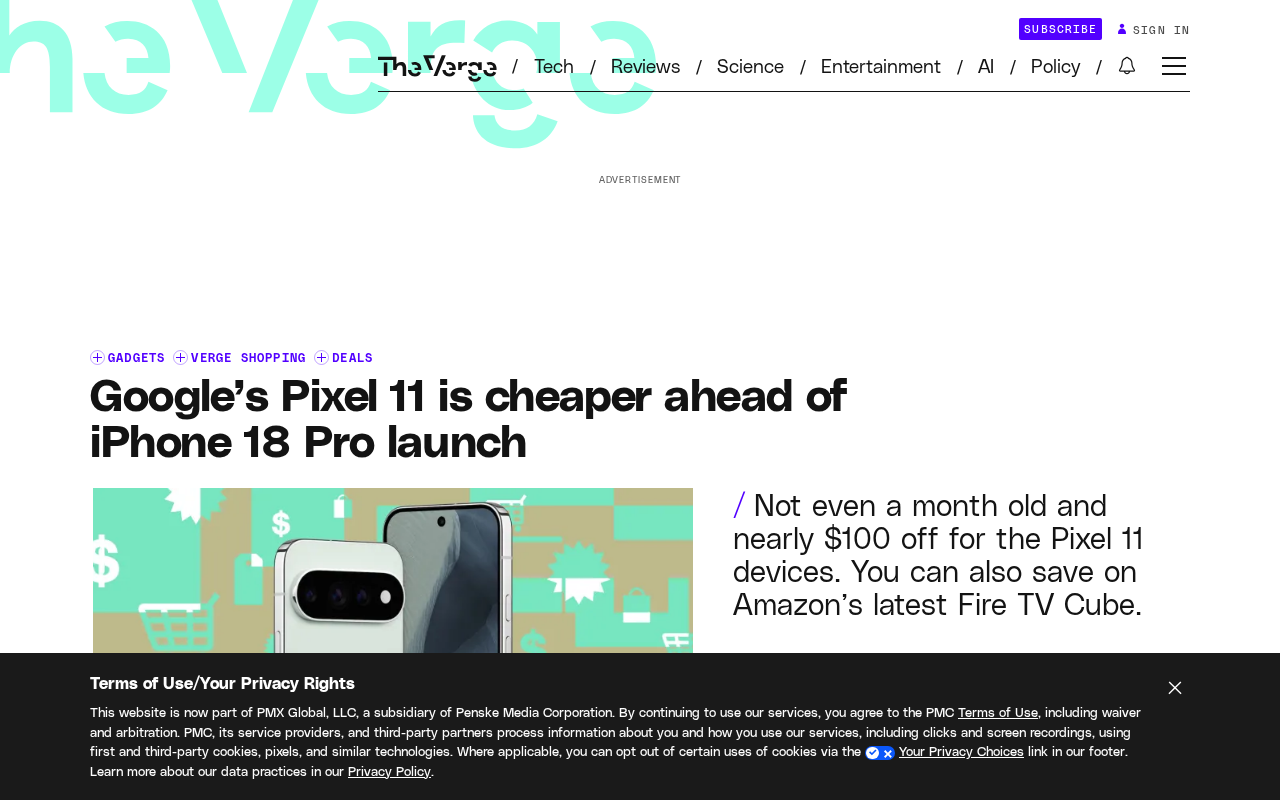
Google cuts Pixel 11 Pro prices the same week as iPhone 18 Pro's launch, bringing costs back to last year's levels.
With Apple's iPhone 18 Pro launching on September 18, Google has moved to discount its Pixel lineup, dropping the Pixel 11 Pro to around $1,007 on Amazon — nearly wiping out the $100 price hike applied to the model this year. The timing is no accident: discounting around a rival's launch is a well-worn defensive tactic in a mature premium smartphone market. For shoppers on the fence, this means getting this year's flagship at close to last year's price, though these promotions are typically time-limited. The annual "you launch, I discount" dance between Google and Apple signals that as hardware innovation plateaus, price and ecosystem have become the defining battlegrounds for consumer loyalty.
A Carefully Orchestrated Price War
With Apple's iPhone 18 Pro set to officially launch this Friday (September 18), Google's decision to discount its latest Pixel lineup at this exact moment is hard to write off as coincidence. As its rival prepares to drop a flagship bombshell on the premium smartphone market, Google is moving first with a pricing play — a move that has become practically a yearly autumn ritual in the smartphone industry.
The biggest discount in this round falls on the Pixel 11 Pro. The fog, olive, and obsidian colorways are now listed on Amazon for around $1,007 — nearly canceling out the $100 price increase Google applied to the model this year. In other words, Google is effectively handing back this year's price hike through a discount, ensuring consumers don't feel the sting of that increase at checkout.
The Market Logic Behind the Discount
Offering discounts during the critical launch window of a rival's flagship is a classic defensive competitive strategy. For Google, a new iPhone reveal inevitably dominates media coverage and consumer attention, leaving the Pixel at risk of being drowned out by the noise. By cutting prices, Google carves out room among price-sensitive buyers — preventing that segment of potential customers from drifting toward Apple during a period of indecision.
What's notable is how precisely the discount offsets the Pixel 11 Pro's $100 price hike this year. This isn't a simple inventory clearance or a straightforward concession — it's Google using a promotional lever to absorb the market resistance created by its own pricing strategy. For consumers, it's a chance to pick up this year's flagship at something close to last year's price.
What This Means for Consumers
If you're on the fence between Android and iOS, this discount offers a genuinely practical data point. The Pixel lineup has long been known for its clean Google software experience, AI features, and computational photography — and pricing has often been a key card in its hand when going up against the iPhone. When the real-world cost of a Pixel 11 Pro comes down, its value proposition against the iPhone 18 Pro at a similar price tier becomes more compelling.
That said, it's worth keeping in mind that these launch-adjacent, limited-time discounts tend to have an expiration date — prices may revert once the promotional cycle ends. If you have a clear need for a new phone, this window is worth acting on. But if you're primarily drawn in by the discount itself, it's still worth grounding your decision in your actual preferences around ecosystem, OS, and daily usage habits.
The New Normal in Flagship Competition
The "you launch, I discount" dynamic playing out between Google and Apple reflects a high-end smartphone market that has long since matured and saturated. As the marginal returns on hardware innovation diminish, price, ecosystem lock-in, and launch timing have become the primary levers manufacturers use to fight for users. Google's choice to cut prices during the same week as the iPhone 18 Pro launch is both a direct response to Apple's momentum and a proactive defense of its own market share.
What looks like a casual discount is, at its core, an ongoing tug-of-war over consumer attention and spending. For those watching from the sidelines, the intense competition between manufacturers tends to translate into real, tangible savings at the point of purchase — and that's arguably the most relevant takeaway for everyday consumers in stories like this one.
Related articles
Xi Jinping Proposes Open Source AI Cooperation Zone Among BRICS Nations
Xi Jinping proposed an open source AI cooperation zone at the BRICS summit. Analyzing the strategic intent, open source rationale, and global AI governance implications.
Swift-Qwen3.8-27B: 58% Fewer Thinking Tokens, Nearly 2x Faster Inference
UkisAI open-sources Swift-Qwen3.8-27B, cutting thinking tokens by 58% and boosting inference speed 1.95x via overthinking token penalties and on-policy distillation — with under 1% accuracy loss.
Netflix Partners with Sega: Crazy Taxi Movie and New Sonic Animated Series on the Way
Netflix announces three Sega game adaptations: a Crazy Taxi movie, a new Sonic animated series with edge, and a live-action film based on RGG Studio's Stranger Than Heaven.