Xi Jinping Proposes Open Source AI Cooperation Zone Among BRICS Nations
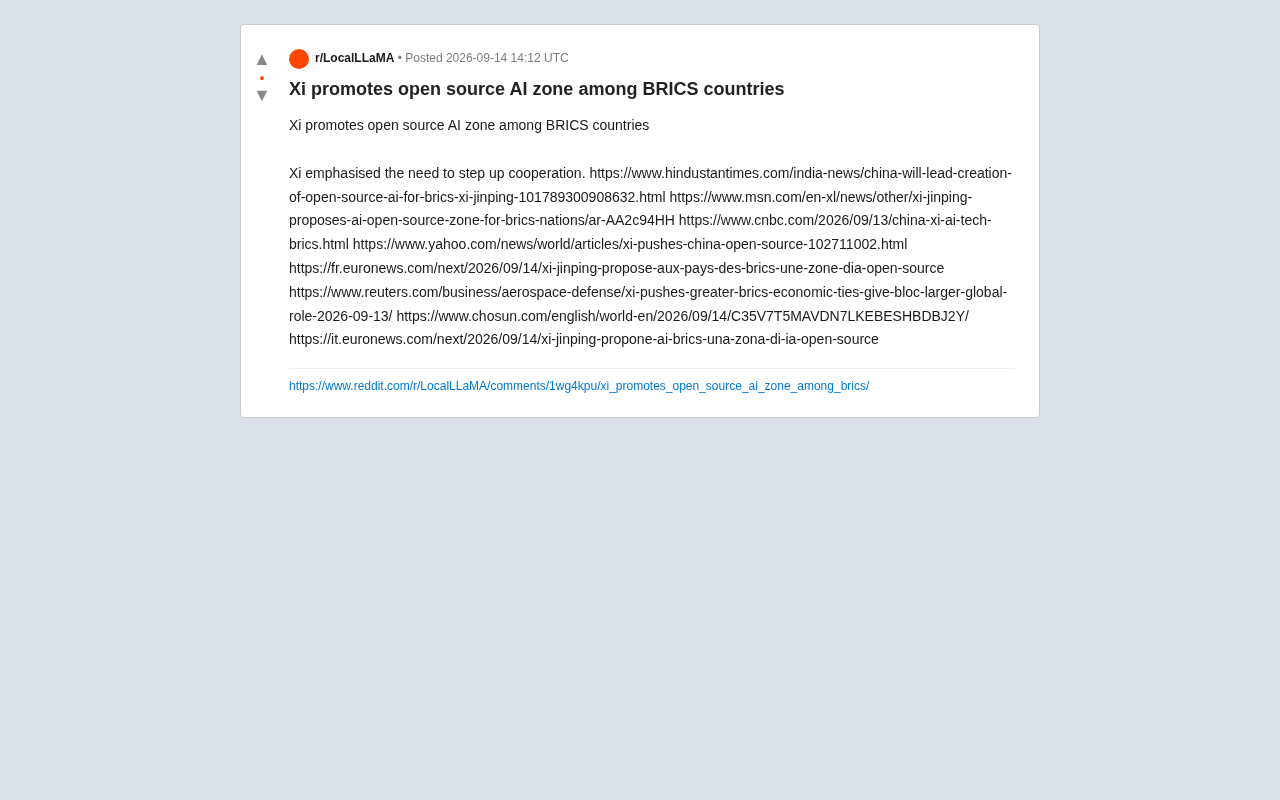
Xi Jinping calls for a BRICS open source AI zone to counter Western tech dominance and shape global AI standards.
At a recent BRICS summit, Xi Jinping proposed an "open source AI cooperation zone" — replacing Western closed-source commercial models with shared open source infrastructure to lower AI barriers for emerging economies. China has already built a substantial open source ecosystem through models like DeepSeek and Qwen, and this proposal is in effect an effort to export that ecosystem to BRICS nations while establishing non-Western norms in data governance and AI standards. However, diverging technical capacities and interests among member states, data sovereignty concerns, and the unclear boundaries of "open source" mean the proposal remains largely a political statement in the near term. Analysts note it reflects a deeper shift in global AI competition — from pure technical rivalry to a contest between closed-source commercial and open source multilateral ecosystems.
A New AI Proposal at the BRICS Summit
At a recent BRICS leaders' summit, Chinese President Xi Jinping put forward a proposal that has drawn widespread attention from the international tech community: the establishment of an "open source AI zone" among BRICS member states. According to reports from Reuters, CNBC, Hindustan Times, and several European outlets, Xi emphasized the need for BRICS nations to deepen cooperation in AI and collectively address both the opportunities and challenges that technological development presents.
The crux of this proposal lies in the phrase "open source." Unlike the AI ecosystem championed by the United States — characterized by closed-source large models and technology restrictions — the open source AI zone envisioned under the BRICS framework aims to lower the technical barriers for member states by sharing foundational models, datasets, and development tools, thereby giving Global South nations greater influence in the AI wave.
Why the "Open Source" Route?
The choice of open source is no accident. In today's global AI race, computing power, data, and top talent are heavily concentrated in a handful of advanced economies, leaving many developing nations unable to afford or access these technologies. The open source model matters precisely because it allows countries with weaker technical capabilities to build on existing models — localizing and adapting them — without having to start from scratch.
According to CNBC's analysis, China has become increasingly active in the open source AI space in recent years. From DeepSeek to Qwen and GLM, a series of open source models has given rise to a substantial open source ecosystem. Extending this ecosystem to BRICS nations represents both a form of technology export and a strategic move to build an AI standards and discourse framework centered on China.
Open Source as a Geopolitical Technology Tool
Notably, European media outlets (such as French and Italian versions of Euronews) have framed this proposal within a broader geopolitical context. As the United States continues to tighten chip and AI technology export restrictions on China, Beijing is pivoting to open source and multilateral cooperation as a way to break through the containment and expand its influence. Here, open source is not merely a technical philosophy — it has become a tool for circumventing technological decoupling and reshaping global supply chains.
DeepSeek is a series of open source large language models released by Chinese AI company DeepSeek between late 2024 and early 2025. DeepSeek-R1 garnered widespread international attention for achieving performance comparable to GPT-4 at a fraction of the training cost. Qwen (Tongyi Qianwen) is Alibaba's open source model series, while the GLM series was jointly developed by Tsinghua University and Zhipu AI. All three projects have released their model weights fully in the open, allowing any organization to download, fine-tune, and deploy them commercially. Together with Meta's LLaMA, they form the world's most active open source large model ecosystem. China's intensive investment in open source LLMs stems partly from domestic firms' strategic choice to "trade openness for ecosystem" after losing access to NVIDIA's high-end chips, and partly from the technical credibility and standard-setting influence China has accumulated in the open source community — a foundation that now supports exporting this ecosystem to BRICS nations.
Strategic Intent Behind an Expanded BRICS
Reuters reported that Xi used the summit not only to discuss AI, but also to push for stronger overall economic ties among BRICS nations and a larger global role for the bloc. With BRICS having expanded its membership in recent years, member states now span emerging economies across Asia, Africa, South America, and the Middle East, with a growing share of global population and GDP.
Against this backdrop, the AI cooperation zone is seen as an attempt to upgrade the BRICS group from an "economic cooperation platform" to a "technology standards alliance." If realized, BRICS nations could develop their own frameworks around data governance, AI ethics, and model standards — frameworks distinct from those of the West — and thereby claim a seat at the table in global AI governance.
At the 2023 BRICS summit, the bloc announced an expansion, inviting Saudi Arabia, Iran, Ethiopia, Egypt, the UAE, and Argentina (which ultimately declined following a change of government) to become full members, growing the core membership from 5 to 10 countries. After this expansion, BRICS nations collectively represent approximately 45% of the global population and around 35% of global GDP (by purchasing power parity), while holding significant sway over oil exports and critical mineral supply chains. The geographic diversity of the expansion — from Middle Eastern oil producers to Africa's most populous nations — gives the BRICS bloc the market scale and resource variety needed to build an independent technology standards alliance. The AI cooperation zone proposal emerged precisely at the moment when this expansion dividend had yet to be fully translated into substantive cooperation, reflecting China's strategic desire to inject meaningful technological collaboration into the enlarged BRICS framework.
Potential Challenges and Uncertainties
Despite the ambitious vision, the open source AI cooperation zone faces considerable real-world obstacles. The most pressing issue is the divergence in technological capacity and strategic interests among member states — countries like India and Brazil have their own approaches to AI development and may not be willing to fully align with a China-led technology ecosystem.
There are also concerns about data sovereignty and security. Open source implies a degree of technical transparency and sharing, yet every country is cautious about cross-border flows of its own data. How to strike a balance between sharing and protection will directly determine the viability of the cooperation zone.
Furthermore, the very boundaries of "open source" deserve scrutiny: releasing model weights is not the same as releasing training data and core computing infrastructure. Whether the key components that truly determine AI capability will be included in the sharing arrangement remains unclear. These unresolved questions mean that, in the near term, this proposal remains largely a political declaration.
"Open source" in the AI field has no unified legal or technical definition, and in practice there are clear gradations. The most permissive form merely releases model weights (the parameter files of a neural network), allowing others to run and fine-tune them, but without disclosing training data, training code, or full technical reports — Meta's LLaMA series falls into this category, and its license also includes commercial restrictions. More thorough open source requires simultaneously releasing training datasets, data cleaning pipelines, and full reproduction code; very few large models have reached this level. The factors that truly determine a model's capability ceiling are training compute (i.e., access to high-end GPU clusters) and data quality — neither of which can be easily shared through "open source" alone. So when the BRICS open source AI zone claims to "share foundational models," the actual degree of empowerment it delivers hinges entirely on what is ultimately disclosed — and that is precisely the core question for which no clear details yet exist.
Far-Reaching Implications for the Global AI Landscape
Regardless of how much of this proposal ultimately gets implemented, it has already sent a clear signal: global AI competition is evolving from a purely technical contest into a battle over technology standards and ecosystem allegiances. The closed-source commercial model championed by Western players like OpenAI and Google, and the open source multilateral cooperation model China is promoting, may give rise to two parallel — and competing — AI ecosystems in the years ahead.
For developing nations, having an additional technological option is not necessarily a bad thing. Open source ecosystems genuinely lower the barrier to participating in the AI revolution. But technology has never been neutral — aligning with a particular ecosystem often also means accepting its accompanying standards, rules, and even values. Xi Jinping's proposal at this summit is a microcosm of exactly that deeper global technology contest.
Related articles
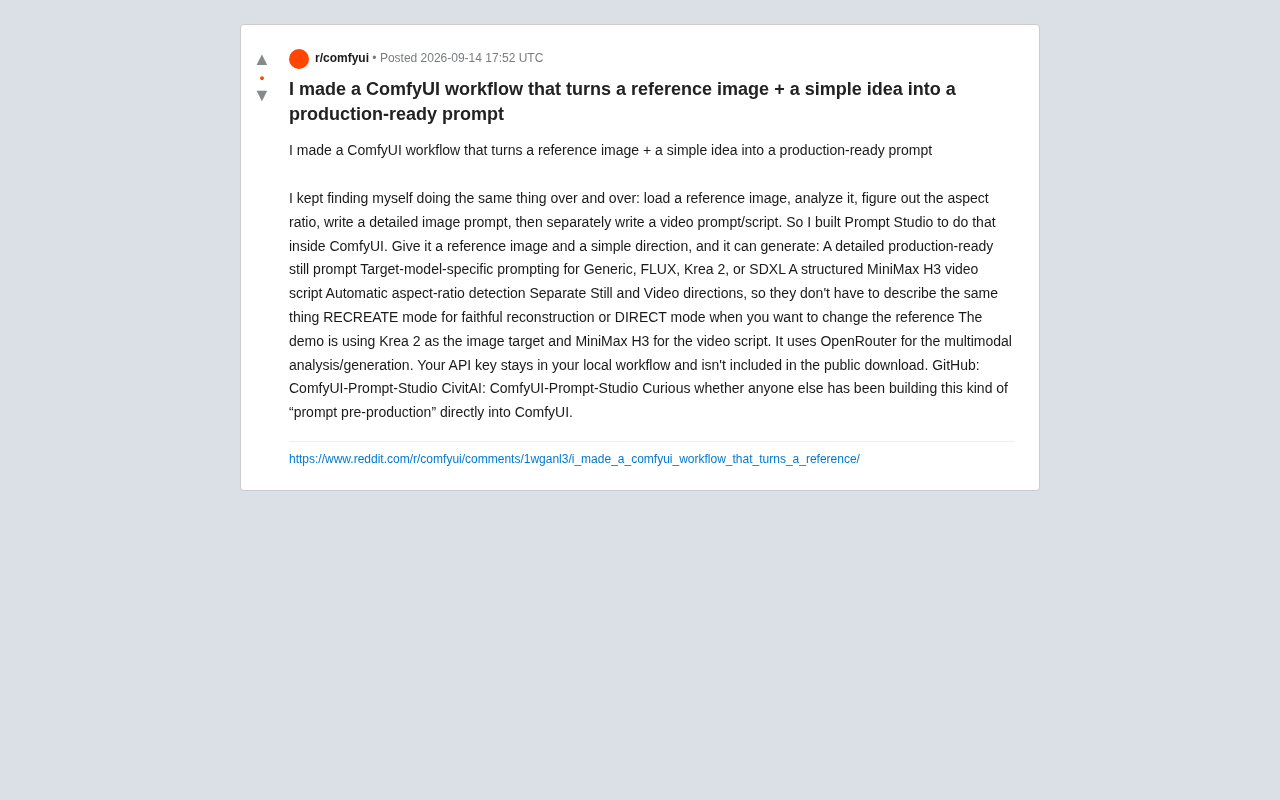
ComfyUI Prompt Studio: A Workflow for Turning Reference Images into Production-Ready Prompts
ComfyUI Prompt Studio is an open-source workflow that auto-generates production-ready image prompts, multi-model custom prompts, and MiniMax video scripts from reference images.
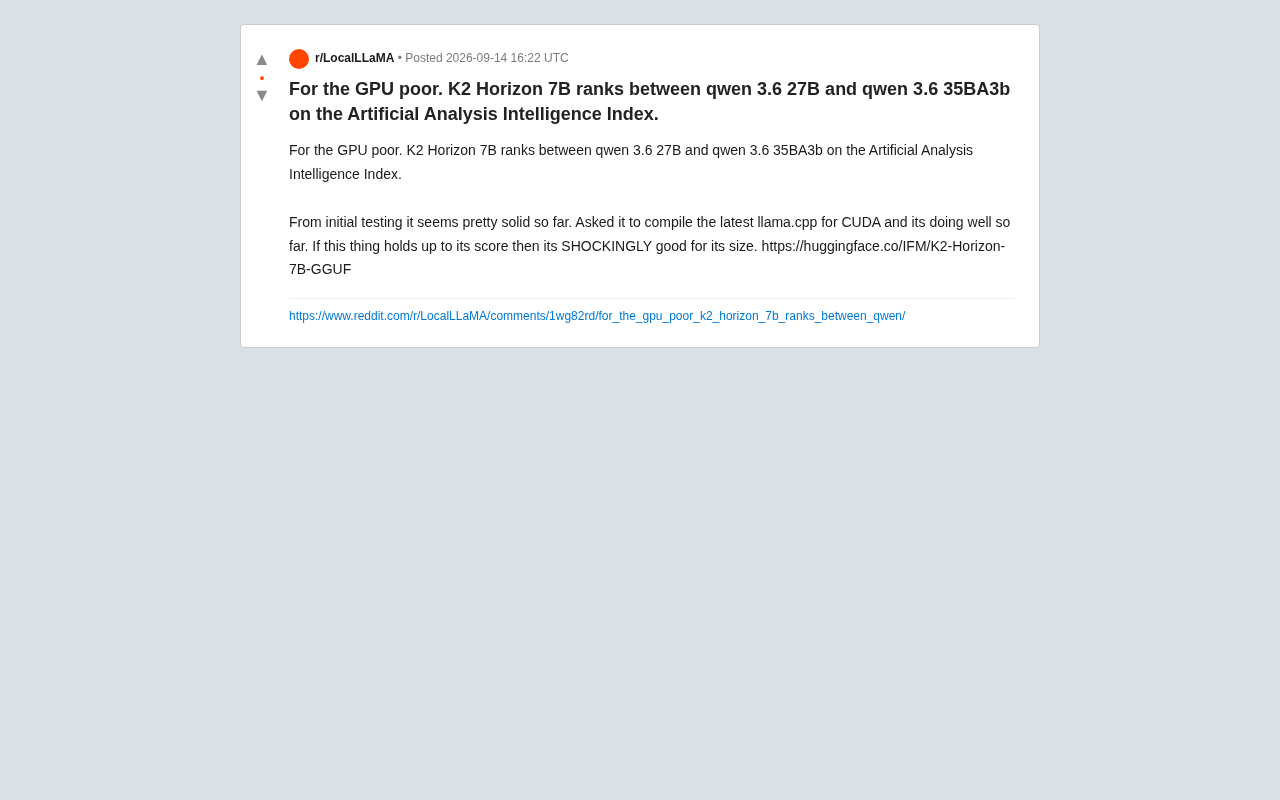
K2 Horizon 7B: A Small Model Punching Above Its Weight
K2 Horizon 7B ranks between Qwen 3.6 27B and 35BA3b on the Artificial Analysis Intelligence Index, delivering near-mid-tier intelligence at 7B parameters — a strong local deployment option.
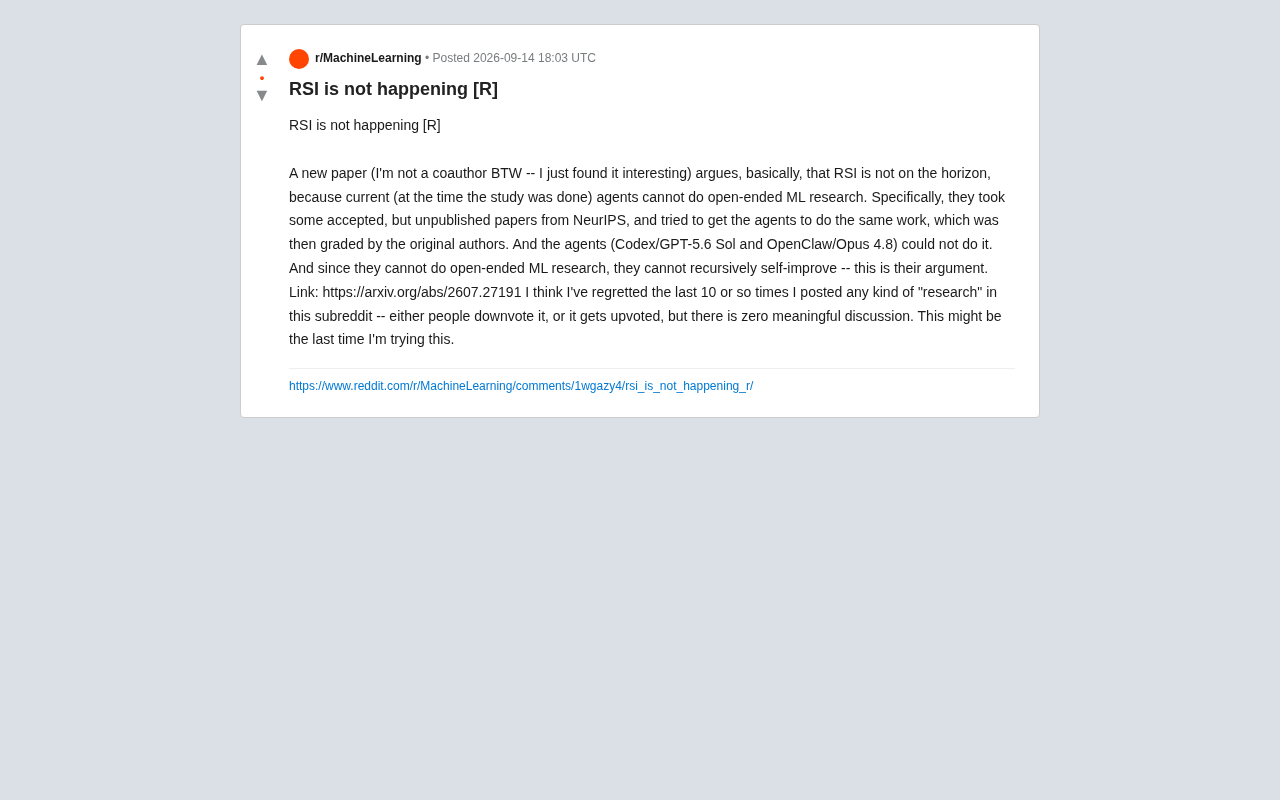
RSI Won't Happen Anytime Soon? A New Paper Uses NeurIPS Experiments to Argue No
A new paper tests AI agents on unpublished NeurIPS work scored by original authors, finding agents fall short — arguing RSI won't happen soon. A breakdown of the methodology and logic.