AI Account Bans and the Open Source Debate: From Anthropic's Equity Review to DeepSeek's "Everyone Gets to Train"

A wuxia fable mapping AI closed-source compliance barriers against open source licensing ecosystem trade-offs.
Using Bilibili creator "问问黑哥"'s wuxia fable, the article recreates a developer's real dilemma building an AI application: the protagonist is rejected by Anthropic because of investor attribution and a 60% stake triggering an equity penetration review, mirroring real-world API service regional and entity compliance restrictions. Turning to DeepSeek, he finds the "manual" license allows copying, modification, and commercial use, requiring only retention of copyright notices and encouraging downstream distribution. The story doesn't stop at "long live open source"—landlord rent and roof repairs show that free open source isn't zero cost. Finally, through the contrast between Altman's advice to lock up the manual and the protagonist ultimately pushing it toward a young applicant, it presents the trade-off between business moats and ecosystem diffusion, reminding developers to read the last page of the license before choosing a model.
A fictional "martial arts school" story captures two real developments in the AI industry: how closed-source giants use compliance clauses to shut developers out, and how open-source models put the "secret manual" directly into your hands.
The Two Sects in the Story
Bilibili creator "问问黑哥" uses a wuxia fable to recreate a real dilemma developers may encounter. The protagonist, Xiao Heizi, wants to open a martial arts school (start an AI application business). He finds an investor (a "bidding house") to take a 60% stake, rents a courtyard, and submits his application—only to be stopped at Anthropic's gate. The reason isn't insufficient skill, but that "the bidding house's head office is on the other side of the mountain," which isn't on the approved list, and the 60% stake causes the "equity penetration" review to fail.
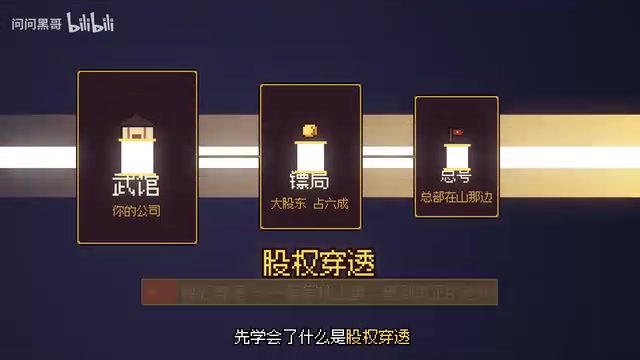
The plaque above the door reads "Benefit the World," yet Dario behind the desk can only lower his head to check the list and cross out names. After circling around, Xiao Heizi realizes: the courtyard is on this side, the flatbread vendor knows him, but the martial arts school is counted as being on the other side. He "didn't even get in the door to learn lightness skills, but first learned what equity penetration means." The satire points precisely at the geographic restrictions and entity attribution reviews in AI companies' API terms of service—your company's registration location, funding sources, and equity structure can all become grounds for rejection.
Equity penetration is a common concept in financial and compliance reviews: regulators or service providers look beyond direct shareholders and trace upward layer by layer to the ultimate beneficial owner (UBO) to determine whether there are sanctioned, restricted, or non-compliant entities. In AI API services, this means that even if your company is registered in a permitted region, if its controlling shareholder, funding source, or parent company is on a restricted list, you may still be deemed non-compliant and denied service. Similarly, regional lists typically refer to the country/region whitelists that providers define based on export controls, sanctions lists, or internal risk controls. Developers must simultaneously satisfy multiple conditions regarding registration location, operating location, and the location of ultimate controllers.
The Open Source License: The Last Page Is the Killer
After being rejected, Xiao Heizi turns to the DeepSeekAd sect. When the "big fat fish" hands him the "secret manual," he doesn't look at the moves first—he flips straight to the last page. This is the instinct of a seasoned veteran: the front makes your heart race, but the few lines of fine print at the end are the real killer.
He searches for a long time but can't find "for learning and exchange only," nor "commercial use prohibited." What's written is: you may copy, modify, and use commercially, provided you retain the original copyright and license notice. More importantly, there's a note—if you master this technique and open your own school to teach other disciples, we support that too; we will continue to open source and share new techniques as soon as they're available. It's signed with the blue whale signature of "founding master Liang Sheng," with a line of small text beside it: Everyone Gets to Train.
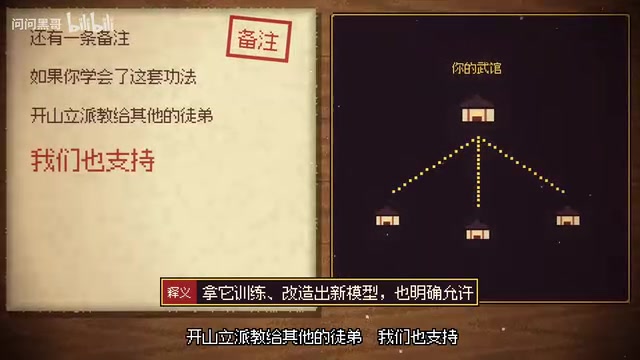
This is precisely a real-world contrast between open source licenses (such as MIT, Apache 2.0) and "open weights" models. The material doesn't specify a particular license name, but the description "copyable, modifiable, commercially usable, retain copyright notice" aligns with the core terms of permissive open source licenses. The promise to "continue open sourcing new techniques" corresponds to the public strategy for model weights and subsequent versions.
Open weights are not entirely equivalent to open source software in the strict sense. Open source licenses (such as MIT, Apache 2.0) target source code, granting rights to use, modify, and redistribute; while large models often release post-training weight parameters, and training data and the full training process may not be disclosed. Therefore, the industry commonly uses "open weight models" to distinguish from "fully open source models." Additionally, the key difference between permissive licenses and copyleft licenses (such as GPL) is: the former allows closed-source commercial use, requiring only retention of copyright and license notices; the latter requires derivative works to be released under the same license. The article's description of "copyable, modifiable, commercially usable, retain notice" is a typical feature of permissive licenses, which is an important basis for developers to judge whether a model can be embedded in commercial products.
A Free Manual Doesn't Mean a Free Business
The story doesn't stop at the thrill of "long live open source." Xiao Heizi returns to the courtyard clutching the manual, and the landlord Old Huang arrives in a black leather jacket to collect rent—DeepSeek gives away the manual for free, but rent is still due; the leaking roof needs fixing, training equipment needs adding, and the moves still need to be practiced over and over. Later, the sect publishes some equipment blueprints—build what you can yourself, and source what's missing on your own.
This honestly portrays the relationship between "open source lowering the barrier" and "startups still having costs." Free model weights don't mean free compute, deployment, tuning, compliance, or customer acquisition. Xiao Heizi doesn't build the grand sect he imagined; he first fixes up a small courtyard where he can teach boxing—this is probably the real starting point for most AI application entrepreneurs.
Compute costs are the most easily underestimated part of deploying open source models. Weight files can be downloaded for free, but inference requires GPU/TPU resources. The larger the model, the longer the context, and the higher the concurrency, the more significant the memory and compute overhead. Developers usually need to weigh "building their own inference cluster" versus "calling a hosted API": self-hosting is controllable but requires high upfront investment, while hosting is convenient but billed by usage. In addition, fine-tuning and deployment optimization (such as quantization, distillation, inference acceleration) also require additional manpower and compute investment. Therefore, open source models lower the barrier to "obtaining a model," not the total cost of "turning a model into a profitable product."
To Lock or Not to Lock: The Business Paradox of Open Source
The scene where Sam Altman comes for tea is the crux of the whole piece. He sees the manual on the table and casually closes it for Xiao Heizi: "This manual needs to be locked up safely. If your disciples learn everything and go open their own martial arts school, what will you live on?"
He has a point. The landlord comes at the end of the month, herbs need buying, daily expenses add up. After Altman leaves, Xiao Heizi finds a lock and walks to the bookcase, standing there for a long time, but he can't bring himself to lock it—because he remembers the words "Everyone Gets to Train."
So when a young applicant rubs his hands and says, "After I learn, I want to go back to my hometown and teach people how to patch iron armor—is that okay?" Xiao Heizi puts the lock back in the drawer and pushes the manual over: "If you learn it, you can go back and open a school to teach disciples. And when your disciples want to open their own schools in the future, don't stop them either."
There's no standard answer to this choice. The closed-source camp believes a moat is necessary; the open-source camp believes ecosystem diffusion itself is the barrier. The attitude the story offers is: flip over the rejected Anthropic application, write "Brother Hei's Martial Arts School" on the back, add the line "Everyone Gets to Train"—but tell the young man that the name is his to decide; just remember those five words.
Business moat refers to the structural barriers companies use to fend off competition and maintain long-term advantage, commonly including technology patents, data assets, network effects, brand, and ecosystem lock-in. Closed-source model vendors typically build moats through model capabilities, security compliance, and API ecosystems; the open-source camp believes that broad adoption and community contributions will create de facto standards, thereby feeding commercial value back through ecosystem scale. The two strategies are not absolutely opposed: in reality, many companies adopt a hybrid model of "open weights + commercial hosting services," where the model is free and operations and value-added services are charged. This is also important context for understanding the "lock or not lock" trade-off.
The Real-World Mapping of Two Paths
The value of the fable lies in translating abstract clauses into tangible situations. On one side are the entry barriers formed by equity penetration, regional lists, and compliance reviews—the plaque reads "Benefit the World," but what's enforced is "security and compliance." On the other side is writing license terms clearly, allowing commercial use, and encouraging redistribution—trading "Everyone Gets to Train" for ecosystem scale.
For developers, the practical reminder of this story is: read the last page before choosing a model. Whether the license allows commercial use, whether it requires retaining notices, and whether it restricts downstream distribution will determine whether your product can survive far more than benchmark scores. For providers, the trade-off between locking and not locking will ultimately be written into their respective ecosystem destinies.
The story ends with a question: if this pen were handed to you, what would you name your martial arts school?
Related articles

GPT-Image 2.6 Dual Release: A Double Upgrade in Speed and Precision
OpenAI releases GPT-Image 2.6 with Flare for faster generation and Sunburst for complex prompts and dense infographics. API adds markup editing, SVG, and GIF support.

Robert Caro: How to Get Insiders to Talk and Uncover the Hidden Logic of Johnson's Money Politics
Pulitzer winner Robert Caro shares how he interviewed John Connally, revealing how pressing on Johnson's funding annotations got insiders to explain political money logic.
Showing This Video to Someone in 2014: The Stunning Evolution of AI Video
From the viral Reddit post "Show this AI video to someone from 2014," we look back at a decade of AI video generation's leap from academic research to indistinguishable reality, analyzing the cognitive impact and trust challenges amid the flood of synthetic content.