AI Agent Cost Optimization in Practice: Engineering Wisdom That Saved $1 Million in One Hour
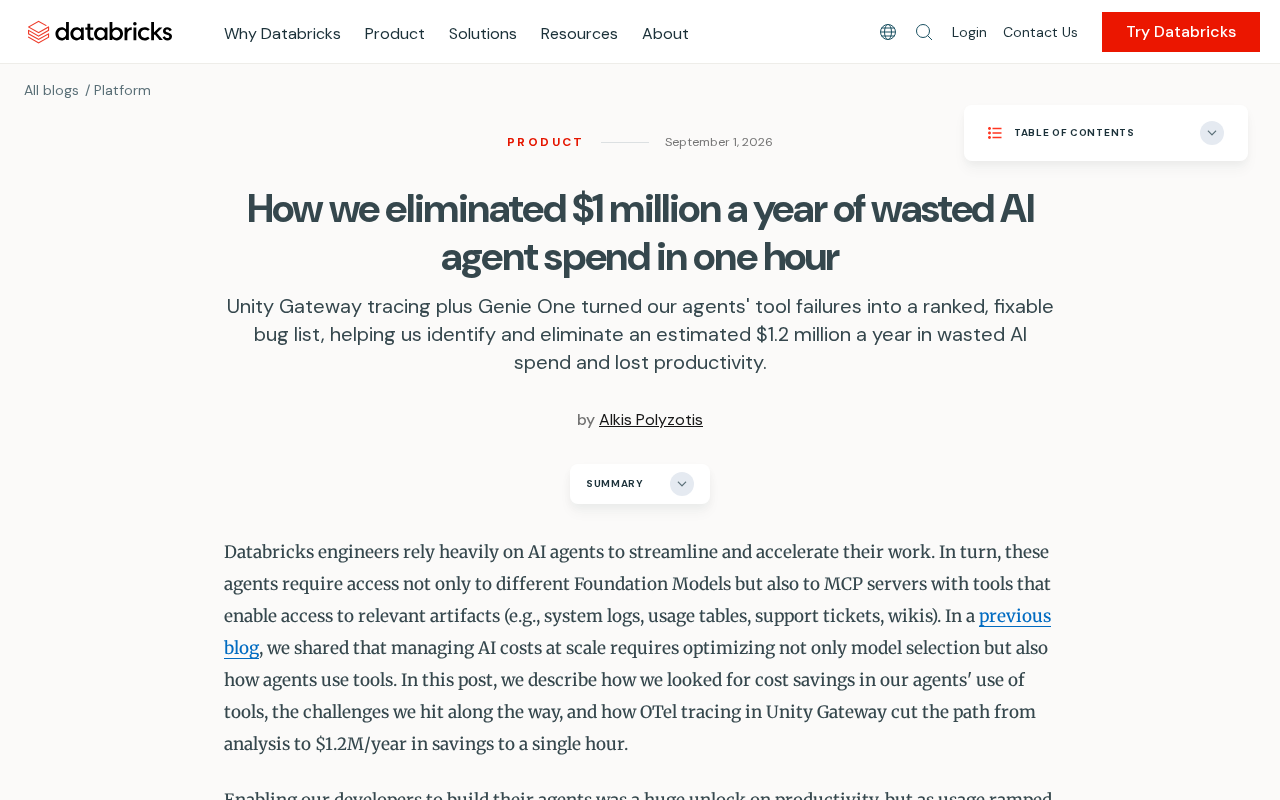
How Databricks saved $1M/year in AI Agent costs through observability and smart optimization strategies.
Databricks' engineering team eliminated $1 million per year in wasted AI Agent spending in just one hour by leveraging fine-grained cost observability. This article explores why Agent costs spiral out of control — from multi-turn reasoning loops to configuration inertia — and details three key optimization strategies: tiered model matching, context compression, and caching with anomaly blocking. It also examines the broader industry shift from capability competition to cost efficiency in AI operations.
Introduction: When AI Agents Become a 'Hidden Cost Black Hole'
AI Agents are rapidly becoming standard productivity tools for engineering teams. From code completion and automated testing to orchestrating complex task execution, deep Agent integration has dramatically boosted development efficiency. However, alongside these gains, an easily overlooked problem is quietly growing in the shadows — runaway compute costs.
AI Agent Fundamentals: An AI Agent is an AI system capable of perceiving its environment, making autonomous decisions, and executing actions to achieve goals. Unlike traditional single-turn Q&A AI, Agents possess continuous interaction, tool invocation, and multi-step reasoning capabilities. A typical Agent workflow follows this pattern: perceive current state → plan the next action → invoke tools or models → observe results → iterate until the task is complete. In software engineering contexts, Agents can automatically perform code reviews, generate test cases, debug errors, and even complete end-to-end feature development. Current mainstream Agent frameworks include LangChain, AutoGPT, and BabyAGI, which implement automated orchestration of complex tasks through patterns like ReAct (Reasoning + Acting).
The Databricks engineering team recently shared an exceptionally instructive case study: in just one hour, they eliminated up to $1 million per year in wasted AI Agent spending. The story behind this number reveals not just a successful cost optimization — it exposes a challenge that the entire industry faces when deploying AI Agents at scale.
About Databricks: Databricks is a data and AI platform company founded in 2013 by the original creators of Apache Spark, headquartered in San Francisco. The company provides a unified data analytics and machine learning platform and was valued at $43 billion in 2023. Databricks has deep technical expertise in data engineering and AI, and its lakehouse architecture has become an industry standard. Because its core business involves helping enterprises manage and optimize data infrastructure, Databricks has a natural technical advantage and tool support for monitoring and optimizing its own internal AI costs — which explains how they were able to quickly identify and resolve a million-dollar waste problem.
Why Do AI Agent Costs Spiral Out of Control?
The Cost Transmission Mechanism Between Agents and LLMs
To understand how million-dollar waste occurs, you first need to understand the cost structure of AI Agents. Unlike traditional single API calls, Agents typically need to perform multiple reasoning loops when executing tasks: they repeatedly call large language models, observe intermediate results, and decide on next actions until the task is complete.
Reasoning Loop Mechanism Explained: The reasoning loop is the core operating mode of an Agent. Each loop consists of three phases: Thought → Action → Observation. The Agent first analyzes the current state and plans the next step, then executes a specific operation (such as calling an API or querying a database), and finally decides whether to continue iterating based on the results. This pattern enables Agents to handle complex multi-step tasks, but it also introduces cost challenges: each loop requires feeding the complete historical context back into the model, causing token consumption to grow in a staircase pattern. A typical code generation task might require 5–15 loops, while complex debugging tasks can exceed 30. Without a reasonable context management strategy, the cost of a single call in later loops can be several times that of earlier ones.
This means a single Agent task can trigger dozens or even hundreds of model calls, each consuming input and output tokens. Costs grow linearly — or even exponentially — with the number of calls and context length. When hundreds or thousands of engineers across an organization simultaneously rely on Agents, even tiny inefficiencies get amplified into staggering bills.
Token Pricing Explained: Large language models are billed by tokens, where 1 token roughly equals 0.75 English words or 0.5 Chinese characters. Model call costs consist of two parts: input tokens (prompt) and output tokens (completion), with output tokens typically priced higher. For example, GPT-4 charges approximately $0.03/1K for input tokens and $0.06/1K for output tokens, while GPT-3.5-turbo costs roughly 1/10 of that. When an Agent performs multi-turn reasoning, the context from each round is re-billed as input tokens — meaning a 10-round Agent task can consume tens of times more tokens than a single call. For enterprise applications handling tens of millions of calls per month, even tiny differences in per-token pricing translate into hundreds of thousands of dollars in cost differences.
The 'Good Enough to Ship' Configuration Trap
In fast-moving engineering cultures, Agent configurations often follow a "good enough" philosophy. Developers focus on whether tasks get completed, and rarely go back to examine questions like:
- Are expensive flagship models being used for simple tasks?
- Does the context window carry excessive redundant information?
- Are there duplicate calls, unnecessary retries, or other wasteful patterns?
- Are failed or idle Agent tasks continuously consuming compute?
This "configuration inertia" is the breeding ground for waste. The Databricks case demonstrates that only by starting with data observability can you uncover these hidden cost leaks.
The Prerequisite for Cost Optimization: Building Fine-Grained Observability
See the Problem Before You Fix It
The reason Databricks could solve the problem in one hour is that they had already established fine-grained observability into Agent spending. A simple but critical principle applies here: you can't optimize what you can't see.
By aggregating and analyzing Agent call logs, token consumption details, model selection distributions, task success rates, and other multi-dimensional data, the team was able to quickly pinpoint the highest-cost, lowest-efficiency components. Once the data was visualized, waste patterns became immediately obvious: perhaps a few task categories accounted for the vast majority of spending, or a certain inefficient call pattern was being triggered repeatedly.
Data Infrastructure Determines Response Speed
The "one hour" fix was actually built on top of data infrastructure accumulated over the long term. This also explains why Databricks, as a data platform company, could achieve results so quickly on this type of problem — they inherently possess powerful data analytics and real-time monitoring capabilities.
For most teams, the core takeaway here is: before pursuing Agent deployment scale, first build a monitoring system for Agent behavior and costs. Otherwise, waste will accumulate unnoticed, and by the time the bill arrives, the damage is already done.
Three Key Optimization Strategies in Detail
Strategy 1: Tiered Model Matching
The most direct and impactful optimization is matching the right model to the complexity of each task. Using a top-tier flagship model for simple format conversions or classification tasks is like using a heavy-duty truck to deliver a single letter.
The core idea behind model tiering is: classify tasks by complexity level, route simple tasks to smaller and cheaper models, and only invoke high-end models for scenarios that genuinely require strong reasoning capabilities. In practice, this strategy often dramatically reduces costs without sacrificing output quality.
Model Tiering Implementation Details: The core of a model tiering strategy is building a task complexity assessment system. Tasks can typically be classified into four tiers: simple classification/extraction (using small models like GPT-3.5-turbo-instruct), routine conversation/summarization (GPT-3.5-turbo), complex reasoning/code generation (GPT-4), and ultra-long context/high-difficulty creation (GPT-4-turbo or Claude-3-opus). Implementation requires adding task routing logic at the Agent dispatch layer: quickly determining task type through keyword matching, input length, historical success rates, and other features, then dynamically selecting the model. Some advanced practices also introduce A/B testing to compare the performance and cost ratios of different models on similar tasks, progressively optimizing the routing strategy. Practical data shows that proper model tiering can reduce total costs by 50–70% while maintaining above 90% task quality.
Strategy 2: Context Pruning and Compression
Controlling context length is another high-leverage optimization. During multi-turn reasoning loops, Agents tend to accumulate lengthy conversation histories and irrelevant information, all of which translates into additional token costs.
Effective approaches include:
- Context compression: Summarize historical information rather than passing it in full
- History truncation: Only retain key interactions from the most recent N turns
- Information filtering: Filter out data irrelevant to the current step before passing it to the model
These methods significantly reduce token consumption per call, and the cumulative effect is substantial.
Context Compression Techniques Explained: Context compression aims to reduce input token count without losing critical information. Mainstream techniques include: 1) Sliding window method: retain only the most recent N conversation turns, suitable for conversational Agents; 2) Hierarchical summarization: apply multi-level summarization to historical interactions — distant history is replaced with brief summaries while recent history retains detail; 3) Retrieval-Augmented Generation (RAG): store large volumes of background knowledge in a vector database and dynamically retrieve relevant snippets based on the current query, rather than passing everything in; 4) Prompt engineering optimization: streamline system prompts by removing redundant descriptions and duplicate examples. Additionally, some cutting-edge research explores compression at the model level — for example, LLMLingua uses a language model to identify and remove unimportant tokens, achieving up to 50% context length compression while maintaining 95% task performance. Combined application of these techniques can significantly improve Agent token efficiency.
Strategy 3: Caching Mechanisms and Anomaly Blocking
For recurring queries and highly similar requests, introducing a caching mechanism can directly avoid unnecessary model calls. At the same time, identifying and blocking invalid retries, infinite loops, and other anomalous behaviors plugs the gaps where money continuously leaks.
The ROI on this type of optimization is typically very high — adding a caching and anomaly detection layer to the call chain can fundamentally eliminate a portion of wasteful spending.
Industry Trend: AI Cost Governance Enters a New Phase
From the Capability Race to the Efficiency Race
Over the past two years, the AI field has primarily focused on competing over model capabilities. But as Agents are deployed at enterprise scale, cost efficiency is rapidly becoming the new competitive dimension. An Agent system that can accomplish the same tasks at lower cost has self-evident business value.
Databricks' million-dollar optimization case sends a clear signal: AI applications are transitioning from the experimental phase of "sparing no expense to achieve results" to the production phase of "carefully managing ROI." The principles of FinOps (cloud financial operations) are rapidly extending into the AI Ops domain.
The Convergence of FinOps and AI Ops: FinOps (Financial Operations) originally emerged from the cloud computing space, emphasizing cross-functional collaboration to achieve visibility, optimization, and control of cloud costs. Core principles include: real-time observability, shared accountability, and continuous optimization. As AI infrastructure spending grows as a share of budgets (Gartner predicts enterprise AI spending will account for 15–20% of IT budgets by 2025), FinOps principles are extending into the AI domain, forming what's known as AI FinOps or AI Ops. Specific practices include: breaking down AI costs by team/project/product, establishing token budgets and alerting mechanisms, incorporating cost metrics into engineering KPIs, and conducting regular cost-benefit audits. Some enterprises have already created dedicated AI cost engineer roles responsible for full-lifecycle management of AI spending. This shift marks the transition of AI applications from experimental exploration to scaled operations.
Practical Recommendations for Technical Teams
Based on this case study, here are the key areas to focus on for teams currently using or planning to deploy AI Agents at scale:
- Build AI cost observability: When deploying Agents, simultaneously build monitoring dashboards for token consumption, model usage distribution, and task success rates.
- Implement tiered model strategies: Dynamically select models based on task complexity to avoid using a sledgehammer to crack a nut.
- Regularly audit Agent call behavior: Identify high-cost, low-value call patterns and optimize them promptly.
- Incorporate cost into architectural design: Make efficiency a core consideration during the Agent system design phase, rather than scrambling to fix things after the bills explode.
Conclusion
Databricks' story of eliminating $1 million in waste in one hour may sound legendary, but it embodies a straightforward piece of engineering wisdom: see clearly first, then optimize; let data drive decisions, not gut feelings.
As AI Agents become deeply embedded in daily workflows, cost governance will no longer be optional — it will be a required course for every technical team. Those who build insight into and control over their AI spending sooner will navigate the wave of scaled Agent adoption more steadily and go further.
Related articles
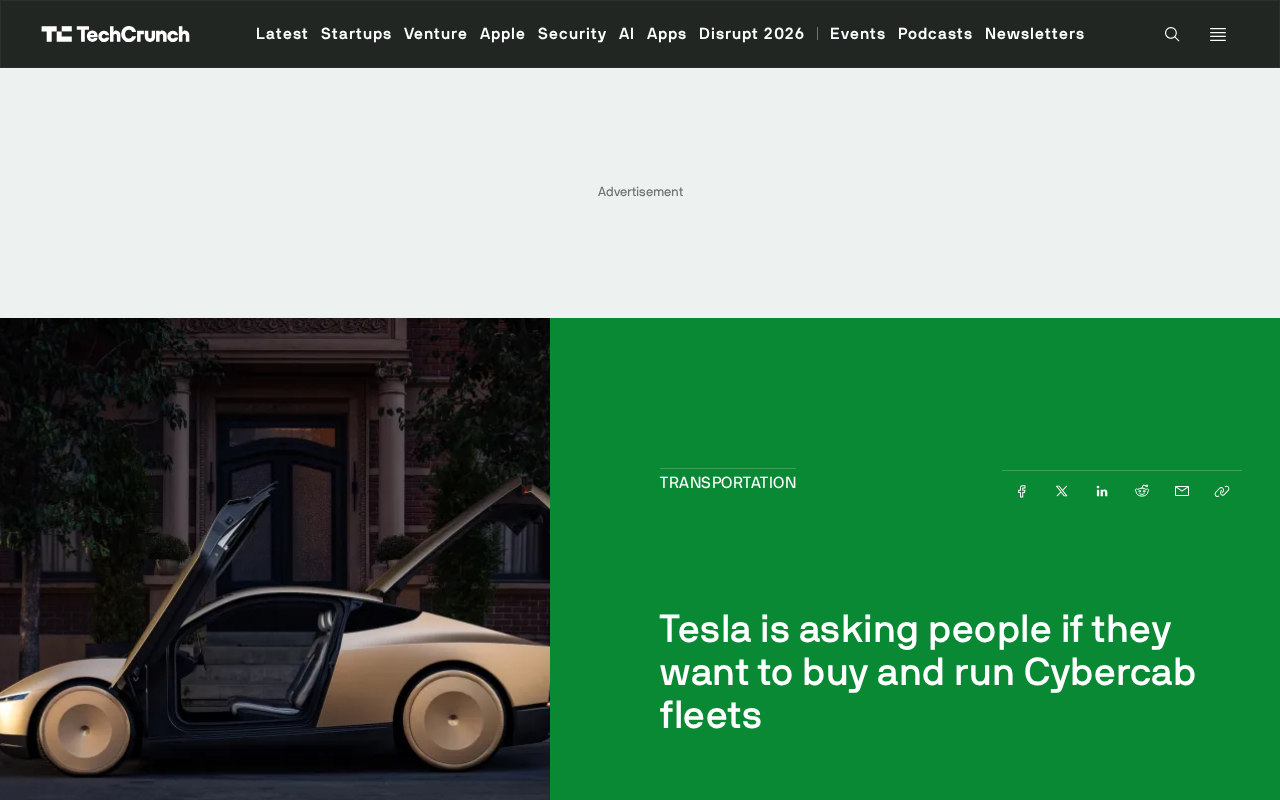
Tesla Opens Cybercab Fleet Purchases, Moving Robotaxi Commercialization Toward a Platform Model
Tesla published a Cybercab fleet purchasing interest form, opening Robotaxi fleet buying and operations to third parties — signaling a shift toward a platform model.
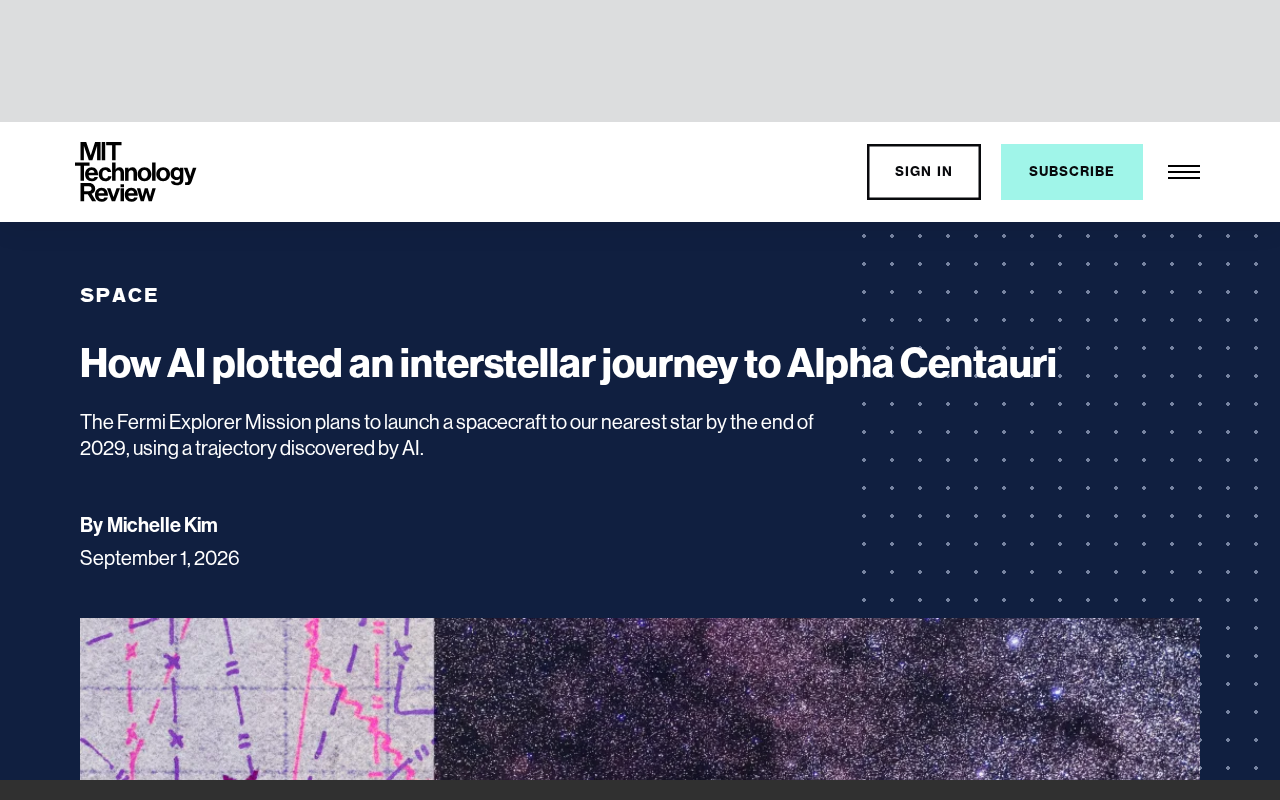
AI Plans an Interstellar Voyage: An 80,000-Year Expedition to Alpha Centauri
The Fermi Explorer Mission plans to launch a spacecraft to Alpha Centauri on an 80,000-year journey. Explore how AI drives trajectory optimization, autonomous navigation, and data prioritization for interstellar exploration.
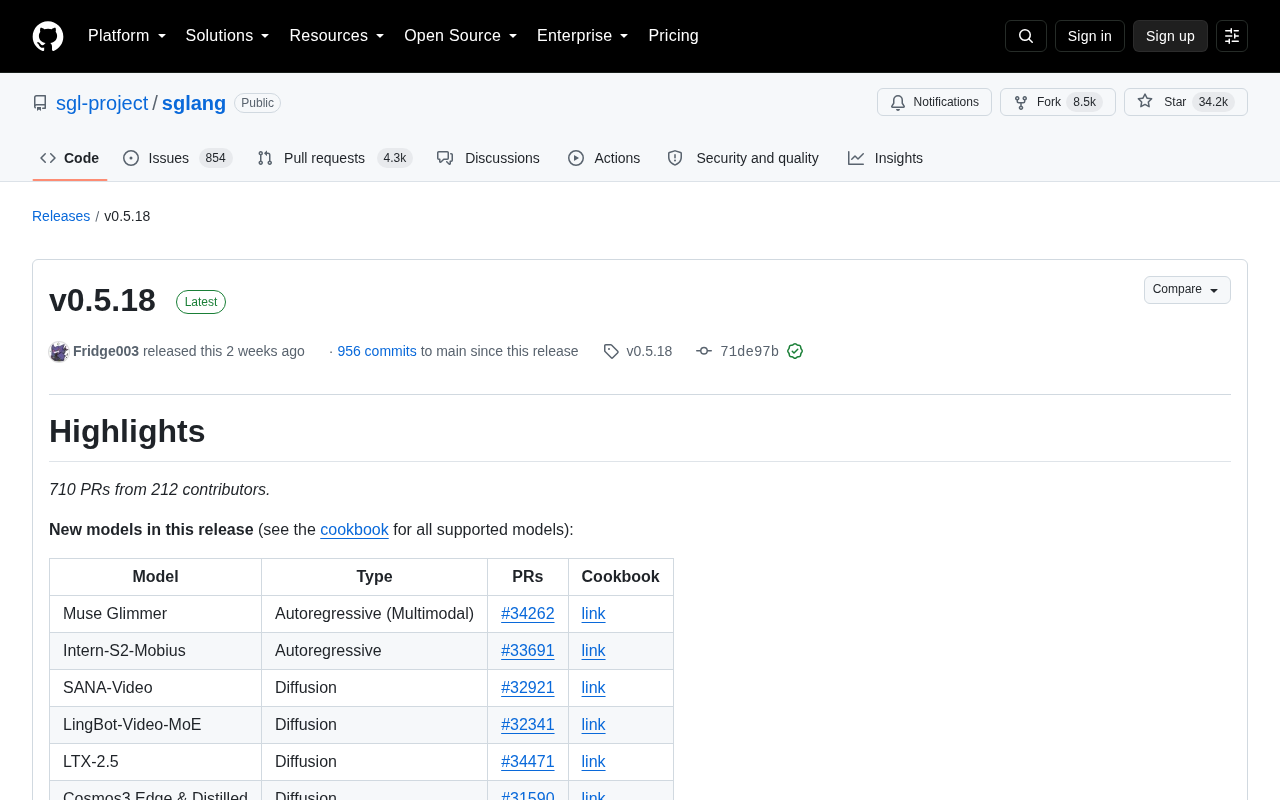
SGLang v0.5.18 Released: Performance Breakthroughs Across 710 PRs
SGLang v0.5.18 brings 710 PRs from 212 contributors, featuring 2.38x startup speedup, tensor parallel optimizations, AMD MXFP4 quantization, and Kimi K3 tuning.