AI Agent Development for Absolute Beginners: A 3-Step Learning Path to Get Started Fast

Three practical steps to go from zero to your first working AI Agent — no theory overload required.
This article distills a beginner-friendly AI Agent learning path built around one idea: "good enough" beats perfect preparation. Step one covers essential Python basics in just three to four days. Step two combines a structured book on LLM architecture with hands-on experimentation using low-code platforms to make abstract concepts tangible. Step three walks through LangChain's official docs to build a first Agent using the core formula: Agent = LLM + Memory + Tools. The path prioritizes action over theory and helps beginners get started fast.
Intimidated by terms like Python, LLMs, and LangChain the moment you try to get into AI Agent development? You're not alone — most beginners fall into the same trap of thinking they need to master all the theory before touching any code. A Bilibili creator who's been through the struggle himself boiled the entire onboarding process down to three key steps, built around one core principle: aim for "good enough," prioritize hands-on practice, and don't get stuck in theory.
Here's a breakdown of that roadmap into a learning path any beginner can actually follow.
Step 1: Learn Just Enough Python — Don't Overdo It
One of the biggest mistakes beginners make is picking up a thick Python textbook and working through it cover to cover before writing a single line of AI code. That approach feels thorough, but it's a massive time sink.
The advice here is refreshingly direct: you only need Python for two things — reading AI project code and writing simple logic. You're learning Python to build AI Agents, not to become an algorithm engineer. "Good enough" is genuinely good enough.

The time commitment isn't daunting either. With a well-organized mind map of the key topics, spending one to two hours a day, you can cover the essentials in three to four days. The trick is prioritizing: variables, functions, loops, basic data structures, and control flow are what matter. Algorithm-heavy or low-level content? Skip it entirely at this stage.
Step 2: Understand LLMs — They're the Engine Powering Every Agent
If Python is your entry ticket, then large language models (LLMs) are the core engine of the entire AI Agent system. A fitting analogy: LLMs are like a car's engine — without one, the whole thing simply doesn't run.

Lots of people find LLMs intimidating, but that's usually because they haven't found the right approach. Here are two practical strategies:
Read One Good Book — Focus on Three Things
There's no shortage of online tutorials, but more content often means more confusion. A better move is to read one structured book and come away with a clear understanding of three things:
- How LLMs are put together (basic architecture)
- What the core concepts are (e.g., vectors and embeddings)
- How LLMs actually run (inference and API call flow)
Once you understand these, LLMs stop being a black box.
Vectors and Embeddings are two foundational concepts worth understanding on their own. Embedding refers to the process of converting natural language — words, sentences, paragraphs — into a sequence of numbers (a vector), so that computers can perform mathematical operations on meaning. Two pieces of text with similar meanings will have vectors that are close together in space — that's the underlying mechanism that lets LLMs "understand" semantics. Features like knowledge base retrieval and semantic search are essentially just comparing the similarity between vectors. Once you grasp this, it becomes immediately clear why, when building a RAG (Retrieval-Augmented Generation) Agent, you need to "vectorize" documents and store them in a database first — rather than just dumping raw text directly into the model.
Get Hands-On with a Low-Code Platform
Reading alone isn't enough — you need to actually build something. The recommended approach is to use platforms like Alibaba Cloud or Baidu, which offer no-code or low-code environments to experiment quickly:
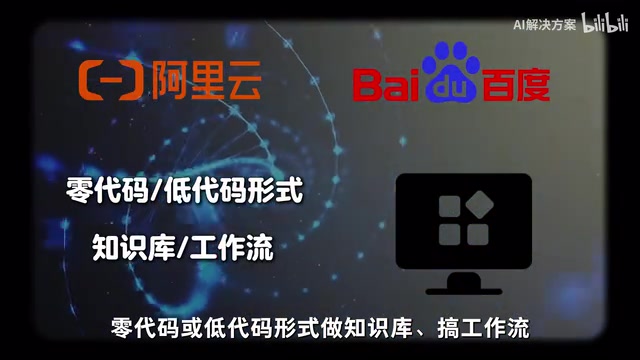
- Upload your own content and build a knowledge base
- Try assembling a workflow
- Experiment with fine-tuning an LLM, and get a feel for how models are called and adapted to specific tasks
This "experience first, dig deeper later" approach consistently outpaces grinding through theory alone. The moment you see an LLM responding based on content you provided, a lot of abstract concepts suddenly click.
Step 3: Build Agents with LangChain
When it's time to actually build an Agent, LangChain is the most widely used development framework right now. The advice here is equally pragmatic: go straight to the official documentation and work through the tutorials from start to finish.
The core idea for this step can be summed up in one line:
Agent = LLM + Memory + Tools
This formula captures the essence of what an Agent actually is — not just a chatbot, but an intelligent system that can retain context (memory) and proactively call external tools (search engines, calculators, APIs, etc.) to complete tasks. At the beginner stage, the most important thing to understand is how to make an Agent automatically invoke tools to get things done.
Work through the official docs, get your first simple Agent running end-to-end, and you've officially cleared the beginner level.
LangChain is currently the most fully-featured framework for building LLM-powered applications. It was released and open-sourced by Harrison Chase in 2022. Its core value lies in packaging common capabilities — LLM calls, memory management, external tool integration — into standardized, reusable components, so developers don't have to build that infrastructure from scratch. A few key concepts are worth knowing upfront: Chain connects multiple processing steps in sequence; Memory preserves context across multi-turn conversations; Tool represents external capabilities the Agent can call, such as a search engine, calculator, or custom API; and Agent is the decision-making layer that sits on top of all these components, letting the LLM autonomously decide "which tool should I call next?" LangChain currently maintains two main lines: LangChain and LangGraph. For beginners, get a basic Agent working with LangChain first — LangGraph is better suited for more complex, multi-step, stateful workflows.
Summary: Three Steps, That's It
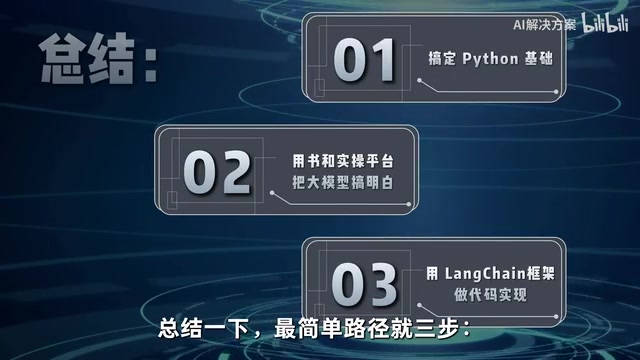
The entire path comes down to three moves:
- Get Python basics down — just enough, learned in three to four days by focusing on what matters
- Understand LLMs through a book plus hands-on platforms — combine conceptual grounding with low-code experimentation
- Build your first Agent with LangChain — follow the official docs and run a working Agent end to end
What makes this path special is that you never need to get buried in theory. Understanding the logic of each component is enough — the emphasis stays on doing. For beginners, this dramatically lowers the barrier to entry.
That said, this roadmap is more of an "entry map" — it helps you find your direction and avoid unnecessary detours. Building production-ready Agents will require ongoing investment in tooling, prompt engineering, evaluation, and fine-tuning. But for anyone who's been paralyzed by unfamiliar terminology and keeps postponing the moment they actually start — following these three steps and getting something running is far more valuable than waiting until you feel "ready."
Related articles

How Big Can Stars Really Get? The Physical Limits of the Largest Stars
Red supergiants are the largest stars by volume, with radii up to 2,000 times the Sun, engulfing the inner solar system. But there is no precise upper limit on stellar size—models predict up to 15,000 solar radii. The most massive blue stars are far smaller than red supergiants—biggest and heaviest are two different things.

Apple HomeView Smart Display Full Feature Breakdown: Wall-Mount or Desktop, $299
Apple launches HomeView, a $299 smart display with wall-mount and desktop options, 12MP camera for facial recognition, smart home control, music playback, and recipe step-by-step cooking. Full breakdown of watch faces, apps, privacy, and cooking integration.

Where Did the Promised New Studio Go? Craft Computing Answers After Five Years
Craft Computing's host responds to viewer questions: the new studio promised five years ago was shelved as construction costs soared from $30,000 to $75,000, and was replaced by a 168-square-foot garage conversion.