AI Agent Development: From Zero to Enterprise-Grade Deployment

A practical guide to enterprise AI Agent development across framework selection, MCP, RAG, and production evaluation.
Using a popular Bilibili Agent course as a jumping-off point, this article systematically breaks down the real engineering challenges in Agent development. It explains how Agents differ from regular programs, then walks through four key areas — framework selection, tool calling with MCP, RAG-based data preparation, and production evaluation — highlighting the specific mistakes beginners most often make at each stage.
A creator on Bilibili has released what they're calling a 100-episode AI Agent course, bundling RAG, MCP, and Skills into the title with the promise of taking you "from beginner to enterprise-level practitioner." Courses like this have been popping up everywhere lately, and the reason isn't hard to figure out: Agent development is sitting in a supply-demand gap — enterprise demand is rising, but people who can actually explain the engineering details are scarce. That gap itself has become a marketing hook.
The original course description reads mostly like a sales pitch: it emphasizes the trend, warns about pitfalls, and assures you that total beginners can handle it. Strip that away, and what it actually promises to cover is four areas: framework selection, tool calling, data preparation, and production deployment. Let's walk through each of those areas properly — what Agent development actually requires — and along the way figure out who this kind of course is and isn't for.
Why Everyone Is Talking About Agent Development Right Now
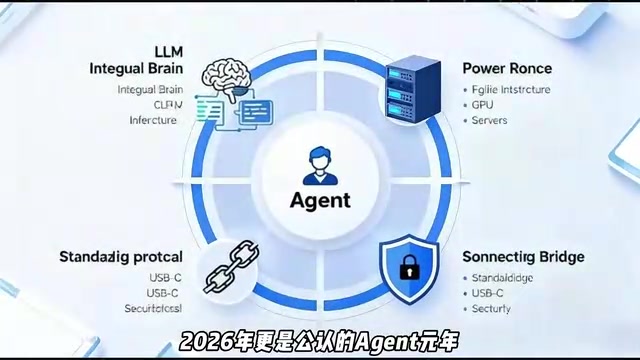
The original video describes the current landscape as "explosive enterprise demand and a continuously expanding market." That directional read is correct, but it needs a footnote: demand growth and job growth aren't the same thing. What enterprises want are people who can integrate Agents into existing business systems, manage costs, and evaluate outcomes — not people who can call an API and get a demo running.
The barrier to entry for Agent development has genuinely come down over the past few years — models have gotten more capable, tool protocols have standardized, and open-source frameworks have matured. Tasks that used to require writing large amounts of glue code can now be handled through configuration. The flip side of that lower barrier is that the number of people who can build an Agent has grown, while the number who can tune one well remains scarce. That's the core tension these courses need to address: teaching someone to build an Agent that runs isn't hard. Teaching someone to build one that's safe to put in production — that's the real dividing line.
Keep that in mind the next time you see a course boasting hundreds of episodes, and you'll be able to judge which ones are teaching real content and which ones are just padding runtime.
How Agents Differ from Regular Scripts and Chatbots

The original description includes something like "what is an agent, how is it different from a normal checkbox" — probably a speech-to-text transcription error — but the underlying question is worth answering properly: where exactly is the line between an Agent and a regular program?
A regular program is deterministic: input A always produces output B. A chatbot is single-turn: you ask, it answers, and that's it. The defining characteristic of an Agent is that it hands off "deciding what to do next" to the model itself — the model has a set of tools, and it decides which one to call, what to do with the result, whether to retry, and when to stop and hand control back to a human.
This creates three engineering headaches that are also the areas most likely to be glossed over in tutorials:
- State management. In multi-turn tasks, context keeps growing. How do you retain the information that matters while keeping token costs under control? This is the first unavoidable pitfall.
- Failure handling. Tool calls fail. Models go in circles. You need to design retry logic, timeouts, fallbacks, and human escalation paths.
- Observability. Deterministic programs can be debugged with logs. Every decision an Agent makes needs to be replayable — otherwise when something goes wrong in production, you have nothing to work with.
Getting clear on these three points is what separates someone who "writes prompts" from someone who "builds Agents."
A Four-Step Development Process That Actually Ships
Framework Selection: Start with Your Team, Then Look at Features
Choosing a framework is the step that trips up beginners the most and that experienced engineers care about the least. The logic isn't complicated: a framework's value is that it eliminates repetitive orchestration code; its cost is the abstraction layer it introduces and the version upgrade cycle you have to follow. If no one on your team knows the framework and your business logic is relatively simple, going straight to the model provider's native API is usually less effort. On the other hand, if you need multi-agent coordination, complex workflow orchestration, or the ability to switch between models, a mature framework starts paying for itself.
What you should actually evaluate comes down to three things: whether it supports the model you plan to use, whether the community is still actively maintaining it, and whether you can read the source code when things break. Feature comparison lists don't tell you much.
Tool Calling and MCP: Letting the Agent Touch the Real World
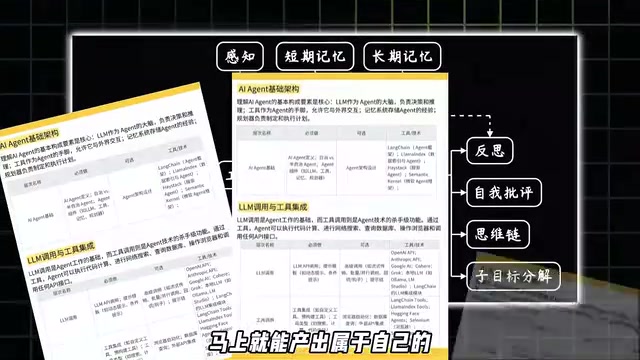
An Agent that can only talk has no value. One that can operate systems, query databases, and send emails does. That's what tool calling is for. MCP (Model Context Protocol) has been the most-discussed development over the past year. It addresses the tedious problem of writing a separate adapter every time a model needs to connect to a tool — instead, a tool is described once in a standardized way and becomes reusable across different models and frameworks.
From real deployment experience: the quality of your tool descriptions determines how accurate your Agent will be. If the name, parameter descriptions, and edge cases are clearly written, the model's choices will be much more reliable. More tools isn't always better, either — piling dozens of tools into a single context noticeably degrades selection accuracy. Grouping them by scenario and adding a second-level routing layer when necessary is more effective than dumping everything in at once.
MCP (Model Context Protocol) was proposed and open-sourced by Anthropic in late 2024 with the goal of establishing a unified standard for communication between large language models and external tools. Before MCP, every model provider had its own tool-calling interface format, which meant the same tool — say, a database query or an internal API call — often needed separate adapter code written for OpenAI, Claude, and Gemini. MCP abstracts this into a standardized client-server architecture: a tool provider implements an MCP Server once, and any model or framework that supports an MCP Client can call it directly — similar to how the USB standard unified connections across different devices.
When thinking about MCP, it helps to distinguish two layers: the protocol layer (which defines message format and communication flow) and the ecosystem layer (which tools have already implemented MCP Servers). Mainstream IDE plugins, some cloud services, and various open-source tools have begun adding MCP support, but production-grade stability is still evolving rapidly. Before introducing MCP into a real project, it's worth confirming whether your framework's MCP client implementation is mature and whether the tools you need already have well-maintained MCP Servers available.
Data Preparation and RAG: Where Most Projects Win or Lose
RAG (Retrieval-Augmented Generation) tends to get treated as a "just plug in a vector database and you're done" component. In real projects, it's usually the most time-consuming piece. How do you split documents? How do you tag metadata? What do you do when retrieval recall is poor? What about when the relevant content is retrieved but the model doesn't use it? Each of those questions could be its own article.
A practical approach is to evaluate retrieval quality in isolation before thinking about generation. If the Top-K retrieved results don't contain the answer, no model is powerful enough to fix that. The Skills concept — packaging capabilities into reusable modules — is fundamentally about reducing the overhead of having to reorganize context and prompts from scratch every time.
The core idea behind RAG (Retrieval-Augmented Generation) is straightforward: before the model generates a response, retrieve relevant passages from an external knowledge base and include them as context alongside the query. This lets the model work with private or up-to-date knowledge that wasn't part of its training data — and it gets around two fundamental limitations: a model's knowledge cutoff date and the constraints of its context window.
A typical RAG pipeline has two phases: offline and online. In the offline phase, documents are split into chunks, each chunk is converted into a vector using an embedding model, and those vectors are stored in a vector database. In the online phase, the user's query is also converted to a vector, a similarity search is run against the database, and the Top-K most relevant chunks are inserted into the prompt. The pipeline sounds simple, but every parameter choice — chunk size, overlap length, embedding model, similarity threshold, the value of K — has a meaningful impact on final quality. This is exactly where the "just plug in a vector database" assumption leads people into trouble.
Deployment and Evaluation: From Running to Ready for Production
The original description mentions that "from data preparation to production deployment, everything is a blurry zone." That's accurate. Once an Agent is live, it faces three pressures: cost, latency, and stability. The same task can cost several times more or less depending on how many model calls it takes; the longer the chain, the harder it is to keep end-to-end latency manageable; and the non-determinism of model outputs breaks traditional testing approaches.
The practical solution is to build your own evaluation set — collect representative tasks and edge cases from your real business, and run everything through it whenever you change a prompt, swap a model, or adjust a tool. Then use the data to judge whether things got better or worse. This approach looks tedious, but it's the required investment that takes an Agent project from demo to production.
The root of the Agent evaluation problem is non-determinism: the same input can produce different tool-calling paths and different final answers at different times. The traditional software testing logic of "input → expected output" assertion breaks down here. The mainstream approach in the industry is a three-part setup: an evaluation set containing real business scenarios and edge cases; evaluation metrics defined by task type (such as tool-call accuracy rate, answer faithfulness, or multi-turn task completion rate); and an evaluation model — typically a stronger model used to automatically score outputs, supplemented by human spot-checks.
Cost control is another problem that tends to be underestimated in production deployment. A multi-step Agent task might trigger 3 to 10 model calls. If every call goes to the most expensive model, the cost per task can be tens of times higher than a simple question-answer interaction. Common mitigation strategies include using lightweight models for intermediate reasoning steps, caching results from repetitive tool calls, and enforcing a maximum step count to force truncation. All of these mechanisms need to be built into the architecture at design time — retrofitting them after launch is expensive.
Who This Kind of Course Is For
Based on the description and title, this content is positioned for beginners, with broad coverage and a high episode count. It's a good fit for two groups: people who are just getting into LLM applications and need a complete path to build a mental map of the space; and developers who already know how to write prompts but are stuck on "I don't know what to learn next" and want to quickly fill in their engineering blind spots.
There are two cases where it's probably not the right fit. If your team is already working on Agent projects and what you actually need is solutions to specific problems — retrieval recall isn't good enough, multi-turn conversation costs are out of control, how to build an evaluation framework — a general beginner course won't have much to offer. You'd be better off going straight to framework documentation and papers. Also, phrases like "avoid 99% of the pitfalls" in course marketing are a standard sales tactic. How much time you'll actually save depends entirely on how much real project detail is in the content — and that's impossible to judge from a title alone. Look at a few public episodes before committing.
What Actually Matters When Learning Agent Development
Learning all the terminology — RAG, MCP, Skills — just gives you a map. What actually separates people is understanding failure cases: why didn't the model call this tool? Why was the retrieved content ignored? Why does the same prompt fall apart with a different model? That kind of knowledge is hard to get from videos. It comes from running into walls in real projects.
The most effective path is: follow a course to build your first Agent that actually runs, then immediately rebuild it for a small scenario from your own work. When you hit problems, go back and look things up. A course's job is to shorten the time from zero to something. Getting from something to skilled — that part you still have to walk yourself.
Related articles

Felix Rieseberg Personal Homepage
Felix Rieseberg's personal homepage sparks attention on Hacker News. This article covers the Slack engineer's technical background, the rise and fall of nativefier, and the value of a developer homepage as a tech calling card.

@ai-sdk/vue 3.0.306 Patch Release Syncs with [email protected] Update
@ai-sdk/vue 3.0.306 released, synced with [email protected]. A routine patch release for the Vercel AI SDK ecosystem with no public API changes; the Vue adapter layer stays version-aligned with the core package.

Gemini 4 Argon API Launches: The Era of Million-Token Output Begins
Google launches Gemini 4 Argon with sparse MoE architecture, up to 1M output tokens, and a 68.90% Vals Index score, available across API, AI Studio, and the Gemini app.