AI Agent Still Makes Mistakes Even with Correct Permissions? The Small-Model Gatekeeper Solution

Cisco research shows AI Agents can pick the wrong tool even with correct permissions, and proposes a small-model relevance gatekeeper reaching 96.13% accuracy.
The Cisco team's research highlights that the AI Agent security blind spot isn't just permission control — even with correct permissions, Agents may call tools irrelevant to the task, and such failures are stealthy and not caught by logs. They propose inserting a "gatekeeper" before each tool call: a small Gemma 3.4b model reads the task and tool descriptions and outputs a binary judgment of relevant or off-topic. After prompt optimization, SFT, and GRPO training, the model reaches 96.13% end-to-end accuracy across 352 tools on 12 MCP servers. The study flags three limitations: synthetic task data, a single model family, and binary judgment's difficulty covering gray areas. The key engineering insight is introducing an independent tool-call check layer into Agent architecture to achieve separation of duties rather than letting the executor self-check.
AI Agents are granted tool-calling permissions, yet they may still pick the wrong tool and perform the wrong action. This isn't a hypothetical — it's a real risk validated by the Cisco team in a study. The core issue isn't permission management, but rather: can an Agent truly judge which tool is relevant to the current task?
Permissions Don't Equal Correctness: The Hidden Failures of AI Agents
When we discuss AI Agent security, the focus usually lands on permission control — whether it can call a certain tool, whether it can access a certain API. But Cisco's research reveals a neglected blind spot: even when permissions are entirely correct, an Agent may still choose a tool that's irrelevant to the task to carry out its action.
The danger of this kind of failure lies in its stealth. The permission system won't block it, the logs look "compliant," but the outcome is wrong. For example, a user asks the Agent to organize meeting notes, but it calls an email-sending tool and blasts a mass message instead. The permissions are fine, but the decision-making has gone wrong.
Using a Small Model as a "Gatekeeper": A Lightweight Solution
The Cisco team's approach isn't to make the main model smarter, but to add a "checkpoint" before every tool call: use a small model to read the task description and the tool description, judge whether the two are related, and output only one of two results — relevant or off-topic.

The elegance of this design lies in its minimalism. It doesn't need to understand the full task context or generate any content — it only needs to make a binary judgment. This dramatically reduces compute overhead and latency while adding a critical safety net to the Agent's tool calls.
MCP (Model Context Protocol) is an open protocol proposed by Anthropic at the end of 2024, aimed at establishing a unified connection standard between AI models and external tools and data sources. Before MCP, every Agent framework had to write separate adapter code for different tools, leading to poor tool reuse and a fragmented ecosystem. By defining a standardized "server–client" interface, MCP allows tool providers to implement an MCP server just once, and it can then be called by all Agents that support the protocol. The "12 MCP servers, 352 tools" mentioned in the article shows that MCP is already carrying a large number of real tools in practice. But the growth in tool count comes with a side effect: the more candidate tools there are, the easier it is for the main model to confuse semantically similar descriptions during selection — exactly the scenario the "gatekeeper" mechanism is designed to solve.
Test Scale and Results: 352 Tools, 96.13% Accuracy
The research team deployed 352 tools across 12 MCP servers for testing, covering a diverse range of tool types and scenarios.
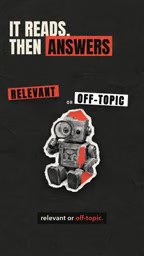
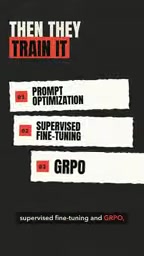
The base model used was Gemma 3.4b. After three stages — prompt optimization, supervised fine-tuning (SFT), and GRPO reinforcement learning — the model achieved 96.13% end-to-end accuracy on their test set.
This number means: out of roughly every 100 tool calls, the gatekeeper can intercept about 96 wrong selections. Considering that the MCP protocol is being adopted by more and more products, and the number of tools will only grow, the value of this kind of pre-check will scale accordingly.
GRPO (Group Relative Policy Optimization) is a reinforcement learning algorithm proposed by the DeepSeekAd team, widely used in the post-training phase of large models. Unlike traditional PPO, which requires training an additional value network (critic), GRPO samples a group of outputs for the same prompt and uses the relative scores within the group to estimate the advantage function, thereby eliminating the critic model and significantly reducing memory and training costs. In this study, GRPO was used to further refine the gatekeeper model's decision boundaries: the SFT phase lets the model learn the basic "relevant/irrelevant" pattern, while the GRPO phase reinforces correct judgments and suppresses incorrect ones through reward signals. This "prompt → SFT → GRPO" three-stage pipeline is the mainstream paradigm for fine-tuning small models on vertical tasks today, and it's the key to why this research could reach 96.13% accuracy at the 3.4B parameter scale.
Don't Rush to Be Optimistic: The Study's Boundary Conditions
The Cisco team also explicitly flagged the study's limitations, which deserve serious consideration:
Tasks are synthetic data. The task descriptions used in testing did not come from real user scenarios but were artificially constructed. Real-world tasks are often vaguer and more conversational, and whether the model can maintain the same accuracy remains unknown.
Only one model family was tested. Gemma 3.4b was the sole experimental subject. Switch to a different model family — even with a similar parameter count — and the results could be very different.
The limits of binary judgment. "Relevant or irrelevant" is a simplified framework. In reality, there's a large gray zone of "partially relevant" and "contextually relevant" cases, and binary judgment may not cover all situations.
Synthetic data refers to training/test samples artificially generated by models or rules, rather than collected from real user interactions. Its advantages are controllability, scalability, and coverage of long-tail scenarios, but the risks are also obvious: synthetic task phrasing tends to be more standardized and structured than real input, making it easy for models to learn "template features" rather than genuine semantic judgment ability. When deployed in real environments, users' colloquial expressions, implicit intents, and omitted context will all cause accuracy to drop. This is why the academic community generally recommends: synthetic data is suitable for cold starts and pre-training, but final evaluation must rely on datasets from the real distribution. The Cisco team proactively flagging this limitation shows they are cautious about extrapolating their conclusions.
Implications for AI Agent Developers
The real value of this research isn't that 96.13% figure, but that it points to an engineering direction: insert an independent reliability check layer into the Agent's tool-calling pipeline.
Current mainstream Agent architectures tend to hand tool selection to the main model and rely on its reasoning ability to make judgments. But this is equivalent to letting the "executor" check its own work, lacking independent audit. Using a small model as a gatekeeper is essentially introducing separation of duties at the architectural level.
Of course, this gatekeeper itself can also make mistakes. A real deployment may require multiple layers of verification, or feeding the gatekeeper's judgment back to the main model as a signal to form a closed loop.
Do you think this line of defense is reliable? In actual projects, would you be willing to add such a check mechanism to an Agent's tool calls?
Separation of duties originates from the fields of information security and auditing, with the core principle being: the person performing an operation should not simultaneously hold the authority to verify that operation, otherwise blind spots or room for fraud easily form. In traditional software engineering, this is reflected in independent testing stages within CI/CD pipelines, review positions in financial transactions, and so on. Transferring this principle to Agent architecture means tool selection and tool execution should be handled by different components: the main model handles planning and execution, the gatekeeper model handles verification, and the two have mutually independent judgment bases and training objectives. This way, even if the main model hallucinates or misjudges, there is an external signal that can intercept it. Furthermore, the gatekeeper's output can also flow back to the main model as a feedback signal, forming an "execute–verify–correct" closed loop, which is closer to a reliable system design in engineering than relying solely on a single model's self-checking.
One-line Summary
Cisco research reveals that AI Agents may pick the wrong tool even with correct permissions, and proposes using a small model as a tool-relevance gatekeeper, achieving 96.13% accuracy.
Paragraph Summary
The Cisco team's research points out that the security blind spot of AI Agents isn't just permission control — even with entirely correct permissions, an Agent may still call a tool irrelevant to the task, and this kind of failure is stealthy and not blocked by logs. To address this, they propose inserting a "gatekeeper" before every tool call: a small Gemma 3.4b model reads the task and tool descriptions and outputs a binary judgment of relevant or off-topic. After a three-stage pipeline of prompt optimization, SFT, and GRPO, the model achieves 96.13% end-to-end accuracy across 352 tools on 12 MCP servers. The study also flags three limitations: tasks are synthetic data, only one model family was tested, and binary judgment struggles to cover gray areas. The core engineering insight is to introduce an independent tool-call check layer into Agent architecture, achieving separation of duties rather than letting the executor self-check.
Related articles

Chain of Thought Isn't Just for AI: How Humans Can Use CoT to Improve Thinking Quality
Chain of Thought isn't just a prompt trick for large models. Starting from a Hacker News discussion, this article analyzes why CoT works for human thinking too, breaks down actionable ways to transfer it, and highlights the key differences between human CoT and machine CoT.
Cloudflare Teams Up with OpenAI: Closi…
Cloudflare Teams Up with OpenAI: Closing the Loop from Vulnerability Discovery to Defense with AI
Cloudflare uses OpenAI Daybreak to investigate security vulnerabilities and generate reviewable remediation plans, while developers use Codex to boost coding efficiency and quality.

Orca Multi-Agent Orchestration in Practice: A Guide to Parallel Collaboration with Claude and Codex
Orca is Stable AI's free open-source agent workbench supporting 34 agents like Claude Code and Codex in parallel. Learn its Git worktree isolation, multi-model orchestration, and mobile management.