AI Agents Are Getting Hired: A Deep Dive into 10 Agent Tools

AI engineering shifts from capability to governance: 10 open-source tools designing roles, workflows, and accountability for Agents.
This article reviews 10 representative open-source AI Agent tools, with governance — not capability — as the central theme. Tencent's Winora offers a self-maintaining enterprise knowledge base with source attribution; Open Spec inserts a spec layer between requirements and implementation. Agent Skills and Open Montage bring standardized workflows to coding and video production. Coder, First Mate, and Orca address multi-Agent office environments, orchestration, and parallel comparison. Onekli ensures Agents never touch credentials directly; Needle compresses tool-calling capability into 8–29 MB for on-device use; and Cloudflare's Security Audit Skill implements adversarial Agent review to avoid blind trust in any single output.
When AI Starts Building Middle Management
Something interesting shifted in the AI open-source ecosystem this week: Agents are no longer just coding assistants — they're stepping into roles like first mate, fleet manager, key custodian, and even an auditor that reviews other Agents. A blogger abroad recently rounded up 10 tools in a video, weaving them together with personified narratives, each one addressing a genuine pain point developers face.
These tools collectively point to a trend: people are no longer satisfied letting a single Agent complete tasks in isolation. They're starting to design organizational structures, workflows, permission boundaries, and accountability mechanisms for Agents. In other words, the center of gravity in AI engineering is shifting from capability to governance. Let's break them down in reverse order.
Knowledge Management and Spec-First: Winora and Open Spec
Coming in at #10 is Winora, built by Tencent. It does one thing: turns a pile of documents into a system that can answer questions and cite its sources. It supports retrieval across multiple vector stores — pgvector, Elasticsearch, Milvus, Qdrant — and uses parent-child chunking to preserve contextual meaning around facts. In Agent mode, it can call tools, run code in a sandbox, and fall back to web search when internal docs fall short. Even more interesting is its wiki mode — a self-maintaining knowledge base with line-level revision history and a rollback button. The blogger's quip was spot-on: the company knowledge base finally has an editor; it just happens to not be human.
#9 is Open Spec, which addresses a classic problem: the Agent faithfully completed the task — in entirely the wrong direction. It inserts a layer of spec documents between idea and implementation that both humans and Agents can read. The workflow is "explore → propose → apply → archive," with requirements written as plain Markdown scenarios. It supports 30+ coding tools, works with existing projects, and requires Node 20. The core philosophy: before the Agent touches a keyboard, it gets a job description — which, incidentally, is the step most human teams skip.
Parent-Child Chunking is a text segmentation strategy used in vector retrieval systems. The traditional approach splits documents into equal-length segments for vectorization, but this causes individual chunks to lose context — a number divorced from its units and explanation, for example. Parent-child chunking solves this by splitting documents into smaller "child chunks" for precise matching, while retaining the larger "parent chunk" for returning complete context alongside an answer. Retrieval uses child chunks for pinpointing; presentation uses parent chunks for readability. This strategy is especially valuable in enterprise knowledge base scenarios, where users don't just need to "find" something — they need to understand the conditions under which it holds true.
pgvector, Milvus, and Qdrant are all vector databases or vector extensions, purpose-built for storing and retrieving high-dimensional embedding vectors. Once text is converted into numerical vectors by a language model, these databases can efficiently perform "semantic similarity search" — finding content that is meaningfully close rather than just keyword-matching. Elasticsearch is a traditional full-text search engine that supports keyword matching. Winora's compatibility with all of these means teams don't need to swap out their existing infrastructure just to wire up a knowledge base.
Workflow and Standards: Agent Skills and Open Montage
#8 is Addy Osmani's Agent Skills. It doesn't add new capabilities — it adds 25 processes that senior engineers follow to prevent things from going sideways later. It breaks development into six stages — define, plan, build, verify, review, release — each with its own slash command, and it includes gates that require evidence (actual test runs and build output) before moving forward. There's even a table explaining why the common excuses don't hold up. It's compatible with Claude Code, Cursor, Gemini CLI, Codex, and most Agents that accept Markdown. The blogger described it as: "The employee handbook has arrived. The Agent must read it."
#7 is Open Montage, which expands the scope to video production: 12 production pipelines, one prompt. Describe a video, and the Agent handles research, scripting, generation, editing, and compositing. It integrates over 100 tools, includes an approval gate before script generation, and scores and ranks providers. It can run on free components — Piper for narration, a stock library in Remotion, and FFmpeg. The project lists the cost of a 60-second animation at approximately $1.33.
Infrastructure and Multi-Agent Collaboration: Coder, First Mate, and Orca
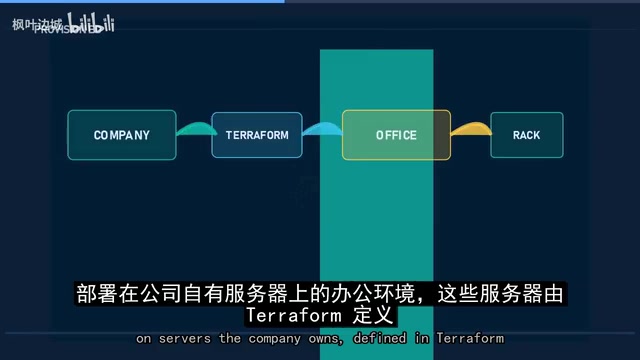
#6, Coder, gives developers and Agents an "office" that runs on company-owned servers, defined with Terraform, and shuts down automatically when not in use. Model keys never enter the workspace; Agent loops run on the control plane; it supports Anthropic, OpenAI, Google, and other providers; and every operation gets cost tracking and audit logs tied to real user identities. Idle workspaces shut down automatically to save costs.
#5, First Mate, reduces multi-Agent management to a single conversation: you talk to one Agent, and it directs the entire team. Tasks come in two types — ship tasks that end in a PR, and scout tasks that end in a report. The supervisor is a zero-token bash listener script that only wakes the First Mate when there's something actionable. The blogger's analogy was sharp: management, at the end of the day, is mostly a script that knows when to stay quiet. It runs on top of Claude Code, Grok, Codex, Open Code, Cursor, and more.
#4, Orca, is an Agent development environment that distributes the same prompt to multiple Agents, each running in its own isolated git work tree, then compares results in one place and merges the best answer. It supports 40+ command-line Agents, has a built-in browser for click-to-annotate note-taking, work trees can run over SSH, and there are iOS and Android apps.

Git Work Tree is a Git feature that allows the same repository to check out multiple branches simultaneously into different local directories, each with its own independent working state. Orca leverages this to let multiple Agents work on the same task in parallel without interfering with each other — each Agent modifies code and runs tests in its own work tree, and then a human or the system compares all the results in one interface and selects the best one to merge. It's like having several engineers solve the same problem simultaneously on their own scratch pads, then copying the best answer onto the official document. Compared to sequential execution or frequent branch switching, the work tree approach significantly reduces context conflicts when running multi-Agent parallel experiments.
Security, Permissions, and On-Device: Onekli, Needle, and Security Audit
#3, Onekli, is built around one design philosophy: Agents never hold credentials. The Agent makes a request, the gateway appends credentials at the egress, the Agent authenticates with an access token, and never sees the key itself (stored at rest with AES-256-GCM encryption). Sensitive operations can be held pending human confirmation in chat. Each employee can be issued a sandbox-scoped Agent governed by team-wide policies.
#2, Needle, targets on-device scenarios, with model sizes ranging from 8 to 29 MB — smaller than a single phone photo. It performs tool calling, structured extraction, and text embedding on-device at 2 bits per weight, with a runtime engine under 1 MB, targeting phones, wearables, browsers, Linux boards, and air-gapped environments. On the project's own benchmarks, it outperforms models 10× its size on mobile tool calling, and returns an empty list rather than a wrong guess when uncertain.
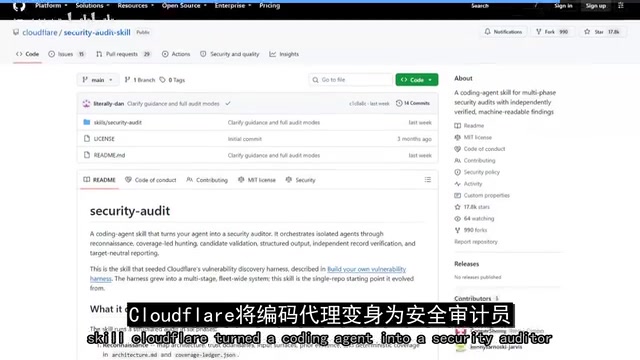
#1 is Cloudflare's Security Audit Skill, which transforms a coding Agent into a six-stage security auditor. The process begins with reconnaissance (architecture, trust boundaries, attack surface), then dispatches isolated hunter Agents to work through a coverage checklist. The most critical step: a finding isn't accepted just because one Agent "feels strongly" about it — a brand new Agent is sent in to rebut it. Conclusions fall into three categories — confirmed, needs validation, or rejected; severity must be backed by demonstrable real-world impact; and results are output as schema-validated JSON.
AES-256-GCM is the symmetric encryption standard widely adopted across the industry today. AES-256 uses a 256-bit key, making brute-force attacks impractical with current compute. GCM (Galois/Counter Mode) is an operating mode that generates an authentication tag alongside encryption, making it possible to detect whether data has been tampered with in transit or at rest — providing both confidentiality and integrity. Onekli uses it to encrypt credentials at rest, meaning that even if the database is accessed directly, an attacker retrieves only ciphertext.
2-bit per weight quantization is an extreme form of model compression. Standard neural network weights are stored as 32-bit or 16-bit floating point numbers; 2-bit quantization compresses each weight to just four discrete values (0/1/2/3), reducing storage to 1/8th to 1/16th of the original. The tradeoff is precision loss, but Needle's design choice is deliberate: return an empty list when uncertain rather than output a wrong guess. This conservative "refuse to answer" strategy partially compensates for the accuracy loss from extreme quantization, keeping the model viable for structured tasks like tool calling.
A "Workplace for Agents" Is Taking Shape
View all 10 tools together and a clear throughline emerges: job description (Open Spec), employee handbook (Agent Skills), office (Coder), key vault (Onekli), first mate (First Mate), and finally an auditor who trusts no one (Security Audit). The question they answer is no longer "can the Agent do this?" — it's "how do we get a group of Agents to do it collaboratively, controllably, and with accountability?"
What's worth sitting with is that the only tool requiring Agents to challenge each other's conclusions is the one ranked #1: the security audit tool. That hints at a quality any mature automation system should have — never blindly trusting any single output. For teams bringing Agents into production, this roundup reads less like a product list and more like an org design checklist: workflow, permissions, audit trails, collaboration. Miss any one of them, and you've got a gap. Rather than waiting for a meeting to hash it out, pick a repository and start running.
Related articles

Chain of Thought Isn't Just for AI: How Humans Can Use CoT to Improve Thinking Quality
Chain of Thought isn't just a prompt trick for large models. Starting from a Hacker News discussion, this article analyzes why CoT works for human thinking too, breaks down actionable ways to transfer it, and highlights the key differences between human CoT and machine CoT.
Cloudflare Teams Up with OpenAI: Closi…
Cloudflare Teams Up with OpenAI: Closing the Loop from Vulnerability Discovery to Defense with AI
Cloudflare uses OpenAI Daybreak to investigate security vulnerabilities and generate reviewable remediation plans, while developers use Codex to boost coding efficiency and quality.

Orca Multi-Agent Orchestration in Practice: A Guide to Parallel Collaboration with Claude and Codex
Orca is Stable AI's free open-source agent workbench supporting 34 agents like Claude Code and Codex in parallel. Learn its Git worktree isolation, multi-model orchestration, and mobile management.