AI Agents in Production: The Multi-Agent Architecture Behind Spotify's 650+ Monthly PR Merges
Spotify auto-merges 650+ PRs/month with multi-agent architecture, but production deployment demands careful attention to cost, debugging, and permissions.
This article uses Anthropic's official demo and Spotify's real-world data to break down the design logic and production realities of multi-agent collaboration. The core pattern: a lead agent handles task delegation while specialized subagents execute in parallel, each holding only the minimum tool permissions required for its role. Spotify's backend coding agent built on this architecture merges 650+ PRs monthly and cuts complex migration time by ~90%. However, production reality is far harder than demos suggest — costs, slow responses, and long tool-chain debugging are common pitfalls, making observability an essential foundation.
How far can AI Agents actually go from demo to production? An official Anthropic case study offers a compelling answer: Spotify's backend coding agent, built on the Agent SDK, automatically merges over 650 Pull Requests per month and achieves roughly 90% time savings on complex code migration tasks. Behind these numbers lies a carefully designed multi-agent (subagent) collaboration architecture.
Multi-Agent Collaboration: A Research Team with Clear Roles
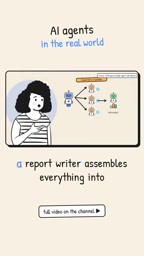
The Anthropic official demo repository includes a research-style agent whose structure is quite illustrative. The entire workflow is orchestrated by a "lead agent": it breaks the user's question into sub-topics, then dispatches multiple "researcher subagents" in parallel to search the web.
The researchers hand their collected notes to a "data analyst agent," which transforms the information into charts. Finally, a "report writer agent" consolidates everything into a PDF document. This is a classic division-of-labor pipeline — each role handles only the part it specializes in.
Principle of Least Privilege: Each Agent Gets Only the Tools It Needs
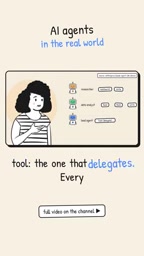
The most valuable design insight in this architecture is the strict constraint on tool permissions. Researchers only receive web search and write access; the analyst gets read, bash, and write permissions to handle numerical processing; and the lead agent has exactly one tool — the one responsible for task delegation.
In other words, each agent's capabilities are precisely matched to its responsibilities — no more, no less. This "least privilege" design not only reduces the risk of errors and runaway behavior, but also makes the entire system more predictable and easier to audit.
The Principle of Least Privilege (PoLP) originates from computer security, and its core idea is: any program, process, or user should only have the minimum level of access necessary to complete its current task. In traditional software, this principle is mainly used to prevent privilege escalation attacks and data breaches. In agent systems, it takes on new significance.
AI agents possess autonomous decision-making and tool-calling capabilities. If an agent is manipulated (via prompt injection) or behaves unexpectedly, the tools it holds directly determine the "blast radius" of the damage. If an agent that only needs to read files also has delete or write permissions, a single misjudgment could cause irreversible harm. In multi-agent systems, therefore, permission boundaries are not just an engineering convention — they are a security perimeter. They contain the impact of any single point of failure to the smallest possible scope, while also making system behavior easier to audit and trace.
Spotify's Real Numbers: Scaling Subagents in Production
Can theoretical architecture hold up under production conditions? Spotify's practice provides direct evidence. Their backend coding agent is also built on the Agent SDK, using this same subagent pattern at its core.
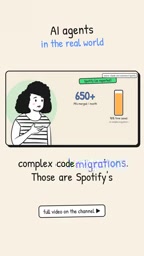
According to a case study published by Anthropic, Spotify's system merges over 650 PRs per month and saves approximately 90% of the time on complex code migration tasks. For code migrations that require large volumes of repetitive, pattern-based changes, the advantages of parallel multi-agent processing are fully amplified — this is precisely the kind of work that is both labor-intensive and error-prone for humans.
The Other Side of Reality: Production Is Far More Complex Than a Demo
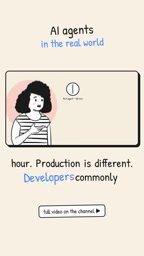
Impressive numbers shouldn't obscure the real barriers to deployment. Building your first agent might take about half an hour, but pushing it to production is an entirely different matter.
Developers commonly run into three categories of problems in real deployments: costs far exceeding expectations, slower response times, and difficulty debugging long chains of tool calls. When a task involves dozens of tool calls and multiple agents interacting back and forth, tracking down the root cause of a single failure step can be genuinely painful.
The practical advice for navigating these pitfalls is direct: start small, log every tool call, and keep a close eye on your bill. Observability (logging) in an agent system isn't a nice-to-have — it's a survival necessity.
Observability in distributed systems typically refers to the ability to infer a system's internal state through three types of data: Logging, Metrics, and Tracing. In multi-agent systems, this concept is especially critical: a single user request may trigger dozens of tool calls spanning multiple subagents, and if the inputs and outputs of any link go unrecorded, pinpointing failures after the fact becomes nearly impossible.
In practice, Tracing is the most important component — it strings together all agent calls for a complete task into a searchable timeline, clearly showing what instructions each subagent received, which tools it called, and what it returned. Anthropic's Agent SDK currently has integration support with observability platforms such as LangSmith and Weave. Connecting at least one tracing tool before going live is the lowest-cost investment you can make to avoid a debugging nightmare.
Not Every Task Needs an Agent
One often-overlooked judgment call is determining whether you need an agent at all. If a task is simply a single question-and-answer — like summarizing an email — then a single model call is sufficient. It's simpler and cheaper.
The real value of agents emerges in tasks with many steps that cannot be fully scripted in advance. When you can't hard-code the complete workflow ahead of time and need the system to make dynamic decisions based on intermediate results, that's the right moment to introduce an agent architecture. Blindly wrapping simple tasks in a multi-agent framework only adds unnecessary cost and complexity.
Summary
Spotify's record of 650+ PR merges per month validates the feasibility of multi-agent collaboration in engineering contexts, and the least-privilege tool allocation is the key to its reliable operation. But using agents well requires finding the right balance between capability and constraint: use logging to ensure observability, use cost awareness to govern scale, and always use task complexity as the deciding factor for whether an agent architecture is truly needed.
Related articles

A Single Prompt Triggers a Global PHP Security Storm: Is AI a Savior or a Hidden Risk?
A single AI prompt triggered a global PHP security crisis affecting Wikipedia and the Internet Archive. This article reviews the incident, analyzes the OpenAI-Amazon controversy, and explores the security paradox of lowered vulnerability discovery barriers in the AI era and developer response strategies.

When AI Is Taken Away: How Reliance on Shortcuts Undermines Your Problem-Solving Resilience
A study of 1,222 people found that after using AI to answer questions, once AI was removed, people gave up on more problems than a control group that never used AI. The article analyzes the impact of AI reliance on learning resilience and metacognition, and explores design implications for AI learning tools.

Carta and NewView Partner to Let Startup Employees Cash Out Equity Early
Carta and NewView Capital partner to simplify startup tender offers, helping employees sell equity early. Analysis of the mechanism, liquidity pain points, and impact.