AI and Humans Team Up to Crack a 167-Year-Old Math Puzzle: Has the Riemann Hypothesis Been Solved?
Human mathematicians and AI collaborate to claim a proof path for the Riemann Hypothesis, verified by Lean, showcasing a new human-AI collaboration model.
The article describes a joint team of human mathematicians and AI models claiming to have found a proof path for the Riemann Hypothesis. Human mathematicians provide a simplified blueprint, AI coordinates about 60 sub-agents to perform computations such as theta lifting, generating 17 million lines of mathematical code, which is then formally verified by Lean within days and refactored into 76,000 readable lines. The case illustrates a new division of labor: human intuition provides direction, AI handles logical labor beyond cognitive bandwidth, and formal tools ensure certainty. However, the source is single, details are unconfirmed, and the proof still needs peer review.
In 1859, mathematician Bernhard Riemann proposed a conjecture about the distribution of prime numbers. For 167 years, no one could prove it, and it became one of the Millennium Prize Problems with a million-dollar bounty from the Clay Mathematics Institute. Now, a joint team of human mathematicians and AI models claims to have found a proof path and completed machine verification in just a few days using formal verification tools. This collaboration is not just about a mathematical conjecture—it reveals a shift in the role of AI in the most difficult intellectual labor.
A Century-Old Puzzle of Prime Distribution
Primes are often compared to the atoms of arithmetic—indivisible, and all integers are built by multiplying them. Yet once you observe primes on the number line, the pattern disappears: the higher you count, the more erratic the gaps between consecutive primes become, sometimes close together, sometimes with huge gaps. We can predict the average number of primes in a range with high accuracy using smooth curves, but we cannot predict where the next prime will fall.
This tension between strict arithmetic rules and apparent randomness is one of the oldest and deepest puzzles in mathematics. In 1859, Riemann proposed that the distribution of primes is governed by a hidden mathematical landscape. To this end, he created the Riemann zeta function, shifting focus from integers themselves to the complex plane.
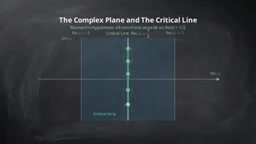
This function presents a complex three-dimensional terrain of peaks and valleys, with mathematical values exactly zero at certain specific points. Riemann's core hypothesis is that all non-trivial zeros align perfectly on a vertical "critical line." If true, the seemingly chaotic distribution of primes is subject to strict mathematical constraints.
The Riemann zeta function is a function defined on the complex plane. It was initially studied by Euler for real arguments, and Riemann analytically continued it to the complex domain. Its definition is ζ(s) = Σ n^{-s} (when the real part is greater than 1), and it extends to the entire complex plane (except for the pole at s=1) via analytic continuation. The function takes the value zero at certain points, which are divided into "trivial zeros" (negative even integers) and "non-trivial zeros" (located in the strip 0<Re(s)<1). The Riemann Hypothesis asserts that the real part of all non-trivial zeros equals 1/2, i.e., they lie on the critical line Re(s)=1/2. This conjecture is closely related to the distribution of primes, because the locations of the zeros of the zeta function control the error term in the prime counting function π(x).
The Gap from Finite Fields to the Integer World
The difficulty of directly proving the Riemann Hypothesis lies in the fact that the required mathematical tools span more than a dozen highly specialized disciplines, including arithmetic geometry, automorphic forms, and the Langlands program. The original text points out that no single human brain can simultaneously hold so many advanced mathematical mechanisms to launch a frontal assault.
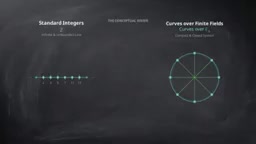
However, mathematicians solved a "parallel version" of the problem in the 20th century. André Weil and Sergei Stepanov successfully proved an analogous version of the Riemann Hypothesis in the closed, perfectly cyclic mathematical system of "curves over finite fields." The problem is translation: Stepanov's logic relies entirely on the boundary conditions of a closed system, and adapting its architecture to the infinite integer landscape has been considered mathematically impossible for decades.
The key word in this dilemma is "transfer"—how to make the proof ideas for finite fields survive in the integer world.
Curves over finite fields are fundamental objects in algebraic geometry, referring to algebraic curves defined over finite fields. The Weil conjectures (later proved by Deligne) include conjectures about the properties of zeta functions of algebraic varieties over finite fields, with the curve case analogous to the Riemann Hypothesis. The "Riemann Hypothesis over finite fields" proved by Stepanov et al. states that for curves over finite fields, the zeros of their zeta functions satisfy a similar critical line condition. This proof utilizes the closedness of finite fields and tools such as the Frobenius automorphism, but there are essential differences from the integer case: the ring of integers is not a finite field and lacks similar symmetry, so transferring the proof to the integer world requires entirely new mathematical ideas.
Human-AI Division of Labor: Blueprint and Execution
According to the video content, in November 2026, an Anthropic mathematician named Levin Alpog found a way to bridge the gap. He played the role of conceptual architect, creating a simplified blueprint (toy setting) that demonstrated how Stepanov's finite field solution could theoretically be transferred to ordinary integers.
To execute this blueprint, he invoked an unreleased version of the Claude model. The AI served as an encyclopedic engine, coordinating about 60 specialized sub-agents while holding the necessary mathematical theories.

The animation demonstrates the computational highlight: the AI uses a technique called theta lifting, applying a chain of transformations to systematically stretch and adjust mathematical shapes from finite fields until they perfectly embed in the integer world. The final output is 17 million lines of dense, machine-generated mathematical code, synthesizing 50 years of number theory results. Humans provide the vision map, and AI performs the heavy computations to traverse the terrain—together they bypass the biological limits of the human mind.
Theta lifting is an operation in the theory of automorphic forms that lifts automorphic forms from lower dimensions to higher-dimensional symmetric spaces. Within the framework of the Langlands program, theta lifting is used to establish connections between automorphic representations of different groups and is an important tool for constructing automorphic forms. In attempts to prove the Riemann Hypothesis, theta lifting might be used to "lift" mathematical objects constructed over finite fields to appropriate spaces over the ring of integers, thereby preserving the properties of zero distribution. This technique involves deep intersections of representation theory, harmonic analysis, and algebraic geometry, typically requiring highly specialized knowledge.
Formal Verification: From 17 Million Lines to 76,000 Lines
The 17 million lines of code immediately created a new obstacle: no human peer review committee could read, audit, or trust a proof of that scale in a lifetime. Therefore, the proof was submitted to Lean—a formal proof assistant for absolute logical truth.
Lean does not guess. It parses millions of lines of code and confirms that each logical step is mathematically impeccable. This discovery was verified and accepted within days based on mechanical certainty rather than subjective human consensus. Subsequently, the mathematical community successfully refactored the cumbersome 17-million-line proof into a readable, elegant 76,000 lines.
Returning to the original number line, the chaotic distribution of primes is now mathematically "tethered" and understood. We have obtained precise, permanent bounds on the magnitude of prime fluctuations, and a 167-year-old puzzle is solved.
Lean is an interactive theorem prover based on dependent type theory, allowing users to write mathematical definitions and proofs in a formal language, with each logical step mechanically verified by computer. Lean's core advantage lies in its small logical kernel, ensuring the reliability of verification. The mathematical community has established the Mathlib library, containing a large amount of formalized mathematical knowledge. Using Lean to verify proofs requires translating informal mathematical arguments into formal code, a process that is typically time-consuming and requires specialized knowledge. In this case, Lean verified 17 million lines of code within days, demonstrating the potential of formal tools to handle large-scale proofs, but it also raises discussions about code readability and human understandability.
Significance and Open Questions
The core insight of this collaboration is not "AI replaces mathematicians" but system-level collaboration: human intuition provides the map, AI performs the heavy logical work, formal tools complete verification, and human intuition confirms the mathematics. Each of the three parties plays an irreplaceable role.
It should be noted that the above narrative is based on a single description from a video source, and the specific names, timelines, and model versions involved have not been independently confirmed. Whether the "proof" of the Riemann Hypothesis will be widely accepted by the mathematical community still awaits formal papers and peer review. But even as a thought experiment, it clearly outlines a feasible path for AI participation in the most difficult mathematical research: not replacing human insight, but undertaking computational and coordination labor that exceeds human cognitive bandwidth.
For those interested in AI programming and AI applications, this case shows that AI's capabilities in formal mathematics, code generation, and multi-agent coordination are entering a new order of magnitude. When the scale of AI-generated code far exceeds human review capacity, formal verification tools like Lean may become standard equipment for future human-AI collaboration.
One-line Summary
Human mathematicians and AI collaborate to claim a proof path for the Riemann Hypothesis, verified by Lean, demonstrating a new model of human-AI collaboration.
Paragraph Summary
The article tells the story of a joint team of human mathematicians and AI models claiming to have found a proof path for the Riemann Hypothesis. Human mathematicians provide a simplified blueprint, and AI coordinates about 60 sub-agents to perform computations such as theta lifting, generating 17 million lines of mathematical code. This is then formally verified by Lean, completing mechanical review within days, and refactored into a readable 76,000-line version. The case demonstrates a new model of human-AI division of labor: human intuition provides direction, AI undertakes logical labor beyond cognitive bandwidth, and formal tools ensure certainty. However, the information comes from a single source, specific details have not been independently confirmed, and the proof of the Riemann Hypothesis still requires peer review.
Related articles
AI Proved the Riemann Hypothesis, Yet No One Understands It: The Gap Between Machine Verification and Human Understanding
An AI and a mathematician produced a 17-million-line Riemann Hypothesis proof that passes computer verification yet no one understands. This article explores the gap between machine verification and human understanding, and the division of knowledge work in the AI era.

Can AI Crack the Riemann Hypothesis? New Hope for the Million-Dollar Math Puzzle
The Riemann Hypothesis carries a million-dollar bounty. Can AI help crack this math puzzle? This article examines the conjecture's origins, the difference between verification and proof, and AI's real role and limits in mathematical research.

AI Cracks the Riemann Hypothesis? 17 Million Lines of Code Send Shockwaves Through Mathematics
In November 2026, Anthropic mathematicians and Claude complete a machine-verified proof of the Riemann Hypothesis — 17 million lines of code pass five independent theorem checks. Yet the mathematics community falls silent: does a proof no human can read through count as a solution?