AI Proved the Riemann Hypothesis, Yet No One Understands It: The Gap Between Machine Verification and Human Understanding
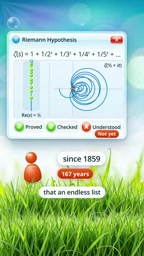
A machine verified a 17-million-line Riemann Hypothesis proof, but understanding still happens only in the human mind that has a perspective.
The article opens with the 17-million-line Riemann Hypothesis proof produced by an Anthropic mathematician working with Claude: the computer verified it line by line, yet no one understands it. Drawing on Thomas Nagel's bat-perspective argument and Hubert Dreyfus's view of embodied engagement, the author argues that understanding lives in a mind with an inner perspective, not in step-by-step correctness. Machines verify; humans assign meaning.
The Riemann Hypothesis, the most famous unsolved problem in mathematics, now has a proof that has passed computer verification. But here's the strange part: no one understands it. This raises a fundamental question—when a machine can ensure every step is correct, where exactly does "understanding" happen?
A Proof No One Understands
Proposed in 1859, the Riemann Hypothesis asserts that infinitely many special points all lie on the same straight line. According to the video, a mathematician at Anthropic worked with the AI model Claude to develop a proof. This proof runs to 17 million lines of code. Mathematician Daniel Litt's comment was blunt: no one understands it yet.
The computer checked every step, and the proof passed verification. So mathematicians went back to work, trying to convert this machine-generated proof into a form humans can follow. This leaves a fascinating puzzle: the software got every step right, but "every step right" doesn't seem to be enough.
The central object of the Riemann Hypothesis is the Riemann zeta function, defined by an infinite series and analytically continuable to the entire complex plane. The conjecture asserts that the real part of every nontrivial zero of this function equals exactly 1/2—that is, all of them lie on a single vertical line in the complex plane. This line is called the critical line, and it is closely tied to the distribution of primes: if the conjecture holds, the error term in the prime number theorem would be controlled in its strongest possible form. For this reason, the Riemann Hypothesis is regarded as one of the most important problems in number theory and indeed in all of mathematics, and it is one of the Millennium Prize Problems with a million-dollar bounty from the Clay Mathematics Institute.
"Formal verification" refers to using a computer to check, step by step, whether each step of a proof strictly conforms to axioms and inference rules. Such verifiers (proof assistants like Lean and Coq) care only about correctness at the symbolic level and do not require a human reader to understand the overall reasoning of the proof. So a proof can pass machine checking while remaining a black box in the cognitive sense—precisely the tension exposed by the 17-million-line proof.
Where Does Understanding Happen?
In 1974, philosopher Thomas Nagel posed a famous question: what is it like to be a bat? His insight was that a mind has an "inside," a point of view. The video's author argues that understanding happens right there—when something makes sense to someone. And a point of view always has a source.
Hubert Dreyfus argued that humans know what matters because we live in the world, have bodies, and have stakes. This points to a conclusion: the mind is the only thing that matters.
So if every step being right isn't enough, where exactly does understanding happen? The answer points to the irreplaceable part of human knowledge: seeing the forest, not just the trees.
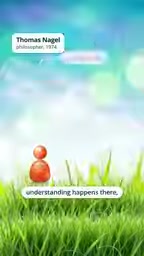
Nagel's bat argument targets the problem of "subjective experience": even if we grasp the full physical and neural mechanisms of bat echolocation, we cannot thereby know what it is like to be a bat. He thus distinguishes objective physical description from the first-person perspective, holding that the latter cannot be reduced to the former. The article borrows this distinction to locate "understanding" inside a mind that has a perspective, rather than in a sequence of steps that can be checked externally one by one.
Dreyfus's argument comes from the phenomenological tradition, especially influenced by Heidegger. He maintains that human expertise is not the accumulation of a rule base but embodied coping embedded in concrete situations: we know what matters because we are invested, we can fail, and we care. This position is often used to criticize the assumption that intelligence can be fully formalized as symbolic operations, and it offers a philosophical gloss on "machine-verified as correct yet understood by no one."
The Computer Gives the Trees, Humans See the Forest
A computer can hand you every single tree. But a person must see for themselves what these answers add up to, how they connect, and why they matter. This capacity can be fed—if you make your living by creating, absorb as much as you can: big ideas, art, history, science, literature, invention, exploration. Every domain you learn is one more connection you're able to see.
Then comes the division of labor. Let computers do what computers should do, and keep for ourselves what humans should do. The video's author mentions they wrote an article discussing which work belongs on which side.

Implications for Knowledge Work in the AI Era
This 17-million-line proof is a landmark case: machines can complete formal verification at a scale humans cannot understand step by step, but the gap between "correct" and "understood" does not close automatically. For knowledge workers, the real competitive edge lies not in producing more steps but in building cross-domain connections, judging what is worth doing, and integrating scattered answers into a meaningful whole. Computers handle verification; humans handle meaning—this may be the clearest dividing line in the AI era.
One-line Summary
A machine verified a 17-million-line proof of the Riemann Hypothesis, but understanding still happens only in the human mind that has a perspective.
Paragraph Summary
The article opens with the 17-million-line Riemann Hypothesis proof produced by an Anthropic mathematician working with Claude: the computer verified it line by line, yet no one understands it, and mathematician Daniel Litt says plainly that no one does yet. The author then asks "where does understanding happen," drawing on Thomas Nagel's argument about the bat's perspective and Hubert Dreyfus's view of embodied engagement to argue that understanding happens in a mind with an inner perspective, not in the correctness of steps. The core metaphor: a computer can hand every tree to a person, but seeing the forest—the connections between answers, their meaning and importance—must be done by humans themselves. The response is to absorb cross-domain knowledge broadly in order to build connections, and to draw a clear division of labor between humans and machines: machines verify, humans assign meaning.
Related articles
AI Joins Forces with Mathematicians to Crack the Riemann Hypothesis? A 167-Year-Old Puzzle Reaches a Critical Turning Point
Anthropic mathematician Levent Alpoge collaborated with Claude for about six weeks to produce an AI-assisted proof of the Riemann Hypothesis, verified by the Lean formalization community. This article analyzes the relationship between the Riemann zeta function and prime distribution, the significance of formal verification, and the mathematical community's excitement and anxiety over machine-generated proofs.
Can AI Crack the Riemann Hypothesis? New Hope for the Million-Dollar Math Puzzle
The Riemann Hypothesis carries a million-dollar bounty. Can AI help crack this math puzzle? This article examines the conjecture's origins, the difference between verification and proof, and AI's real role and limits in mathematical research.
AI Cracks the Riemann Hypothesis? 17 Million Lines of Code Send Shockwaves Through Mathematics
In November 2026, Anthropic mathematicians and Claude complete a machine-verified proof of the Riemann Hypothesis — 17 million lines of code pass five independent theorem checks. Yet the mathematics community falls silent: does a proof no human can read through count as a solution?