AI and Machine Learning Research: How to Choose the Right College Major?
A comprehensive guide to choosing the right college major for a career in AI and ML research.
This article helps students aspiring to AI/ML research choose the right college major. It covers three core paths — Computer Science, Mathematics/Statistics, and alternative fields like EE and Physics — explains degree requirements for engineering vs. research roles, offers actionable high school preparation tips, and outlines a clear path from undergrad through PhD to an AI research career.
From High Schooler to AI Researcher: Where Do You Start?
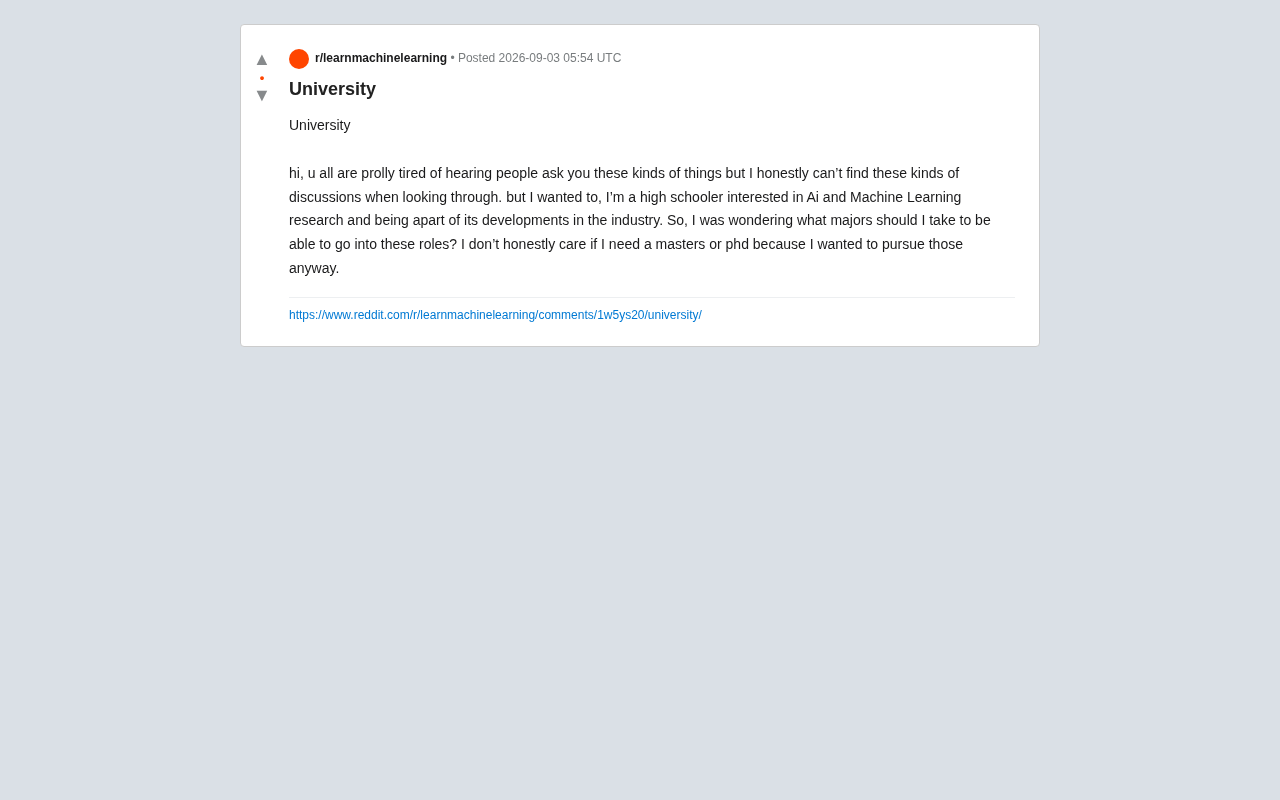
I recently came across a very typical question on Reddit: a high school student passionate about artificial intelligence and machine learning research wanted to enter the field for both research and industry development work. They posed a question that plagues countless young people — "What major should I actually choose?"
The poster also specifically mentioned they had no problem pursuing a master's or even a PhD, as that was already part of their plan. This is actually a very clear-headed perspective: the academic bar for genuine AI/ML research positions is indeed quite high.
This article will systematically walk through this pathway, helping students aspiring to AI research make informed decisions about their choice of major.
Core Major Choices: Three Main Directions
Computer Science — The Most Direct Path
If you could only pick one major, the answer is virtually unanimous — Computer Science (CS). It's the most direct and mainstream route into AI/ML research.
A Computer Science degree gives you a solid foundation in programming, algorithms and data structures, theory of computation, and systems design. These are all core skills for machine learning engineering and research. Among these, algorithms and data structures are the bedrock of computational thinking — algorithms are step-by-step methods for solving problems, while data structures are ways of organizing and storing data (such as linked lists, trees, graphs, hash tables, etc.). Together, they determine a program's runtime efficiency. Theory of computation, on the other hand, studies the fundamental question of "what problems can be computed," involving concepts like Turing machines and computational complexity (P vs. NP problems). These seemingly abstract concepts have direct applications in AI research: for example, understanding algorithmic complexity helps you estimate the time cost of training models, and a grasp of computation theory helps you understand why certain optimization problems are inherently "hard," driving researchers to seek approximate algorithms or heuristic methods. The vast majority of AI researchers, deep learning engineers, and research scientists at major tech companies have a CS background.
When it comes to electives, it's advisable to focus early on AI-related courses, such as:
- Introduction to Machine Learning
- Deep Learning
- Natural Language Processing (NLP)
- Computer Vision
- Reinforcement Learning
These five courses actually form a comprehensive AI knowledge map. Introduction to Machine Learning typically covers classical algorithms (such as linear regression, decision trees, support vector machines, clustering, etc.) and is a prerequisite for understanding everything that follows. Deep Learning focuses on neural networks — multi-layered computational structures inspired by neurons in the brain that automatically learn feature representations from data through the backpropagation algorithm. NLP studies how to make computers understand and generate human language, and today's hottest large language models (like the GPT series) belong to this field. Computer Vision enables machines to "understand" images and videos, with widespread applications in autonomous driving, medical imaging, and more. Reinforcement Learning is a method that allows agents to learn optimal strategies in an environment through a "trial-and-error plus reward" mechanism — it's one of the core technologies behind AlphaGo's defeat of human Go champions.
Mathematics and Statistics — The Underestimated Hardcore Foundation
Many people underestimate the importance of mathematics in AI research. In truth, the essence of machine learning is mathematics — linear algebra, calculus, probability theory, and statistics form the theoretical foundation of virtually all algorithms.
To understand this claim, consider the specific applications of several key mathematical branches. Linear algebra is the tool for handling high-dimensional data — every layer of computation in a neural network is essentially matrix multiplication plus nonlinear transformations. Calculus (especially multivariate calculus) is the language of optimization — the core process of training a model involves iteratively updating parameters in the direction of the loss function's gradient using gradient descent, minimizing prediction error. Probability theory and statistics provide the framework for handling uncertainty — methods like Bayesian inference, maximum likelihood estimation, and hypothesis testing permeate the entire process of model design and evaluation.
If you truly want to do "research" rather than just call existing APIs or frameworks, then a deep mathematical foundation becomes the dividing line between you and an average engineer. Understanding why gradient descent works, why one loss function is more reasonable than another, and where a model's generalization bounds lie — all of these require solid mathematical thinking.
Specifically, a loss function is a mathematical function that measures the gap between a model's predicted values and true values — for instance, mean squared error is suited for regression tasks, while cross-entropy loss is suited for classification tasks. Choosing different loss functions means you have different mathematical definitions of "what constitutes a good prediction," which directly affects the model's learning behavior. Gradient descent is an iterative optimization method: imagine you're blindfolded on a hillside trying to reach the lowest point. All you can do is feel the slope of the ground beneath your feet (i.e., the gradient), then take a step downhill, repeating this process until you hopefully reach the valley floor (i.e., the parameter configuration with minimum loss). "Generalization bounds" are a core concept in statistical learning theory, quantitatively describing to what extent a model's performance on training data can be extended to unseen new data — this directly determines whether a model has truly "learned knowledge" rather than merely "memorized answers" (i.e., the overfitting problem). People who understand these principles can diagnose why a model isn't converging and design better optimization strategies, while those who only know how to call frameworks are often helpless when problems arise.
A common and powerful combination is: CS major + Math minor, or vice versa. This interdisciplinary background is especially competitive when applying to top graduate programs.
Other Viable Major Paths
Besides CS and mathematics, the following majors can also lead to AI research, though they typically require filling gaps in programming or mathematics:
-
Electrical Engineering / Computer Engineering: Leans toward hardware and signal processing, suitable for those interested in edge computing and robotics. Edge Computing refers to running AI models directly on devices near the data source (such as smartphones, sensors, embedded devices) rather than sending data back to cloud servers for processing. This direction is important because many real-world scenarios (autonomous driving, industrial inspection, AR glasses, etc.) have extremely low latency requirements and cannot tolerate the wait time of network transmission. The technical challenge of edge AI lies in compressing models with tens of billions of parameters to run on chips with extremely limited computing power and memory, involving specialized techniques such as model quantization, knowledge distillation, and Neural Architecture Search (NAS), while also requiring deep understanding of hardware architectures (such as GPU, NPU, FPGA) — this is precisely where an electrical engineering background excels.
-
Physics: Strong mathematical foundation, and it's not uncommon for physics PhDs to transition into AI research. There's deep historical precedent — the mathematical intuition and modeling abilities trained through physics are highly compatible with machine learning research. There are deep mathematical connections between statistical mechanics and probabilistic graphical models, quantum mechanics and linear algebra, and variational principles and variational inference. In fact, many important AI methods originated from physics: Boltzmann machines directly borrowed from energy models in statistical mechanics, Monte Carlo methods were originally invented for nuclear physics simulations, and the recently popular Diffusion Models (the technology behind Stable Diffusion) are mathematically grounded in non-equilibrium thermodynamics.
-
Statistics / Data Science: More oriented toward data modeling and practical applications
-
Cognitive Science: Suitable for those interested in brain-inspired intelligence and human-computer interaction
Education Planning: Do You Need a PhD for AI Research?
The original poster mentioned being prepared to pursue a master's or PhD, which is a very sound directional judgment. However, we need to clearly distinguish the academic requirements for different roles.
Industry Application Roles: Bachelor's + Project Experience Will Do
If the goal is to work as a Machine Learning Engineer (ML Engineer) — responsible for deploying models, building training pipelines, and optimizing inference performance — then a bachelor's degree plus solid project experience is often sufficient. These positions prioritize engineering skills and practical experience.
Research Scientist Roles: A PhD Is Practically Standard
But if the goal is explicitly "research" — conducting cutting-edge exploration at institutions like Google DeepMind, OpenAI, Meta AI, or Microsoft Research, or doing academic research at universities — then a PhD is almost a necessary requirement.
These positions require the ability to independently formulate problems, design experiments, and publish papers at top conferences (such as NeurIPS, ICML, ICLR, CVPR, etc.). These capabilities are precisely the core objectives of PhD training.
It's worth understanding that these top conferences hold immense significance in the AI academic community. NeurIPS (Conference on Neural Information Processing Systems) and ICML (International Conference on Machine Learning) are the two flagship conferences in the machine learning field, covering all aspects of theory, algorithms, and applications. ICLR (International Conference on Learning Representations) focuses on representation learning and deep learning, known for its open review process, and has rapidly grown in influence in recent years. CVPR (IEEE Conference on Computer Vision and Pattern Recognition) is the top conference in the computer vision field. Publishing papers at these conferences is the core metric of an AI researcher's academic credentials — applicants to top PhD programs are typically expected to have at least one top-conference submission experience before graduation, while research scientist positions at DeepMind, OpenAI, and similar institutions often require multiple top-conference publications.
AI Learning Preparation You Can Start in High School
As a high school student interested in AI, there's actually quite a lot you can do to prepare early, and these efforts will give you a noticeable head start in college.
Build a Strong Foundation in Math and Programming
During high school, learn math as thoroughly as possible, especially calculus and probability-related content. At the same time, start self-learning Python programming — it's the de facto universal language in the AI field.
Build Projects and Gain Hands-on Experience
Beyond theoretical learning, hands-on practice is crucial. Here are some starting points:
- Learn to use deep learning frameworks like PyTorch or TensorFlow
- Participate in data science competitions on Kaggle
- Reproduce simple models from classic papers
- Contribute to open-source AI projects to build collaborative experience
PyTorch and TensorFlow are currently the two most mainstream open-source frameworks in deep learning. PyTorch, developed by Meta (Facebook), is beloved by researchers for its dynamic computation graphs and Pythonic programming style, and currently dominates in academia. TensorFlow, developed by Google, has a more mature ecosystem for industrial deployment (e.g., TensorFlow Serving, TensorFlow Lite). For beginners, PyTorch is generally recommended as the first framework to learn because its code logic is more intuitive and debugging is more convenient.
Kaggle is the world's largest data science competition platform, operated by Google, offering free GPU computing resources, rich datasets, and an active community. Participating in Kaggle competitions not only hones practical skills like data preprocessing, feature engineering, and model tuning, but the ranking results also serve as a compelling addition to your résumé — especially for undergraduates without formal research experience.
Stay Up to Date with AI Frontiers
Develop a habit of reading technical blogs and watching open courses, such as Andrew Ng's Machine Learning course and Stanford's CS229/CS231n, among other classic resources. Early exposure to real research contexts will help you find your specific area of interest more quickly.
A Clear AI Research Path Plan
Overall, for young people aspiring to AI/ML research, here's a relatively solid pathway to plan out:
- Undergraduate Stage: Major in Computer Science, minor or double major in Mathematics, take as many AI-related courses as possible, and actively participate in professors' research projects
- Build Research Experience: During undergrad, aim to join a lab and participate in paper writing — this is a key credential for applying to top PhD programs
- Graduate Stage: Go directly for a PhD, or first complete a research-oriented master's before transitioning to a PhD
- Identify Your Sub-field: The AI field is extremely broad, so find the sub-area you're passionate about as early as possible (e.g., large language models, multimodal learning, robot learning, etc.)
It's worth learning more about these sub-fields. Large Language Models (LLMs) are currently the most high-profile direction in AI, represented by GPT-4, Claude, Gemini, and others. Their core architecture is the Transformer — a neural network based on the self-attention mechanism that effectively captures long-range dependencies in sequential data. Multimodal Learning studies how to make models simultaneously understand and relate multiple types of information (text, images, audio, video, etc.), with representative work including GPT-4V's image-text understanding capabilities and video generation models like Sora. This direction is considered a key pathway toward more general artificial intelligence, as human cognition itself is inherently multimodal. Robot Learning combines AI algorithms with physical world interaction, studying how robots can acquire dexterous manipulation and autonomous navigation capabilities through imitation learning or reinforcement learning. Understanding the general contours of these directions will help you allocate your energy more purposefully throughout your studies.
Final Thoughts
There's no single correct path into AI/ML research, but the combination of Computer Science + strong mathematical foundation + research experience + PhD is a repeatedly proven high-success-rate pathway.
Most importantly, the willingness to proactively seek information, think about long-term planning, and embrace intensive academic training — this spirit of proactive exploration is itself the most valuable quality for a career in research. Choosing the right major is just the starting point; true differentiation comes from the depth and passion you consistently invest along this journey.
Related articles

Fable 5.1 Hands-On: AI One-Click 3D Game Scene Generation Crushes GPT and Grok
Hands-on comparison of Fable 5.1, GPT-5.6 Sol, Grok 4.6, and Kimi K3 in 3D game scene generation — from Gothic architecture to Sekiro menus, analyzing real gaps in detail fidelity, speed, and interaction.
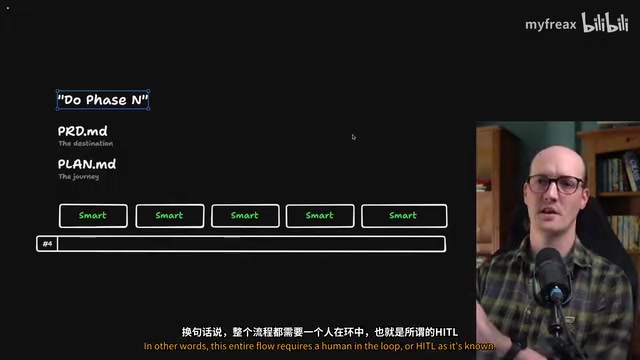
AFK Agent: Let AI Code Autonomously While You're Away From the Keyboard
Explore how AFK Agent mode elevates AI coding from Human-In-The-Loop to autonomous unattended execution through multi-phase plan decomposition and automation loops.
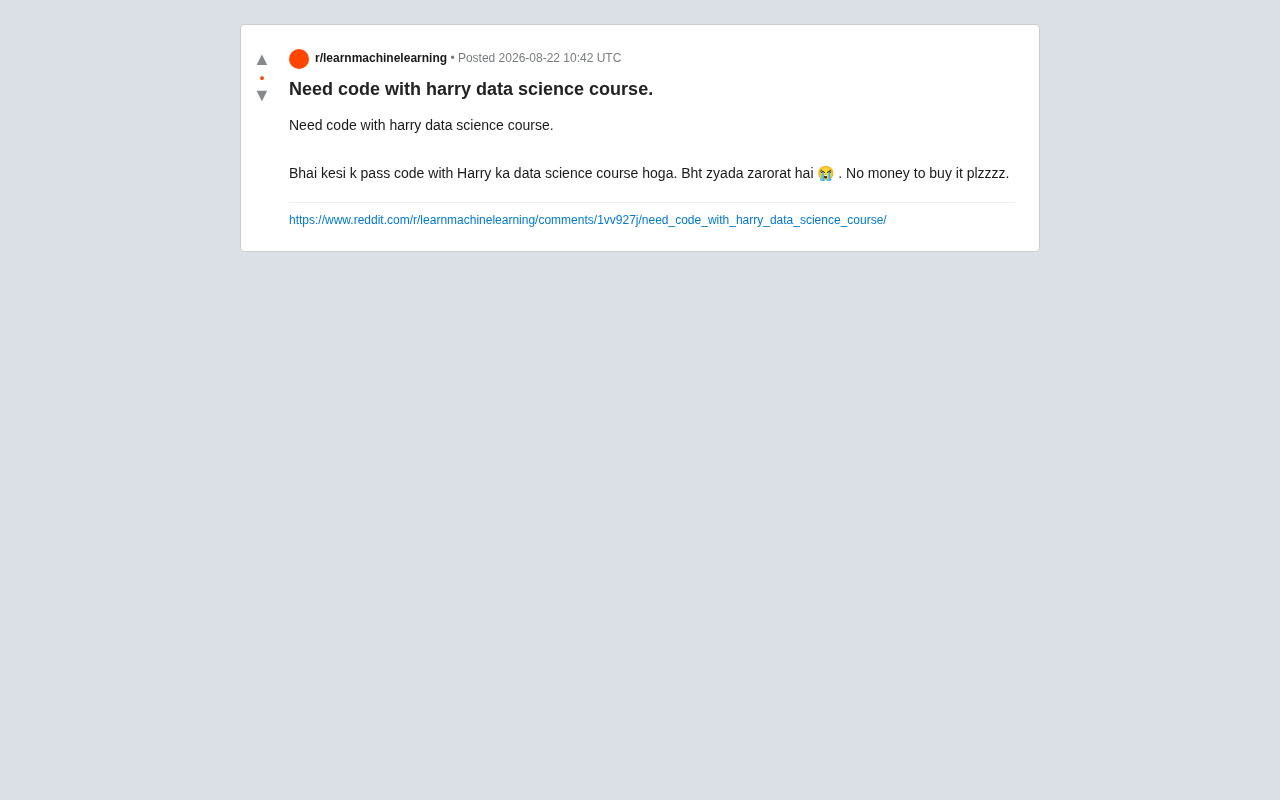
Free Data Science Learning Resources Guide: An Efficient Path to Getting Started on Zero Budget
How to learn data science on a tight budget? This guide covers free resources like Kaggle Learn, freeCodeCamp, and Fast.ai with a complete self-study roadmap from Python basics to machine learning.