AI and Mathematics Alignment: A Possibility Beyond the Toolbox
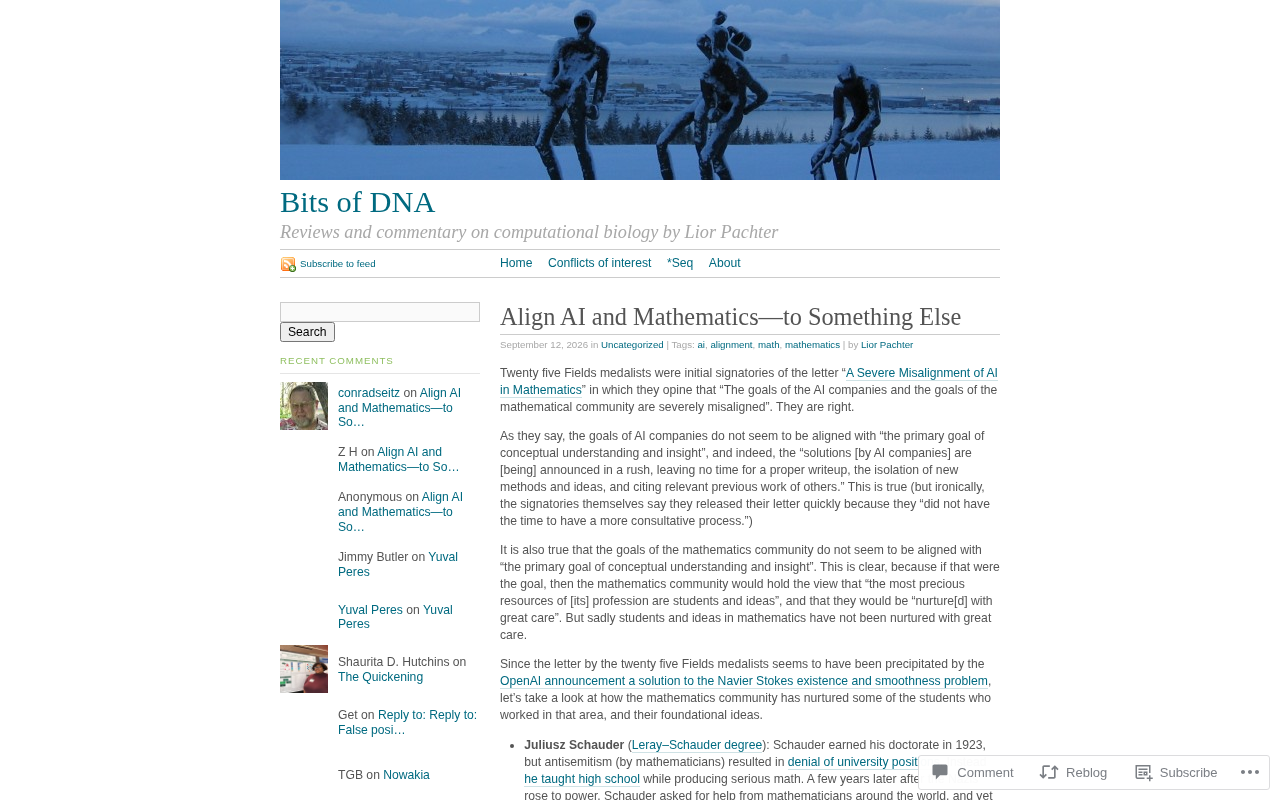
AI's relationship with mathematics is shifting from tool to partner — formal verification may offer an objective standard for alignment.
This article extends a Hacker News thread title into a broader discussion on the alignment of AI and mathematics. As AI moves from using math as a foundation to actively assisting in theorem proving, the relationship has become bidirectional. The phrase "align to something else" suggests that in mathematics, the alignment target may not be human preference but the consistency and verifiability of mathematical truth itself. Formal proof systems like Lean and Coq can machine-verify every reasoning step, providing objective correctness standards and making mathematics an ideal sandbox for alignment research. If this framework holds, the ultimate goal of AI alignment would not be replicating human judgment, but remaining consistent with objective truth — a shift with far-reaching implications for the field.
Introduction: An Overlooked Perspective on Alignment
When the industry discusses AI Alignment, the focus tends to center on how to make AI systems follow human values and avoid harmful outputs. Yet a discussion thread titled Align AI and Mathematics–To Something Else raises a more nuanced angle: the relationship between AI and mathematics may need to be aligned toward a goal that transcends pure utility.
A candid disclaimer is in order: this Hacker News post has relatively little traction (11 upvotes, 1 comment), and the original material provides extremely limited information — essentially just a title. What follows is a thematic exploration inspired by that title, not a summary of any detailed argument in the original post.
The Dual Role of Mathematics in AI Development
Mathematics has long been the bedrock of artificial intelligence. From linear algebra powering neural networks, to probability theory driving inference, to optimization theory guiding model training — mathematics is both the language of AI and the underlying logic of its operation.
But the phrase "To Something Else" in the title hints at a moment of reflection: have we been treating mathematics purely as a means to achieve AI capability? As large models break through on math competition problems and AI begins assisting mathematicians in proving theorems, the relationship between AI and mathematics is undergoing a structural shift — mathematics is no longer just a tool for AI; AI is becoming a partner in exploring mathematics itself.
This bidirectional relationship opens a new dimension of the alignment question: if AI can perform mathematical reasoning or even discover new mathematical structures, what do we want it to align to? The existing body of human mathematics, or something that might transcend human intuition entirely — some "something else"?
What Does "Align to Something Else" Actually Mean?
The traditional alignment paradigm aims to make AI comply with human intent. But in mathematics — a highly abstract domain where objective truth exists — the alignment target may not be human preference at all, but rather the consistency and verifiability of mathematical truth itself.
This line of thinking is worth dwelling on. Mathematical proofs are machine-verifiable by nature — formal proof systems such as Lean and Coq allow rigorous checking of every step in a derivation. Within such a framework, an AI's alignment target could be "correctness of proof" rather than "pleasing a human evaluator." This gives AI alignment a rare testing ground with genuinely objective standards.
In other words, mathematics may be the ideal sandbox for evaluating AI alignment methods: it offers clear right-and-wrong criteria, strips away the ambiguity introduced by human values, and lets researchers observe more clearly whether an AI's reasoning is truly trustworthy and reliable.
Potential Implications for AI Research
From an engineering perspective, combining AI's mathematical capabilities with formal verification could deliver value in several ways:
Trustworthy Reasoning Chains
When every step of an AI's output can be verified by a formal system, the hallucination problem can be effectively contained in mathematical contexts. This is especially important for applications requiring high reliability, such as scientific computing and engineering validation.
Exploration Beyond Human Reach
If AI is aligned not only to existing mathematical knowledge but is also able to explore new territory while maintaining logical rigor, it may discover mathematical structures that humans have yet to encounter. This could be the deeper meaning behind "To Something Else" — the endpoint of alignment is not to replicate humans, but to remain consistent with objective truth.
Conclusion: A Careful Reading Under Limited Source Material
It must be emphasized that this article is an extended reflection built around a title with very little accompanying information. The original post provides no detailed argument, and its actual intent may differ from the interpretation offered here. For readers interested in the intersection of AI alignment and mathematics, this topic provides an interesting starting point: as AI gradually develops genuine mathematical reasoning capabilities, our definition of "alignment" may need to evolve alongside it.
Readers who want to go deeper are encouraged to explore related research areas such as formal mathematics, automated theorem proving, and verifiable AI, where more systematic and empirically grounded understanding can be found.
Related articles
Recurrent Looped Transformers: A New Architecture That Teaches Models to "Think Again"
Recurrent Looped Transformers repeatedly apply the same Transformer block to decouple compute from parameters, enabling variable reasoning depth without scaling model size.
"Everyone Else Should Slow Down AI — Except Me": The Double Standard Trap in Big Tech
A viral Hacker News quip — "Everyone should slow down AI, except me" — exposes the double-standard at the heart of the AI race. We unpack why it's a Prisoner's Dilemma, not mere hypocrisy, and why institutions matter more than moral self-discipline.
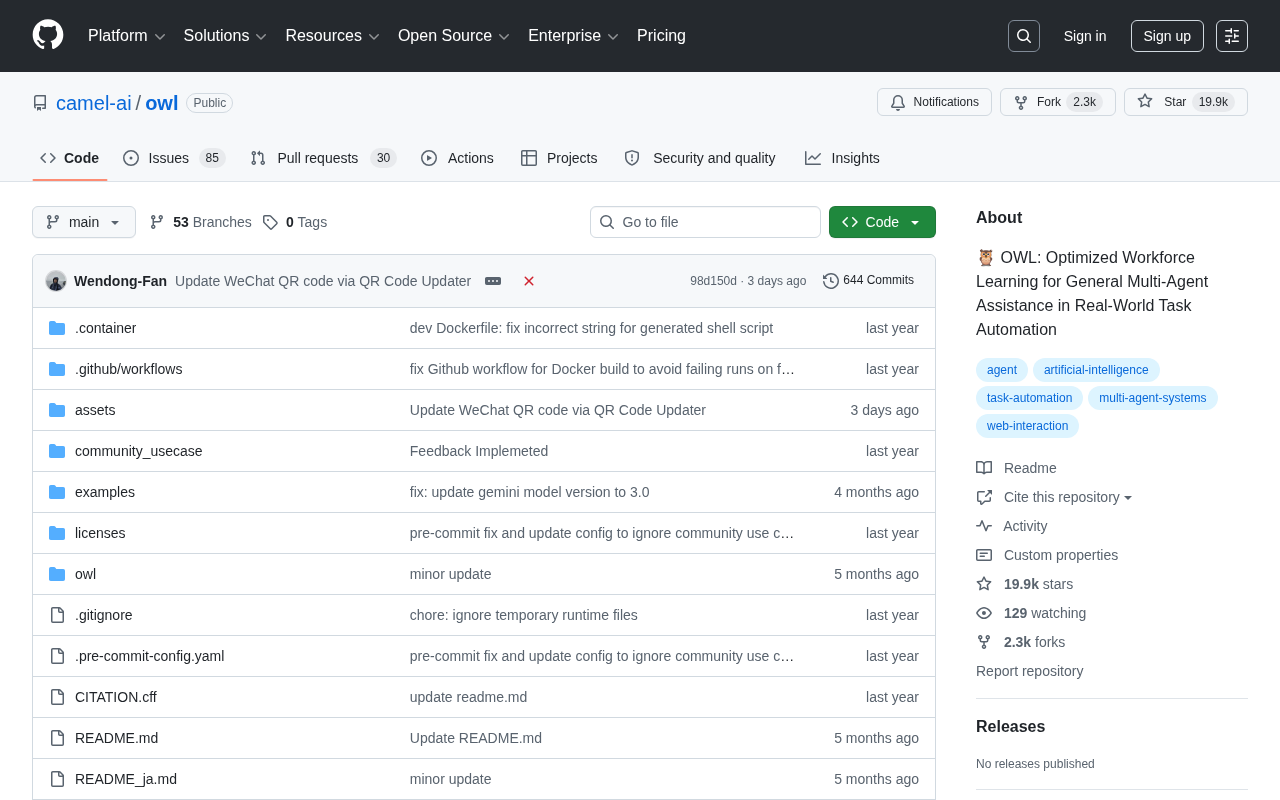
OWL: An Open-Source Multi-Agent Framework for Real-World Task Automation
OWL (Optimized Workforce Learning) is an open-source multi-agent framework by camel-ai for real-world task automation, with 19K+ GitHub Stars. Learn how it works.